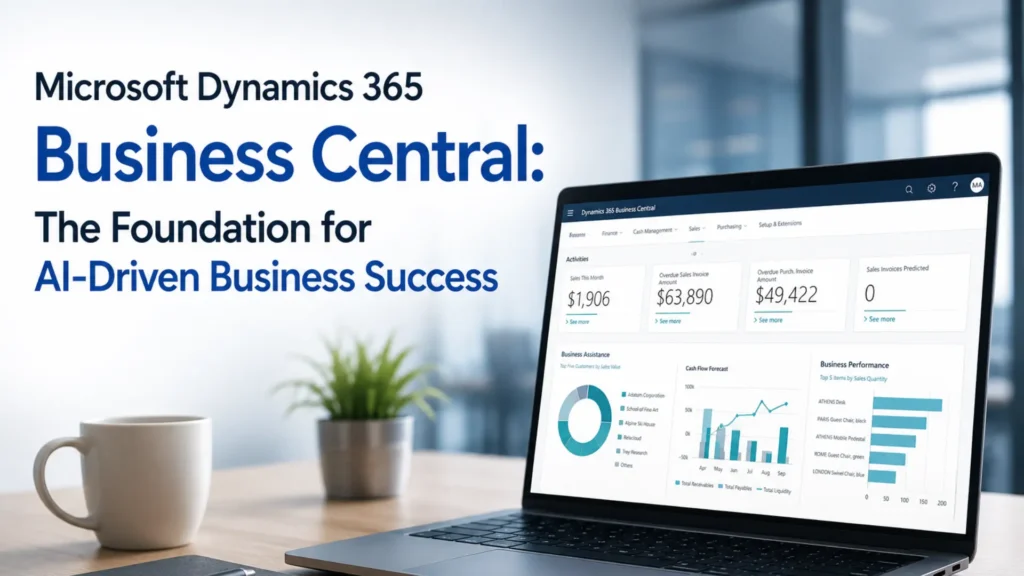
Microsoft Dynamics 365 Business Central: The Foundation for AI-Driven Business Success
Artificial Intelligence (AI) is no longer a futuristic concept—it has become an essential driver of business growth, innovation, and operational efficiency. Organizations across industries are investing in AI technologies to automate processes, improve decision-making, and deliver exceptional customer experiences. However, the success of AI depends on one critical factor: access to accurate, centralized, and real-time business data. This is where Microsoft Dynamics 365 Business Central plays a vital role. As Microsoft’s comprehensive cloud-based ERP solution, Business Central provides businesses with a unified platform to manage finance, sales, purchasing, inventory, operations, and customer information. When combined with Microsoft’s AI capabilities, including Copilot and advanced analytics, it becomes the foundation for smarter business decisions and sustainable growth. Whether you are a growing business looking to modernize operations or an established enterprise planning digital transformation, working with an experienced Microsoft Dynamics 365 partner can help you unlock the full potential of Business Central and AI-driven business solutions. Why AI Needs a Modern ERP Platform Artificial intelligence relies on high-quality business data to generate meaningful insights. Unfortunately, many organizations still use disconnected systems where financial data, inventory records, customer information, and operational reports are stored separately. This makes it difficult for AI to provide accurate recommendations. Microsoft Dynamics 365 Business Central eliminates these silos by bringing all business functions together in a single cloud platform. With centralized data, businesses can leverage AI to identify trends, forecast demand, optimize inventory, and improve financial planning. Instead of spending hours compiling reports from multiple systems, decision-makers gain instant access to reliable insights that help them respond quickly to changing market conditions. Key AI Capabilities in Microsoft Dynamics 365 Business Central Microsoft continues to enhance Business Central with intelligent features that improve productivity and simplify business operations. These AI-powered capabilities help organizations automate routine tasks while enabling employees to focus on strategic activities. Some of the most valuable AI-driven features include: These capabilities help businesses make informed decisions while reducing manual work and operational costs. How Business Central Improves Business Performance One of the biggest advantages of Business Central is its ability to connect every department within a single ERP system. Finance teams gain better visibility into cash flow and profitability, sales teams can track customer interactions more effectively, and inventory managers can monitor stock levels in real time. This connected approach improves collaboration across departments and enables AI to generate more accurate business insights. Business Central also integrates seamlessly with Microsoft applications such as Microsoft 365, Teams, Outlook, Excel, and Power BI. Employees can access business information directly from the tools they already use every day, improving efficiency and reducing the need to switch between multiple applications. For organizations embracing AI, this integration creates a powerful digital ecosystem where data flows automatically across business processes, allowing teams to work faster and make smarter decisions. Microsoft Copilot: Bringing AI into Everyday Work Microsoft Copilot is transforming the way businesses interact with ERP systems. Rather than manually searching for reports or entering repetitive information, users can ask questions in natural language and receive instant responses based on real-time business data. For example, finance managers can quickly generate financial summaries, sales teams can create product descriptions, and business leaders can analyze operational performance without spending hours preparing reports. Copilot reduces administrative workloads while helping employees focus on activities that create greater value for the organization. As Microsoft continues to invest in AI innovation, Copilot will become an even more powerful assistant within Microsoft Dynamics 365 Business Central, making everyday business operations more efficient and intelligent. The Importance of Professional Implementation and Support Implementing an ERP solution involves much more than installing software. Every organization has unique business processes, reporting requirements, and operational goals. Choosing the right Microsoft Dynamics 365 partner ensures your Business Central implementation is tailored to your specific needs. Professional MS Dynamics 365 implementation services help businesses configure the system correctly, migrate existing data, integrate third-party applications, train employees, and support a smooth go-live process. A well-planned implementation minimizes business disruption and helps organizations achieve faster returns on their ERP investment. After deployment, ongoing Microsoft Dynamics 365 support services play an equally important role. Regular updates, technical assistance, performance optimization, and user support ensure that the system continues to deliver maximum value as business requirements evolve. Why D365 Migration Services Matter Many organizations still rely on outdated ERP systems that limit business growth and make AI adoption difficult. Upgrading to Business Central enables businesses to take advantage of cloud technology, automation, and advanced analytics. Professional D365 migration services help organizations move securely from legacy systems such as Microsoft Dynamics NAV, Dynamics GP, or other ERP platforms. The migration process typically includes data cleansing, system configuration, testing, and user training to ensure a seamless transition with minimal downtime. Migrating to Business Central also provides businesses with a scalable platform that supports future innovation and continuous Microsoft updates without the complexity of maintaining legacy infrastructure. The Value of Microsoft Dynamics Consulting Services Every organization has different goals, challenges, and growth strategies. This is why expert Microsoft Dynamics consulting services are essential for maximizing the benefits of Business Central. Experienced consultants evaluate existing business processes, identify improvement opportunities, and recommend solutions that align with organizational objectives. Consulting services also help businesses adopt AI strategically by identifying automation opportunities, improving reporting capabilities, and ensuring the ERP system supports long-term business growth. With expert guidance, organizations can make better technology investments and accelerate their digital transformation journey. Benefits of Using Microsoft Dynamics 365 Business Central Businesses implementing Business Central often experience measurable improvements across their operations. Some of the key benefits include: These advantages help organizations improve efficiency, reduce costs, and remain competitive in an increasingly digital marketplace. Conclusion Artificial intelligence is transforming the future of business, but its success depends on having the right technology foundation. Microsoft Dynamics 365 Business Central provides that foundation by bringing together financial management, operations, inventory, sales, and customer information into a single intelligent ERP platform. Combined with Microsoft Copilot and advanced AI capabilities, Business Central
Microsoft Dynamics 365 Business Central: The Foundation for AI-Driven Business Success Read More »