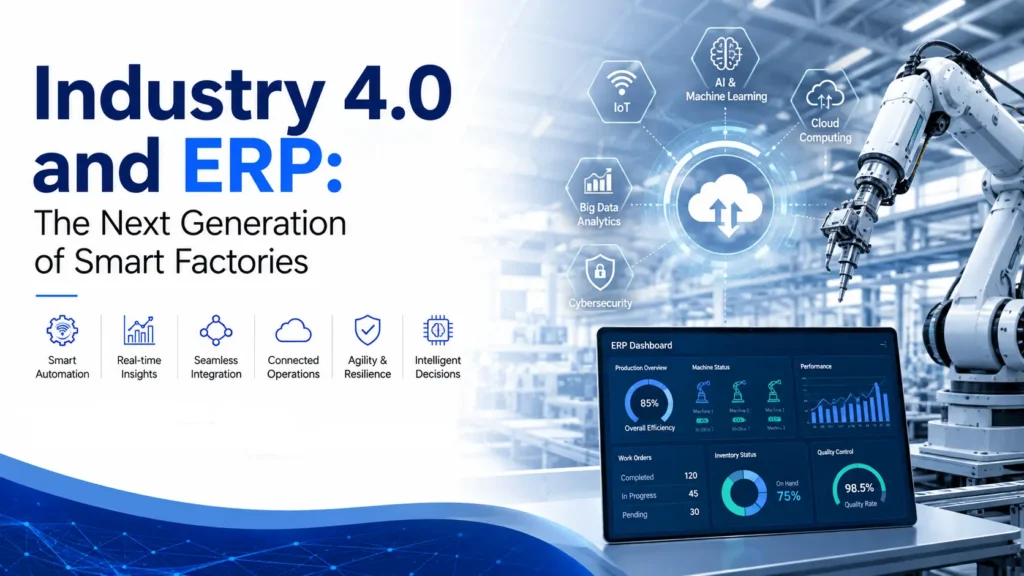
The manufacturing industry is undergoing a major transformation as businesses embrace Industry 4.0, the fourth industrial revolution driven by artificial intelligence (AI), the Internet of Things (IoT), cloud computing, robotics, big data, and automation. Modern factories are no longer dependent on manual processes and disconnected systems. Instead, they rely on intelligent technologies that provide real-time visibility, predictive insights, and seamless communication across production, inventory, supply chains, and finance.
At the heart of every smart factory is a powerful Enterprise Resource Planning (ERP) system. Microsoft Dynamics 365 Business Central enables manufacturers to connect every aspect of their operations into one integrated platform, helping them improve efficiency, reduce costs, and make data-driven decisions. By partnering with an experienced Microsoft Dynamics 365 partner, businesses can successfully implement an ERP solution that supports digital transformation and prepares them for the future of manufacturing.
Understanding Industry 4.0
Industry 4.0 refers to the integration of digital technologies into manufacturing processes to create intelligent, connected, and highly automated production environments. Unlike traditional factories, smart factories continuously collect and analyze data from machines, sensors, and business applications to optimize operations in real time.
Modern manufacturers use Industry 4.0 technologies to monitor equipment performance, automate repetitive tasks, improve product quality, predict maintenance requirements, and respond quickly to market changes. This connected ecosystem allows businesses to become more agile while improving productivity and customer satisfaction.
However, these advanced technologies require a centralized platform that can manage business data efficiently. This is where ERP systems become essential.
Why ERP Is the Foundation of Smart Factories
A smart factory generates enormous amounts of operational data every day. Without a centralized ERP solution, this information often remains scattered across different departments, making it difficult to gain meaningful insights.
Microsoft Dynamics 365 Business Central acts as the digital backbone of Industry 4.0 by connecting finance, production, inventory, procurement, warehouse management, and customer information into a single cloud-based system. This unified approach enables manufacturers to monitor business performance in real time and make informed decisions based on accurate data.
With ERP integrated into factory operations, organizations can automate workflows, improve collaboration between departments, and eliminate manual data entry, creating a more efficient manufacturing environment.
How Microsoft Dynamics 365 Business Central Supports Smart Manufacturing
Modern manufacturing requires more than inventory management and accounting software. Businesses need intelligent ERP capabilities that support automation, analytics, and operational excellence.
Microsoft Dynamics 365 Business Central provides manufacturers with features such as production planning, inventory management, supply chain visibility, financial management, purchasing, warehouse operations, and business intelligence. Combined with Microsoft Copilot and AI-powered analytics, Business Central helps organizations forecast demand, optimize inventory, reduce production delays, and improve resource utilization.
Real-time dashboards allow decision-makers to monitor key performance indicators across the entire manufacturing process, enabling faster responses to operational challenges.
Key Benefits of ERP in Industry 4.0
Implementing an ERP system as part of an Industry 4.0 strategy delivers measurable improvements across manufacturing operations.
Some of the most significant benefits include:
- Real-time operational visibility across production, inventory, procurement, and finance.
- Improved production planning through AI-powered forecasting and demand analysis.
- Better inventory control that reduces stock shortages and excess inventory.
- Enhanced collaboration between departments using centralized business data.
- Automated workflows that reduce manual work and improve operational efficiency.
- Scalable cloud infrastructure that supports future business growth and innovation.
These capabilities enable manufacturers to improve productivity while maintaining flexibility in an increasingly competitive market.
AI and Automation in Smart Factories
Artificial intelligence is becoming a key component of Industry 4.0. AI-powered ERP systems analyze historical and real-time data to identify trends, predict equipment failures, optimize production schedules, and improve quality control.
Microsoft Copilot further enhances Business Central by helping employees generate reports, summarize operational data, answer business questions, and automate routine administrative tasks. Instead of manually compiling information, managers receive actionable insights instantly, allowing them to focus on strategic decision-making.
Automation also reduces repetitive manual processes such as purchase order creation, invoice processing, inventory updates, and production scheduling, resulting in faster operations and lower operational costs.
The Importance of Professional ERP Implementation
Successfully implementing an ERP solution requires careful planning, business process analysis, and technical expertise. Every manufacturing organization has unique operational requirements, making professional implementation services essential.
Experienced MS Dynamics 365 implementation services help manufacturers configure Business Central to align with their production processes, migrate business data, integrate factory systems, and train employees. A structured implementation approach minimizes disruption while ensuring users quickly adopt the new system.
Working with a trusted Microsoft Dynamics 365 partner also provides access to industry best practices and ongoing technical guidance throughout the implementation journey.
Why Microsoft Dynamics 365 Support Services Matter
Digital transformation does not end after ERP implementation. Continuous system optimization and technical support are essential for maintaining operational performance.
Professional Microsoft Dynamics 365 Support Services help manufacturers manage software updates, troubleshoot issues, optimize workflows, and ensure system security. Ongoing support allows businesses to adapt their ERP environment as operational requirements evolve, maximizing long-term return on investment.
Reliable support also helps minimize downtime, ensuring production processes continue without interruption.
Upgrading Legacy Systems with D365 Migration Services
Many manufacturers still rely on outdated ERP platforms that lack modern AI capabilities and cloud functionality. These legacy systems often limit scalability and reduce operational efficiency.
Professional D365 migration services help organizations transition from older ERP systems such as Dynamics NAV, Dynamics GP, or other legacy solutions to Microsoft Dynamics 365 Business Central. The migration process includes data cleansing, validation, configuration, testing, and employee training, ensuring a smooth transition with minimal business disruption.
Moving to a cloud-based ERP platform allows manufacturers to take advantage of continuous Microsoft updates, advanced analytics, and future AI innovations.
The Role of Microsoft Dynamics Consulting Services
Every manufacturing business has different production workflows, compliance requirements, and growth objectives. This makes expert Microsoft Dynamics consulting services invaluable during digital transformation initiatives.
Consultants evaluate existing business processes, identify improvement opportunities, and develop ERP strategies that align with organizational goals. They also help manufacturers implement automation, optimize reporting, improve supply chain visibility, and integrate Industry 4.0 technologies into daily operations.
With expert consulting, businesses can maximize the value of their ERP investment while preparing for future technological advancements.
Conclusion
Industry 4.0 is redefining manufacturing by combining automation, artificial intelligence, IoT, and real-time analytics to create smarter and more efficient factories. However, these technologies require a robust ERP platform capable of managing complex business operations and delivering actionable insights.
Microsoft Dynamics 365 Business Central provides the digital foundation that manufacturers need to embrace smart factory initiatives, improve operational efficiency, and remain competitive in a rapidly evolving marketplace. From production planning and inventory optimization to AI-powered decision-making and cloud scalability, Business Central supports every stage of modern manufacturing.
By working with an experienced Microsoft Dynamics 365 partner and leveraging professional MS Dynamics 365 Implementation services, Microsoft Dynamics 365 Support Services, D365 migration services, and Microsoft Dynamics consulting services, manufacturers can confidently accelerate their Industry 4.0 journey and build future-ready smart factories.
Frequently Asked Questions (FAQs)
Q1. What is Industry 4.0?
Ans: Industry 4.0 is the fourth industrial revolution that combines technologies such as AI, IoT, cloud computing, robotics, and automation to create intelligent, connected, and data-driven manufacturing environments.
Q2. Why is ERP important for smart factories?
Ans: ERP systems centralize business data, automate workflows, improve production planning, and provide real-time visibility across manufacturing operations, making them essential for Industry 4.0.
Q3. How does Microsoft Dynamics 365 Business Central support manufacturers?
Ans: Microsoft Dynamics 365 Business Central helps manufacturers manage finance, inventory, production, purchasing, warehouse operations, and supply chains while providing AI-powered insights and cloud scalability.
Q4. Why should manufacturers work with a Microsoft Dynamics 365 partner?
Ans: A certified Microsoft Dynamics 365 partner ensures successful ERP implementation, customization, integration, user training, and ongoing support tailored to manufacturing requirements.
Q5. What are D365 migration services?
Ans: D365 migration services help businesses securely move from legacy ERP systems to Microsoft Dynamics 365 Business Central while preserving data integrity and minimizing operational disruption.
Q6. What do Microsoft Dynamics consulting services provide?
Ans: Microsoft Dynamics consulting services help businesses optimize ERP strategies, improve manufacturing processes, implement Industry 4.0 technologies, and maximize the return on their Microsoft Dynamics investment.