ms dynamics crm partners

how-managed-erp-services-strengthen-security-and-compliance

How Managed ERP Services Strengthen Security and Compliance

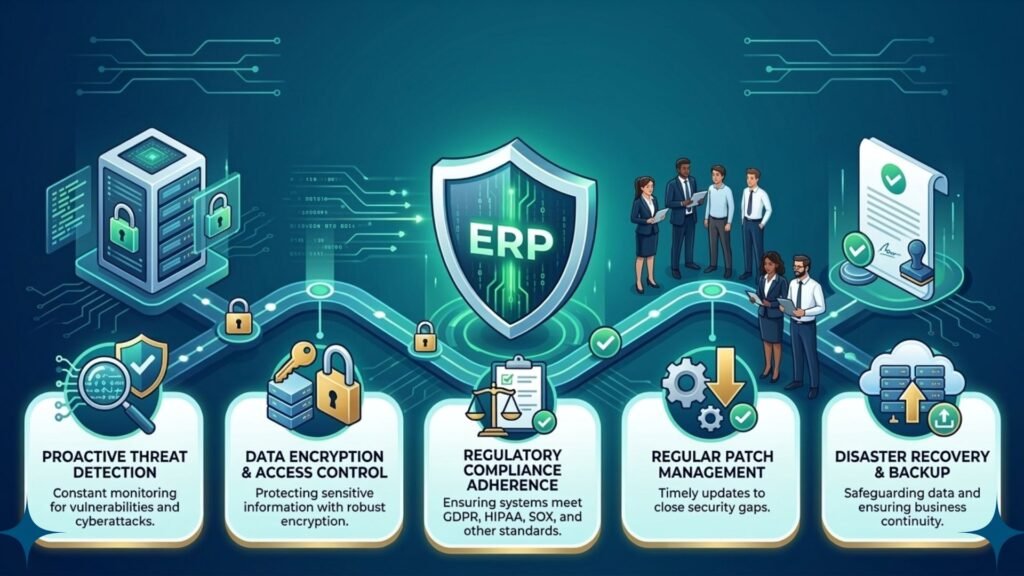
In today’s digital-first business environment, organizations rely heavily on Enterprise Resource Planning (ERP) systems to manage finance, supply chains, operations, and customer data. However, as businesses become more connected and data-driven, the risks associated with cybersecurity threats, regulatory requirements, and compliance management also increase. This is where Managed ERP Services play a critical role. Managed ERP services help organizations maintain secure, reliable, and compliant ERP environments while allowing internal teams to focus on core business activities. Businesses across industries are increasingly partnering with a Microsoft Dynamics 365 partner in Texas, USA, to ensure their ERP systems remain protected against cyber threats while meeting regulatory requirements. This article explores how managed ERP services enhance security, strengthen compliance, and support long-term business growth. Understanding Managed ERP Services Managed ERP services involve outsourcing ERP system management, maintenance, monitoring, and optimization to specialized experts. Instead of relying solely on in-house IT teams, organizations work with ERP specialists who ensure the system operates securely and efficiently. For companies using Microsoft Dynamics 365 Business Central in texas usa, managed ERP services often include: These services ensure that ERP platforms remain secure, compliant, and aligned with evolving business requirements. The Growing Importance of ERP Security ERP systems store highly sensitive business data, including financial records, customer information, employee data, and operational insights. This makes ERP platforms attractive targets for cybercriminals. Without proper security measures, organizations may face risks such as: Companies using Microsoft Dynamics 365 Support Services in texas usa often rely on managed ERP providers to implement advanced security frameworks that safeguard sensitive data and protect critical operations. Key Security Benefits of Managed ERP Services 1. Proactive Threat Monitoring One of the biggest advantages of managed ERP services is 24/7 system monitoring. Security specialists continuously monitor ERP environments to detect unusual activities, suspicious logins, or potential vulnerabilities. With the help of Microsoft Dynamics consulting services in texas usa, businesses can quickly identify and address potential threats before they escalate into major security incidents. Proactive monitoring includes: This proactive approach significantly reduces the risk of data breaches. 2. Advanced Access Control and User Management Access control is a crucial aspect of ERP security. Not every employee should have access to all system data. Managed ERP providers implement role-based access control (RBAC) to ensure users only access information relevant to their responsibilities. Organizations using MS Dynamics 365 Implementation services in texas usa often configure: These controls prevent unauthorized access and strengthen internal security. 3. Regular Security Updates and Patch Management ERP software vendors frequently release security updates to address vulnerabilities. However, many organizations fail to implement these updates promptly due to resource constraints or operational challenges. Managed ERP providers ensure that: For businesses relying on D365 migration services in texas usa, maintaining updated systems is particularly important because newly migrated environments must remain secure from the start. 4. Data Encryption and Secure Data Storage Managed ERP services also strengthen data protection through encryption. Sensitive information stored within ERP systems is encrypted both in transit and at rest. Security measures include: Organizations implementing Microsoft Dynamics 365 Business Central in texas usa benefit from enterprise-level security features combined with expert management services. 5. Backup and Disaster Recovery Planning Data loss can result from cyberattacks, hardware failures, or human errors. Managed ERP services ensure businesses have robust backup and disaster recovery strategies in place. These strategies include: With support from Microsoft Dynamics 365 Support Services in texas usa, businesses can recover operations quickly in the event of unexpected disruptions. Strengthening Compliance with Managed ERP Services In addition to security, organizations must comply with numerous regulatory requirements. Industries such as finance, healthcare, manufacturing, and retail face strict compliance standards related to data protection, financial reporting, and operational transparency. Managed ERP services help organizations maintain compliance through structured governance and regulatory alignment. 1. Regulatory Compliance Management ERP systems must comply with various regulations, such as: Working with a Microsoft Dynamics 365 partner in texas usa helps businesses ensure their ERP environment aligns with evolving compliance requirements. Managed ERP providers regularly review system configurations, ensuring compliance policies remain properly enforced. 2. Automated Audit Trails Audit trails play an essential role in compliance. ERP systems track all system activities, including user actions, data modifications, and financial transactions. Managed ERP services ensure these logs are: Companies using Microsoft Dynamics consulting services in texas usa can generate compliance reports quickly and efficiently during regulatory audits. 3. Data Governance and Policy Enforcement Effective compliance requires strict data governance policies. Managed ERP providers help organizations implement policies that control: Organizations leveraging MS Dynamics 365 Implementation services in texas usa benefit from structured governance models that ensure consistent compliance across departments. 4. Compliance Reporting and Documentation Managed ERP services simplify compliance reporting by providing automated documentation and reporting tools. Businesses can generate reports related to: This capability is particularly valuable for organizations using D365 migration services in texas usa, as regulatory reporting must remain consistent during and after ERP migrations. Why Businesses in Texas Are Adopting Managed ERP Services Texas is home to a rapidly growing business ecosystem that includes manufacturing companies, energy firms, logistics providers, and technology enterprises. As these businesses expand, they require scalable ERP systems that can support growth while maintaining strong security and compliance. Partnering with a trusted Microsoft Dynamics 365 partner in texas usa enables organizations to: Managed ERP services also help businesses focus on innovation rather than technical maintenance. How Managed ERP Services Improve Business Continuity In addition to security and compliance benefits, managed ERP services also improve overall business continuity. Organizations gain advantages such as: Businesses implementing Microsoft Dynamics 365 Business Central in texas usa often rely on managed service providers to maintain system stability while scaling operations. Choosing the Right Managed ERP Partner Selecting the right ERP partner is crucial for maximizing the benefits of managed services. Organizations should evaluate potential providers based on: A reliable provider offering Microsoft Dynamics 365 Support Services in texas usa ensures businesses receive ongoing support, security monitoring, and compliance management. Future of Managed ERP Security

How Managed ERP Services Strengthen Security and Compliance Read More »

why-manufacturers-trust-business-central-for-supply-chain-optimization

Why Manufacturers Trust Business Central for Supply Chain Optimization

In today’s highly competitive manufacturing landscape, supply chain efficiency is no longer optional—it is a strategic necessity. Manufacturers must manage fluctuating demand, rising operational costs, supplier disruptions, and increasing customer expectations, all while maintaining profitability. This growing complexity explains why manufacturers trust Business Central for supply chain optimization, as many organizations are turning to Microsoft Dynamics 365 Business Central as a modern, scalable ERP solution that delivers end-to-end supply chain visibility and control. Across the United States—and particularly in Texas—manufacturers are partnering with a trusted Microsoft Dynamics 365 partner in Texas USA to transform their operations, streamline processes, and optimize supply chains. This growing shift highlights why manufacturers trust Business Central for supply chain optimization, as Dynamics 365 Business Central has become the ERP of choice for manufacturers seeking greater visibility and control. This article explores how it enhances supply chain performance and why working with experienced Microsoft Dynamics consulting services in Texas USA is essential for long-term success. The Growing Supply Chain Challenges Faced by Manufacturers Manufacturers today operate in an environment shaped by global sourcing, volatile markets, and digital disruption. Traditional ERP systems often fail to provide the agility and real-time insights needed to respond quickly. Common supply chain challenges include: Legacy ERP systems struggle to adapt to these realities. As a result, manufacturers are increasingly migrating to cloud-based solutions like Dynamics 365 Business Central, supported by expert D365 migration services in Texas USA. What Is Microsoft Dynamics 365 Business Central? Microsoft Dynamics 365 Business Central is a comprehensive, cloud-based ERP solution designed for small to mid-sized businesses and growing enterprises. It unifies finance, supply chain, manufacturing, sales, and customer relationship management (CRM) into a single platform. Often referred to as Dynamics 365 Business Central, Business Central, or Dynamics 365 BC, it is part of the broader Microsoft Dynamics 365 ecosystem, seamlessly integrating with tools like Microsoft Dynamics 365 CRM, Microsoft 365, Power BI, and Azure. For manufacturers, Business Central delivers: Why Manufacturers Trust Business Central for Supply Chain Optimization 1. End-to-End Supply Chain Visibility One of the biggest reasons manufacturers trust Dynamics 365 Business Central is its ability to provide complete visibility across the supply chain. From procurement and inventory to production and fulfillment, every process is connected. With real-time dashboards and analytics, manufacturers can: A trusted Microsoft Dynamics 365 Business Central partner in Texas USA ensures that dashboards and reports are customized to manufacturing KPIs. 2. Intelligent Inventory Management Inventory optimization is critical for manufacturers aiming to reduce carrying costs while avoiding stockouts. Business Central uses intelligent planning tools to help manufacturers maintain the right inventory levels. Key benefits include: By working with Microsoft Dynamics 365 Support Services in Texas USA, manufacturers can continuously refine inventory strategies as business needs evolve. 3. Demand Forecasting and Production Planning Accurate demand forecasting is essential for efficient supply chain operations. Dynamics Microsoft solutions use historical data and predictive insights to help manufacturers align production with actual demand. Business Central supports: Manufacturers partnering with experienced MS Dynamics 365 Implementation services in Texas USA can configure these features to match complex production environments. 4. Seamless Procurement and Supplier Management Procurement inefficiencies can disrupt the entire supply chain. Microsoft Dynamics ERP partner solutions streamline purchasing by automating vendor selection, approvals, and order tracking. With Business Central, manufacturers can: A certified Microsoft Dynamics 365 partner ensures procurement workflows align with industry best practices. 5. Integrated Manufacturing and Shop Floor Control Unlike disconnected systems, Dynamics 365 Business Central integrates supply chain operations directly with manufacturing processes. Capabilities include: Manufacturers working with Microsoft Dynamics implementation partners gain tailored configurations that support discrete, process, or mixed-mode manufacturing. 6. Built-In Financial and Cost Control Supply chain optimization is incomplete without financial alignment. Business Central links inventory movements, procurement, and production directly to finance. This enables manufacturers to: A reliable Microsoft ERP partner helps manufacturers leverage these insights for strategic planning. Why Texas Manufacturers Prefer Dynamics 365 Business Central Texas is home to a diverse manufacturing ecosystem, including automotive, electronics, oil & gas, food processing, and industrial equipment. These industries require scalable and flexible ERP solutions. Manufacturers in Texas benefit from: By choosing Microsoft Dynamics 365 Business Central in Texas USA, organizations gain both global technology and local expertise. The Role of Microsoft Dynamics Consulting Services in Texas USA ERP success depends not only on software but also on strategy, implementation, and ongoing optimization. Microsoft Dynamics consulting services in Texas USA play a critical role in ensuring manufacturers realize maximum ROI. Consulting services include: Experienced consultants ensure that Dynamics 365, MS Dynamics, and Dynamics CRM capabilities are aligned with manufacturing goals. Smooth Transitions with D365 Migration Services in Texas USA Many manufacturers are moving from legacy systems or older Microsoft ERP solutions to Dynamics 365 Business Central. A poorly planned migration can disrupt operations—but expert D365 migration services in Texas USA minimize risk. Migration services cover: Certified Microsoft Dynamics partners list providers ensure secure and seamless transitions. Business Central and CRM: A Unified View of Customers Supply chain efficiency is closely linked to customer satisfaction. Microsoft Dynamics 365 CRM integrates seamlessly with Business Central, giving manufacturers a 360-degree view of customers. Benefits include: This integration strengthens both supply chain and customer experience strategies. Why Choose a Microsoft Dynamics 365 Partner in Texas USA? Choosing the right partner is as important as choosing the right ERP. A trusted Dynamics 365 partner, Business Central partner, or Microsoft Dynamics ERP partner brings industry knowledge, technical expertise, and ongoing support. Key advantages include: Leading Microsoft Dynamics implementation partners help manufacturers stay competitive in a rapidly changing market. Future-Ready Supply Chains with Dynamics 365 With continuous updates, AI-driven insights, and cloud scalability, Microsoft Dynamics 365 Business Central prepares manufacturers for the future. Key innovations include: Manufacturers partnering with a reliable Dynamics 365 Business Central partner gain a future-proof ERP platform. Frequently Asked Questions (FAQs) Q1. Why is Business Central ideal for manufacturers? Ans: Business Central integrates supply chain, manufacturing, finance, and CRM into one system, providing real-time visibility, automation, and scalability. Q2.

Why Manufacturers Trust Business Central for Supply Chain Optimization Read More »

license-based-erp

Subscription vs. License-Based ERP: Which Is Better for Long-Term Growth?

In today’s fast-evolving digital economy, Enterprise Resource Planning (ERP) systems are the backbone of business operations — integrating finance, supply chain, manufacturing, sales, and human resources into one unified platform. But when it comes to adopting an ERP, one question keeps business leaders and IT managers debating: Should you choose a subscription-based (cloud) ERP or a license-based (on-premises) ERP? This question isn’t just about pricing models; it’s about long-term scalability, innovation, and total cost of ownership (TCO). As more businesses move toward cloud-based solutions like Microsoft Dynamics 365, it’s important to understand what each model offers — and which one aligns best with your growth strategy. In this article, we’ll explore the key differences between subscription and license-based ERP models, their advantages and drawbacks, the financial and operational impacts, and how to choose the right option for long-term success. Understanding ERP Deployment and Licensing Models Before diving into comparisons, let’s clarify what these two models mean in practice. 1. License-Based ERP (Perpetual License) A license-based ERP involves purchasing a software license outright, which gives your company the right to use the software indefinitely. Traditionally, this model is paired with on-premises deployment, where the software is installed on your own servers, and your internal IT team (or a partner) manages the infrastructure, upgrades, and security. Key Characteristics: Examples: Microsoft Dynamics AX, SAP ECC, Oracle E-Business Suite (legacy editions) 2. Subscription-Based ERP A subscription-based ERP operates under a pay-as-you-go model. You pay a recurring monthly or annual fee to access the software, which is typically hosted in the cloud by the vendor or a managed partner. Key Characteristics: Examples: Microsoft Dynamics 365 Business Central, Oracle NetSuite, SAP S/4HANA Cloud Key Differences Between Subscription and License-Based ERP Factor Subscription-Based ERP (SaaS) License-Based ERP (Perpetual) Cost Structure Monthly/annual OPEX One-time CAPEX + maintenance Deployment Cloud-hosted On-premises or private cloud Scalability Easily scalable up or down Limited by hardware and licenses Upgrades Automatic, frequent updates Manual upgrades; costly & disruptive Security & Compliance Managed by vendor (enterprise-grade) Managed internally Customization Limited but configurable Deep customization possible Integration with Modern Tools Native integration with cloud apps, AI, Power BI May require manual integrations Access & Mobility Accessible anywhere, anytime Typically on-premises access TCO (Total Cost of Ownership) Lower over time for SMBs and mid-market Potentially lower for large enterprises over 10+ years Deep Dive: Advantages and Drawbacks of Each Model Subscription-Based ERP – The Modern Approach Advantages: Drawbacks: License-Based ERP – The Traditional Powerhouse Advantages: Drawbacks: Total Cost of Ownership (TCO) Comparison When evaluating ERP options, cost must be viewed beyond licensing alone. Here’s how both models typically compare across time: Cost Element Subscription ERP (Cloud) License ERP (On-Premises) License Monthly/annual subscription One-time perpetual license Infrastructure Included in subscription Requires servers, network, backup Maintenance Included Annual support fee (15–25%) Upgrades Included automatically Paid upgrades (every 5–7 years) IT Staff Minimal Dedicated internal team required Security Managed by vendor Managed in-house Scalability On-demand Hardware-dependent Long-Term Cost (10 yrs) Potentially higher for very large users Potentially lower after break-even point Insight:For small and mid-sized businesses (SMBs), subscription ERP typically offers lower TCO and higher agility. For large enterprises with established IT infrastructure and predictable operations, license-based ERP may eventually become more cost-efficient — provided they manage it effectively. The Future is Cloud – Here’s Why Over the past decade, the ERP landscape has undergone a massive transformation. According to industry reports, more than 80% of new ERP implementations today are cloud-based. Microsoft, SAP, and Oracle are all transitioning customers from their legacy on-premises products to modern SaaS platforms. Here’s why cloud subscription models are dominating: Which Model Is Right for You? The decision depends on your size, industry, IT maturity, budget, and growth objectives. Here’s a practical framework: Choose Subscription-Based ERP (Cloud) Choose License-Based ERP (On-Premises) : Hybrid ERP: The Best of Both Worlds Many companies are now adopting hybrid ERP models, combining the stability of on-premises systems with the flexibility of cloud applications. For instance, a manufacturer may run core financials and operations in Dynamics 365 Finance (cloud) while maintaining on-premises systems for shop-floor control or legacy integrations. The hybrid model provides a balanced approach to innovation and control. Benefits of Hybrid ERP: Drawbacks: Nevertheless, hybrid ERP serves as a strategic bridge for organizations transitioning from legacy systems toward full digital transformation. Microsoft Dynamics 365: A Real-World Example Microsoft Dynamics 365 offers flexible licensing options — subscription-based SaaS as the default model and on-premises deployment for specific industries and compliance needs. Why it stands out: For businesses aiming for long-term growth, Dynamics 365’s cloud-first model enables agility, innovation, and scalability while maintaining enterprise-grade security and compliance. The Strategic View: Long-Term Growth Implications When evaluating ERP models for long-term growth, think beyond immediate costs — focus on strategic flexibility, innovation velocity, and business resilience. Growth Factor Subscription (Cloud) License (On-Prem) Innovation Continuous delivery, AI-first Limited upgrades Scalability Dynamic scaling Hardware-dependent Agility Rapid deployment & updates Slow change cycles Cost Control Predictable, flexible High upfront, low variable Security Vendor-managed enterprise-grade Internal responsibility Long-Term ROI High for fast-growing firms High for stable enterprises Future Readiness Built for digital transformation May require modernization later In essence, subscription-based ERP is the better choice for most growing organizations. It offers agility, lower barriers to entry, and constant innovation — all essential in an economy defined by rapid technological change. License-based ERP still has relevance for specific industries and large enterprises needing full control, but even these organizations are gradually adopting hybrid or cloud-first strategies. Conclusion Both subscription-based and license-based ERP models have their place in today’s business landscape. However, when it comes to long-term growth, the balance increasingly tilts toward the subscription (cloud) model. Subscription ERP: License ERP: For most businesses aiming to future-proof their operations, cloud ERP platforms like Microsoft Dynamics 365 represent the smarter, more sustainable path forward. As the world continues to shift toward AI-driven, data-centric operations, flexibility and continuous innovation will define success — and subscription-based ERP models are designed precisely for that. Frequently Asked Questions (FAQs) Q

Subscription vs. License-Based ERP: Which Is Better for Long-Term Growth? Read More »