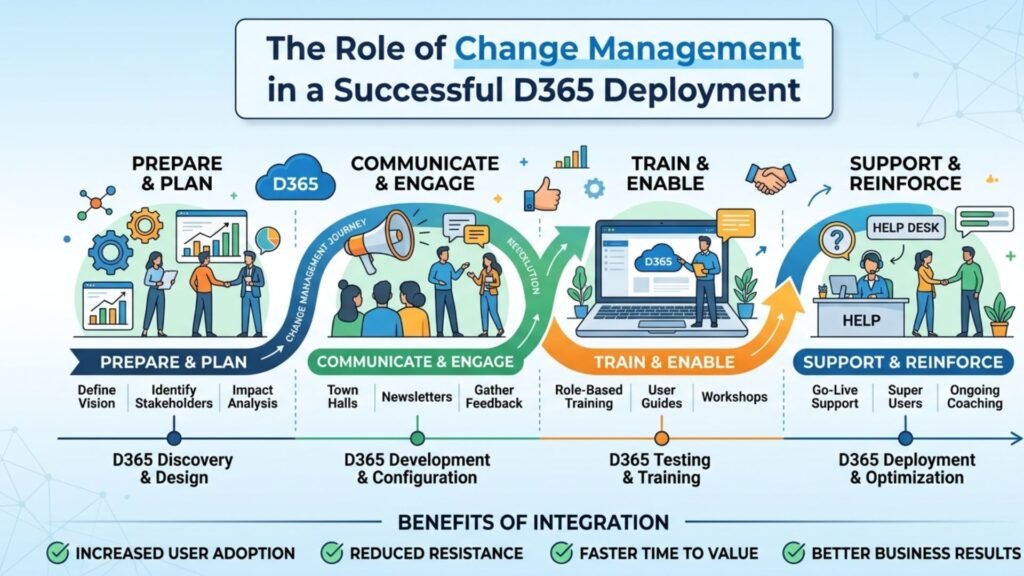
The Role of Change Management in a Successful D365 Deployment
In today’s fast-evolving digital landscape, implementing an advanced ERP system like Microsoft Dynamics 365 (D365) is no longer just a technological upgrade—it’s a strategic transformation. Organizations across industries are investing heavily in D365 to streamline operations, enhance customer experiences, and gain real-time insights. However, many implementations fall short of expectations—not because of technology limitations, but due to poor change management. Change management is the backbone of a successful D365 deployment. It ensures that employees, processes, and organizational culture align with the new system, maximizing ROI and minimizing disruption. Whether you are working with a Microsoft Dynamics 365 partner in Texas, USA, or managing the project internally, a strong change management strategy can make or break your deployment. Understanding Change Management in D365 Deployment Change management is a structured approach to transitioning individuals, teams, and organizations from their current state to a desired future state. In the context of D365, it involves preparing users to adopt new workflows, tools, and processes introduced by the system. Unlike traditional ERP implementations, D365 introduces cloud-based flexibility, automation, AI-driven insights, and integration capabilities. While these benefits are transformative, they also require employees to adapt quickly—making change management critical. Why Change Management is Critical for D365 Success 1. Ensures User Adoption: One of the biggest challenges in ERP implementation is resistance to change. Employees often feel comfortable with legacy systems and processes. Without proper training and communication, they may resist adopting D365. A reliable Microsoft Dynamics 365 Business Central partner in Texas, USA, often emphasizes user adoption through structured onboarding, training sessions, and ongoing support. 2. Minimizes Business Disruptions: During implementation, businesses may experience temporary disruptions in workflows. Effective change management ensures that employees understand new processes, reducing downtime and maintaining productivity. Organizations leveraging MS Dynamics 365 Implementation services in Texas, USA, benefit from phased rollouts and proactive planning that minimizes operational risks. 3. Aligns Business Goals with Technology: D365 is not just a software upgrade—it’s a business transformation tool. Change management ensures that the system aligns with organizational goals, improving efficiency and decision-making. Key Components of Change Management in D365 Deployment 1. Leadership and Stakeholder Engagement: Successful change starts at the top. Leadership must actively support the D365 implementation and communicate its importance to the organization. Working with a trusted Microsoft Dynamics consulting service in texas usa provider helps ensure that leadership remains aligned with project goals and timelines. 2. Clear Communication Strategy: Communication is essential throughout the deployment lifecycle. Employees need to understand: Regular updates, workshops, and feedback sessions help build trust and reduce uncertainty. 3. Training and Skill Development: Training is one of the most crucial aspects of change management. Without proper training, even the most advanced system will fail. Organizations using Microsoft Dynamics 365 Support Services in Texas, USA often provide: 4. Process Redesign D365 implementation often requires re-engineering existing processes to align with best practices. Change management ensures that employees understand and embrace these new workflows. 5. Change Impact Assessment: Before implementation, it’s important to assess how changes will impact different departments. This helps in: The Role of a D365 Partner in Change Management Choosing the right partner is critical for a successful deployment. A professional Microsoft Dynamics 365 partner in Texas, USA, brings expertise, tools, and methodologies that simplify change management. What a Good Partner Provides: Similarly, organizations opting for D365 migration services in Texas, USA, benefit from seamless data migration combined with user readiness strategies. Common Challenges in D365 Change Management 1. Resistance to Change: Employees may fear job loss or struggle to adapt to new systems. Addressing these concerns early is essential. 2. Lack of Training: Insufficient training leads to poor system utilization and frustration among users. 3. Poor Communication: Without clear communication, employees may feel disconnected from the transformation process. 4. Inadequate Leadership Support: If leadership is not actively involved, the project may lose direction and momentum. Best Practices for Effective Change Management 1. Start Early: Change management should begin at the planning stage—not after implementation. 2. Involve Employees: Engage employees in the process by gathering feedback and involving them in decision-making. 3. Use Change Champions: Identify key employees who can act as advocates for the new system and help others adapt. 4. Provide Continuous Support: Post-implementation support is crucial for long-term success. Many companies rely on Microsoft Dynamics 365 Support Services in Texas, USA, to ensure ongoing optimization. 5. Measure Success Track key performance indicators (KPIs) such as: The Impact of Change Management on ROI Organizations that invest in change management see significantly higher returns from their D365 implementation. Benefits include: By partnering with experts in MS Dynamics 365 Implementation services in Texas, USA, businesses can maximize these benefits while minimizing risks. Change Management in D365 Business Central Deployments For small and mid-sized businesses, Microsoft Dynamics 365 Business Central in Texas, USA, offers a scalable and cost-effective ERP solution. However, even SMBs require structured change management to ensure success. Key focus areas include: Role of Technology in Supporting Change Management Modern tools and technologies play a vital role in change management, including: These tools help organizations monitor progress and identify areas for improvement. Future Trends in D365 Change Management As businesses continue to evolve, change management strategies are also transforming. Key trends include: 1. AI-Driven Adoption Insights: AI tools analyze user behavior to identify training needs and improve adoption rates. 2. Personalized Training Programs: Customized learning paths based on user roles and skill levels. 3. Continuous Change Management: Instead of a one-time effort, change management is becoming an ongoing process. Conclusion A successful D365 deployment is not just about implementing technology—it’s about transforming the way people work. Change management plays a critical role in ensuring that this transformation is smooth, effective, and sustainable. By working with experienced providers of Microsoft Dynamics consulting services in Texas, USA, businesses can navigate the complexities of change and unlock the full potential of Microsoft Dynamics 365. From planning and training to post-implementation support, a strong change management strategy ensures that your investment delivers long-term value. Whether you’re leveraging D365
The Role of Change Management in a Successful D365 Deployment Read More »