partner dynamics

how-demand-forecasting-in-d365-f-o-is-reshaping-the-automotive-supply-chain

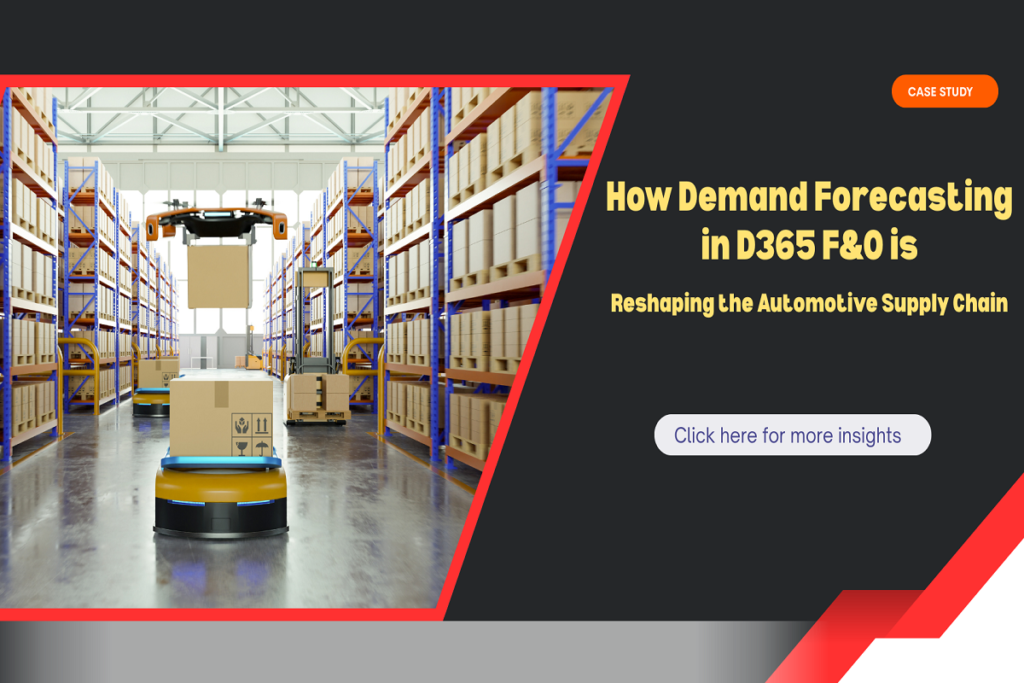
How Demand Forecasting in D365 F&O is Reshaping the Automotive Supply Chain

In today’s fast-evolving automotive industry, supply chain efficiency is no longer optional—it’s a competitive necessity. With fluctuating customer demand, global disruptions, and complex supplier networks, manufacturers need intelligent systems that go beyond traditional planning. This case study explores how a mid-sized automotive components manufacturer transformed its supply chain using Microsoft Dynamics 365 Finance & Operations (D365 F&O), leveraging advanced demand forecasting capabilities to drive efficiency, accuracy, and growth. Client Overview The client is a rapidly growing automotive parts manufacturer supplying OEMs and aftermarket distributors. With operations across multiple regions, the company faced increasing pressure to optimize inventory, reduce lead times, and improve service levels. Business Challenges Before implementing D365 F&O, the company struggled with: Solution Implemented To address these challenges, the company implemented Microsoft Dynamics 365 Finance & Operations with a strong focus on demand forecasting and supply chain optimization. Key Features Deployed Implementation Approach The implementation followed a structured and phased approach: Results & Business Impact: After implementing D365 F&O, the company achieved significant improvements: 1. Improved Forecast Accuracy 2. Optimized Inventory Management 3. Faster Decision-Making 4. Enhanced Supplier Collaboration 5. Increased Customer Satisfaction Key Use Case: Handling Seasonal Demand One of the biggest breakthroughs came during peak seasonal demand. Previously, the company either overproduced or faced shortages. With D365 F&O: This resulted in zero stockouts during peak season—a first for the company. Why Demand Forecasting Matters in Automotive Supply Chains The automotive sector is uniquely complex due to: By leveraging advanced forecasting in Microsoft Dynamics 365 Finance & Operations, businesses can: Lessons Learned From this transformation, several key insights emerged: Conclusion Demand forecasting is no longer just a planning tool—it’s a strategic enabler. This case study demonstrates how implementing Microsoft Dynamics 365 Finance & Operations can revolutionize automotive supply chains by improving accuracy, agility, and efficiency. Organizations that embrace intelligent forecasting are better equipped to navigate uncertainty, meet customer expectations, and achieve sustainable growth. FAQs Q1. What makes D365 F&O demand forecasting different from traditional methods?Ans: It uses AI and machine learning to analyze multiple variables, providing more accurate and dynamic forecasts. Q2. Can demand forecasting reduce inventory costs?Ans: Yes, by aligning stock levels with actual demand, it minimizes overstocking and stockouts. Q3. Is D365 F&O suitable for mid-sized automotive companies?Ans: Absolutely. It is scalable and can be tailored to meet the needs of growing businesses. Q4. How long does it take to implement demand forecasting in D365 F&O?Ans: Typically, it depends on data readiness and customization needs, but most implementations range from a few months to a year.

How Demand Forecasting in D365 F&O is Reshaping the Automotive Supply Chain Read More »

7-emerging-erp-trends-every-business-should-watch-in-2026

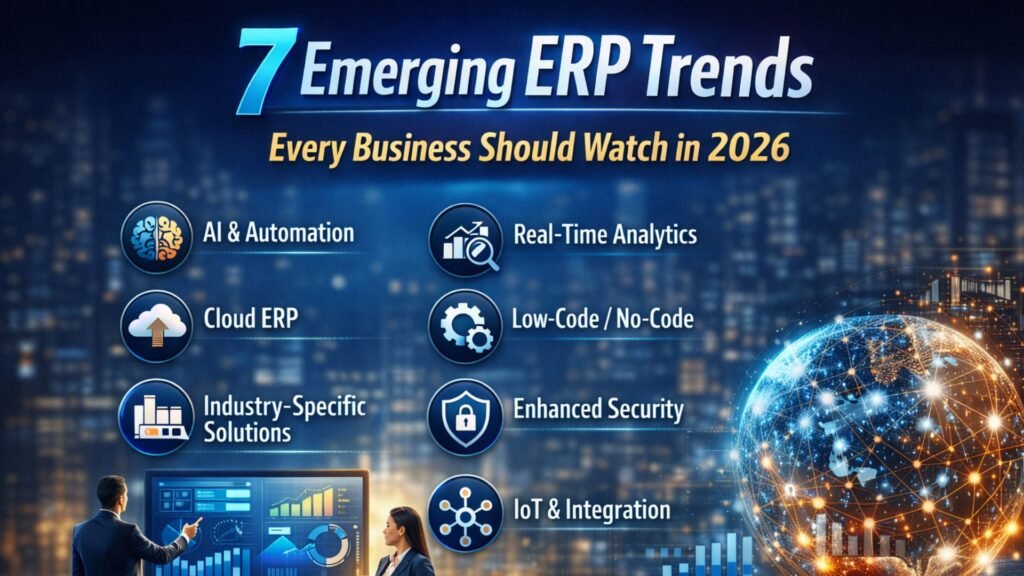
7 Emerging ERP Trends Every Business Should Watch in 2026

In 2026, Enterprise Resource Planning (ERP) systems are no longer just back-office tools—they are becoming intelligent, cloud-powered, and data-driven platforms that drive strategic decision-making. Businesses across industries are rapidly adopting modern ERP solutions like Microsoft Dynamics 365 to stay competitive, agile, and future-ready. If your organization is planning digital transformation or looking for a reliable Microsoft Dynamics 365 partner in Texas, USA, understanding these trends is crucial. This article explores the top 7 ERP trends shaping 2026, along with their business impact and why companies are investing heavily in solutions like Microsoft Dynamics 365 Business Central in Texas, USA. 1. AI-Driven and Autonomous ERP Systems Artificial Intelligence (AI) is the most transformative ERP trend in 2026. Modern ERP platforms are embedding AI capabilities that go beyond automation. Key Capabilities: ERP systems are evolving from reactive tools to proactive systems, helping businesses anticipate problems before they occur. According to recent insights, AI-driven ERP allows companies to automate workflows and improve decision-making significantly. Business Impact: Companies leveraging Microsoft Dynamics 365 Support Services in Texas, USA, are already benefiting from AI-powered insights that improve operational efficiency and reduce human error. 2. Cloud-First ERP Adoption Cloud ERP is no longer optional—it is the standard. Businesses are moving away from legacy on-premise systems toward scalable, cloud-based platforms. Why Cloud ERP is Dominating: Studies show that the majority of ERP deployments are now cloud or hybrid rather than traditional on-premise systems. Business Impact: Organizations adopting MS Dynamics 365 implementation services in Texas, USA, benefit from flexibility, scalability, and seamless updates. 3. Industry-Specific ERP Solutions One-size-fits-all ERP systems are fading. Businesses now prefer industry-specific ERP solutions tailored to their needs. Examples: Industry-focused ERP reduces customization costs and accelerates implementation. Business Impact: Companies working with Microsoft Dynamics consulting services in Texas, USA, can deploy tailored ERP solutions faster with better ROI. 4. Real-Time Data and Advanced Analytics In 2026, data is the backbone of decision-making. ERP systems are integrating advanced analytics and real-time dashboards. Key Features: Businesses can now make data-driven decisions instantly, improving agility and competitiveness. Business Impact: With D365 migration services in Texas, USA, companies can upgrade legacy systems to real-time analytics platforms that deliver actionable insights. 5. Low-Code/No-Code ERP Customization Customization used to be expensive and time-consuming. Now, low-code and no-code platforms are transforming ERP development. Benefits: This trend empowers business users to modify workflows without deep technical expertise. Business Impact: Organizations using Microsoft Dynamics 365 Business Central in Texas, USA, can quickly adapt ERP systems to changing business needs. 6. Enhanced Cybersecurity and Compliance With increasing cloud adoption, cybersecurity has become a top priority. Key Security Trends: ERP systems must comply with global regulations like GDPR and data protection laws. Business Impact: Businesses relying on Microsoft Dynamics 365 Support Services in Texas, USA, benefit from robust security frameworks that protect sensitive data. 7. ERP Integration with Emerging Technologies (IoT, AI, and Automation) ERP systems are now integrating with emerging technologies like IoT, machine learning, and automation tools. Examples: These integrations create a connected ecosystem, enabling smarter operations and improved efficiency. Business Impact: Companies adopting Microsoft Dynamics consulting services in Texas, USA, can leverage these integrations to optimize business processes and drive innovation. Why Microsoft Dynamics 365 is Leading ERP Innovation Microsoft Dynamics 365 is at the forefront of these trends, offering: Businesses partnering with a Microsoft Dynamics 365 partner in Texas, USA, gain access to advanced ERP capabilities that align with modern business needs. How to Prepare for ERP Trends in 2026 To stay competitive, businesses should: 1. Invest in Cloud ERP: Upgrade legacy systems with D365 migration services in Texas, USA. 2. Focus on AI and Automation: Adopt ERP systems that support intelligent automation. 3. Choose the Right Partner: Work with experienced providers offering MS Dynamics 365 implementation services in Texas, USA. 4. Prioritize Security: Ensure your ERP system meets compliance and security standards. 5. Enable Data-Driven Decision Making: Leverage real-time analytics for better business outcomes. Conclusion ERP systems in 2026 are smarter, faster, and more connected than ever before. From AI-driven automation to cloud-first architectures, these trends are reshaping how businesses operate. Organizations that embrace these innovations—especially through solutions like Microsoft Dynamics 365 Business Central in Texas, USA—will gain a competitive edge in efficiency, scalability, and decision-making. Partnering with the right Microsoft Dynamics 365 partner in Texas, USA, ensures a smooth transition and long-term success in this rapidly evolving ERP landscape. FAQs Q1. What are the key ERP trends in 2026? Ans: The major trends include AI-driven ERP, cloud adoption, real-time analytics, industry-specific solutions, low-code customization, enhanced cybersecurity, and integration with emerging technologies. Q2. Why is cloud ERP important in 2026? Ans: Cloud ERP offers scalability, flexibility, cost efficiency, and real-time access to data, making it essential for modern businesses. Q3. How does AI improve ERP systems? Ans: AI enhances ERP by automating processes, predicting trends, detecting anomalies, and providing actionable insights. Q4. What is the role of Microsoft Dynamics 365 in ERP trends? Ans: Microsoft Dynamics 365 leads ERP innovation with AI capabilities, cloud integration, and industry-specific solutions. Q5. How can businesses choose the right ERP partner? Ans: Businesses should look for experience, industry expertise, and services like Microsoft Dynamics 365 Support Services in Texas, USA, and MS Dynamics 365 Implementation Services in Texas, USA. Q6. What are the benefits of ERP migration? Ans: ERP migration improves system performance, enables real-time analytics, enhances security, and supports scalability. Q7. Is ERP suitable for small businesses? Ans: Yes, modern cloud ERP solutions like Microsoft Dynamics 365 Business Central in Texas, USA, are designed for businesses of all sizes. Q8. What industries benefit most from ERP in 2026? Ans: Manufacturing, retail, healthcare, logistics, and finance are among the top industries benefiting from ERP systems.

7 Emerging ERP Trends Every Business Should Watch in 2026 Read More »

data-migration-done-right-avoiding-pitfalls-during-your-erp-upgrade

Data Migration Done Right: Avoiding Pitfalls During Your ERP Upgrade

Upgrading your ERP system is a critical step toward modernizing your business operations, improving efficiency, and gaining real-time insights. However, one of the most complex and high-risk aspects of any ERP upgrade is data migration. Whether you’re transitioning from a legacy system or upgrading within the same ecosystem, poor data migration can derail your entire project. For organizations planning to adopt Microsoft Dynamics 365, particularly in regions like Texas, ensuring a smooth migration process is essential. Businesses often rely on a trusted Microsoft Dynamics 365 partner in Texas, USA, to guide them through this journey. In this comprehensive guide, we will explore the importance of data migration, common pitfalls, and best practices to ensure a seamless ERP upgrade. Understanding Data Migration in ERP Upgrades Data migration is the process of transferring data from your existing systems into a new ERP platform, such as Microsoft Dynamics 365 Business Central or Dynamics 365 Finance & Operations. This process includes: Organizations investing in Microsoft Dynamics 365 Business Central in Texas, USA, often underestimate the complexity of migration, assuming it is just a technical step rather than a strategic process. Why Data Migration Matters Data is the backbone of your ERP system. Poor data quality leads to: Engaging experts offering Microsoft Dynamics 365 Support Services in Texas, USA, ensures your data remains accurate, consistent, and usable throughout the transition. Common Data Migration Pitfalls 1. Lack of a Clear Migration Strategy Many businesses jump into ERP upgrades without a defined migration plan. Without proper planning: Working with professionals providing MS Dynamics 365 Implementation services in Texas, USA, helps define a structured roadmap. 2. Poor Data Quality Migrating outdated, duplicate, or incorrect data is a major mistake. Common issues include: Before migration, data must be cleaned and standardized—something experienced teams offering D365 migration services in Texas, USA prioritize. 3. Underestimating Data Complexity ERP systems store vast amounts of interconnected data: Failing to map relationships correctly can break workflows in the new system. This is where Microsoft Dynamics consulting services in Texas, USA, play a vital role. 4. Insufficient Testing Skipping testing phases can lead to: Testing should include: 5. Lack of Stakeholder Involvement Data migration is not just an IT task. Business users must be involved to: 6. Ignoring Compliance and Security Sensitive data must be handled securely during migration. Risks include: A trusted Microsoft Dynamics 365 partner in Texas, USA, ensures compliance with data protection standards. 7. No Backup or Rollback Plan If something goes wrong during migration, you need a fallback. Without backups: Best Practices for Successful Data Migration 1. Define Clear Objectives Start by identifying: This reduces clutter and improves system performance. 2. Conduct Data Audit and Cleansing Before migration: Organizations leveraging Microsoft Dynamics 365 Support Services in Texas, USA, often perform multiple rounds of data cleansing. 3. Choose the Right Migration Approach There are different migration strategies: The right approach depends on your business size and complexity. 4. Use Automated Tools Modern ERP platforms offer migration tools that: Professionals offering D365 migration services in Texas, USA, utilize advanced tools for efficient data transfer. 5. Ensure Proper Data Mapping Data mapping defines how old data aligns with the new system structure. This includes: Incorrect mapping is one of the leading causes of migration failure. 6. Perform Multiple Testing Cycles Testing should not be a one-time activity. Best practices include: 7. Train Your Team User adoption is critical. Training ensures: Working with experts in MS Dynamics 365 Implementation services in Texas, USA, ensures proper user training. 8. Monitor Post-Migration Performance After go-live: Role of Microsoft Dynamics 365 in Data Migration Microsoft Dynamics 365 offers robust capabilities for data migration, including: Organizations adopting Microsoft Dynamics 365 Business Central in Texas, USA, benefit from streamlined migration processes and improved data visibility. Why Partner with Experts? ERP migration is not a DIY project. Partnering with specialists offering Microsoft Dynamics consulting services in Texas, USA, provides: A reliable Microsoft Dynamics 365 partner in Texas, USA, ensures your migration is efficient, secure, and aligned with your business goals. Real-World Example Consider a manufacturing company upgrading to Dynamics 365. Without proper data migration: After engaging experts providing D365 migration services in Texas, USA, they: Result: A successful ERP upgrade with improved efficiency and accuracy. Key Benefits of Proper Data Migration When done right, data migration offers: Frequently Asked Questions (FAQs) Q1. What is data migration in ERP? Ans: Data migration is the process of transferring data from a legacy system to a new ERP system like Microsoft Dynamics 365 while ensuring accuracy and integrity. Q2. Why is data cleansing important before migration? Ans: Data cleansing removes duplicates, errors, and inconsistencies, ensuring that only high-quality data is migrated. Q3. How long does ERP data migration take? Ans: The timeline depends on: It can range from a few weeks to several months. Q4. What are the risks of poor data migration? Ans: Risks include: Q5. Should I migrate all legacy data? Not necessarily. It’s best to: Q6. What tools are used for Dynamics 365 data migration? Ans: Common tools include: Q7. How can I ensure data accuracy after migration? By: Q8. Why hire a Microsoft Dynamics 365 partner? Ans: A Microsoft Dynamics 365 partner in Texas, USA, brings expertise, reduces risks, and ensures a smooth migration process. Q9. What is the cost of data migration services? Ans: Costs vary based on: Working with providers offering Microsoft Dynamics 365 Support Services in Texas, USA, helps optimize costs. Q10. Can data migration be automated? Ans: Yes, modern tools and services enable automation, improving speed and accuracy. Conclusion Data migration is the foundation of a successful ERP upgrade. Ignoring its complexity can lead to costly mistakes, operational disruptions, and failed implementations. However, with proper planning, the right tools, and expert guidance, you can ensure a seamless transition. Businesses investing in Microsoft Dynamics 365 Business Central in Texas, USA, or leveraging MS Dynamics 365 Implementation services in Texas, USA, must prioritize data migration as a strategic initiative—not just a technical task. By partnering with experienced

Data Migration Done Right: Avoiding Pitfalls During Your ERP Upgrade Read More »

the-role-of-change-management-in-a-successful-d365-deployment

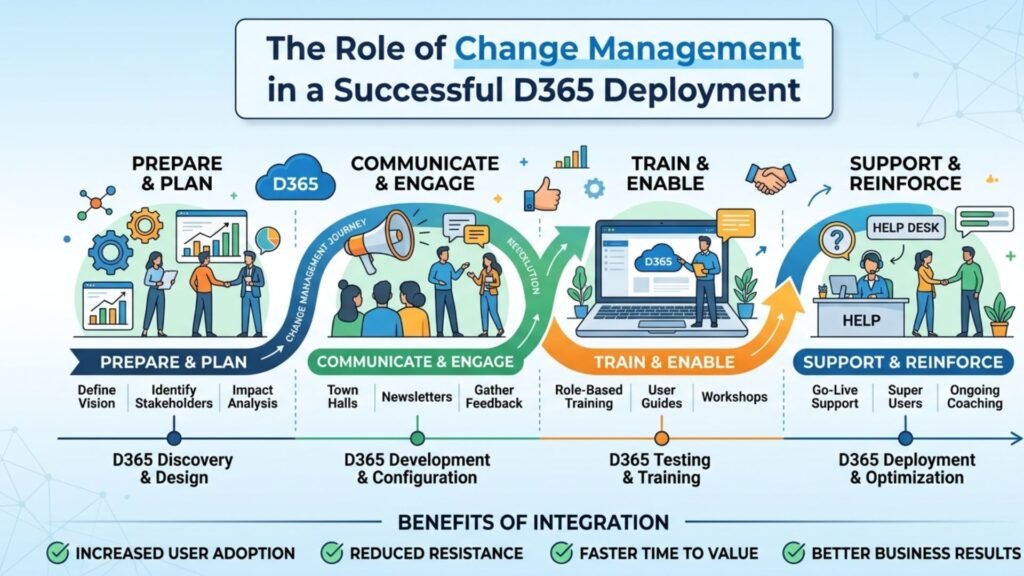
The Role of Change Management in a Successful D365 Deployment

In today’s fast-evolving digital landscape, implementing an advanced ERP system like Microsoft Dynamics 365 (D365) is no longer just a technological upgrade—it’s a strategic transformation. Organizations across industries are investing heavily in D365 to streamline operations, enhance customer experiences, and gain real-time insights. However, many implementations fall short of expectations—not because of technology limitations, but due to poor change management. Change management is the backbone of a successful D365 deployment. It ensures that employees, processes, and organizational culture align with the new system, maximizing ROI and minimizing disruption. Whether you are working with a Microsoft Dynamics 365 partner in Texas, USA, or managing the project internally, a strong change management strategy can make or break your deployment. Understanding Change Management in D365 Deployment Change management is a structured approach to transitioning individuals, teams, and organizations from their current state to a desired future state. In the context of D365, it involves preparing users to adopt new workflows, tools, and processes introduced by the system. Unlike traditional ERP implementations, D365 introduces cloud-based flexibility, automation, AI-driven insights, and integration capabilities. While these benefits are transformative, they also require employees to adapt quickly—making change management critical. Why Change Management is Critical for D365 Success 1. Ensures User Adoption: One of the biggest challenges in ERP implementation is resistance to change. Employees often feel comfortable with legacy systems and processes. Without proper training and communication, they may resist adopting D365. A reliable Microsoft Dynamics 365 Business Central partner in Texas, USA, often emphasizes user adoption through structured onboarding, training sessions, and ongoing support. 2. Minimizes Business Disruptions: During implementation, businesses may experience temporary disruptions in workflows. Effective change management ensures that employees understand new processes, reducing downtime and maintaining productivity. Organizations leveraging MS Dynamics 365 Implementation services in Texas, USA, benefit from phased rollouts and proactive planning that minimizes operational risks. 3. Aligns Business Goals with Technology: D365 is not just a software upgrade—it’s a business transformation tool. Change management ensures that the system aligns with organizational goals, improving efficiency and decision-making. Key Components of Change Management in D365 Deployment 1. Leadership and Stakeholder Engagement: Successful change starts at the top. Leadership must actively support the D365 implementation and communicate its importance to the organization. Working with a trusted Microsoft Dynamics consulting service in texas usa provider helps ensure that leadership remains aligned with project goals and timelines. 2. Clear Communication Strategy: Communication is essential throughout the deployment lifecycle. Employees need to understand: Regular updates, workshops, and feedback sessions help build trust and reduce uncertainty. 3. Training and Skill Development: Training is one of the most crucial aspects of change management. Without proper training, even the most advanced system will fail. Organizations using Microsoft Dynamics 365 Support Services in Texas, USA often provide: 4. Process Redesign D365 implementation often requires re-engineering existing processes to align with best practices. Change management ensures that employees understand and embrace these new workflows. 5. Change Impact Assessment: Before implementation, it’s important to assess how changes will impact different departments. This helps in: The Role of a D365 Partner in Change Management Choosing the right partner is critical for a successful deployment. A professional Microsoft Dynamics 365 partner in Texas, USA, brings expertise, tools, and methodologies that simplify change management. What a Good Partner Provides: Similarly, organizations opting for D365 migration services in Texas, USA, benefit from seamless data migration combined with user readiness strategies. Common Challenges in D365 Change Management 1. Resistance to Change: Employees may fear job loss or struggle to adapt to new systems. Addressing these concerns early is essential. 2. Lack of Training: Insufficient training leads to poor system utilization and frustration among users. 3. Poor Communication: Without clear communication, employees may feel disconnected from the transformation process. 4. Inadequate Leadership Support: If leadership is not actively involved, the project may lose direction and momentum. Best Practices for Effective Change Management 1. Start Early: Change management should begin at the planning stage—not after implementation. 2. Involve Employees: Engage employees in the process by gathering feedback and involving them in decision-making. 3. Use Change Champions: Identify key employees who can act as advocates for the new system and help others adapt. 4. Provide Continuous Support: Post-implementation support is crucial for long-term success. Many companies rely on Microsoft Dynamics 365 Support Services in Texas, USA, to ensure ongoing optimization. 5. Measure Success Track key performance indicators (KPIs) such as: The Impact of Change Management on ROI Organizations that invest in change management see significantly higher returns from their D365 implementation. Benefits include: By partnering with experts in MS Dynamics 365 Implementation services in Texas, USA, businesses can maximize these benefits while minimizing risks. Change Management in D365 Business Central Deployments For small and mid-sized businesses, Microsoft Dynamics 365 Business Central in Texas, USA, offers a scalable and cost-effective ERP solution. However, even SMBs require structured change management to ensure success. Key focus areas include: Role of Technology in Supporting Change Management Modern tools and technologies play a vital role in change management, including: These tools help organizations monitor progress and identify areas for improvement. Future Trends in D365 Change Management As businesses continue to evolve, change management strategies are also transforming. Key trends include: 1. AI-Driven Adoption Insights: AI tools analyze user behavior to identify training needs and improve adoption rates. 2. Personalized Training Programs: Customized learning paths based on user roles and skill levels. 3. Continuous Change Management: Instead of a one-time effort, change management is becoming an ongoing process. Conclusion A successful D365 deployment is not just about implementing technology—it’s about transforming the way people work. Change management plays a critical role in ensuring that this transformation is smooth, effective, and sustainable. By working with experienced providers of Microsoft Dynamics consulting services in Texas, USA, businesses can navigate the complexities of change and unlock the full potential of Microsoft Dynamics 365. From planning and training to post-implementation support, a strong change management strategy ensures that your investment delivers long-term value. Whether you’re leveraging D365

The Role of Change Management in a Successful D365 Deployment Read More »

why-unified-retail-erp-is-the-key-to-omnichannel-success

Why Unified Retail ERP Is the Key to Omnichannel Success

In today’s retail landscape, customers don’t think in channels. They browse online, compare prices on mobile, visit physical stores, and expect home delivery or curbside pickup—without friction. Retailers, however, often struggle because their systems don’t talk to each other. Separate POS, inventory, finance, eCommerce, and CRM platforms create data silos, delays, and costly mistakes. This is where a unified retail ERP becomes a game-changer. A modern solution like Microsoft Dynamics 365 Business Central brings all retail operations into one connected platform. From inventory and supply chain to finance and customer engagement, everything works in sync. For retailers looking to scale in competitive markets like Texas, partnering with a trusted Microsoft Dynamics 365 expert can make all the difference. Let’s explore why unified retail ERP is the backbone of omnichannel success—and how the right strategy, implementation, and support can transform your retail business. Understanding Omnichannel Retail in 2026 Omnichannel retail means delivering a seamless customer experience across all touchpoints—online stores, marketplaces, social commerce, brick-and-mortar outlets, and mobile apps. Customers expect: Without a unified ERP, managing these expectations becomes chaotic. Disconnected systems lead to stockouts, overselling, delayed reporting, and frustrated customers. The Core Problem: Fragmented Retail Systems Many retailers still operate on: This fragmentation causes: Retailers often try to “patch” systems together, but integrations without a centralized ERP create complexity rather than clarity. What Is a Unified Retail ERP? A unified retail ERP integrates: All departments operate on a single source of truth. Data updates in real time, ensuring that online orders immediately reflect inventory levels in stores and warehouses. This is especially powerful with Microsoft Dynamics 365 Business Central in Texas USA, where retailers are scaling rapidly and require enterprise-level performance with mid-market flexibility. Why Unified ERP Drives Omnichannel Success 1. Real-Time Inventory Visibility Customers hate seeing “In Stock” online only to find it unavailable at checkout. Unified ERP ensures accurate stock updates across: Retailers can enable buy-online-pickup-in-store (BOPIS) without risk of stock errors. 2. Centralized Financial Control Retail margins are thin. Without real-time financial tracking, profitability suffers. A unified ERP gives: Retailers working with a Microsoft Dynamics 365 partner in Texas USA gain localized expertise, ensuring compliance with state and federal regulations. 3. Faster Order Processing Orders from eCommerce, POS, and marketplaces flow into one system. Automated workflows reduce manual intervention and errors. This improves: 4. Smarter Demand Forecasting Data-driven forecasting helps retailers: Advanced analytics inside Dynamics 365 enable retailers to make proactive decisions instead of reactive ones. The Texas Retail Opportunity Texas is one of the fastest-growing retail markets in the United States. With expanding eCommerce penetration and strong brick-and-mortar presence, businesses must adopt scalable technology. Retailers searching for: are actively investing in digital transformation to stay competitive. Implementation: Turning Strategy into Execution Technology alone does not guarantee success. Proper implementation is critical. Step 1: Business Process Assessment A certified Microsoft Dynamics 365 partner in Texas USA evaluates: Step 2: System Design & Customization ERP is configured to match retail operations: Step 3: Data Migration Legacy data from outdated systems is securely transferred. This is where D365 migration services in Texas USA play a vital role in preventing data loss and downtime. Step 4: Training & Go-Live Teams receive hands-on training to ensure smooth adoption. A phased rollout reduces risk. The Importance of Ongoing Support Even the best ERP requires continuous optimization. Retailers benefit from: Support ensures that your ERP evolves with your business rather than becoming outdated. Migration from Legacy Systems Many retailers still operate on: Migrating to Dynamics 365 Business Central provides: Professional D365 migration services in Texas USA ensure minimal disruption during transition. Unified ERP and Customer Experience Omnichannel success is ultimately about customer experience. With unified ERP, retailers can: Customers receive consistent service whether shopping online or in-store. Data-Driven Retail Growth Modern ERP integrates analytics tools that provide: Retailers no longer rely on guesswork. Decisions are backed by real-time data. Scalability for Multi-Location Retailers As retailers expand across Texas and beyond, they require: Unified ERP ensures growth without operational chaos. Security and Compliance Retailers handle sensitive data: Cloud-based Dynamics 365 offers: Working with experienced Microsoft Dynamics consulting services in Texas USA ensures security best practices are implemented correctly. Cost Savings Through Automation Manual processes cost time and money. ERP automation reduces: Automation improves operational efficiency and increases profitability. Retail Use Case Example Imagine a retailer with: Before ERP: After implementing Microsoft Dynamics 365 Business Central: That’s the power of unified ERP. Why Choosing the Right Partner Matters Technology success depends on expertise. A certified Microsoft Dynamics 365 partner in Texas USA provides: The right partner ensures your ERP investment delivers measurable ROI. Future of Omnichannel Retail Retail in 2026 and beyond will be driven by: Unified ERP acts as the foundation for all future innovation. Without it, retailers remain stuck in fragmented operations. Final Thoughts Omnichannel success is not about being present on multiple platforms—it’s about delivering a unified experience across all of them. A unified retail ERP like Microsoft Dynamics 365 Business Central connects finance, operations, inventory, and customer data into one intelligent system. Retailers in Texas looking for: should prioritize working with an experienced Microsoft Dynamics 365 partner in Texas USA to ensure seamless deployment and long-term success.

Why Unified Retail ERP Is the Key to Omnichannel Success Read More »

why-choosing-the-right-d365-partner-determines-project-success

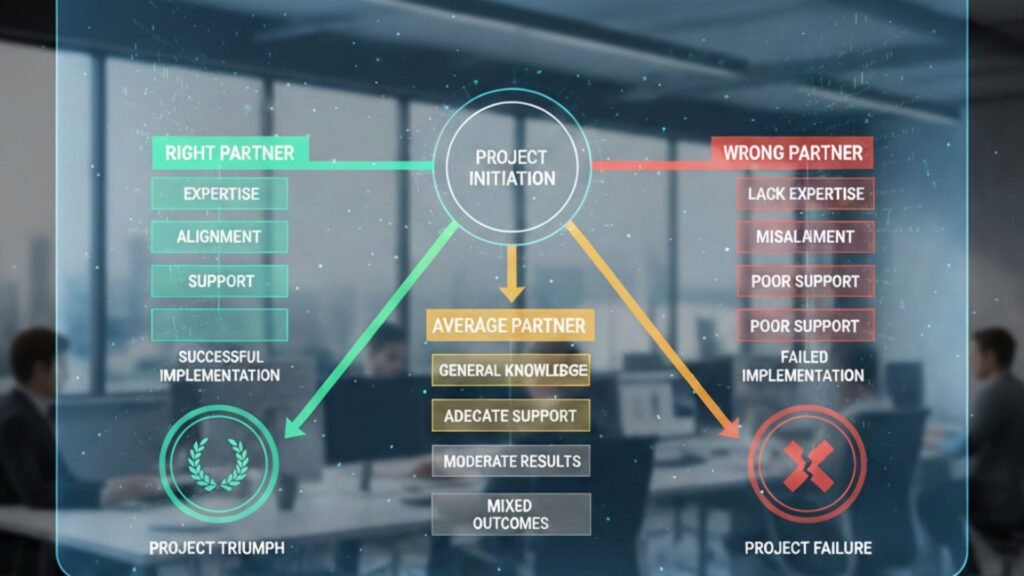
Why Choosing the Right D365 Partner Determines Project Success

Digital transformation is no longer optional—it’s survival. Businesses across industries are moving toward intelligent ERP and CRM platformse to stay competitive, agile, and data-driven. At the center of this transformation stands Microsoft Dynamics 365, a powerful cloud-based business application platform designed to unify finance, operations, sales, supply chain, and customer engagement. But here’s the truth most companies realize too late: The success of your Dynamics 365 project depends less on the software—and more on the partner you choose. If you’re searching for a microsoft dynamics 365 partner in texas usa or evaluating MS Dynamics 365 implementation services in texas usa, this article will help you understand why the right partner makes all the difference. Understanding Microsoft Dynamics 365: More Than Just an ERP Microsoft Dynamics 365 is not just another ERP system. It’s a comprehensive ecosystem that integrates seamlessly with tools like Microsoft 365, Power BI, and Microsoft Azure. From finance and operations to customer service and supply chain, it offers modular solutions tailored to industry needs. However, its flexibility and customization capabilities require deep technical expertise and strategic planning. That’s where a trusted microsoft dynamics consulting services in texas usa provider becomes essential. Why the Right D365 Partner Matters More Than You Think 1. Strategy Before Technology A skilled partner doesn’t start with features—they start with your business goals. The right microsoft dynamics 365 partner in texas usa will conduct a detailed assessment of your processes, challenges, growth plans, and compliance requirements. They align the technology roadmap with your business objectives to ensure measurable ROI. Choosing the wrong partner? You risk misaligned modules, unnecessary customization, and budget overruns. 2. Industry-Specific Expertise Texas has a diverse business ecosystem—manufacturing, oil & gas, retail, healthcare, distribution, and more. An experienced partner offering microsoft dynamics 365 business central in texas usa understands local industry regulations, tax structures, and operational nuances. For example: Without domain expertise, your ERP may technically work—but strategically fail. 3. Seamless Implementation Determines Adoption Let’s talk about MS Dynamics 365 Implementation services in texas usa. Implementation is where most projects succeed—or collapse. It involves: A qualified partner follows structured methodologies like Agile or Sure Step to minimize disruption. They ensure your team is trained, confident, and ready to adopt the new system. Poor implementation leads to: 4. Business Central: The Smart Choice for Growing Companies Many mid-sized companies in Texas are choosing Dynamics 365 Business Central to modernize their operations. If you’re searching for microsoft dynamics 365 business central in texas usa, you’re likely looking for: But Business Central isn’t “plug and play.” A knowledgeable partner customizes it to match your workflows, ensuring you don’t have to change your business to fit the software. 5. Migration: The Most Sensitive Phase Upgrading from legacy systems like NAV or on-premise ERP requires careful planning. That’s why D365 migration services in texas usa are critical. Migration involves: A seasoned partner ensures your transition to Dynamics 365 is smooth, secure, and minimally disruptive. A poorly managed migration can result in: 6. Ongoing Support Defines Long-Term Success ERP success doesn’t end at go-live. It begins there. Reliable Microsoft Dynamics 365 Support Services in texas usa ensure: Business needs evolve. Regulations change. Markets shift. Your partner must provide long-term support and proactive optimization. Without strong support, even the best implementation can deteriorate over time. Key Qualities to Look for in a Microsoft Dynamics 365 Partner in Texas USA ✔ Certified Microsoft Experts :Ensure the partner is officially certified and recognized within the Microsoft ecosystem. ✔ Proven Track Record : Request case studies and client references from Texas-based businesses. ✔ Local Presence : A local microsoft dynamics 365 partner in texas usa understands regional compliance requirements and offers on-site support when needed. ✔ Industry Experience: Look for vertical-specific knowledge relevant to your business sector. ✔ Transparent Pricing & Methodology : Avoid hidden costs. A reliable partner clearly defines scope, timelines, and deliverables. Risks of Choosing the Wrong Partner Let’s be clear—choosing the wrong partner can cost more than just money. ❌ Budget Overruns ❌ Project Delays ❌ Incomplete Functionality ❌ Low User Adoption ❌ Security Vulnerabilities ERP failures often stem from poor implementation, not poor software. Why Texas Businesses Need Specialized Dynamics 365 Consulting Services Texas is home to a rapidly growing business economy. From Houston’s energy sector to Dallas-Fort Worth’s logistics and Austin’s tech ecosystem, companies require scalable and secure ERP solutions. A strong microsoft dynamics consulting services in texas usa provider helps organizations: They don’t just implement software—they build digital transformation strategies. The Role of Cloud and Security in D365 Projects Modern ERP solutions run in the cloud. Dynamics 365 leverages Microsoft Azure to ensure: A competent partner ensures: Security isn’t optional—it’s mandatory. Cost vs Value: The Real Investment Many organizations focus solely on pricing when selecting a partner. But ERP is not a short-term expense—it’s a long-term strategic investment. The right MS Dynamics 365 Implementation services in texas usa provider delivers: Cheaper isn’t always better. Expertise pays for itself. Real-World Scenario: Success vs Failure Company A: Chose a low-cost vendor without industry experience. Result? 8-month delay, data issues, frustrated employees. Company B : Partnered with an experienced microsoft dynamics 365 partner in texas usa. Result? On-time go-live, 30% operational efficiency improvement within 6 months. The difference? The partner. Future-Proofing Your Business with the Right Partner Technology evolves. Microsoft continuously updates Dynamics 365 with AI, automation, and analytics enhancements. A forward-thinking Microsoft Dynamics 365 Support Services in texas usa provider ensures: Your ERP should grow with you—not limit you. Conclusion: Your Partner Is Your Project’s Backbone Choosing the right microsoft dynamics 365 partner in texas usa determines whether your ERP project becomes a growth engine—or an expensive mistake. From microsoft dynamics 365 business central in texas usa to D365 migration services in texas usa, the expertise, strategy, and support of your partner define your return on investment. When selecting a partner, ask yourself: Because in the world of ERP, success is not about the software—it’s about who implements it. Frequently Asked Questions (FAQs) Q1.

Why Choosing the Right D365 Partner Determines Project Success Read More »

247 ERP Monitoring Why Your Business Can’t Afford Downtime

24/7 ERP Monitoring: Why Your Business Can’t Afford Downtime

In today’s hyper-connected business environment, downtime is no longer a minor inconvenience—it’s a direct threat to revenue, productivity, customer trust, and long-term growth. Whether you operate in manufacturing, retail, distribution, healthcare, or professional services, your ERP system is the backbone of daily operations. From finance and inventory to supply chain and customer service, every process depends on seamless system performance. That’s why 24/7 ERP monitoring has become a business necessity rather than a luxury. For organizations leveraging Microsoft Dynamics solutions, especially those working with a trusted microsoft dynamics 365 partner in texas usa, proactive ERP monitoring ensures business continuity, security, and performance optimization around the clock. This article explores why downtime is so costly, how continuous monitoring protects your business, and why partnering with experts offering Microsoft Dynamics 365 Support Services in texas usa is critical for long-term success. The True Cost of ERP Downtime Many businesses underestimate the real impact of ERP downtime. The costs go far beyond IT inconvenience. 1. Revenue Loss If your ERP system goes down: For manufacturers and distributors using microsoft dynamics 365 business central in texas usa, even a few hours of downtime can delay shipments and impact customer satisfaction. 2. Productivity Decline When ERP systems fail: Teams spend more time fixing problems than focusing on strategic tasks. 3. Customer Experience Damage Customers expect: System outages damage credibility and may drive customers toward competitors. 4. Compliance & Data Risks ERP systems manage sensitive financial and operational data. Downtime or system instability can: This is where reliable Microsoft Dynamics 365 Support Services in texas usa become essential. Why 24/7 ERP Monitoring Matters Traditional IT support models are reactive—issues are addressed only after they occur. In contrast, 24/7 monitoring is proactive. Here’s how it transforms ERP management: 1. Real-Time System Monitoring Continuous monitoring tracks: Potential bottlenecks are detected before they escalate into system failures. 2. Early Issue Detection Proactive monitoring tools can identify: Working with a microsoft dynamics 365 partner in texas usa ensures that alerts are handled immediately by certified experts. 3. Reduced Downtime When issues are identified early: This is particularly important for companies that rely on MS Dynamics 365 Implementation services in texas usa to manage large-scale operations. 4. Enhanced Security ERP systems are prime targets for cyberattacks. Continuous monitoring enables: Security is not optional—it’s mandatory. The Role of Microsoft Dynamics 365 in Modern Businesses Microsoft Dynamics 365 has become one of the most powerful ERP platforms globally. Businesses in Texas and across the USA increasingly rely on: Organizations using microsoft dynamics 365 business central in texas usa benefit from cloud flexibility, scalability, and real-time insights. However, even cloud systems require ongoing monitoring and optimization. Cloud does not mean “self-managing.” A trusted provider offering microsoft dynamics consulting services in texas usa ensures your system performs at peak efficiency 24/7. Key Components of 24/7 ERP Monitoring 1. Infrastructure Monitoring 2. Application Performance Monitoring (APM) 3. Integration Monitoring Modern ERP systems integrate with: Monitoring ensures APIs and integrations function without interruption. 4. Database Monitoring ERP systems rely heavily on databases. Continuous checks prevent: 5. Security Monitoring Companies investing in D365 migration services in texas usa especially need enhanced monitoring during and after migration. Why Businesses in Texas Need Proactive ERP Support Texas is home to: High-volume operations mean ERP systems process thousands of transactions daily. Any downtime can result in significant operational disruption. A reliable microsoft dynamics 365 partner in texas usa understands regional business demands and provides localized support with global expertise. ERP Monitoring During Migration ERP migration is a high-risk phase. Organizations upgrading legacy systems must ensure continuous monitoring during transition. Companies utilizing D365 migration services in texas usa benefit from: Without proactive monitoring, post-migration performance issues can compromise user adoption. How 24/7 Monitoring Improves ROI ERP systems are major investments. Continuous monitoring helps maximize ROI by: Organizations working with MS Dynamics 365 Implementation services in texas usa gain long-term value through structured monitoring strategies. Reactive Support vs Proactive Monitoring Reactive Support 24/7 Monitoring Fix after failure Prevent before failure Longer downtime Minimal disruption Higher repair costs Predictable maintenance Frustrated users Confident workforce Modern businesses can no longer afford reactive-only IT models. Industries That Cannot Afford ERP Downtime Manufacturing: Production halts when ERP fails. Retail : POS and inventory systems rely on ERP data. Healthcare: Patient records and billing systems depend on uptime. Distribution: Logistics and warehouse operations require real-time visibility. Companies using microsoft dynamics 365 business central in texas usa in these industries require constant performance assurance. Key Benefits of Partnering with an Expert A certified microsoft dynamics 365 partner in texas usa provides: Additionally, microsoft dynamics consulting services in texas usa offer strategic improvements, not just technical fixes. Disaster Recovery & Business Continuity ERP downtime can result from: 24/7 monitoring integrates with disaster recovery strategies: Companies using Microsoft Dynamics 365 Support Services in texas usa benefit from structured business continuity frameworks. Signs Your Business Needs 24/7 ERP Monitoring If your organization recently adopted D365 migration services in texas usa, post-go-live monitoring is critical. Future of ERP Monitoring: AI & Predictive Analytics Advanced monitoring solutions now use AI to: Businesses leveraging microsoft dynamics consulting services in texas usa gain access to intelligent performance management tools. Building a Monitoring Strategy A strong ERP monitoring framework includes: Partnering with experts offering MS Dynamics 365 Implementation services in texas usa ensures your monitoring strategy aligns with business goals. Conclusion ERP downtime is not just an IT issue—it’s a business risk. In an always-on economy, customers expect uninterrupted service, real-time information, and operational reliability. Organizations using microsoft dynamics 365 business central in texa usa must prioritize 24/7 ERP monitoring to protect revenue, ensure compliance, and maintain competitive advantage. By partnering with a trusted microsoft dynamics 365 partner in texas usa that delivers comprehensive Microsoft Dynamics 365 Support Services in texas usa, businesses can move from reactive troubleshooting to proactive optimization. In a world where every minute counts, continuous monitoring is not optional—it’s essential. Frequently Asked Questions (FAQs) Q 1. What is 24/7 ERP monitoring? Ans:

24/7 ERP Monitoring: Why Your Business Can’t Afford Downtime Read More »

retail-analytics-with-ls-central-turning-data-into-decisions

Retail Analytics with LS Central: Turning Data into Decisions

In today’s hyper-competitive retail environment, data is no longer just a by product of transactions—it is a strategic asset. Retailers that can capture, analyze, and act on data in real time gain a decisive edge in customer experience, inventory optimization, pricing strategy, and profitability. This is where Retail Analytics with LS Central, powered by Microsoft Dynamics 365 Business Central, plays a transformative role. LS Central combines Point of Sale (POS), ERP, inventory, customer management, and analytics into a single, unified platform. When deployed by an experienced Microsoft Dynamics 365 partner in Texas, USA, LS Central enables retailers to turn raw data into actionable insights that drive smarter decisions and sustainable growth. This article explores how LS Central empowers retailers with advanced analytics, the role of Microsoft Dynamics 365 Business Central, and why partnering with the right Dynamics experts in Texas is critical for success. Understanding Retail Analytics in the Modern Retail Landscape Retail analytics refers to the process of collecting, analyzing, and interpreting data from multiple retail touchpoints—stores, POS systems, eCommerce platforms, supply chains, and customer interactions. The goal is simple: make better decisions faster. Traditional retail systems often operate in silos. Sales data lives in one system, inventory in another, and customer data in a third. This fragmentation leads to delayed insights, manual reporting, and reactive decision-making. With LS Central integrated into Microsoft Dynamics 365 Business Central, retailers gain a single source of truth. Every transaction, return, stock movement, and customer interaction is captured in real time—creating a powerful analytics foundation. What Is LS Central and Why It Matters for Retail Analytics LS Central is an industry-specific retail solution built on Microsoft Dynamics 365 Business Central. It is designed for retailers, restaurants, and hospitality businesses that need end-to-end operational visibility. Core Capabilities of LS Central Because LS Central runs natively on Business Central, analytics are not bolted on—they are embedded into daily operations. Retailers can analyze data at store level, regional level, or enterprise level without complex integrations. For organizations working with a trusted Microsoft Dynamics 365 Business Central partner in Texas, USA, LS Central becomes a powerful decision-making engine rather than just a retail system. Turning Retail Data into Actionable Insights 1. Sales Performance Analytics LS Central provides deep visibility into sales data across channels and locations. Retailers can analyze: These insights allow retailers to quickly identify best-selling products, underperforming SKUs, and revenue opportunities. With guidance from Microsoft Dynamics consulting services in Texas, USA, businesses can customize dashboards that align with strategic goals. 2. Inventory Analytics and Demand Forecasting Inventory is one of the biggest cost centers in retail. Overstocking ties up capital, while stockouts lead to lost sales and unhappy customers. LS Central delivers advanced inventory analytics, including: By leveraging these insights, retailers can reduce carrying costs, improve availability, and optimize supply chains. Many organizations rely on Microsoft Dynamics 365 Support Services in Texas, USA to continuously fine-tune inventory analytics as their business scales. 3. Customer Behavior and Loyalty Analytics Modern retail success depends on understanding customer behavior. LS Central captures rich customer data directly at the POS and across digital channels. Retailers can analyze: These insights help retailers design personalized promotions, targeted marketing campaigns, and loyalty rewards that increase retention and lifetime value. When implemented through MS Dynamics 365 Implementation services in Texas, USA, customer analytics become a competitive differentiator rather than an afterthought. 4. Pricing and Promotion Effectiveness Pricing decisions are no longer guesswork. LS Central enables retailers to measure the real impact of pricing strategies and promotions. Analytics reveal: Retailers working with a Microsoft Dynamics 365 partner in Texas, USA can use these insights to create data-driven pricing models that balance competitiveness and profitability. 5. Store and Workforce Performance Analytics LS Central goes beyond sales and inventory—it also delivers operational analytics. Retailers can track: These insights help managers optimize staffing, improve store layouts, and enhance customer service. With ongoing Microsoft Dynamics 365 Support Services in Texas, USA, businesses can continuously refine KPIs and reports to match evolving retail strategies. The Power of Microsoft Dynamics 365 Business Central in Retail Analytics At the heart of LS Central lies Microsoft Dynamics 365 Business Central, a modern cloud ERP designed for scalability and intelligence. Why Business Central Is Ideal for Retail Analytics Retailers using Microsoft Dynamics 365 Business Central in Texas, USA benefit from enterprise-grade analytics without the complexity of traditional ERP systems. When combined with LS Central, Business Central delivers a unified analytics ecosystem. Enhancing Analytics with Power BI Integration One of the most powerful advantages of LS Central is its native integration with Microsoft Power BI. Retailers can transform raw data into interactive dashboards and visual reports. Power BI enables: With expert Microsoft Dynamics consulting services in Texas, USA, retailers can design custom Power BI dashboards that align with business objectives and leadership needs. Migration and Analytics Transformation with D365 Many retailers still rely on legacy POS and ERP systems that limit analytics capabilities. Migrating to LS Central and Business Central unlocks modern, data-driven retail operations. Through D365 migration services in Texas, USA, businesses can: A structured migration strategy ensures minimal disruption while maximizing analytics value from day one. Why Choose a Microsoft Dynamics 365 Partner in Texas, USA Implementing LS Central is not just a technical project—it is a business transformation. The right partner makes all the difference. A certified Microsoft Dynamics 365 partner in Texas, USA provides: From initial assessment to post-go-live optimization, experienced MS Dynamics 365 Implementation services in Texas, USA ensure retailers fully leverage analytics capabilities. Ongoing Support and Continuous Improvement Retail analytics is not a one-time setup. As markets change and customer expectations evolve, analytics must adapt. With reliable Microsoft Dynamics 365 Support Services in Texas, USA, retailers can: Continuous support ensures analytics remain aligned with business goals over the long term. The Future of Retail Analytics with LS Central As AI, machine learning, and predictive analytics become more accessible, LS Central is well-positioned to support the next generation of retail intelligence. Future-ready capabilities include: Retailers investing today in

Retail Analytics with LS Central: Turning Data into Decisions Read More »

Choosing the Right Microsoft Dynamics Support

Choosing the Right Microsoft Dynamics Support: Shared, Dedicated, or Incident-Based?

Microsoft Dynamics is a robust suite of tools designed to streamline enterprise resource planning (ERP) and customer relationship management (CRM). To maintain its performance and ensure efficiency, choosing the right Microsoft Dynamics support model is essential. Businesses can select from three primary options: Shared Support, Dedicated Support, or Incident-Based Support. Each model serves different needs, making it crucial to understand their benefits and ideal use cases. Shared Support Shared Support involves a support team assisting multiple clients. This model is cost-effective and suitable for businesses with straight forward needs. Key Benefits: Best for: Small to medium-sized businesses needing occasional support without high costs. Dedicated Support Dedicated Support provides exclusive assistance with a team of professionals assigned solely to your business. Key Benefits: Best for: Medium to large businesses with complex systems requiring constant attention and minimal downtime. Incident-Based Support Incident-Based Support works on a pay-per-incident basis. Businesses pay only when they need assistance. Key Benefits: Best for: Small businesses with minimal issues or organizations needing backup support. How to Choose the Right Model When selecting a support model, consider the following factors: Conclusion Choosing the right Microsoft Dynamics support model—Shared, Dedicated, or Incident-Based—depends on your business needs, budget, and resources. Shared support is affordable and ideal for occasional issues, dedicated support ensures personalized and proactive assistance, and incident-based support provides flexibility for minimal requirements. By evaluating your business requirements carefully, you can select a support model that keeps your Microsoft Dynamics environment running smoothly and efficiently.

Choosing the Right Microsoft Dynamics Support: Shared, Dedicated, or Incident-Based? Read More »

cloud-erp-is-the-cornerstone-of-digital-transformation

Why Cloud ERP Is the Cornerstone of Digital Transformation

Digital transformation is no longer a choice—it is an urgent necessity for organizations looking to remain competitive, scalable, and resilient in the modern business landscape. As companies strive to automate workflows, enhance data visibility, improve customer experiences, and adopt emerging technologies, one platform has emerged as the heart of this movement: Cloud ERP. Cloud ERP systems such as Microsoft Dynamics 365 Business Central, SAP Cloud ERP, Oracle NetSuite, and others provide businesses with connected intelligence, automation, mobility, and real-time insights that traditional on-premises systems simply cannot match. Whether a business is operating in Texas, New York, London, or anywhere else in the world, cloud ERP empowers them to transform internal processes and deliver greater value to customers. In this article, we explore why Cloud ERP is considered the cornerstone of digital transformation, how it drives business success, and why organizations across industries—especially those engaging with a Microsoft Dynamics 365 Partner in Texas, USA—are prioritizing cloud migration as a central part of their digital strategy. What Is Cloud ERP and Why Does It Matter? Cloud ERP is an enterprise management system hosted on the cloud, enabling businesses to access integrated modules such as finance, supply chain, HR, inventory, operations, manufacturing, and CRM through a secure, web-based platform. Unlike traditional ERP systems that rely on hardware, servers, and physical infrastructure, cloud ERP offers: This modern architecture positions Cloud ERP as the foundation of digital transformation. Organizations across the United States increasingly rely on cloud-based business solutions delivered by providers offering Microsoft Dynamics 365 Support Services in Texas, USA to stay competitive. Why Cloud ERP Is the Cornerstone of Digital Transformation Digital transformation is built on key pillars such as innovation, agility, data intelligence, automation, and customer-focused strategies. Cloud ERP strengthens all these pillars with unmatched capabilities. Enables Real-Time Data-Driven Decision Making One of the biggest barriers to transformation is siloed data. Traditional systems store information separately, causing delays, inaccuracies, and inconsistencies. Cloud ERP eliminates silos by integrating all business functions into a single platform with real-time data access. This empowers decision-makers to: For businesses in Texas, partnering with a Microsoft Dynamics 365 Partner in Texas, USA ensures expert implementation of real-time dashboards, Power BI analytics, and intelligent reporting tools. Supports Intelligent Automation Across Processes Automation is a defining element of digital transformation. Cloud ERP incorporates advanced automation features such as: With platforms like Microsoft Dynamics 365 Business Central in Texas, USA, organizations can automate repetitive processes, reduce manual errors, and significantly improve operational efficiency. Highly Scalable for Business Growth Digital transformation is incomplete without scalability. Businesses must continuously adapt to new customers, markets, and technologies. Cloud ERP provides: This flexibility supports rapid growth without infrastructure burden. Companies often rely on MS Dynamics 365 Implementation Services in Texas, USA to scale their ERP environment as business needs evolve. Strengthens Customer Experience and Service Quality Modern customers expect seamless digital interactions, quick service, and personalized engagement. Cloud ERP enables businesses to improve customer experience by integrating ERP with CRM and POS systems. Benefits include: Businesses leveraging Microsoft Dynamics 365 Support Services in Texas, USA can enhance customer satisfaction using D365’s built-in CRM and service modules. Enhances Supply Chain Visibility and Agility A resilient supply chain is essential for digital transformation—especially post-pandemic. Cloud ERP helps businesses gain end-to-end visibility into their supply chain. Capabilities include: Dynamics 365 Supply Chain Management is widely used in Texas-based manufacturing and distribution sectors, often supported by local D365 Migration Services in Texas, USA. Reduces IT Costs and Infrastructure Overheads Cloud ERP significantly lowers total cost of ownership (TCO). Companies no longer need to invest in: Cloud providers handle: This cost efficiency gives businesses more budget to invest in innovation, marketing, and growth. Improves Security and Compliance Security is a top priority in digital transformation. Cloud ERP platforms offer: When organizations work with a Microsoft Dynamics 365 Partner in Texas, USA, they also receive region-specific compliance support. Seamless Integration With Emerging Technologies Cloud ERP acts as the central hub integrating disruptive technologies like: For example, Dynamics 365 integrates easily with Microsoft tools such as Power Platform, Azure IoT, Teams, and AI Builder—making digital workflows more powerful. Cloud ERP Use Cases Across Industries Cloud ERP delivers transformative value across multiple industries: Manufacturing Retail Healthcare Hospitality Logistics & Distribution Businesses in Texas increasingly rely on Microsoft Dynamics 365 Business Central in Texas, USA for industry-specific digital transformation. The Role of Dynamics 365 in Cloud-Based Digital Transformation Microsoft Dynamics 365 is one of the most powerful Cloud ERP solutions, combining ERP and CRM capabilities in a single intelligent platform. Why Businesses in Texas Prefer Dynamics 365 Businesses can implement or migrate with confidence using D365 Migration Services in Texas, USA and MS Dynamics 365 Implementation Services in Texas, USA. Benefits of Cloud ERP in Digital Transformation ✔ Operational Benefits ✔ Financial Benefits ✔ Customer Benefits ✔ Strategic Benefits Steps to Successfully Adopt Cloud ERP Define Transformation Goals : Align ERP capabilities with business objectives. Choose the Right Cloud ERP Vendor : Selecting a trusted partner—like a Microsoft Dynamics 365 Partner in Texas, USA—ensures proper deployment. Migrate Data Strategically : Use professional D365 migration services in Texas, USA for secure, validated migration. Adopt Automation & Analytics Early : Maximize ROI with AI, Power BI, RPA, and IoT integrations. Train Users & Encourage Adoption : Successful digital transformation requires an empowered workforce. Conclusion Cloud ERP is not just a software upgrade—it is the center piece of digital transformation. It equips businesses with real-time intelligence, end-to-end automation, strong security, and the agility required to compete in a digital-first world. From improved customer experiences to better financial management and enhanced operational efficiency, Cloud ERP accelerates digital maturity and prepares businesses for the future. Organizations in Texas and across the United States are rapidly embracing cloud ERP solutions like Microsoft Dynamics 365 Business Central in Texas, USA to unlock innovation and gain a competitive advantage. With expert partners offering MS Dynamics 365 Implementation Services in Texas, USA and Microsoft Dynamics 365 Support Services in Texas, USA, businesses

Why Cloud ERP Is the Cornerstone of Digital Transformation Read More »