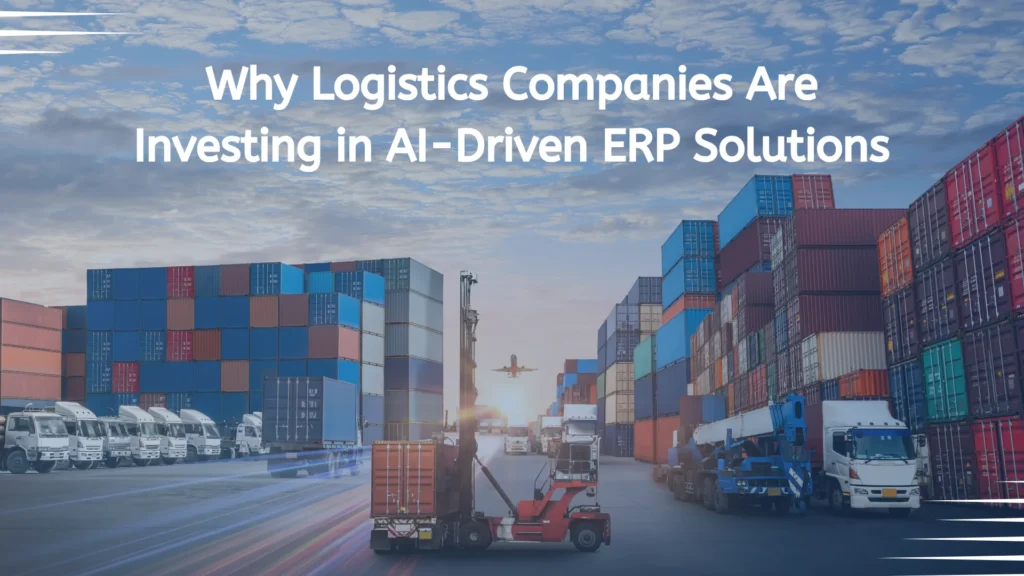
The logistics industry is going through a major digital transformation. Rising customer expectations, supply chain disruptions, increasing fuel costs, and the need for real-time visibility are pushing logistics companies to modernize their operations. Traditional ERP systems are no longer enough to manage the growing complexity of transportation, warehousing, inventory, and customer service. This is why many businesses are now investing in AI-driven ERP solutions powered by platforms like Microsoft Dynamics 365 Business Central and other intelligent enterprise applications.
AI-driven ERP systems combine automation, predictive analytics, machine learning, and real-time data insights to help logistics companies improve operational efficiency and make smarter business decisions. Organizations that rely on a reliable Microsoft ecosystem and a trusted Microsoft Dynamics 365 Partner are gaining a competitive advantage through digital transformation.
The Growing Challenges in the Logistics Industry
Logistics companies operate in a highly dynamic environment. They face multiple operational challenges every day, including delayed shipments, fluctuating demand, warehouse inefficiencies, inventory inaccuracies, and rising transportation costs. Managing these processes manually or with outdated systems can lead to operational bottlenecks and poor customer experiences.
Modern logistics companies also need better visibility across their supply chains. Customers now expect real-time shipment tracking, faster deliveries, and proactive communication. At the same time, businesses must control costs while maintaining service quality. AI-driven ERP solutions address these challenges by integrating intelligent technologies into core business operations.
This is one reason why organizations are increasingly investing in Microsoft Dynamics 365 Business Central and advanced ERP platforms supported by professional Microsoft Dynamics consulting service providers.
What Is an AI-Driven ERP Solution?
An AI-driven ERP solution is an enterprise resource planning system enhanced with artificial intelligence capabilities. These systems can analyze large amounts of business data, identify patterns, automate repetitive tasks, and provide predictive insights for decision-making.
Unlike traditional ERP systems, AI-powered ERP platforms can:
- Predict inventory shortages
- Forecast customer demand
- Optimize transportation routes
- Automate invoice processing
- Detect operational inefficiencies
- Improve warehouse management
- Enhance customer service through intelligent automation
Solutions such as Microsoft Dynamics 365 Business Central help logistics companies streamline operations while improving agility and scalability.
Why Logistics Companies Are Choosing AI-Driven ERP Solutions
1. Improved Supply Chain Visibility
One of the biggest reasons logistics companies are investing in AI-driven ERP systems is the need for complete supply chain visibility. Logistics managers need accurate real-time information about inventory, shipments, suppliers, and warehouse operations.
AI-enabled ERP systems collect and process data from multiple sources to provide centralized visibility across the organization. This allows businesses to monitor shipments in real time, identify delays early, and make faster operational decisions.
A reliable Microsoft Dynamics 365 partner can help organizations implement dashboards and analytics tools that improve operational transparency.
2. Predictive Demand Forecasting
Demand fluctuations can create serious operational challenges in logistics. Overstocking increases storage costs, while understocking leads to delays and customer dissatisfaction.
AI-driven ERP platforms use historical data, market trends, and customer behavior to predict future demand more accurately. This helps logistics companies optimize inventory levels and improve warehouse planning.
Businesses investing in MS Dynamics 365 implementation services often gain access to advanced forecasting tools that reduce waste and improve profitability.
3. Route Optimization and Transportation Efficiency
Transportation costs are one of the largest expenses for logistics companies. AI-powered ERP systems can optimize delivery routes by analyzing traffic conditions, weather data, fuel consumption, and delivery schedules.
Smart route optimization helps companies:
- Reduce fuel expenses
- Improve delivery times
- Increase driver productivity
- Lower operational costs
- Improve customer satisfaction
Companies leveraging Microsoft Dynamics Consulting Services can integrate AI capabilities that improve transportation planning and fleet management.
4. Warehouse Automation and Inventory Management
Warehouse operations are becoming increasingly complex due to growing order volumes and customer expectations. AI-driven ERP systems automate many warehouse processes, including inventory tracking, order picking, and stock replenishment.
These intelligent systems reduce manual errors and improve operational efficiency. Real-time inventory visibility also helps businesses avoid stock shortages and excess inventory.
With the support of Microsoft Dynamics 365 Support Services, logistics companies can maintain smooth warehouse operations and quickly resolve technical issues.
5. Better Customer Experience
Customer expectations in the logistics industry have changed significantly. Businesses now expect accurate delivery timelines, real-time shipment tracking, and fast issue resolution.
AI-powered ERP systems improve customer experiences by providing better communication, predictive delivery estimates, and automated customer service workflows. Chatbots and AI-based support tools can handle customer inquiries more efficiently.
Organizations using Microsoft Dynamics 365 Business Central can create customer-centric logistics operations that improve satisfaction and loyalty.
6. Reduced Operational Costs
Cost reduction is one of the biggest advantages of AI-driven ERP systems. Automation minimizes manual work, improves productivity, and reduces errors across operations.
AI also helps businesses identify inefficiencies in supply chain processes, inventory management, and transportation operations. These insights allow logistics companies to optimize resources and reduce unnecessary expenses.
A trusted Microsoft Dynamics 365 Partner can help organizations maximize ERP ROI through customized implementation strategies.
7. Faster and Smarter Decision-Making
Traditional reporting methods often provide delayed or incomplete information. AI-powered ERP systems deliver real-time analytics and predictive insights that support faster decision-making.
Managers can quickly analyze operational performance, identify risks, and respond to changing business conditions. This agility is especially important in the logistics industry, where delays and disruptions can impact customer relationships and profitability.
Companies investing in Microsoft Dynamics consulting services gain access to data-driven business intelligence tools that support long-term growth.
The Role of Microsoft Dynamics 365 in Logistics Transformation
Microsoft Dynamics 365 Business Central has become one of the most popular ERP platforms for logistics and supply chain companies. The platform offers integrated capabilities for finance, inventory management, warehousing, purchasing, sales, and customer service.
When combined with AI technologies, the platform provides powerful automation and analytics features that help logistics businesses improve operational performance.
Key benefits include the following:
- Centralized business management
- Real-time reporting and analytics
- AI-powered forecasting
- Automated workflows
- Cloud-based scalability
- Improved data security
- Better collaboration across departments
Working with an experienced Microsoft Dynamics 365 Partner ensures successful ERP deployment and customization based on business needs.
Why Cloud-Based ERP Is Important for Logistics Companies
Cloud ERP solutions are becoming increasingly important in logistics because they provide flexibility, scalability, and remote accessibility. Logistics operations often involve multiple warehouses, transportation hubs, and teams working across different locations.
Cloud-based AI ERP systems enable employees to access real-time data from anywhere. This improves collaboration and operational responsiveness.
Cloud ERP platforms also reduce infrastructure costs and simplify software updates. Many companies now prefer cloud-based D365 migration services to modernize outdated legacy systems.
The Importance of ERP Migration Services
Many logistics businesses still rely on outdated legacy ERP systems that lack AI capabilities and modern integrations. Migrating to a modern ERP platform can significantly improve operational efficiency and business agility.
Professional D365 migration services help organizations transition smoothly from legacy systems to advanced cloud-based ERP platforms.
Benefits of ERP migration include:
- Improved system performance
- Better scalability
- Enhanced security
- Real-time analytics
- AI-powered automation
- Reduced maintenance costs
- Better integration capabilities
Successful migration projects require careful planning, data management, employee training, and technical expertise.
How AI Improves Risk Management in Logistics
The logistics industry is highly vulnerable to disruptions caused by weather conditions, supply shortages, transportation delays, and geopolitical issues.
AI-powered ERP systems help companies identify potential risks before they become major problems. Predictive analytics can forecast delays, supplier issues, and inventory shortages, allowing businesses to take proactive action.
This improves operational resilience and minimizes business disruptions. Organizations using Microsoft Dynamics 365 Support Services can also maintain system reliability and operational continuity.
The Future of AI-Driven ERP in Logistics
AI-driven ERP technology will continue to evolve in the coming years. Emerging technologies such as IoT, machine learning, robotic process automation, and advanced analytics will further transform logistics operations.
Future ERP systems may offer:
- Autonomous warehouse management
- Intelligent demand forecasting
- Advanced robotic automation
- Real-time supply chain simulations
- AI-powered customer interactions
- Predictive maintenance for fleets
Companies that invest early in AI-driven ERP solutions will be better positioned to adapt to changing market demands and maintain a competitive advantage.
Choosing the Right Microsoft Dynamics Partner
Selecting the right implementation partner is critical for ERP success. An experienced Microsoft Dynamics 365 Partner can help businesses customize ERP solutions, integrate AI tools, manage data migration, and provide long-term support.
When choosing a partner, logistics companies should evaluate the following:
- Industry experience
- Technical expertise
- Migration capabilities
- Support services
- AI integration experience
- Customer success stories
- Scalability solutions
Reliable MS Dynamics 365 implementation services providers can ensure smoother deployment and faster business transformation.
Conclusion
Logistics companies are investing in AI-driven ERP solutions to manage complex operations more effectively and efficiently. AI-powered ERP platforms improve visibility, automate processes, optimize transportation, enhance customer service, and reduce operational costs.
Solutions like Microsoft Dynamics 365 Business Central are helping organizations modernize their supply chains and achieve long-term growth. Businesses that work with experienced Microsoft Dynamics 365 partner providers and leverage professional Microsoft Dynamics 365 support services can maximize the value of their ERP investments.
As the logistics industry continues to evolve, AI-driven ERP technology will play a critical role in improving operational efficiency, agility, and competitiveness. Companies that embrace digital transformation today will be better prepared for the future of logistics and supply chain management.
FAQs
Q1. Why are logistics companies investing in AI-driven ERP solutions?
Ans: Logistics companies are investing in AI-driven ERP solutions to improve operational efficiency, automate repetitive tasks, optimize supply chains, reduce costs, and enhance customer experiences through real-time data insights and predictive analytics.
Q2. How does Microsoft Dynamics 365 Business Central help logistics companies?
Ans: Microsoft Dynamics 365 Business Central helps logistics companies manage inventory, transportation, warehousing, finance, and customer operations from a centralized platform while providing AI-powered automation and analytics capabilities.
Q3. What are the benefits of D365 migration services?
Ans: D365 migration services help businesses move from outdated systems to modern cloud ERP platforms, improving scalability, security, reporting, and operational efficiency.
Q4. Why is choosing the right Microsoft Dynamics 365 Partner important?
Ans: A reliable Microsoft Dynamics 365 Partner ensures successful ERP implementation, customization, integration, training, and long-term support for business growth.
Q5. How does AI improve warehouse management?
Ans: AI improves warehouse management by automating inventory tracking, optimizing storage space, predicting stock requirements, reducing errors, and improving order fulfillment efficiency.
Q6. What role do Microsoft Dynamics 365 Support Services play?
Ans: Microsoft Dynamics 365 Support Services help businesses maintain ERP performance, resolve technical issues, implement updates, and ensure uninterrupted operations.
Q7. What industries benefit from AI-driven ERP solutions?
Ans: Industries such as logistics, manufacturing, retail, healthcare, distribution, and eCommerce benefit significantly from AI-driven ERP systems because they require real-time data visibility and operational automation.