dynamics 365 customer engagement partner

saas-concept

How Our Managed Services Reduce ERP TCO for US & Canadian Companies

Enterprise Resource Planning (ERP) systems are powerful tools that help organizations streamline operations, improve decision-making, and drive growth. However, managing an ERP system—whether Microsoft Dynamics 365, SAP, Oracle, or another platform—often comes with a hefty price tag. From licensing and infrastructure to upgrades, customizations, and support, many companies in the US and Canada struggle to keep their Total Cost of Ownership (TCO) under control. This is where ERP Managed Services can transform the game. By outsourcing day-to-day management, monitoring, and optimization to a trusted provider, businesses reduce IT overhead, improve efficiency, and extend the value of their ERP investment. In this article, we’ll explore how managed services reduce ERP TCO, what benefits they deliver, and why US and Canadian companies should consider this strategic approach. Understanding ERP Total Cost of Ownership (TCO) ERP TCO goes beyond the initial implementation costs. It includes: Without proper planning, these costs quickly spiral, making ERP feel more like a burden than a business enabler. How Managed Services Reduce ERP TCO 1. Optimized Licensing and Usage Many companies overpay for licenses they don’t fully use. Managed service providers (MSPs) perform license audits, identify underutilized subscriptions, and recommend right-sizing strategies. By aligning licenses with actual business needs, companies in the US and Canada save significantly on recurring costs. 2. Reduced Infrastructure Expenses Cloud-based ERP hosting through a managed service model eliminates the need for heavy on-premises hardware investments. Providers offer scalable cloud infrastructure, ensuring companies pay only for the resources they need while avoiding unnecessary infrastructure maintenance costs. 3. Proactive Monitoring and Maintenance Unplanned downtime can be costly. Managed services provide 24/7 monitoring and preventive maintenance, reducing disruptions and ensuring system stability. By resolving issues before they become critical, businesses avoid revenue losses and productivity declines. 4. Streamlined Upgrades and Patches ERP systems evolve constantly, but upgrades can be resource-intensive. MSPs handle regular updates, patches, and compliance requirements, keeping your ERP environment secure and current without requiring internal IT teams to spend long hours managing upgrades. 5. Access to Expert Resources Without Hiring Costs Hiring skilled ERP consultants in USA, especially in the US and Canadian markets where IT salaries are high. With managed services, companies gain access to a pool of certified ERP experts—covering functional, technical, and integration areas—at a fraction of the cost. 6. Enhanced Security and Compliance Managed service providers bring advanced security tools and compliance frameworks tailored to regional regulations like GDPR, HIPAA, or Canadian data privacy laws. This reduces the risk of fines, penalties, or costly breaches. 7. Scalability and Flexibility Business needs change—mergers, acquisitions, new market entries. Managed services allow companies to scale ERP environments up or down without massive reinvestments. This flexibility keeps costs predictable and aligned with actual growth. 8. Improved User Productivity By providing helpdesk support, user training, and troubleshooting, MSPs ensure employees spend less time struggling with ERP issues and more time focusing on business outcomes. Higher productivity translates to measurable cost savings. Why US and Canadian Companies Benefit Most Companies in the US and Canada often operate across multiple states, provinces, or even countries. This creates complexities in compliance, taxation, and supply chain processes. ERP managed services address these regional challenges by: With high labor costs in North America, outsourcing ERP management helps companies control budgets without sacrificing performance. Case Example: Reducing ERP TCO with Managed Services A mid-sized manufacturing company in Ontario relied on Microsoft Dynamics 365 Finance & Operations but struggled with escalating IT costs. They faced: By partnering with a managed services provider, the company: Result: A 35% overall reduction in ERP TCO within the first year. Additional Business Benefits Beyond Cost Savings While TCO reduction is the most obvious advantage, managed services also provide: Choosing the Right Managed Services Provider When selecting a provider in the US or Canada, businesses should look for: FAQs About ERP Managed Services and TCO Q 1. What is the average cost savings from ERP managed services?Ans: Most companies see 20–40% savings in TCO within the first 12–18 months, depending on system complexity and scope. Q 2. Can small and mid-sized businesses benefit from ERP managed services?Ans: Absolutely. SMEs often benefit even more, since they typically lack the in-house expertise required for ERP management. Q 3. Do managed services replace my internal IT team?Ans: Not necessarily. They complement your IT staff, allowing them to focus on innovation while the provider handles ERP administration. Q 4. How do managed services improve ERP security?Ans: Providers implement advanced security monitoring, regular patches, and compliance checks, reducing the risk of breaches and penalties. Q 5. Is ERP managed services only for cloud systems?Ans: No. Managed services support both on-premises and cloud ERP environments, or hybrid models, depending on your business needs. Conclusion Managing an ERP system in-house can quickly escalate costs, drain resources, and distract from strategic priorities. For companies in the US and Canada, partnering with an ERP managed services provider is a smart way to reduce TCO, improve system reliability, and unlock innovation. By optimizing licensing, infrastructure, and operations, managed services deliver not only cost efficiency but also the agility businesses need to stay competitive. Whether you’re running Microsoft Dynamics 365, SAP, or another ERP, the managed services model ensures you get the most value from your investment while maintaining financial control.

How Our Managed Services Reduce ERP TCO for US & Canadian Companies Read More »

erp-support-outsourcing

ERP Support Outsourcing: A Case for Cost Reduction in the U.S.

In today’s fast-paced business environment, companies across North America are constantly seeking ways to reduce operational costs while maintaining efficiency and innovation. Enterprise Resource Planning (ERP) systems, particularly Microsoft Dynamics 365, have become central to this mission by streamlining operations, enhancing decision-making, and enabling scalability. However, with ERP systems come challenges—chief among them being support and maintenance costs. Many businesses in the U.S. and Canada are now turning to ERP support outsourcing as a strategic move to lower expenses while ensuring robust performance. Whether you’re working with a Dynamics 365 Business Central Partner in Canada, collaborating with a Microsoft Dynamics 365 Partner in Canada, or evaluating ERP consulting options, outsourcing ERP support offers clear financial and operational benefits. In this article, we’ll explore why outsourcing ERP support is becoming the preferred choice, how it reduces costs, and what role trusted partners play in ensuring ERP success. The Rising Cost of ERP Support Implementing ERP solutions like Microsoft Dynamics 365 is a significant investment. While the upfront implementation cost is substantial, ongoing support and maintenance often account for an even larger portion of the ERP lifecycle expenses. Some of the key cost drivers for ERP support include: Outsourcing ERP support addresses these challenges while enabling organizations to focus on their core business objectives. Why Outsource ERP Support? Outsourcing ERP support provides businesses with access to specialized skills, 24×7 availability, and cost-efficient solutions. Let’s break down the benefits: 1. Lower Labor Costs Hiring and retaining in-house ERP specialists is expensive. Outsourcing to a Microsoft Dynamics 365 Partner in Canada allows businesses in the U.S. to access top-tier expertise without the high salary burden. 2. Access to Certified Experts ERP outsourcing partners employ certified consultants with in-depth knowledge of Microsoft Dynamics ERP. This ensures quick troubleshooting, smooth upgrades, and efficient issue resolution. 3. Round-the-Clock Support Unlike in-house teams restricted by working hours, outsourced providers offer Microsoft Dynamics 365 Support Services in Canada with 24×7 coverage, ensuring business continuity. 4. Scalability & Flexibility Whether it’s a minor issue, a full ERP migration and implementation services in Canada project, or an upgrade to Business Central, outsourcing provides flexibility to scale services as needed. 5. Focus on Core Business By outsourcing ERP support, companies free up internal resources, allowing them to focus on strategy, growth, and customer engagement. The Role of Trusted Partners Outsourcing ERP support is only effective when businesses partner with the right experts. A reliable Dynamics 365 Business Central Partner in Canada or a Microsoft Dynamics 365 ERP implementation services in Canada provider ensures that businesses not only reduce costs but also improve efficiency and system performance. Trusted partners provide: Case Study: Consider a mid-sized manufacturing firm in the U.S. that was struggling with rising ERP maintenance costs. Their in-house IT team lacked the expertise to handle advanced Dynamics 365 upgrades and troubleshooting. By outsourcing support to a Microsoft Dynamics 365 Partner in Canada, the company: This example demonstrates the tangible ROI of outsourcing ERP support. ERP Migration and Implementation Services in Canada and the U.S. For many businesses, outsourcing doesn’t just stop at support—it also extends to ERP migration and implementation services in Canada and the U.S. Moving from legacy systems like Dynamics GP or NAV to Microsoft Dynamics 365 Business Central requires expertise, planning, and flawless execution. By partnering with an experienced ERP Consultant in Canada, companies ensure: This approach not only saves money but also accelerates digital transformation. Key Cost Reduction Strategies Through Outsourcing Outsourced ERP partners apply several strategies to optimize costs: Future of ERP Support Outsourcing in the U.S. With the growing adoption of cloud-based ERP solutions like Dynamics 365, outsourcing is no longer just an option—it’s becoming the norm. U.S. businesses recognize that outsourcing ERP support to trusted global partners offers cost-efficiency, scalability, and expertise that in-house teams often cannot match. By leveraging Microsoft Dynamics 365 Support Services in Canada, U.S. companies can focus on what matters most—innovation, growth, and customer satisfaction—while enjoying significant cost savings. FAQs on ERP Support Outsourcing Q1. Why should U.S. companies outsource ERP support to partners in Canada?Ans: Outsourcing to a Microsoft Dynamics 365 Partner in Canada provides cost-effective services, access to certified experts, and round-the-clock support compared to building an expensive in-house team. Q2. Can outsourcing partners handle ERP migrations as well as support?Ans: Yes. Many partners offer ERP migration and implementation services in Canada, ensuring seamless upgrades and transitions from legacy systems, such as GP or NAV, to Dynamics 365 Business Central. Q3. How does outsourcing improve ROI on ERP systems?Ans: Outsourcing reduces labor costs, ensures proactive maintenance, minimizes downtime, and improves system performance—directly enhancing ROI. Q4. Is ERP outsourcing secure?Trusted partners implement advanced security protocols, regular updates, and compliance standards to ensure data protection. Q5. What industries benefit most from outsourcing ERP support?Ans: Industries such as retail, manufacturing, logistics, finance, and healthcare benefit greatly due to their need for continuous system uptime and scalability. Conclusion ERP systems are critical to business success, but their support and maintenance costs can quickly spiral if not managed effectively. Outsourcing ERP support offers U.S. businesses a clear path to cost reduction, efficiency, and innovation. By partnering with a Dynamics 365 Business Central Partner in Canada, a Microsoft Dynamics 365 Partner in Canada, or an expert ERP Consultant in Canada, organizations can achieve significant savings while ensuring their ERP systems remain future-ready. Additionally, outsourcing opens doors to advanced Microsoft Dynamics 365 ERP implementation services in Canada, ensuring long-term digital transformation success.

ERP Support Outsourcing: A Case for Cost Reduction in the U.S. Read More »

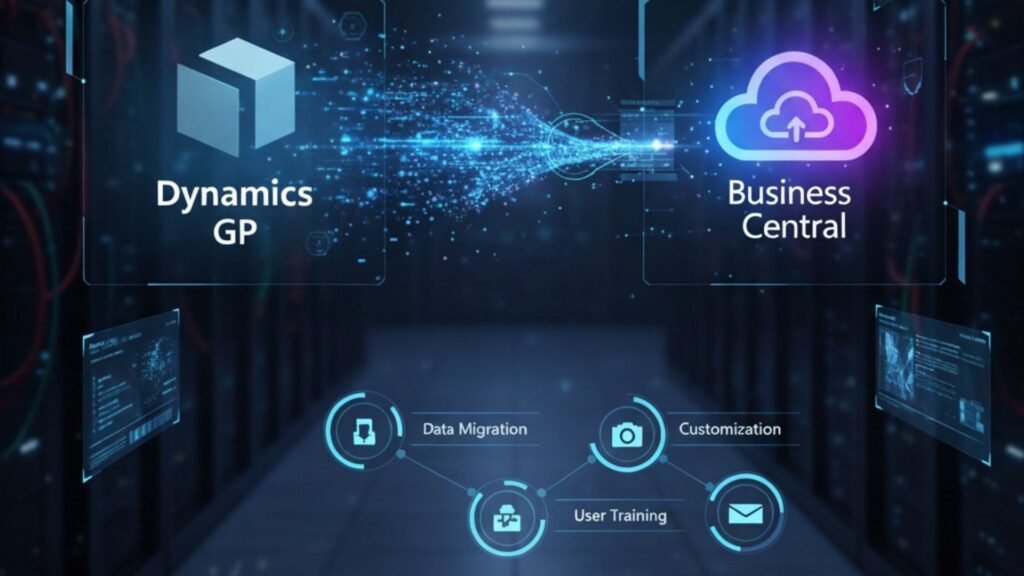
5-Step Roadmap to Migrate Dynamics GP to Business Central

Migrating from Microsoft Dynamics GP to Business Central is more than a software upgrade—it’s a strategic move toward cloud-based efficiency, modern business processes, and future-ready operations. For companies in Canada and the USA, making this transition offers a chance to enhance flexibility, scalability, and integration with the full Microsoft ecosystem. Whether you’re planning to migrate Dynamics GP to Business Central in Canada and the USA or considering a broader transformation, working with experienced Microsoft D365 F&O implementation partners in Canada and the USA can help ensure your migration is smooth, cost-effective, and risk-free. In this article, we’ll explore a 5-step roadmap to upgrade Dynamics GP to Business Central in Canada and the USA, as well as provide important tips for businesses transitioning from NAV to the Microsoft Dynamics 365 Business Central upgrade in Canada and the USA. Why Businesses Are Moving from Dynamics GP to Business Central Microsoft Dynamics GP has served thousands of organizations for decades, but its architecture and deployment model no longer match today’s fast-paced, cloud-first business environment. Microsoft’s innovation focus is now on Dynamics 365 Business Central, which offers: This makes it a natural choice for organizations looking to upgrade Dynamics GP to Business Central in Canada and the USA. The 5-Step Roadmap to a Successful GP-to-BC Migration Step 1: Assess and Plan Every successful migration begins with a detailed assessment. This involves: For companies also considering a NAV to Microsoft Dynamics 365 Business Central upgrade in Canada and the USA, this step ensures a clear understanding of both technical requirements and business objectives. Pro Tip: Partner with experienced Microsoft D365 F&O implementation partners in Canada and the USA to perform a migration readiness check. Step 2: Clean and Prepare Your Data Migrating outdated or inaccurate data can cause problems in your new ERP environment. A thorough data cleanup ensures only relevant, accurate, and properly formatted data moves to Business Central. Key tasks include: If you plan to migrate Dynamics GP to Business Central in Canada and USA, this step is critical for ensuring a smooth and error-free transition. Step 3: Choose the Right Migration Tools and Method Microsoft provides specialized tools for GP-to-BC migrations, including: You’ll need to decide between: For NAV to Microsoft Dynamics 365 Business Central upgrades in Canada and the USA, similar tools and methods apply, but NAV migrations often require additional mapping for custom modules. Step 4: Configure and Test Business Central Once data migration is planned, your Business Central environment needs to be set up and tested. This includes: Before going live, conduct User Acceptance Testing (UAT) to ensure processes run as expected and reports deliver accurate results. Pro Tip: Your Microsoft D365 F&O implementation partners in Canada and the USA can create a sandbox environment for testing before full deployment. Step 5: Go Live and Optimize With testing complete and your team trained, it’s time to go live. However, migration doesn’t end at deployment—ongoing optimization is key. Post-migration steps include: If you’re making the jump from Dynamics GP to Business Central in Canada and the USA, continuous monitoring ensures your investment delivers long-term value. Additional Considerations for NAV to Business Central Upgrades For businesses still on Microsoft Dynamics NAV, the migration path is slightly different from GP: Engaging a partner skilled in NAV to Microsoft Dynamics 365 Business Central upgrades in Canada and the USA can help streamline the process. Benefits of Migrating to Business Central Why Work with a Microsoft D365 Partner The complexity of ERP migration demands specialized expertise. Experienced Microsoft D365 F&O implementation partners in Canada and the USA bring: Whether you’re planning to migrate Dynamics GP to Business Central in Canada and the USA or upgrade from NAV, the right partner ensures a seamless transition. Conclusion Migrating from Dynamics GP—or even NAV—to Business Central is a strategic move that positions your business for greater agility, efficiency, and innovation. By following this 5-step roadmap and working with skilled Microsoft D365 F&O implementation partners in Canada and the USA, you can reduce risks, avoid downtime, and unlock the full potential of Microsoft’s modern ERP platform. Whether your goal is to upgrade Dynamics GP to Business Central in Canada and the USA or embark on a NAV to Microsoft Dynamics 365 Business Central upgrade in Canada and the USA, careful planning, expert guidance, and a structured approach will set you up for long-term success. FAQs 1. How long does it take to migrate from Dynamics GP to Business Central?Ans: Migration timelines vary based on data volume, complexity, and business requirements. Small to medium businesses often complete the process in 2–4 months. 2. Can we keep historical data during migration?Ans: Yes. Businesses can choose to migrate all historical data or only the most recent records for efficiency. 3. What happens to my GP licenses after migration?Ans: Once you move to Business Central, your GP licenses will no longer be required, though you may maintain GP access for historical reference. 4. Is it possible to migrate from NAV directly to Business Central cloud?Ans: Yes. The process may require reworking customizations, but experienced Microsoft D365 F&O implementation partners in Canada and the USA can make it seamless. 5. Do I need to retrain my team for Business Central?Ans: Yes. While there are similarities, Business Central offers many new capabilities, and user training ensures faster adoption.

5-Step Roadmap to Migrate Dynamics GP to Business Central Read More »

pharma-erp

Is Your Pharma ERP FDA & GMP Ready?

In the pharmaceutical industry, compliance is non-negotiable. Companies must adhere to strict regulations such as the U.S. Food and Drug Administration (FDA) guidelines and Good Manufacturing Practices (GMP) to ensure product safety, quality, and traceability. An ERP (Enterprise Resource Planning) system plays a critical role in enabling compliance, automating processes, and ensuring accurate reporting. But here’s the real question: Is your pharma ERP truly FDA and GMP ready? Whether you are planning a new system rollout with ERP Implementation Services in Canada, US or upgrading through ERP Migration Services in Canada, US, your ERP must meet specific requirements to keep you compliant and competitive. 1. What Does FDA & GMP Compliance Mean for Pharma ERP? FDA Compliance In the United States, the FDA governs how pharmaceutical products are developed, manufactured, stored, and distributed. An ERP system must support 21 CFR Part 11 compliance, which deals with electronic records and electronic signatures. ERP must enable: GMP Compliance GMP standards ensure products are consistently produced according to quality standards. This includes maintaining controlled processes, proper documentation, and safety protocols. ERP must enable: 2. Why Your ERP Must Be FDA & GMP Ready For pharmaceutical manufacturers in Canada and the US, ERP compliance is not just about avoiding penalties—it’s about: Without the right system, even minor non-compliance can result in fines, operational downtime, and loss of market access. 3. Key Features of an FDA & GMP-Ready ERP If you are implementing or migrating to Microsoft Dynamics 365 ERP in Canada, US, here’s what your system should include: a) Audit Trails & Electronic Signatures The system must log every transaction, modification, and approval—supporting FDA’s 21 CFR Part 11. b) Batch & Lot Traceability End-to-end visibility of raw materials and finished products ensures quick action during recalls. c) Quality Management Module Automated quality checks, non-conformance tracking, and CAPA (Corrective and Preventive Actions) management. d) Document Control Secure, version-controlled documentation for SOPs, test results, and manufacturing records. e) Validation & Testing ERP software must be validated before use to prove it meets compliance needs. 4. Microsoft Dynamics 365 ERP for Pharma Compliance When implemented by a trusted Microsoft Dynamics 365 Partner in Canada, US, Dynamics 365 ERP offers: Dynamics 365 also integrates with LS Retail solutions—ideal for pharmaceutical companies with retail or LS Retail Hospitality in Canada, US operations, such as pharmacies with on-site clinics or health service offerings. 5. ERP Migration vs. New Implementation If your current ERP lacks compliance capabilities, you have two main options: ERP Migration Services in Canada, US ERP Implementation Services in Canada, US 6. The Cost of Non-Compliance in Pharma ERP Failure to comply with FDA and GMP regulations can lead to: In contrast, investing in an FDA & GMP-ready Microsoft Dynamics 365 ERP in Canada, US ensures peace of mind, operational efficiency, and readiness for any audit. 7. How to Make Your ERP FDA & GMP Ready 8. Future-Proofing Compliance with Cloud ERP Cloud-based ERP solutions like Microsoft Dynamics 365 offer: For pharma businesses operating across multiple sites in Canada and the US, this ensures unified, compliant operations regardless of location. Conclusion FDA and GMP compliance is non-negotiable for pharmaceutical businesses in Canada and the US. Whether you choose ERP Implementation Services in Canada, US for a fresh start or ERP Migration Services in Canada, US to upgrade your existing system, the goal remains the same: ensure your ERP system meets stringent compliance requirements. With the right technology—such as Microsoft Dynamics 365 ERP in Canada, US—and the guidance of an experienced Microsoft Dynamics 365 Partner in Canada, US, you can transform compliance from a burden into a competitive advantage. FAQs Q1: What makes an ERP FDA compliant?Ans: An ERP is FDA compliant if it supports secure user authentication, electronic signatures, audit trails, and data integrity as per 21 CFR Part 11. Q2: Can Microsoft Dynamics 365 ERP handle GMP requirements?Ans: Yes. With the right configuration and partner support, Dynamics 365 ERP offers batch tracking, quality management, and document control for GMP compliance. Q3: How does LS Retail Hospitality in Canada, US relate to pharma?Ans: Pharma companies with retail pharmacies or in-store clinics can use LS Retail Hospitality features for customer management, point of sale, and integrated inventory tracking. Q4: Should I migrate or fully replace my ERP for compliance?Ans: If your current ERP has basic compliance capabilities, ERP Migration Services in Canada, US may suffice. If it’s outdated, consider ERP Implementation Services in Canada, US. Q5: Who can help make my ERP FDA & GMP ready?Ans: A certified Microsoft Dynamics 365 Partner in Canada, US with experience in pharmaceutical ERP compliance can guide the process.

Is Your Pharma ERP FDA & GMP Ready? Read More »

erp-managed-support-over-in-house-teams

Why North American Businesses Are Choosing 24*7 ERP Managed Support Over In-House Teams

In today’s digital-first business environment, Enterprise Resource Planning (ERP) systems like Microsoft Dynamics 365 have become the backbone of operations for organizations across North America. From finance and supply chain to human resources and sales, ERP systems streamline business processes, improve data visibility, and enhance decision-making. But with this complexity comes the need for continuous monitoring, updates, and optimization. That’s why a growing number of companies in Canada and the USA are choosing 24*7 ERP managed support over traditional in-house ERP teams. Let’s explore the driving forces behind this shift, how it impacts efficiency, cost, and innovation, and why it’s especially relevant for organizations seeking expert ERP consulting services in Canada and the USA. 1. The Changing ERP Landscape Modern ERP systems, especially cloud-based solutions like Microsoft Dynamics 365, have moved far beyond basic accounting or inventory tools. Today, these systems are deeply integrated with AI, automation, IoT, analytics, and even industry-specific functionalities. As a result, managing ERP has become a highly specialized task, requiring real-time monitoring, rapid problem resolution, and proactive performance tuning. In this environment, relying solely on an in-house team can be limiting, especially when support is needed beyond the typical 9-to-5 schedule. 2. Why 24*7 ERP Managed Support Is Taking Over a. Round-the-Clock Support Businesses don’t operate in isolation anymore. With global operations, remote teams, and eCommerce platforms running 24*7, any ERP downtime—even at midnight—can result in lost revenue and customer dissatisfaction. Managed service providers offer 24*7 monitoring and support, ensuring issues are identified and resolved before they impact your operations. b. Cost Efficiency Building and retaining a skilled ERP team in-house can be prohibitively expensive. Salaries, training, and benefits for full-time ERP specialists—especially for high-end platforms like Microsoft Dynamics 365 F&O—add up quickly. On the other hand, ERP implementation services in Canada and the USA that offer managed support give you access to a full team of experts at a predictable monthly cost. c. Access to Specialized Skills An in-house team may be strong in daily ERP operations but might lack expertise in specific modules or upcoming updates. A managed service partner brings a broader skill set, including access to seasoned Microsoft Dynamics 365 F&O consultants in Texas and the USA who can handle technical issues, upgrades, customizations, and integrations with ease. d. Scalability and Flexibility As your business grows or pivots, your ERP needs change. A managed service provider can quickly scale support up or down based on your evolving requirements. Whether you’re adding new modules, expanding to new markets, or upgrading to a newer version of Dynamics 365, managed support ensures you’re never understaffed or over-invested. e. Proactive Problem Resolution Rather than reacting to issues after they occur, 24*7 managed support teams use predictive analytics and monitoring tools to detect anomalies early. This helps reduce system downtime, prevent data loss, and maintain a seamless user experience. 3. The Strategic Role of ERP Consulting Services Many North American companies are not just looking for support—they’re seeking strategic partners. ERP consulting services in Austin and the USA don’t just fix problems; they help align ERP systems with business goals. With the right partner, organizations can: A trusted Microsoft Dynamics 365 partner in Texas and the USA can guide your organization from roadmap development to post-implementation support—offering both stability and innovation. 4. Industry Use Case: Manufacturing in Canada A mid-sized manufacturing company in Ontario implemented Microsoft Dynamics 365 Finance and Operations to modernize its supply chain. Initially relying on an in-house IT team, they soon faced challenges in managing updates, resolving system lags, and customizing reports. By switching to 24*7 managed ERP support, provided by an experienced Microsoft Dynamics 365 F&O consultant in Texas, the company achieved: This shift not only improved operations but also freed up their internal team to focus on business development and innovation. 5. Security and Compliance Data privacy regulations such as HIPAA, GDPR, and Canada’s PIPEDA require ERP systems to follow strict compliance protocols. Managed service providers are well-versed in these requirements and can implement security controls, monitor access, and ensure audit-readiness. In contrast, in-house teams may lack the time or expertise to stay updated with regulatory changes, increasing risk exposure. 6. Making the Right Choice: What to Look For in a Managed ERP Partner Choosing the right partner is crucial. Look for the following when evaluating managed ERP providers: Conclusion The complexities and demands of modern ERP systems are pushing North American businesses to reconsider traditional support models. With continuous innovation, data security needs, and around-the-clock operational demands, 24*7 ERP managed support has emerged as the smarter, scalable, and more strategic choice. By partnering with a certified Microsoft Dynamics 365 partner in Texas or the USA, companies can ensure their ERP systems are not only running efficiently but also evolving with the business. Frequently Asked Questions (FAQs) Q 1. What is ERP managed support?Ans: ERP managed support refers to ongoing, outsourced management of your ERP system, including monitoring, troubleshooting, updates, and optimization—typically available 24*7. Q 2. How is managed ERP support different from in-house support?Ans: In-house teams operate during standard business hours and are limited in skill diversity. Managed support offers 24*7 service, broader expertise, and cost-effective scalability. Q 3. Why is 24×7 support important for ERP systems?Ans: Businesses operate globally and rely on real-time data. Any downtime can impact operations, revenue, or customer experience. 24*7 support ensures problems are addressed immediately, regardless of the time. Q 4. Can managed support help with ERP upgrades and customizations?Ans: Yes, providers often include experts in various ERP modules and can assist with upgrades, custom developments, integrations, and process optimization. Q 5. How do I choose the right ERP consulting services provider?Ans: Look for experience, certifications, industry expertise, client references, and a strong understanding of compliance and security regulations.

Why North American Businesses Are Choosing 24*7 ERP Managed Support Over In-House Teams Read More »