dynamics partner

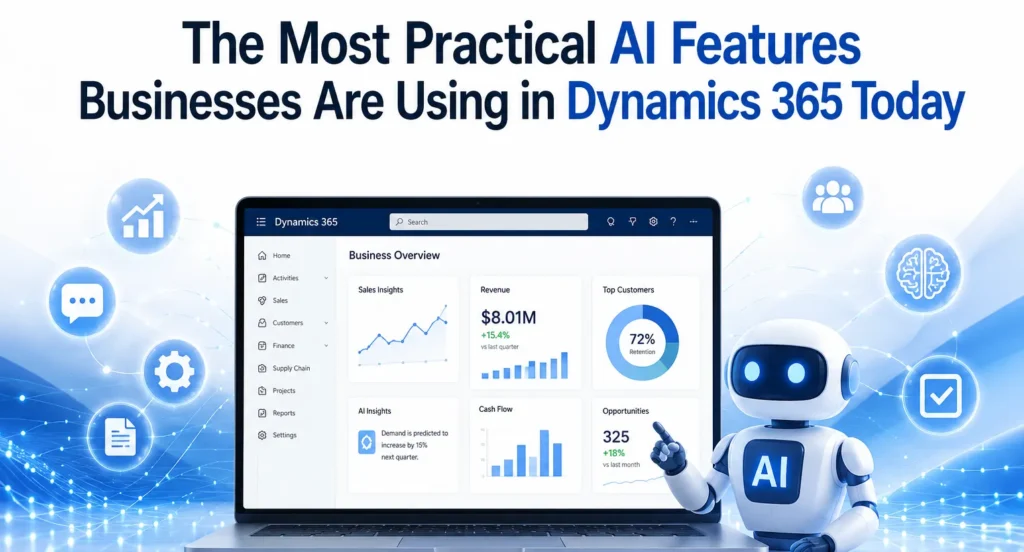
the-most-practical-ai-features-businesses-are-using-in-dynamics-365-today

The Most Practical AI Features Businesses Are Using in Dynamics 365 Today

Artificial Intelligence (AI) has evolved from being a futuristic concept into a practical business tool that delivers measurable value. Organizations across manufacturing, retail, finance, healthcare, logistics, and professional services are no longer experimenting with AI—they are integrating it into their daily operations to improve productivity, automate repetitive tasks, and make faster business decisions. One platform leading this transformation is Microsoft Dynamics 365. With built-in AI capabilities and Microsoft Copilot, Dynamics 365 helps businesses simplify complex processes without requiring advanced technical expertise. Whether it’s generating financial reports, predicting customer demand, automating customer service responses, or improving inventory planning, AI is making enterprise resource planning (ERP) and customer relationship management (CRM) smarter than ever. Businesses working with an experienced Microsoft Dynamics 365 partner can implement these AI capabilities effectively, ensuring they align with organizational goals while maximizing return on investment. Why AI Matters in Dynamics 365 Traditional ERP systems were designed primarily to store and process business data. Modern Dynamics 365 solutions go much further by interpreting data, identifying patterns, and providing intelligent recommendations. Instead of manually analysing thousands of transactions or customer interactions, AI can instantly highlight trends, detect anomalies, and recommend actions. This allows employees to focus on strategic work rather than repetitive administrative tasks. As organizations continue their digital transformation journey, AI has become one of the biggest competitive advantages available within the Microsoft ecosystem. Microsoft Copilot: The Everyday AI Assistant Microsoft Copilot is perhaps the most practical AI feature currently available across Dynamics 365 applications. Rather than replacing employees, Copilot assists them by automating routine work. Users can create reports, summarize meetings, draft emails, generate customer responses, and analyse business data using simple natural language prompts. For finance teams, Copilot helps generate financial summaries and variance analyses. Sales teams receive AI-generated customer insights, while customer service agents can quickly access suggested solutions based on previous support cases. Within Microsoft Dynamics 365 Business Central, Copilot simplifies accounting tasks, purchasing processes, inventory management, and financial reporting, making ERP more accessible for users without technical expertise. AI-Powered Financial Management Finance departments spend countless hours reconciling accounts, preparing reports, reviewing invoices, and forecasting cash flow. AI dramatically reduces this workload. Dynamics 365 can automatically: Instead of spending days preparing month-end reports, finance teams can focus on analysing business performance and identifying growth opportunities. Organizations using professional Microsoft Dynamics 365 Support Services also benefit from continuous optimization as Microsoft regularly introduces new AI capabilities and enhancements. Intelligent Demand Forecasting Inventory planning has traditionally relied on historical sales and manual estimates. AI transforms this process by analysing multiple variables simultaneously. Dynamics 365 evaluates: The result is more accurate inventory forecasting, helping businesses reduce excess stock while avoiding costly stock shortages. Manufacturers and retailers especially benefit from AI-driven forecasting because it improves procurement decisions and production planning. Smarter Customer Service Customer expectations continue to rise, and businesses must deliver faster, more personalized support. AI within Dynamics 365 Customer Service enables organizations to: Support agents spend less time searching for information and more time resolving customer issues. Companies implementing these capabilities through experienced MS Dynamics 365 Implementation services often see improvements in customer satisfaction while reducing service costs. Sales Intelligence That Improves Conversions Sales professionals often struggle to identify which opportunities deserve immediate attention. Dynamics 365 Sales uses AI to prioritize leads based on customer behaviour, purchasing history, communication frequency, and engagement levels. Sales representatives receive recommendations such as: Instead of relying solely on instinct, sales teams can make data-driven decisions that improve conversion rates and increase revenue. AI in Supply Chain Management Supply chain disruptions have become increasingly common. AI helps businesses anticipate potential issues before they become serious problems. Dynamics 365 Supply Chain Management uses AI to: These predictive capabilities help organizations maintain business continuity while reducing operational costs. Businesses planning D365 migration services from legacy ERP systems often prioritize these AI-enabled supply chain features because they deliver immediate operational improvements. Automated Business Insights One of AI’s greatest strengths is transforming raw data into actionable insights. Executives no longer need to wait for manually prepared reports. Instead, AI continuously monitors business performance and alerts decision-makers about significant changes. Examples include: This proactive approach enables faster decision-making and more effective strategic planning. AI-Driven Purchasing and Procurement Procurement teams benefit from AI through improved supplier analysis and purchasing recommendations. Dynamics 365 can evaluate supplier performance, compare historical pricing, identify purchasing trends, and recommend optimal reorder quantities. This reduces procurement costs while improving supplier relationships and ensuring consistent product availability. Document Automation Businesses process thousands of documents every year, including invoices, purchase orders, contracts, receipts, and shipping documents. AI helps automate document processing by: This significantly reduces administrative work while minimizing human error. Predictive Maintenance Manufacturing companies using Dynamics 365 can leverage AI for predictive maintenance. Instead of repairing equipment after failure, AI analyses machine data to predict maintenance requirements before breakdowns occur. Benefits include reduced downtime, lower maintenance costs, longer equipment life, and improved production efficiency. Why Expert Implementation Matters Although Dynamics 365 includes powerful AI capabilities, achieving successful outcomes requires proper planning, customization, and integration. Working with experienced Microsoft Dynamics consulting services ensures businesses configure AI features according to their industry requirements, business processes, and long-term objectives. Professional consultants also help organizations integrate Microsoft 365, Power Platform, Azure AI, and other Microsoft technologies to create a connected digital ecosystem. Preparing for the Future Microsoft continues investing heavily in AI innovation across Dynamics 365. As Copilot evolves, businesses can expect even greater automation, more accurate predictions, and deeper business insights. Organizations that begin adopting AI today will be better positioned to respond to changing customer expectations, market conditions, and competitive pressures. Whether improving finance, supply chain, customer service, or sales, practical AI within Dynamics 365 is already delivering measurable business value across industries. Companies that embrace these capabilities with the guidance of a trusted implementation partner can achieve higher productivity, smarter decision-making, and sustainable long-term growth. Conclusion AI is no longer an optional technology for forward-thinking organizations. It has become a practical tool that improves

The Most Practical AI Features Businesses Are Using in Dynamics 365 Today Read More »
ax-to-dynamics-365-f-and-migration-costs-timeline-and-strategy

AX to Dynamics 365 F&O Migration: Costs, Timeline & Strategy

Businesses using Microsoft Dynamics AX have benefited from a reliable ERP system for many years. However, as technology evolves and organisations increasingly adopt cloud-first strategies, many are choosing to migrate to Microsoft Dynamics 365 Finance & Operations (Dynamics 365 F&O). This modern ERP solution provides greater flexibility, enhanced security, AI-powered capabilities, and continuous updates that help businesses stay competitive in an increasingly digital world. Migrating from Dynamics AX is more than simply upgrading software. It is an opportunity to modernise business processes, improve operational efficiency, and create a scalable platform that supports long-term growth. Whether you are planning your first ERP migration or evaluating your options, understanding the costs, timeline, and implementation strategy is essential for a successful transition. Why Upgrade from Dynamics AX to Dynamics 365 F&O? Microsoft Dynamics AX was designed for on-premises environments and has served thousands of organisations worldwide. However, maintaining legacy infrastructure, managing customisations, and handling manual upgrades have become increasingly expensive and time-consuming. Dynamics 365 F&O addresses these challenges with a cloud-based architecture that delivers continuous innovation and better performance. The platform offers advanced financial management, intelligent supply chain capabilities, automated workflows, real-time reporting, and seamless integration with Microsoft 365, Power Platform, and Azure services. Businesses also gain access to AI-driven insights that support faster and more informed decision-making. Working with an experienced Microsoft Dynamics 365 partner helps organisations make the transition smoothly while reducing risks associated with complex ERP migrations. Understanding the Cost of Migration One of the first questions businesses ask is, “How much does an AX to Dynamics 365 F&O migration cost?” There is no fixed answer because every organisation’s ERP environment is different. The overall investment depends on several factors, including the size of the business, the complexity of existing processes, and the amount of customisation required. Organisations running older versions such as Dynamics AX 2009 or AX 2012 often require additional planning because these systems typically contain outdated customisations, legacy integrations, and inconsistent data. Businesses with multiple locations, international operations, or high transaction volumes may also require more extensive implementation efforts. Another important cost factor is data migration. Customer records, vendor information, inventory data, financial transactions, and historical reports all need to be reviewed and validated before being transferred into the new system. The cleaner the existing data, the smoother and more cost-effective the migration process becomes. Training employees and preparing them for the new system should also be included in the overall project budget. Investing in user adoption ensures employees can quickly take advantage of the platform’s new features and capabilities. Typical Migration Timeline The duration of an AX to Dynamics 365 F&O migration depends on project complexity. Small businesses with straightforward business processes can often complete migration within a few months, while large enterprises with multiple legal entities and extensive integrations require a longer implementation schedule. A standard migration project generally includes assessment, solution design, system configuration, data migration, testing, user training, and go-live support. Each phase requires careful planning to minimise disruption to daily business operations. Rather than rushing implementation, organisations should focus on completing each stage thoroughly. Proper testing and user acceptance significantly reduce the likelihood of issues after deployment and contribute to a smoother transition. Building an Effective Migration Strategy A successful migration starts with a detailed assessment of the existing Dynamics AX environment. This involves reviewing current business processes, identifying customisations, evaluating integrations, and understanding reporting requirements. The goal is not simply to recreate the existing system but to identify opportunities for improvement. Once the assessment is complete, organisations can begin designing their future ERP environment. During this phase, business requirements are aligned with the capabilities available in Dynamics 365 F&O. Many businesses also evaluate Microsoft Dynamics 365 Business Central for smaller subsidiaries or regional offices while using Dynamics 365 F&O for enterprise-wide operations. This combination allows organisations to build a connected Microsoft ecosystem that supports different business needs. Data preparation is another critical step. Before migration begins, duplicate records should be removed, outdated information archived, and financial data validated. Clean and accurate data reduces migration errors and improves system performance after deployment. Testing plays a crucial role throughout the implementation process. Every workflow, integration, and report should be validated before the new system goes live. User acceptance testing allows employees to become familiar with the new environment while identifying any remaining issues. Common Migration Challenges Although every migration project is unique, organisations often encounter similar challenges. Legacy customisations are among the most common obstacles. Many Dynamics AX systems have been modified over several years to meet specific business requirements. During migration, these customisations should be carefully evaluated to determine whether they are still necessary or whether standard Dynamics 365 functionality can achieve the same outcome. Data quality is another common concern. Incomplete customer records, duplicate vendors, inconsistent product information, and outdated financial data can slow implementation and increase project costs. Beginning data cleansing early in the project significantly improves migration success. Employee adoption also deserves careful attention. Even the most advanced ERP solution will not deliver its full value if users are uncomfortable with the new system. Providing comprehensive training and communicating the benefits of the migration helps employees embrace new processes more confidently. Best Practices for a Successful Migration Organizations that experience successful ERP migrations typically follow a structured approach rather than treating migration as a simple technical upgrade. They establish clear business objectives, involve key stakeholders throughout the project, and prioritise business process improvements over replicating outdated workflows. While every implementation is different, several practices consistently contribute to success: Following these principles helps organisations reduce implementation risks while maximizing the return on their ERP investment. Benefits After Migrating to Dynamics 365 F&O Businesses that successfully migrate to Dynamics 365 F&O often experience improvements across finance, operations, manufacturing, procurement, and supply chain management. Real-time dashboards provide better visibility into business performance, allowing leaders to make faster and more informed decisions. Automation reduces repetitive manual tasks, enabling employees to focus on higher-value activities. Continuous Microsoft updates ensure the ERP platform remains

AX to Dynamics 365 F&O Migration: Costs, Timeline & Strategy Read More »

how-resource-augmentation-helps-businesses-complete-erp-projects-faster

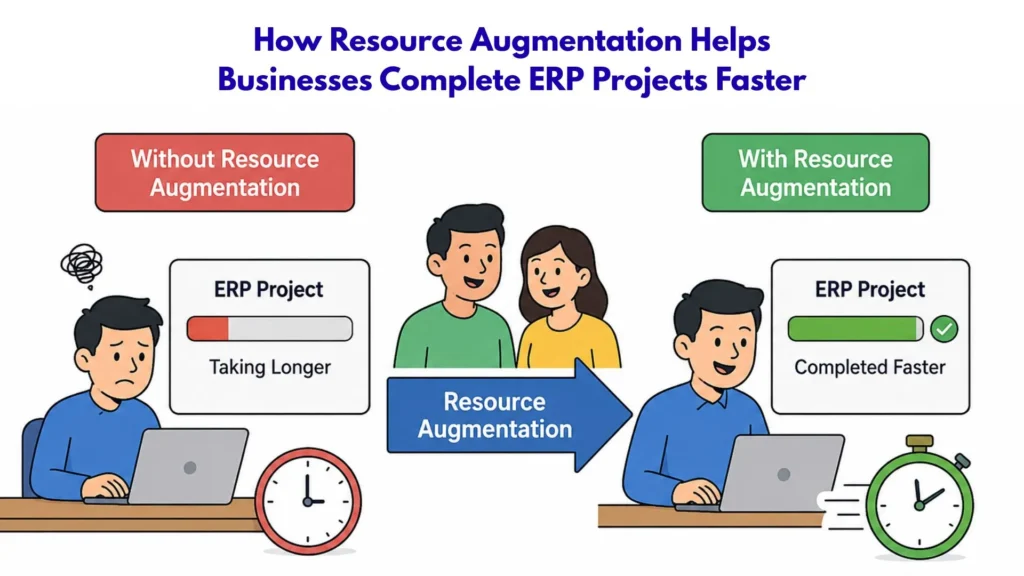
How Resource Augmentation Helps Businesses Complete ERP Projects Faster

Enterprise Resource Planning (ERP) systems have become the backbone of modern business operations. They help organizations streamline processes, improve productivity, enhance decision-making, and create better visibility across departments. However, implementing or upgrading an ERP solution is rarely a simple undertaking. ERP projects often involve multiple stakeholders, complex workflows, data migration activities, integrations, customizations, and extensive testing. As a result, many businesses struggle to complete ERP projects on time and within budget. One of the most common reasons for project delays is the lack of skilled resources. Organizations frequently find themselves short of experienced ERP consultants, developers, business analysts, and project managers at critical stages of implementation. Hiring full-time specialists can be costly and time-consuming, particularly when the requirement is temporary and project-specific. This is where resource augmentation plays a vital role. Resource augmentation enables organizations to add experienced professionals to their existing teams, providing immediate access to specialized expertise without the long-term commitment of permanent hiring. Businesses working with a Microsoft Dynamics 365 partner in Texas, USA, increasingly rely on resource augmentation to accelerate ERP implementations, reduce project risks, and maximize return on investment. In today’s competitive business environment, organizations need flexible staffing models that allow them to scale quickly and respond effectively to changing project demands. Resource augmentation offers that flexibility while ensuring ERP initiatives remain on track. Understanding Resource Augmentation Resource augmentation is a business strategy that allows organizations to temporarily extend their workforce by engaging skilled professionals with expertise in specific technologies, industries, or business functions. Unlike traditional outsourcing, resource augmentation enables businesses to retain complete control over project management while leveraging external talent to fill skill gaps. In ERP projects, augmented resources work alongside internal teams and contribute directly to project activities. These professionals may include ERP consultants, solution architects, developers, data migration specialists, quality assurance experts, trainers, and project managers. The primary objective of resource augmentation is to provide businesses with the expertise they need exactly when they need it. Instead of spending months recruiting and onboarding new employees, organizations can quickly integrate experienced professionals into ongoing projects and immediately benefit from their expertise. This approach is particularly valuable for organizations implementing Microsoft Dynamics solutions, where specialized expertise can significantly influence project success. Why ERP Projects Often Experience Delays ERP projects are complex by nature and require coordination between multiple departments, systems, and stakeholders. Even well-planned implementations can encounter challenges that affect timelines and budgets. Some of the most common causes of ERP project delays include: When organizations lack the necessary expertise, critical tasks often take longer than expected. Team members may spend valuable time learning new technologies, troubleshooting issues, or correcting mistakes that experienced consultants could have avoided. Resource augmentation addresses these challenges by introducing skilled professionals who can contribute immediately and keep projects moving forward. How Resource Augmentation Accelerates ERP Project Completion Immediate Access to Specialized Skills One of the biggest advantages of resource augmentation is the ability to gain immediate access to specialized ERP expertise. Organizations no longer need to spend months searching for qualified candidates, conducting interviews, and providing training before project work can begin. Experienced ERP professionals can join the project quickly and start contributing from day one. Their familiarity with implementation methodologies, business processes, and technical requirements allows them to perform tasks efficiently and minimize delays. For businesses working with a Microsoft Dynamics 365 partner in Texas, USA, resource augmentation provides access to professionals who understand Microsoft technologies, implementation best practices, and industry-specific requirements. This expertise helps organizations avoid common pitfalls and accelerate project delivery. Increased Project Capacity Many ERP projects fail to meet deadlines because internal teams simply do not have enough capacity to handle the workload. Employees often balance project responsibilities alongside their regular operational duties, creating bottlenecks that slow progress. Resource augmentation increases project capacity by adding qualified professionals to support key activities. Additional resources can manage configuration, development, testing, documentation, training, and support tasks, allowing internal teams to focus on strategic decision-making and business operations. As project workloads increase, organizations can scale their augmented workforce accordingly. This flexibility helps maintain project momentum without overwhelming existing employees. Faster Decision-Making and Problem Resolution ERP projects inevitably encounter challenges, whether related to system configuration, business process alignment, integrations, or data quality issues. Inexperienced teams may require significant time to identify and resolve these problems. Augmented professionals bring valuable experience gained from previous ERP implementations. They can quickly assess issues, recommend solutions, and implement corrective actions before problems escalate. Their expertise often results in faster decision-making and more efficient project execution. Organizations investing in MS Dynamics 365 implementation services in Texas, USA, frequently benefit from consultants who have completed similar projects across multiple industries. Their practical knowledge helps accelerate project progress and improve overall implementation quality. Enhanced Data Migration Efficiency Data migration is one of the most challenging aspects of any ERP implementation. Businesses must transfer large volumes of information from legacy systems while ensuring accuracy, completeness, and consistency. Without experienced migration specialists, organizations often encounter data quality issues, mapping errors, and extended testing cycles that delay project timelines. Resource augmentation provides access to professionals who specialize in migration planning, execution, validation, and optimization. Companies utilizing D365 migration services in Texas, USA, often rely on augmented experts to streamline migration activities and ensure a smooth transition to modern ERP platforms. These specialists understand migration tools, data structures, and validation techniques that help reduce risks and improve efficiency. Improved Project Governance Effective governance is critical for ERP project success. Organizations need clear communication, accountability, risk management, and performance monitoring throughout the implementation process. Experienced augmented-reality professionals contribute to stronger governance by helping establish project frameworks, monitoring progress, and identifying potential issues before they impact timelines. Their structured approach improves visibility and ensures stakeholders remain aligned with project objectives. When combined with internal leadership and external implementation expertise, resource augmentation creates a balanced project environment that supports timely and successful delivery. Resource Augmentation and Microsoft Dynamics 365 Microsoft Dynamics 365 has become one of the most popular ERP platforms for

How Resource Augmentation Helps Businesses Complete ERP Projects Faster Read More »

how-digital-retail-platforms-like-ls-central-are-revolutionizing-demand-forecasting

How Digital Retail Platforms Like LS Central Are Revolutionizing Demand Forecasting

The retail industry is experiencing a major transformation driven by digital technologies, artificial intelligence, and data analytics. Today’s retailers operate in a highly competitive environment where customer expectations change rapidly, market trends evolve quickly, and supply chain disruptions can impact profitability. To remain competitive, businesses need accurate demand forecasting to anticipate customer needs and optimize inventory levels. This is where digital retail platforms like LS Central are making a significant difference. Built on Microsoft Dynamics 365 Business Central, LS Central provides retailers with an integrated solution that combines point-of-sale (POS), inventory management, customer insights, and advanced reporting capabilities. By centralizing data and leveraging intelligent analytics, retailers can forecast demand more accurately and make informed business decisions. Many organizations working with a trusted Microsoft Dynamics 365 partner in Texas, USA, are adopting LS Central to modernize their retail operations and gain better visibility into customer demand patterns. Understanding Demand Forecasting in Retail Demand forecasting is the process of predicting future customer demand based on historical sales data, seasonal trends, customer behavior, market conditions, and other business factors. Accurate forecasting helps retailers maintain the right inventory levels while reducing excess stock and stockouts. Traditional forecasting methods often relied on spreadsheets and manual calculations. While these approaches may have worked in the past, they struggle to keep up with the complexity of modern retail operations. Retailers now need real-time data and predictive analytics to respond effectively to changing market conditions. Digital retail platforms provide the tools necessary to collect, analyze, and interpret large volumes of business data, enabling more accurate forecasting and better planning. What is LS Central? LS Central is a unified retail management solution designed specifically for retailers, restaurants, pharmacies, hospitality businesses, and specialty stores. Built on Microsoft Dynamics 365 Business Central in Texas, USA, LS Central combines multiple business functions into a single platform. Instead of managing separate systems for POS, inventory, customer loyalty, purchasing, and financial management, businesses can manage everything through a single centralized solution. This unified approach creates a single source of truth for retail data, making demand forecasting more accurate and actionable. The Growing Importance of Digital Retail Platforms Modern retailers generate enormous amounts of data every day. Every transaction, customer interaction, inventory movement, and promotional campaign creates valuable information. Without the right tools, much of this data remains underutilized. Digital retail platforms transform raw data into meaningful business insights by providing the following: These capabilities help retailers make proactive decisions rather than reactive ones. How LS Central Improves Demand Forecasting Centralized Data Management One of the biggest challenges retailers face is fragmented data spread across multiple systems. LS Central consolidates sales, inventory, purchasing, customer, and financial information into a single platform. When all business data is connected, retailers gain a complete view of customer behavior and purchasing trends. This centralized approach improves forecast accuracy because decisions are based on comprehensive and up-to-date information. Businesses working with Microsoft Dynamics consulting services in Texas, USA, often identify data silos as a major obstacle to effective forecasting. LS Central helps eliminate these barriers. Real-Time Sales Visibility Demand forecasting depends heavily on accurate sales data. LS Central provides real-time sales visibility across all retail locations and channels. Retail managers can monitor the following: With access to current information, businesses can quickly adjust purchasing plans and inventory strategies before shortages or overstock situations occur. Advanced Inventory Intelligence Inventory optimization is closely connected to demand forecasting. Excess inventory increases carrying costs, while insufficient inventory leads to lost sales. LS Central enables retailers to monitor stock levels continuously and identify patterns that impact future demand. The platform provides automated replenishment recommendations based on sales history, inventory turnover, and forecasted demand. This intelligence allows retailers to maintain optimal stock levels while improving customer satisfaction. AI and Predictive Analytics in Demand Forecasting Artificial intelligence is changing the way retailers forecast demand. Traditional forecasting models rely heavily on historical data, while AI-powered forecasting incorporates multiple variables to generate more accurate predictions. LS Central, integrated with Microsoft technologies, can analyze the following: AI-driven forecasting helps businesses identify opportunities and risks before they affect operations. Organizations utilizing Microsoft Dynamics 365 Support Services in Texas, USA, often leverage AI-powered analytics to improve forecasting accuracy and enhance decision-making capabilities. Omnichannel Retail and Demand Forecasting Today’s customers shop through multiple channels, including physical stores, eCommerce platforms, mobile applications, and social media marketplaces. This omnichannel environment creates additional forecasting challenges because demand patterns vary across channels. LS Central provides a unified view of customer activity across all touchpoints. Retailers can analyze purchasing behavior regardless of where transactions occur. This comprehensive visibility improves forecasting by ensuring that demand predictions reflect the entire customer journey rather than isolated sales channels. Seasonal Demand Management Retail demand often fluctuates based on seasons, holidays, and special events. Predicting these fluctuations accurately is essential for maximizing sales opportunities. LS Central enables retailers to analyze historical seasonal trends and compare performance across multiple years. For example, retailers can: By understanding seasonal patterns, retailers can avoid stock shortages during peak periods while minimizing excess inventory during slower seasons. Customer Behavior Analysis Demand forecasting is not only about products—it is also about customers. LS Central provides detailed customer insights that help retailers understand purchasing preferences, buying frequency, and shopping habits. Retailers can identify: These insights help businesses predict future demand more accurately and develop targeted marketing strategies that drive revenue growth. Improved Supply Chain Planning Demand forecasting directly impacts supply chain efficiency. When forecasts are inaccurate, businesses may experience delayed shipments, excess inventory, or missed sales opportunities. LS Central improves supply chain planning by providing greater visibility into inventory levels, supplier performance, and purchasing requirements. Retailers can collaborate more effectively with suppliers and make informed procurement decisions based on forecasted demand. Companies implementing MS Dynamics 365 implementation services in Texas, USA, frequently use LS Central to strengthen supply chain operations and improve inventory planning processes. Data-Driven Decision Making Retail success increasingly depends on the ability to make data-driven decisions. LS Central provides dashboards, reports, and analytics tools that transform

How Digital Retail Platforms Like LS Central Are Revolutionizing Demand Forecasting Read More »

How AI in Dynamics 365 is Transforming Logistics-Operations

How AI in Dynamics 365 is Transforming Logistics Operations

The logistics industry is evolving rapidly as businesses face increasing pressure to deliver goods faster, reduce operational costs, and improve supply chain visibility. Traditional logistics systems often struggle to manage growing operational complexity, which is why many organizations are now investing in AI-powered ERP solutions. One of the most effective platforms helping businesses modernize logistics operations is Microsoft Dynamics 365. AI capabilities within Microsoft Dynamics 365 Business Central are transforming how logistics companies manage inventory, transportation, warehousing, customer service, and demand forecasting. By combining automation, predictive analytics, and real-time business intelligence, organizations can make smarter decisions while improving operational efficiency. This article explores how AI in Dynamics 365 is reshaping logistics operations and why businesses are increasingly working with a trusted Microsoft Dynamics 365 partner to implement and optimize these intelligent solutions. The Growing Role of AI in Logistics The logistics industry handles a massive amount of operational data every day. Managing deliveries, supplier coordination, warehouse operations, and customer expectations manually can create delays, errors, and rising operational costs. AI helps solve these challenges by automating repetitive tasks and delivering predictive insights that improve decision-making. Modern logistics companies are using AI-powered ERP systems to streamline operations, reduce human error, and gain complete visibility into their supply chains. AI can analyze historical trends, monitor real-time operations, and identify patterns that help businesses respond faster to changing market conditions. As competition increases, companies are relying on advanced ERP platforms and experienced Microsoft Dynamics consulting service providers to build smarter and more scalable logistics processes. What is AI in Dynamics 365? AI in Dynamics 365 combines machine learning, automation, cloud technology, and advanced analytics to help businesses improve operational performance. These intelligent capabilities are integrated across finance, supply chain, inventory management, customer service, and warehouse operations. Within Microsoft Dynamics 365 Business Central, AI helps logistics businesses forecast demand, automate workflows, improve shipment planning, and optimize inventory management. Instead of relying on manual reporting and reactive processes, organizations can use real-time insights to make proactive business decisions. AI also improves collaboration between departments by centralizing operational data into a single connected system. This creates better transparency across the supply chain and helps logistics teams respond quickly to disruptions. Predictive Demand Forecasting Demand forecasting is one of the most important functions in logistics operations. Inaccurate forecasting can lead to inventory shortages, overstocking, delayed deliveries, and unnecessary operational expenses. AI-powered forecasting tools in Dynamics 365 analyze historical sales trends, customer purchasing behavior, seasonal demand patterns, and market conditions to generate more accurate forecasts. This allows logistics businesses to maintain optimal stock levels while reducing waste and storage costs. Companies working with experienced MS Dynamics 365 implementation service providers can customize forecasting models according to their business requirements and industry-specific operational needs. Improved forecasting also helps businesses strengthen supplier relationships because procurement teams can plan inventory requirements more effectively. This results in smoother operations and improved customer satisfaction. Intelligent Inventory Management Inventory management becomes far more efficient when AI is integrated into ERP systems. AI-powered inventory tools within Dynamics 365 provide real-time visibility into stock levels, warehouse movement, and replenishment requirements. Instead of manually tracking inventory, businesses can automate stock monitoring and receive alerts when inventory reaches predefined thresholds. AI also identifies slow-moving products, reduces excess inventory, and improves order fulfillment accuracy. For logistics companies managing large warehouses or multiple distribution centers, this level of automation significantly improves operational efficiency. With the help of Microsoft Dynamics 365 Business Central, businesses can reduce carrying costs while improving delivery performance. Route Optimization and Fleet Efficiency Transportation costs are one of the largest operational expenses for logistics companies. Fuel consumption, delivery delays, and inefficient route planning can directly impact profitability. AI in Dynamics 365 helps businesses optimize delivery routes by analyzing traffic conditions, weather data, fuel usage, and delivery schedules in real time. This allows logistics companies to select the most efficient routes and improve delivery performance. Better route optimization reduces transportation costs while helping businesses improve customer satisfaction through faster and more reliable deliveries. AI also helps organizations improve fleet utilization and reduce vehicle downtime. Companies implementing intelligent transportation workflows through professional MS Dynamics 365 implementation services can achieve significant operational savings over time. Real-Time Supply Chain Visibility Supply chain disruptions have become increasingly common due to global economic uncertainty, labor shortages, transportation delays, and changing customer demands. Businesses now require complete real-time visibility into their operations to manage these challenges effectively. AI-powered dashboards in Dynamics 365 provide logistics companies with real-time monitoring of inventory movement, supplier performance, shipment status, and warehouse activities. Managers can identify bottlenecks quickly and make informed decisions before problems escalate. This level of visibility allows organizations to become more proactive instead of reactive. Businesses working with a reliable Microsoft Dynamics 365 partner can configure customized dashboards and reporting tools that align with their operational goals and KPIs. Warehouse Automation Warehouse operations involve multiple repetitive tasks that consume time and increase the risk of human error. AI-powered warehouse automation in Dynamics 365 helps businesses improve efficiency by automating processes such as inventory tracking, barcode scanning, picking, packing, and shipment scheduling. AI also helps optimize warehouse space utilization by analyzing product movement patterns and storage requirements. This improves operational productivity while reducing delays in order fulfillment. As logistics operations continue to scale, warehouse automation becomes essential for maintaining accuracy and operational efficiency. Businesses leveraging Microsoft Dynamics 365 Support Services can continuously optimize warehouse performance and adapt workflows based on operational changes. Predictive Maintenance for Fleet Vehicles Unexpected vehicle breakdowns can disrupt logistics operations and lead to missed delivery deadlines. AI-driven predictive maintenance capabilities within Dynamics 365 help businesses monitor vehicle performance and identify maintenance issues before failures occur. By analyzing engine performance, fuel usage, maintenance history, and sensor data, AI can predict when maintenance is required. This proactive approach reduces downtime, lowers repair costs, and improves fleet reliability. Predictive maintenance also helps logistics companies extend vehicle lifespan and maintain consistent delivery schedules. This creates a more dependable transportation network while improving overall operational efficiency. Enhanced

How AI in Dynamics 365 is Transforming Logistics Operations Read More »

Why-Flexible-ERP-Teams-Are-the-Future-of-Digital-transformation

Why Flexible ERP Teams Are the Future of Digital Transformation

In today’s rapidly changing business environment, organizations are under constant pressure to innovate, adapt, and scale faster than ever before. Digital transformation is no longer a long-term vision — it has become a business necessity. Companies across industries are investing in cloud technologies, automation, artificial intelligence, and enterprise solutions to stay competitive. At the center of this transformation lie ERP systems, especially platforms like Microsoft Dynamics 365 and Microsoft Dynamics 365 Business Central. However, technology alone does not guarantee success. Businesses also need skilled, agile, and flexible ERP teams that can adapt quickly to changing business needs. Traditional fixed IT teams often struggle to keep pace with modern digital demands. This is why flexible ERP teams are becoming the future of digital transformation. Organizations are now increasingly relying on scalable ERP experts, remote consultants, implementation specialists, and managed support teams to accelerate transformation projects while reducing operational costs. Whether it is cloud migration, ERP upgrades, or process automation, flexible ERP teams provide businesses with the expertise and scalability they need. The Shift Toward Flexible ERP Teams For years, companies depended heavily on in-house IT departments to manage ERP systems. While this model worked in the past, modern digital transformation projects require specialized expertise across multiple domains such as cloud computing, integrations, cybersecurity, analytics, and automation. Hiring permanent employees for every ERP function can be expensive and time-consuming. Moreover, digital transformation projects often require temporary specialized skills that may not be needed long-term. This is where flexible ERP teams create value. Flexible ERP teams allow businesses to: Businesses working with a trusted Microsoft ecosystem partner or a reliable Microsoft Dynamics 365 partner can quickly access experienced consultants, developers, support specialists, and project managers without long recruitment cycles. Why Digital Transformation Requires Agility Digital transformation projects are dynamic by nature. Requirements change frequently due to evolving market trends, customer expectations, and technology advancements. Companies need ERP teams that can respond quickly to these changes. Traditional ERP models are often rigid and slow. Flexible ERP teams, on the other hand, offer agility and responsiveness. They can adapt to new business priorities, integrate emerging technologies, and optimize processes continuously. For example, a manufacturing company implementing Microsoft Dynamics 365 Business Central may initially focus on finance and inventory management. Later, they may decide to add AI-driven forecasting, warehouse automation, or CRM integrations. Flexible ERP teams can seamlessly expand the project scope without major disruptions. This adaptability is one of the key reasons why businesses increasingly invest in Microsoft Dynamics consulting services and cloud ERP specialists. The Growing Importance of Microsoft Dynamics 365 Modern organizations require ERP systems that support scalability, remote work, automation, and data-driven decision-making. Microsoft Dynamics 365 has emerged as one of the leading ERP and CRM platforms because it combines flexibility, intelligence, and cloud capabilities. Businesses implementing Microsoft Dynamics 365 Business Central can centralize operations, improve productivity, and gain real-time business visibility. However, successful ERP implementation depends heavily on having the right team. A skilled Microsoft Dynamics 365 partner helps organizations: Flexible ERP teams make these services more accessible and cost-effective for businesses of all sizes. Benefits of Flexible ERP Teams 1. Faster ERP Implementations One of the biggest challenges businesses face during ERP implementation is project delays. Traditional hiring processes slow down project execution because finding skilled ERP professionals takes time. Flexible ERP teams provide immediate access to experienced consultants and developers, accelerating deployment timelines. Businesses can start projects quickly and reduce downtime. Organizations using MS Dynamics 365 implementation services often benefit from faster onboarding, streamlined workflows, and reduced implementation risks when working with scalable ERP teams. 2. Access to Specialized Expertise Digital transformation projects require expertise in multiple areas, including: Instead of maintaining a large in-house team, businesses can access specialists only when needed. Flexible ERP teams allow organizations to bring in experts for specific phases of the project. For example, companies using D365 migration services may require temporary migration specialists during system upgrades but not afterward. Flexible staffing models eliminate unnecessary long-term costs. 3. Reduced Operational Costs Hiring full-time ERP professionals can be expensive, especially for small and mid-sized businesses. Flexible ERP teams reduce overhead costs related to: Businesses only pay for the expertise they need, making digital transformation more affordable and scalable. Many companies now prefer outsourcing Microsoft Dynamics 365 support rather than maintaining large in-house support departments. 4. Improved Business Continuity ERP systems are critical for daily business operations. Downtime or technical issues can lead to revenue loss and productivity disruptions. Flexible ERP teams provide continuous support and proactive monitoring to ensure system stability. Businesses can access remote ERP experts across different time zones, enabling faster issue resolution and improved operational continuity. A reliable Microsoft Dynamics 365 partner ensures that ERP systems remain secure, optimized, and fully functional even during business expansion or system upgrades. 5. Easier Cloud Migration Cloud ERP adoption continues to grow because it offers scalability, flexibility, and remote accessibility. However, cloud migration can be complex without the right expertise. Flexible ERP teams simplify migration processes by providing skilled consultants experienced in: Organizations investing in D365 migration services can minimize migration risks and ensure smooth transitions to cloud-based ERP environments. Flexible ERP Teams and Remote Work Culture The rise of hybrid and remote work models has further increased the demand for flexible ERP teams. Modern businesses need ERP professionals who can collaborate virtually and support distributed teams. Cloud-based platforms like Microsoft Dynamics 365 allow ERP consultants, developers, and support teams to work remotely while maintaining productivity and collaboration. Remote ERP teams offer several advantages: This flexibility enables businesses to remain agile and competitive in an increasingly digital economy. The Role of Automation in Flexible ERP Teams Automation is transforming how ERP systems operate. Businesses are increasingly using AI-powered workflows, robotic process automation, and predictive analytics to improve efficiency. Flexible ERP teams help organizations implement automation strategies more effectively. Experienced consultants can identify repetitive processes and integrate intelligent automation solutions into ERP systems. Some common automation areas include: Organizations leveraging Microsoft Dynamics consulting services

Why Flexible ERP Teams Are the Future of Digital Transformation Read More »

Why-business-Central-is-Becoming-the-Preferred-ERP-for-growing-US-businesses

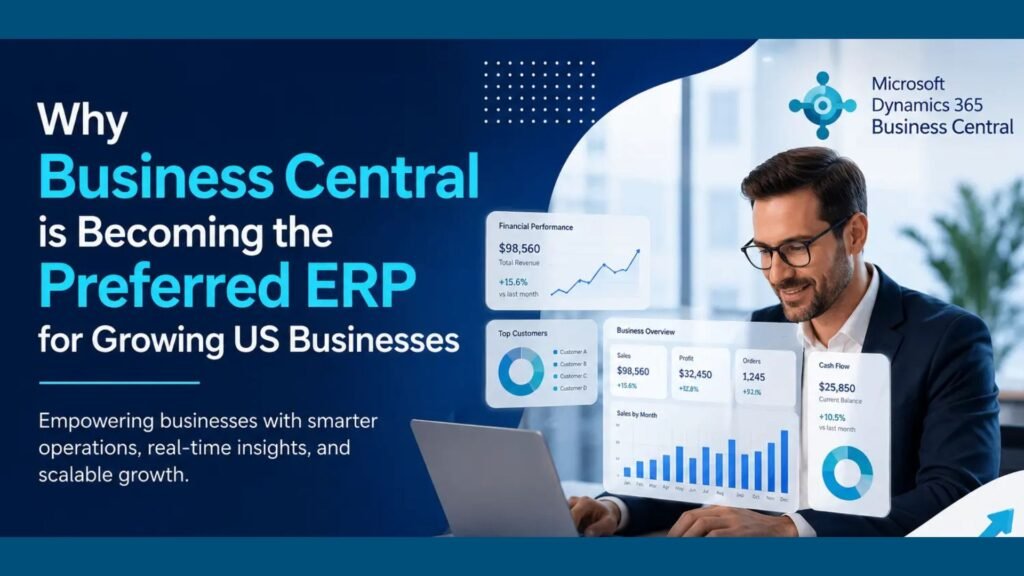
Why Business Central Is Becoming the Preferred ERP for Growing US Businesses

Modern businesses in the United States are rapidly transforming the way they operate. From finance and inventory management to customer service and analytics, organizations are looking for intelligent systems that can help them scale efficiently while reducing operational complexity. Traditional software solutions often fail to support growing business needs, which is why many companies are moving toward cloud-based ERP platforms. One solution that continues to gain popularity among small and mid-sized businesses is Microsoft Dynamics 365 Business Central. Known for its flexibility, automation capabilities, and seamless integration with Microsoft tools, Business Central is helping organizations streamline operations and improve decision-making. Today, businesses in Texas, USA, searching for a reliable Microsoft Dynamics 365 partner are increasingly choosing Business Central to modernize operations, improve productivity, and prepare for long-term growth. Understanding Microsoft Dynamics 365 Business Central Microsoft Dynamics 365 Business Central is a comprehensive enterprise resource planning (ERP) solution designed to unify core business processes within a single platform. It combines finance, supply chain management, sales, purchasing, inventory, reporting, and customer relationship management into one connected system. Unlike traditional ERP systems that require expensive hardware and complex maintenance, Business Central operates in the cloud. This enables organizations to access critical business information securely from anywhere while reducing IT infrastructure costs. Growing companies often choose Microsoft Dynamics 365 Business Central in Texas, USA, because the platform supports scalability, automation, and digital transformation without requiring large enterprise budgets. Why Growing US Businesses Need Modern ERP Solutions As businesses expand, operational challenges also increase. Managing disconnected software systems, spreadsheets, manual reporting, and outdated processes can slow growth and reduce efficiency. Many organizations struggle with: Modern ERP systems solve these problems by centralizing business data and automating workflows. Business Central has become one of the preferred ERP platforms because it allows businesses to simplify operations while improving agility and decision-making. Cloud ERP Is Driving Digital Transformation Cloud technology has fundamentally changed how businesses operate. Companies no longer want complex on-premise systems that require costly upgrades and maintenance. Business Central provides a cloud-first environment that offers: For organizations looking for MS Dynamics 365 implementation services in Texas, USA, cloud ERP adoption offers significant operational and financial advantages. Businesses can access their ERP system anytime using laptops, smartphones, or tablets, making it ideal for remote and hybrid work environments. Seamless Integration with Microsoft Ecosystem One of the strongest advantages of Business Central is its seamless integration with Microsoft applications. Businesses can connect Business Central with: This integration improves collaboration and productivity because employees can work within familiar tools while accessing real-time business data. For example: Companies searching for Microsoft Dynamics consulting services in Texas, USA, often prioritize this integration capability because it improves workflow efficiency across departments. Financial Management Made Easier Financial management is one of the most critical areas for growing businesses. Business Central helps organizations improve financial visibility and automate accounting processes. Key financial management features include the following: Automation reduces manual data entry and minimizes errors, allowing finance teams to focus on strategic planning rather than repetitive tasks. Real-time financial reporting helps businesses make faster decisions and respond quickly to market changes. Organizations requiring Microsoft Dynamics 365 Support Services in Texas, USA, often use Business Central to improve accounting accuracy and financial control. Inventory and Supply Chain Optimization Inventory management becomes increasingly complex as businesses grow. Overstocking and stock shortages can negatively impact profitability and customer satisfaction. Business Central helps businesses optimize supply chain operations through: Manufacturers, distributors, and retailers benefit significantly from improved inventory visibility and automation. Businesses implementing Business Central can reduce operational delays while improving order fulfillment accuracy. Scalability Supports Long-Term Growth One major reason businesses choose Business Central is scalability. Many traditional ERP systems become difficult to manage as organizations expand. Business Central supports growth by allowing companies to: This flexibility ensures businesses can continue using the same ERP platform as they grow without requiring expensive system replacements. Companies seeking D365 migration services in Texas, USA, often migrate from outdated ERP systems because Business Central offers a scalable and future-ready solution. Automation Improves Operational Efficiency Manual processes consume time and increase the likelihood of errors. Business Central automates repetitive business tasks, helping organizations improve efficiency and productivity. Automation features include the following: By automating routine operations, employees can focus on customer engagement, strategic initiatives, and business growth. Automation also helps reduce operational costs while improving overall service quality. Real-Time Data and Business Intelligence Modern businesses rely heavily on accurate data to make informed decisions. Business Central provides real-time reporting and analytics capabilities that help organizations monitor performance effectively. Users can access: Integration with Power BI enables businesses to create advanced visual dashboards and customized reports. This level of visibility supports proactive decision-making and helps leadership teams identify opportunities for improvement. Enhanced Customer Relationship Management Customer expectations continue to rise, making customer relationship management more important than ever. Business Central helps businesses improve customer experiences through: Sales and service teams gain better visibility into customer interactions, enabling faster response times and personalized engagement. Improved customer management ultimately leads to stronger customer retention and higher revenue growth. Cost-Effective ERP Solution for SMBs Large enterprise ERP systems are often expensive and difficult to maintain. Business Central offers a cost-effective alternative designed specifically for small and mid-sized businesses. Benefits include: Because the platform operates in the cloud, businesses avoid major upfront investments while still accessing enterprise-grade functionality. For businesses evaluating Microsoft Dynamics 365 Business Central in Texas, USA, affordability is often a major advantage. Strong Security and Compliance Features Data security is a top priority for modern organizations. Business Central benefits from Microsoft’s advanced cloud security infrastructure. Security features include the following: These security capabilities help businesses protect sensitive financial and operational information while meeting regulatory requirements. Faster ERP Deployment and Implementation Traditional ERP implementations can take years to complete. Business Central offers faster implementation timelines, especially when businesses work with experienced ERP consultants. Professional implementation services typically include: Organizations seeking MS Dynamics 365 implementation services in Texas, USA, often prefer Business Central because

Why Business Central Is Becoming the Preferred ERP for Growing US Businesses Read More »

top-challenges-in-erp-implementation-and-how-to-overcome-them

Top Challenges in ERP Implementation and How to Overcome Them

Implementing an Enterprise Resource Planning (ERP) system is a major step toward digital transformation. It helps businesses unify operations, improve efficiency, and gain real-time insights across departments. However, ERP implementation is not just a technical upgrade—it’s a strategic shift that impacts people, processes, and technology. Solutions like Microsoft Dynamics 365 have made ERP more flexible and scalable, but organizations still face several challenges during implementation. Whether you’re planning a new deployment or upgrading an existing system, understanding these challenges can help you avoid costly mistakes. In this blog, we explore the most common ERP implementation challenges and how to overcome them effectively. 1. Unclear Business Goals One of the most common reasons ERP projects fail is the lack of clearly defined objectives. Without a clear vision, businesses struggle to measure success or align the system with their operational needs. How to overcome it:Start by identifying your business goals—whether it’s improving reporting, reducing costs, or enhancing productivity. Define KPIs and ensure your ERP solution supports these objectives. Working with an experienced Microsoft Dynamics 365 partner in Texas, USA, can help you create a structured implementation roadmap. 2. Resistance to Change ERP systems often require employees to adopt new workflows and processes. This can lead to resistance, especially if users are not properly trained or informed. How to overcome it:Focus on change management from the beginning. Communicate the benefits of the new system clearly and involve employees in the implementation process. Provide hands-on training and continuous support to ease the transition. Businesses that invest in Microsoft Dynamics 365 Support Services in Texas, USA, often achieve better adoption rates. 3. Poor Planning and Budget Issues ERP implementations can quickly exceed budgets if not planned carefully. Hidden costs, scope changes, and delays can impact the overall success of the project. How to overcome it:Create a detailed project plan that includes timelines, budgets, and milestones. Break the implementation into phases and allocate contingency funds. Choosing reliable MS Dynamics 365 implementation services in Texas, USA, can help minimize risks and keep your project on track. 4. Data Migration Challenges Migrating data from legacy systems to a new ERP platform is often complex. Poor data quality or incomplete migration can lead to inaccurate reporting and operational issues. How to overcome it:Before migration, audit and clean your data. Remove duplicates, standardize formats, and ensure consistency. Using expert D365 migration services in texas usa can make the process smoother and more accurate. 5. Lack of Skilled Resources ERP implementation requires specialized knowledge, which many organizations may not have in-house. How to overcome it:Consider hiring experienced consultants or using resource augmentation services. Partnering with experts in Microsoft Dynamics consulting services in texas usa ensures that your implementation is handled efficiently and professionally. 6. Over-Customization While customization can make ERP systems more tailored, excessive modifications can increase complexity and maintenance costs. How to overcome it:Use standard features wherever possible and customize only when necessary. Solutions like Microsoft Dynamics 365 Business Central in Texas, USA, offer built-in functionalities that meet most business needs without heavy customization. 7. Integration Issues ERP systems need to integrate with existing tools like CRM, HR software, and third-party applications. Poor integration can create data silos. How to overcome it:Identify integration requirements early in the project. Use APIs and middleware to ensure seamless connectivity. Thorough testing is essential to ensure smooth data flow across systems. 8. Unrealistic Timelines: Many organizations underestimate the time required for ERP implementation, leading to rushed deployments and errors. How to overcome it:Set realistic timelines based on project scope and complexity. Use a phased approach and allow enough time for testing, training, and adjustments. 9. Inadequate Testing: Skipping testing or rushing through it can result in system failures after go-live. How to overcome it:Conduct multiple testing phases, including user acceptance testing. Simulate real business scenarios and involve end-users to ensure the system works as expected. 10. Lack of Post-Implementation Support: ERP implementation doesn’t end at go-live. Without ongoing support, businesses may struggle to resolve issues or optimize performance. How to overcome it:Invest in continuous support and maintenance. Regular updates, monitoring, and training ensure your ERP system continues to deliver value over time. Final Thoughts ERP implementation is a transformative journey that requires careful planning, the right expertise, and a clear strategy. While challenges are inevitable, they can be effectively managed with the right approach. By working with experienced professionals and leveraging reliable services, businesses can ensure a smooth transition and maximize the benefits of their ERP investment. A well-implemented ERP system not only improves efficiency but also sets the foundation for long-term growth and innovation. FAQs Q1. What is the biggest challenge in ERP implementation? Ans: The biggest challenge is usually a lack of clear goals and poor planning, which can lead to delays and budget overruns. Q2. How long does ERP implementation take? Ans: It depends on the size and complexity of the business, but most projects take several months to a year. Q3. Why is data migration important? Ans: Data migration ensures that all existing business information is accurately transferred to the new system without errors. Q4. Can small businesses benefit from ERP? Ans: Yes, modern ERP solutions are scalable and help small businesses improve efficiency and manage growth. Q5. What is the role of ERP support services? Ans: Support services help maintain system performance, resolve issues, and ensure continuous improvement after implementation.

Top Challenges in ERP Implementation and How to Overcome Them Read More »

complete-guide-to-migrating-from-dynamics-nav-to-business-central

Complete Guide to Migrating from Dynamics NAV to Business Central

In today’s fast-evolving digital landscape, businesses relying on legacy ERP systems are increasingly shifting toward modern, cloud-based solutions. One of the most significant transitions happening globally is the migration from Microsoft Dynamics NAV to Microsoft Dynamics 365 Business Central. Why Businesses Are Moving from Dynamics NAV to Business Central Microsoft has officially shifted its focus to cloud-first solutions under Microsoft Dynamics 365. While Dynamics NAV served businesses well for years, it lacks the agility and scalability modern organizations need. Key Reasons for Migration Businesses working with a Microsoft Dynamics 365 partner in Texas, USA, often accelerate this transition with minimal disruption and maximum ROI. What is Microsoft Dynamics 365 Business Central? Microsoft Dynamics 365 Business Central is a next-generation, all-in-one ERP solution designed for small to mid-sized businesses. It combines finance, operations, sales, and customer service into a unified platform. Core Features Companies leveraging Microsoft Dynamics 365 Business Central in Texas, USA, gain a competitive advantage through automation and real-time decision-making. NAV vs Business Central: Key Differences Feature Dynamics NAV Business Central Deployment On-premise Cloud & Hybrid Updates Manual Automatic Scalability Limited Highly scalable Integration Basic Advanced (Power Platform, AI) User Experience Traditional Modern & intuitive Benefits of Migrating to Business Central 1. Cloud-Based Flexibility: Access your ERP system anytime, anywhere. 2. Lower IT Costs: No need for expensive infrastructure or maintenance. 3. Enhanced Productivity: Automation reduces manual tasks and errors. 4. Real-Time Insights: Built-in analytics improve decision-making. 5. Seamless Integration: Connect easily with Microsoft ecosystem tools. Businesses opting for D365 migration services in Texas, USA, often report faster ROI and improved operational efficiency. Challenges in NAV to Business Central Migration Migration isn’t without hurdles. Common challenges include: This is why partnering with experts offering Microsoft Dynamics 365 support services in Texas, USA, is essential for smooth execution. Step-by-Step Migration Process 1. Assessment & Planning 2. Choose the Right Migration Strategy A reliable Microsoft Dynamics consulting services provider in Texas, USA, helps determine the best approach. 3. Data Migration 4. Customization & Integration 5. Testing Phase 6. Go-Live & Support Engaging MS Dynamics 365 implementation services in Texas, USA, ensures a seamless go-live experience. Cost of Migration Migration costs vary depending on the following: Estimated Cost Breakdown Working with a trusted Microsoft Dynamics 365 partner in Texas, USA, helps optimize costs and avoid hidden expenses. Best Practices for Successful Migration Plan Early: Start planning at least 6–12 months. Clean Your Data: Remove redundant or outdated data before migration. Choose the Right Partner: A certified partner ensures efficiency and compliance. Train Your Team: User adoption is critical for success. Test Thoroughly: Never skip testing phases. How Migration Improves Business Performance After migrating to Business Central, companies typically experience: Organizations leveraging Microsoft Dynamics 365 Support Services in Texas, USA, also benefit from continuous system optimization. Industry Use Cases Manufacturing Retail Services Why Choose a Dynamics Partner in Texas? Working with a local Microsoft Dynamics 365 partner in Texas, USA, offers the following: Future of ERP: Why Business Central is the Right Choice The future of ERP lies in the following: Microsoft Dynamics 365 continues to lead innovation, making Business Central a future-proof investment. Frequently Asked Questions (FAQs) Q1. What is the difference between Dynamics NAV and Business Central? Ans: Dynamics NAV is an on-premise ERP, while Business Central is a cloud-based, modern ERP with advanced capabilities. Q2. How long does migration take? Ans: Typically, 3 to 12 months, depending on complexity and data size. Q3. Is data migration safe? Ans: Yes, when handled by experts offering D365 migration services in Texas, USA, data integrity and security are ensured. Q4. What are the costs involved? Ans: Costs depend on customization, data volume, and implementation scope. Q5. Can I keep my NAV customizations? Ans: Some can be migrated, but many require redevelopment in Business Central. Q6. Do I need training after migration? Ans: Yes, user training is essential for smooth adoption. Q7. Why choose Business Central over other ERPs? Ans: It offers seamless Microsoft integration, scalability, and cost efficiency. Q8. What support is available after migration? Ans: Ongoing Microsoft Dynamics 365 support services in Texas, USA, ensure system stability and updates. Conclusion Migrating from Microsoft Dynamics NAV to Microsoft Dynamics 365 Business Central is no longer just an upgrade—it’s a strategic move toward digital transformation. With the right approach, tools, and expert guidance from a trusted Microsoft Dynamics 365 partner in Texas, USA, businesses can unlock new levels of efficiency, scalability, and innovation. Whether you’re planning a simple upgrade or a complete ERP transformation, investing in MS Dynamics 365 implementation services in Texas, USA, and Microsoft Dynamics consulting services in Texas, USA, ensures long-term success.

Complete Guide to Migrating from Dynamics NAV to Business Central Read More »

common-dynamics-365-issues-and-how-support-teams-fix-them

Common Dynamics 365 Issues and How Support Teams Fix Them

Modern businesses depend on Microsoft Dynamics 365 to manage operations, customer relationships, finance, and supply chains in one unified ecosystem. While the platform offers powerful capabilities, organizations often face technical and operational challenges that can impact productivity. The difference between struggling with these issues and turning them into opportunities lies in having the right support strategy. In this guide, we’ll explore the most common Dynamics 365 issues and how expert teams resolve them efficiently. 1. System Performance and Slow Response One of the most frequent complaints users have is slow system performance. This can affect reporting, transaction processing, and overall user experience. Why it happen: How support teams fix it: Experts analyze system performance using diagnostic tools, optimize database queries, and streamline customizations. In many cases, businesses working with a Microsoft Dynamics 365 partner in Texas, USA, benefit from proactive monitoring that prevents these issues before they escalate. 2. Integration Issues with External Systems Dynamics 365 is often connected with CRM platforms, eCommerce tools, and third-party applications. When integrations fail, it can disrupt workflows and create data silos. Common causes: Resolution: Support specialists implement secure APIs, use middleware solutions, and perform regular testing. Providers offering Microsoft Dynamics consulting services in Texas, USA, ensure that integrations remain stable and scalable. 3. Data Migration Challenges Migrating data from legacy systems or older ERP platforms can be complex. Errors during this process may lead to data loss or duplication. Key issues: How experts handle it: Teams providing D365 migration services in Texas, USA, typically start with data audits, followed by cleansing and validation. Automated tools and post-migration testing ensure accuracy and reliability. 4. Low User Adoption Even the most advanced system fails if employees don’t use it effectively. Many organizations struggle with user adoption after implementation. Signs of poor adoption: Fix: Support teams conduct role-based training, simplify interfaces, and provide ongoing assistance. Companies using Microsoft Dynamics 365 Business Central in Texas, USA, often see improved adoption when workflows are tailored to user needs. 5. Customization and Update Conflicts Customization is essential for aligning the platform with business processes. However, excessive or poorly managed modifications can create problems during updates. Causes: Solution: Professionals delivering MS Dynamics 365 implementation services in Texas, USA, follow best practices such as using extensions instead of altering core code. They also test updates in sandbox environments to avoid disruptions. 6. Security and Compliance Risks With sensitive business data stored in the system, security is a top concern. Common risks: How support teams mitigate risks: They implement role-based access, enable multi-factor authentication, and conduct regular audits. Reliable Microsoft Dynamics 365 support services in Texas, USA, also ensure compliance with industry standards. 7. Reporting and Analytics Limitations Businesses rely on accurate insights for decision-making. Poor reporting setups can lead to delays or incorrect data interpretation. Issues include: Fix: Support teams optimize reporting frameworks and integrate tools like Microsoft Power BI to deliver actionable insights. 8. Licensing and Cost Optimization Many organizations overspend due to inefficient license management. Challenges: Solution: A trusted Microsoft Dynamics 365 partner in Texas, USA, conducts license audits and aligns subscriptions with actual business needs, helping reduce unnecessary costs. 9. Workflow and Automation Failures Automation is a major advantage of Dynamics 365, but poorly configured workflows can lead to operational issues. Causes: Resolution: Support teams debug workflows, optimize logic, and continuously monitor automation processes to ensure consistency. 10. Lack of Ongoing Support and Maintenance Without continuous monitoring, systems can become outdated and inefficient over time. Solution: Businesses benefit from ongoing support that includes: Organizations leveraging Microsoft Dynamics 365 support services in Texas, USA, often experience improved system stability and long-term efficiency. Why Professional Support Matters Working with experienced experts provides long-term advantages beyond just fixing issues. Key benefits: A reliable Microsoft Dynamics 365 partner in Texas, USA, not only solves problems but also helps businesses scale effectively. Conclusion Microsoft Dynamics 365 is a robust platform that can transform business operations, but it requires proper management to deliver its full value. From performance bottlenecks to integration challenges and user adoption issues, these problems are common—but solvable. By working with experts offering services such as: Businesses can ensure smooth operations and sustained growth without disruptions. FAQs Q1. What are the most common Dynamics 365 problems? Ans: Performance issues, integration errors, data migration challenges, and low user adoption are among the most common problems. Q2. How can I improve system performance? Ans: Optimizing databases, reducing unnecessary customizations, and using expert support services can significantly improve performance. Q3. Why is migration to Dynamics 365 complex? Ans: It involves handling large datasets, ensuring accuracy, and maintaining data integrity, which requires specialized tools and expertise. Q4. How do consultants help with integration? Ans: They design scalable integration frameworks, configure APIs, and ensure consistent data flow between systems. Q5. Is customization recommended? Ans: Yes, but it should follow best practices to avoid issues during system updates. Q6. How important is ongoing support? Ans: Continuous support ensures system stability, security, and performance optimization over time. Q7. Can Dynamics 365 scale with business growth? Ans: Yes, it is highly scalable and can adapt to changing business needs across industries. Q8. What tools enhance reporting in Dynamics 365? Ans: Tools like Microsoft Power BI provide advanced analytics and real-time insights.

Common Dynamics 365 Issues and How Support Teams Fix Them Read More »