
microsoft d365 implementation partners

why-logistics-companies-are-investing-in-ai-driven-erp-solution

Why Logistics Companies Are Investing in AI-Driven ERP Solutions

The logistics industry is going through a major digital transformation. Rising customer expectations, supply chain disruptions, increasing fuel costs, and the need for real-time visibility are pushing logistics companies to modernize their operations. Traditional ERP systems are no longer enough to manage the growing complexity of transportation, warehousing, inventory, and customer service. This is why many businesses are now investing in AI-driven ERP solutions powered by platforms like Microsoft Dynamics 365 Business Central and other intelligent enterprise applications. AI-driven ERP systems combine automation, predictive analytics, machine learning, and real-time data insights to help logistics companies improve operational efficiency and make smarter business decisions. Organizations that rely on a reliable Microsoft ecosystem and a trusted Microsoft Dynamics 365 Partner are gaining a competitive advantage through digital transformation. The Growing Challenges in the Logistics Industry Logistics companies operate in a highly dynamic environment. They face multiple operational challenges every day, including delayed shipments, fluctuating demand, warehouse inefficiencies, inventory inaccuracies, and rising transportation costs. Managing these processes manually or with outdated systems can lead to operational bottlenecks and poor customer experiences. Modern logistics companies also need better visibility across their supply chains. Customers now expect real-time shipment tracking, faster deliveries, and proactive communication. At the same time, businesses must control costs while maintaining service quality. AI-driven ERP solutions address these challenges by integrating intelligent technologies into core business operations. This is one reason why organizations are increasingly investing in Microsoft Dynamics 365 Business Central and advanced ERP platforms supported by professional Microsoft Dynamics consulting service providers. What Is an AI-Driven ERP Solution? An AI-driven ERP solution is an enterprise resource planning system enhanced with artificial intelligence capabilities. These systems can analyze large amounts of business data, identify patterns, automate repetitive tasks, and provide predictive insights for decision-making. Unlike traditional ERP systems, AI-powered ERP platforms can: Solutions such as Microsoft Dynamics 365 Business Central help logistics companies streamline operations while improving agility and scalability. Why Logistics Companies Are Choosing AI-Driven ERP Solutions 1. Improved Supply Chain Visibility One of the biggest reasons logistics companies are investing in AI-driven ERP systems is the need for complete supply chain visibility. Logistics managers need accurate real-time information about inventory, shipments, suppliers, and warehouse operations. AI-enabled ERP systems collect and process data from multiple sources to provide centralized visibility across the organization. This allows businesses to monitor shipments in real time, identify delays early, and make faster operational decisions. A reliable Microsoft Dynamics 365 partner can help organizations implement dashboards and analytics tools that improve operational transparency. 2. Predictive Demand Forecasting Demand fluctuations can create serious operational challenges in logistics. Overstocking increases storage costs, while understocking leads to delays and customer dissatisfaction. AI-driven ERP platforms use historical data, market trends, and customer behavior to predict future demand more accurately. This helps logistics companies optimize inventory levels and improve warehouse planning. Businesses investing in MS Dynamics 365 implementation services often gain access to advanced forecasting tools that reduce waste and improve profitability. 3. Route Optimization and Transportation Efficiency Transportation costs are one of the largest expenses for logistics companies. AI-powered ERP systems can optimize delivery routes by analyzing traffic conditions, weather data, fuel consumption, and delivery schedules. Smart route optimization helps companies: Companies leveraging Microsoft Dynamics Consulting Services can integrate AI capabilities that improve transportation planning and fleet management. 4. Warehouse Automation and Inventory Management Warehouse operations are becoming increasingly complex due to growing order volumes and customer expectations. AI-driven ERP systems automate many warehouse processes, including inventory tracking, order picking, and stock replenishment. These intelligent systems reduce manual errors and improve operational efficiency. Real-time inventory visibility also helps businesses avoid stock shortages and excess inventory. With the support of Microsoft Dynamics 365 Support Services, logistics companies can maintain smooth warehouse operations and quickly resolve technical issues. 5. Better Customer Experience Customer expectations in the logistics industry have changed significantly. Businesses now expect accurate delivery timelines, real-time shipment tracking, and fast issue resolution. AI-powered ERP systems improve customer experiences by providing better communication, predictive delivery estimates, and automated customer service workflows. Chatbots and AI-based support tools can handle customer inquiries more efficiently. Organizations using Microsoft Dynamics 365 Business Central can create customer-centric logistics operations that improve satisfaction and loyalty. 6. Reduced Operational Costs Cost reduction is one of the biggest advantages of AI-driven ERP systems. Automation minimizes manual work, improves productivity, and reduces errors across operations. AI also helps businesses identify inefficiencies in supply chain processes, inventory management, and transportation operations. These insights allow logistics companies to optimize resources and reduce unnecessary expenses. A trusted Microsoft Dynamics 365 Partner can help organizations maximize ERP ROI through customized implementation strategies. 7. Faster and Smarter Decision-Making Traditional reporting methods often provide delayed or incomplete information. AI-powered ERP systems deliver real-time analytics and predictive insights that support faster decision-making. Managers can quickly analyze operational performance, identify risks, and respond to changing business conditions. This agility is especially important in the logistics industry, where delays and disruptions can impact customer relationships and profitability. Companies investing in Microsoft Dynamics consulting services gain access to data-driven business intelligence tools that support long-term growth. The Role of Microsoft Dynamics 365 in Logistics Transformation Microsoft Dynamics 365 Business Central has become one of the most popular ERP platforms for logistics and supply chain companies. The platform offers integrated capabilities for finance, inventory management, warehousing, purchasing, sales, and customer service. When combined with AI technologies, the platform provides powerful automation and analytics features that help logistics businesses improve operational performance. Key benefits include the following: Working with an experienced Microsoft Dynamics 365 Partner ensures successful ERP deployment and customization based on business needs. Why Cloud-Based ERP Is Important for Logistics Companies Cloud ERP solutions are becoming increasingly important in logistics because they provide flexibility, scalability, and remote accessibility. Logistics operations often involve multiple warehouses, transportation hubs, and teams working across different locations. Cloud-based AI ERP systems enable employees to access real-time data from anywhere. This improves collaboration and operational responsiveness. Cloud ERP platforms also reduce infrastructure costs

Why Logistics Companies Are Investing in AI-Driven ERP Solutions Read More »

Why-Flexible-ERP-Teams-Are-the-Future-of-Digital-transformation

Why Flexible ERP Teams Are the Future of Digital Transformation

In today’s rapidly changing business environment, organizations are under constant pressure to innovate, adapt, and scale faster than ever before. Digital transformation is no longer a long-term vision — it has become a business necessity. Companies across industries are investing in cloud technologies, automation, artificial intelligence, and enterprise solutions to stay competitive. At the center of this transformation lie ERP systems, especially platforms like Microsoft Dynamics 365 and Microsoft Dynamics 365 Business Central. However, technology alone does not guarantee success. Businesses also need skilled, agile, and flexible ERP teams that can adapt quickly to changing business needs. Traditional fixed IT teams often struggle to keep pace with modern digital demands. This is why flexible ERP teams are becoming the future of digital transformation. Organizations are now increasingly relying on scalable ERP experts, remote consultants, implementation specialists, and managed support teams to accelerate transformation projects while reducing operational costs. Whether it is cloud migration, ERP upgrades, or process automation, flexible ERP teams provide businesses with the expertise and scalability they need. The Shift Toward Flexible ERP Teams For years, companies depended heavily on in-house IT departments to manage ERP systems. While this model worked in the past, modern digital transformation projects require specialized expertise across multiple domains such as cloud computing, integrations, cybersecurity, analytics, and automation. Hiring permanent employees for every ERP function can be expensive and time-consuming. Moreover, digital transformation projects often require temporary specialized skills that may not be needed long-term. This is where flexible ERP teams create value. Flexible ERP teams allow businesses to: Businesses working with a trusted Microsoft ecosystem partner or a reliable Microsoft Dynamics 365 partner can quickly access experienced consultants, developers, support specialists, and project managers without long recruitment cycles. Why Digital Transformation Requires Agility Digital transformation projects are dynamic by nature. Requirements change frequently due to evolving market trends, customer expectations, and technology advancements. Companies need ERP teams that can respond quickly to these changes. Traditional ERP models are often rigid and slow. Flexible ERP teams, on the other hand, offer agility and responsiveness. They can adapt to new business priorities, integrate emerging technologies, and optimize processes continuously. For example, a manufacturing company implementing Microsoft Dynamics 365 Business Central may initially focus on finance and inventory management. Later, they may decide to add AI-driven forecasting, warehouse automation, or CRM integrations. Flexible ERP teams can seamlessly expand the project scope without major disruptions. This adaptability is one of the key reasons why businesses increasingly invest in Microsoft Dynamics consulting services and cloud ERP specialists. The Growing Importance of Microsoft Dynamics 365 Modern organizations require ERP systems that support scalability, remote work, automation, and data-driven decision-making. Microsoft Dynamics 365 has emerged as one of the leading ERP and CRM platforms because it combines flexibility, intelligence, and cloud capabilities. Businesses implementing Microsoft Dynamics 365 Business Central can centralize operations, improve productivity, and gain real-time business visibility. However, successful ERP implementation depends heavily on having the right team. A skilled Microsoft Dynamics 365 partner helps organizations: Flexible ERP teams make these services more accessible and cost-effective for businesses of all sizes. Benefits of Flexible ERP Teams 1. Faster ERP Implementations One of the biggest challenges businesses face during ERP implementation is project delays. Traditional hiring processes slow down project execution because finding skilled ERP professionals takes time. Flexible ERP teams provide immediate access to experienced consultants and developers, accelerating deployment timelines. Businesses can start projects quickly and reduce downtime. Organizations using MS Dynamics 365 implementation services often benefit from faster onboarding, streamlined workflows, and reduced implementation risks when working with scalable ERP teams. 2. Access to Specialized Expertise Digital transformation projects require expertise in multiple areas, including: Instead of maintaining a large in-house team, businesses can access specialists only when needed. Flexible ERP teams allow organizations to bring in experts for specific phases of the project. For example, companies using D365 migration services may require temporary migration specialists during system upgrades but not afterward. Flexible staffing models eliminate unnecessary long-term costs. 3. Reduced Operational Costs Hiring full-time ERP professionals can be expensive, especially for small and mid-sized businesses. Flexible ERP teams reduce overhead costs related to: Businesses only pay for the expertise they need, making digital transformation more affordable and scalable. Many companies now prefer outsourcing Microsoft Dynamics 365 support rather than maintaining large in-house support departments. 4. Improved Business Continuity ERP systems are critical for daily business operations. Downtime or technical issues can lead to revenue loss and productivity disruptions. Flexible ERP teams provide continuous support and proactive monitoring to ensure system stability. Businesses can access remote ERP experts across different time zones, enabling faster issue resolution and improved operational continuity. A reliable Microsoft Dynamics 365 partner ensures that ERP systems remain secure, optimized, and fully functional even during business expansion or system upgrades. 5. Easier Cloud Migration Cloud ERP adoption continues to grow because it offers scalability, flexibility, and remote accessibility. However, cloud migration can be complex without the right expertise. Flexible ERP teams simplify migration processes by providing skilled consultants experienced in: Organizations investing in D365 migration services can minimize migration risks and ensure smooth transitions to cloud-based ERP environments. Flexible ERP Teams and Remote Work Culture The rise of hybrid and remote work models has further increased the demand for flexible ERP teams. Modern businesses need ERP professionals who can collaborate virtually and support distributed teams. Cloud-based platforms like Microsoft Dynamics 365 allow ERP consultants, developers, and support teams to work remotely while maintaining productivity and collaboration. Remote ERP teams offer several advantages: This flexibility enables businesses to remain agile and competitive in an increasingly digital economy. The Role of Automation in Flexible ERP Teams Automation is transforming how ERP systems operate. Businesses are increasingly using AI-powered workflows, robotic process automation, and predictive analytics to improve efficiency. Flexible ERP teams help organizations implement automation strategies more effectively. Experienced consultants can identify repetitive processes and integrate intelligent automation solutions into ERP systems. Some common automation areas include: Organizations leveraging Microsoft Dynamics consulting services

Why Flexible ERP Teams Are the Future of Digital Transformation Read More »

the-role-of-change-management-in-a-successful-d365-deployment

The Role of Change Management in a Successful D365 Deployment

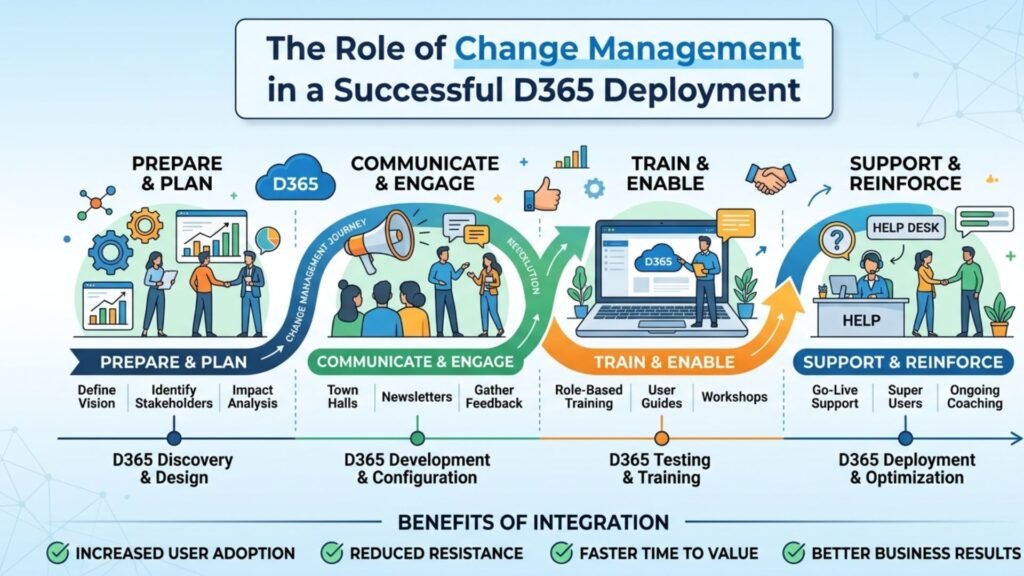
In today’s fast-evolving digital landscape, implementing an advanced ERP system like Microsoft Dynamics 365 (D365) is no longer just a technological upgrade—it’s a strategic transformation. Organizations across industries are investing heavily in D365 to streamline operations, enhance customer experiences, and gain real-time insights. However, many implementations fall short of expectations—not because of technology limitations, but due to poor change management. Change management is the backbone of a successful D365 deployment. It ensures that employees, processes, and organizational culture align with the new system, maximizing ROI and minimizing disruption. Whether you are working with a Microsoft Dynamics 365 partner in Texas, USA, or managing the project internally, a strong change management strategy can make or break your deployment. Understanding Change Management in D365 Deployment Change management is a structured approach to transitioning individuals, teams, and organizations from their current state to a desired future state. In the context of D365, it involves preparing users to adopt new workflows, tools, and processes introduced by the system. Unlike traditional ERP implementations, D365 introduces cloud-based flexibility, automation, AI-driven insights, and integration capabilities. While these benefits are transformative, they also require employees to adapt quickly—making change management critical. Why Change Management is Critical for D365 Success 1. Ensures User Adoption: One of the biggest challenges in ERP implementation is resistance to change. Employees often feel comfortable with legacy systems and processes. Without proper training and communication, they may resist adopting D365. A reliable Microsoft Dynamics 365 Business Central partner in Texas, USA, often emphasizes user adoption through structured onboarding, training sessions, and ongoing support. 2. Minimizes Business Disruptions: During implementation, businesses may experience temporary disruptions in workflows. Effective change management ensures that employees understand new processes, reducing downtime and maintaining productivity. Organizations leveraging MS Dynamics 365 Implementation services in Texas, USA, benefit from phased rollouts and proactive planning that minimizes operational risks. 3. Aligns Business Goals with Technology: D365 is not just a software upgrade—it’s a business transformation tool. Change management ensures that the system aligns with organizational goals, improving efficiency and decision-making. Key Components of Change Management in D365 Deployment 1. Leadership and Stakeholder Engagement: Successful change starts at the top. Leadership must actively support the D365 implementation and communicate its importance to the organization. Working with a trusted Microsoft Dynamics consulting service in texas usa provider helps ensure that leadership remains aligned with project goals and timelines. 2. Clear Communication Strategy: Communication is essential throughout the deployment lifecycle. Employees need to understand: Regular updates, workshops, and feedback sessions help build trust and reduce uncertainty. 3. Training and Skill Development: Training is one of the most crucial aspects of change management. Without proper training, even the most advanced system will fail. Organizations using Microsoft Dynamics 365 Support Services in Texas, USA often provide: 4. Process Redesign D365 implementation often requires re-engineering existing processes to align with best practices. Change management ensures that employees understand and embrace these new workflows. 5. Change Impact Assessment: Before implementation, it’s important to assess how changes will impact different departments. This helps in: The Role of a D365 Partner in Change Management Choosing the right partner is critical for a successful deployment. A professional Microsoft Dynamics 365 partner in Texas, USA, brings expertise, tools, and methodologies that simplify change management. What a Good Partner Provides: Similarly, organizations opting for D365 migration services in Texas, USA, benefit from seamless data migration combined with user readiness strategies. Common Challenges in D365 Change Management 1. Resistance to Change: Employees may fear job loss or struggle to adapt to new systems. Addressing these concerns early is essential. 2. Lack of Training: Insufficient training leads to poor system utilization and frustration among users. 3. Poor Communication: Without clear communication, employees may feel disconnected from the transformation process. 4. Inadequate Leadership Support: If leadership is not actively involved, the project may lose direction and momentum. Best Practices for Effective Change Management 1. Start Early: Change management should begin at the planning stage—not after implementation. 2. Involve Employees: Engage employees in the process by gathering feedback and involving them in decision-making. 3. Use Change Champions: Identify key employees who can act as advocates for the new system and help others adapt. 4. Provide Continuous Support: Post-implementation support is crucial for long-term success. Many companies rely on Microsoft Dynamics 365 Support Services in Texas, USA, to ensure ongoing optimization. 5. Measure Success Track key performance indicators (KPIs) such as: The Impact of Change Management on ROI Organizations that invest in change management see significantly higher returns from their D365 implementation. Benefits include: By partnering with experts in MS Dynamics 365 Implementation services in Texas, USA, businesses can maximize these benefits while minimizing risks. Change Management in D365 Business Central Deployments For small and mid-sized businesses, Microsoft Dynamics 365 Business Central in Texas, USA, offers a scalable and cost-effective ERP solution. However, even SMBs require structured change management to ensure success. Key focus areas include: Role of Technology in Supporting Change Management Modern tools and technologies play a vital role in change management, including: These tools help organizations monitor progress and identify areas for improvement. Future Trends in D365 Change Management As businesses continue to evolve, change management strategies are also transforming. Key trends include: 1. AI-Driven Adoption Insights: AI tools analyze user behavior to identify training needs and improve adoption rates. 2. Personalized Training Programs: Customized learning paths based on user roles and skill levels. 3. Continuous Change Management: Instead of a one-time effort, change management is becoming an ongoing process. Conclusion A successful D365 deployment is not just about implementing technology—it’s about transforming the way people work. Change management plays a critical role in ensuring that this transformation is smooth, effective, and sustainable. By working with experienced providers of Microsoft Dynamics consulting services in Texas, USA, businesses can navigate the complexities of change and unlock the full potential of Microsoft Dynamics 365. From planning and training to post-implementation support, a strong change management strategy ensures that your investment delivers long-term value. Whether you’re leveraging D365

The Role of Change Management in a Successful D365 Deployment Read More »

how-managed-erp-services-strengthen-security-and-compliance

How Managed ERP Services Strengthen Security and Compliance

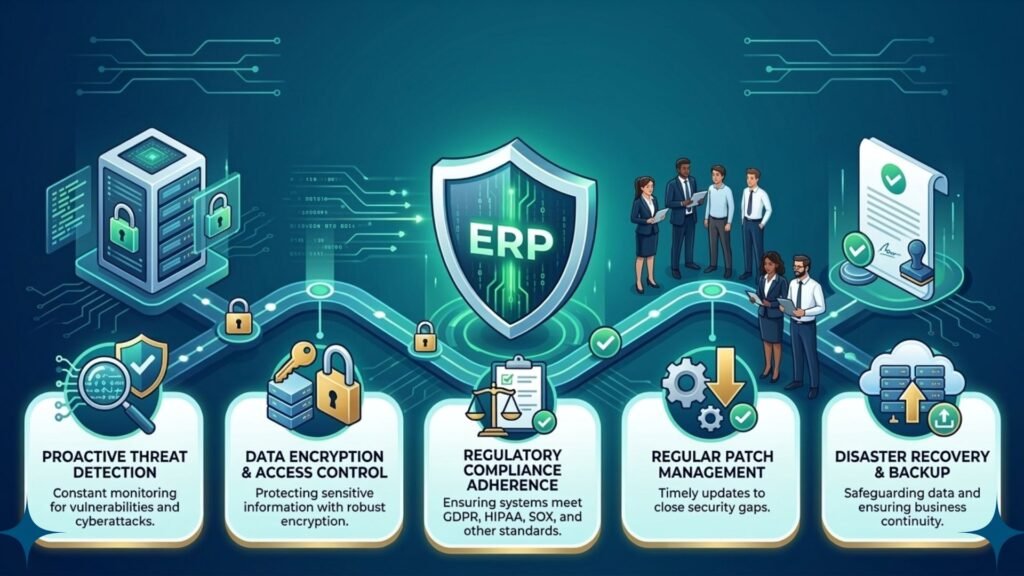
In today’s digital-first business environment, organizations rely heavily on Enterprise Resource Planning (ERP) systems to manage finance, supply chains, operations, and customer data. However, as businesses become more connected and data-driven, the risks associated with cybersecurity threats, regulatory requirements, and compliance management also increase. This is where Managed ERP Services play a critical role. Managed ERP services help organizations maintain secure, reliable, and compliant ERP environments while allowing internal teams to focus on core business activities. Businesses across industries are increasingly partnering with a Microsoft Dynamics 365 partner in Texas, USA, to ensure their ERP systems remain protected against cyber threats while meeting regulatory requirements. This article explores how managed ERP services enhance security, strengthen compliance, and support long-term business growth. Understanding Managed ERP Services Managed ERP services involve outsourcing ERP system management, maintenance, monitoring, and optimization to specialized experts. Instead of relying solely on in-house IT teams, organizations work with ERP specialists who ensure the system operates securely and efficiently. For companies using Microsoft Dynamics 365 Business Central in Texas, USA, managed ERP services often include: These services ensure that ERP platforms remain secure, compliant, and aligned with evolving business requirements. The Growing Importance of ERP Security ERP systems store highly sensitive business data, including financial records, customer information, employee data, and operational insights. This makes ERP platforms attractive targets for cybercriminals. Without proper security measures, organizations may face risks such as: Companies using Microsoft Dynamics 365 Support Services in texas usa often rely on managed ERP providers to implement advanced security frameworks that safeguard sensitive data and protect critical operations. Key Security Benefits of Managed ERP Services 1. Proactive Threat Monitoring One of the biggest advantages of managed ERP services is 24/7 system monitoring. Security specialists continuously monitor ERP environments to detect unusual activities, suspicious logins, or potential vulnerabilities. With the help of Microsoft Dynamics consulting services in Texas, USA, businesses can quickly identify and address potential threats before they escalate into major security incidents. Proactive monitoring includes: This proactive approach significantly reduces the risk of data breaches. 2. Advanced Access Control and User Management Access control is a crucial aspect of ERP security. Not every employee should have access to all system data. Managed ERP providers implement role-based access control (RBAC) to ensure users only access information relevant to their responsibilities. Organizations using MS Dynamics 365 Implementation services in texas usa often configure: These controls prevent unauthorized access and strengthen internal security. 3. Regular Security Updates and Patch Management ERP software vendors frequently release security updates to address vulnerabilities. However, many organizations fail to implement these updates promptly due to resource constraints or operational challenges. Managed ERP providers ensure that: For businesses relying on D365 migration services in texas usa, maintaining updated systems is particularly important because newly migrated environments must remain secure from the start. 4. Data Encryption and Secure Data Storage Managed ERP services also strengthen data protection through encryption. Sensitive information stored within ERP systems is encrypted both in transit and at rest. Security measures include: Organizations implementing Microsoft Dynamics 365 Business Central in texas usa benefit from enterprise-level security features combined with expert management services. 5. Backup and Disaster Recovery Planning Data loss can result from cyberattacks, hardware failures, or human errors. Managed ERP services ensure businesses have robust backup and disaster recovery strategies in place. These strategies include: With support from Microsoft Dynamics 365 Support Services in texas usa, businesses can recover operations quickly in the event of unexpected disruptions. Strengthening Compliance with Managed ERP Services In addition to security, organizations must comply with numerous regulatory requirements. Industries such as finance, healthcare, manufacturing, and retail face strict compliance standards related to data protection, financial reporting, and operational transparency. Managed ERP services help organizations maintain compliance through structured governance and regulatory alignment. 1. Regulatory Compliance Management ERP systems must comply with various regulations, such as: Working with a Microsoft Dynamics 365 partner in texas usa helps businesses ensure their ERP environment aligns with evolving compliance requirements. Managed ERP providers regularly review system configurations, ensuring compliance policies remain properly enforced. 2. Automated Audit Trails Audit trails play an essential role in compliance. ERP systems track all system activities, including user actions, data modifications, and financial transactions. Managed ERP services ensure these logs are: Companies using Microsoft Dynamics consulting services in texas usa can generate compliance reports quickly and efficiently during regulatory audits. 3. Data Governance and Policy Enforcement Effective compliance requires strict data governance policies. Managed ERP providers help organizations implement policies that control: Organizations leveraging MS Dynamics 365 Implementation services in texas usa benefit from structured governance models that ensure consistent compliance across departments. 4. Compliance Reporting and Documentation Managed ERP services simplify compliance reporting by providing automated documentation and reporting tools. Businesses can generate reports related to: This capability is particularly valuable for organizations using D365 migration services in Texas, USA, as regulatory reporting must remain consistent during and after ERP migrations. Why Businesses in Texas Are Adopting Managed ERP Services Texas is home to a rapidly growing business ecosystem that includes manufacturing companies, energy firms, logistics providers, and technology enterprises. As these businesses expand, they require scalable ERP systems that can support growth while maintaining strong security and compliance. Partnering with a trusted Microsoft Dynamics 365 partner in Texas, USA, enables organizations to: Managed ERP services also help businesses focus on innovation rather than technical maintenance. How Managed ERP Services Improve Business Continuity In addition to security and compliance benefits, managed ERP services also improve overall business continuity. Organizations gain advantages such as: Businesses implementing Microsoft Dynamics 365 Business Central in Texas, USA, often rely on managed service providers to maintain system stability while scaling operations. Choosing the Right Managed ERP Partner Selecting the right ERP partner is crucial for maximizing the benefits of managed services. Organizations should evaluate potential providers based on: A reliable provider offering Microsoft Dynamics 365 Support Services in Texas, USA, ensures businesses receive ongoing support, security monitoring, and compliance management. Future of Managed ERP Security

How Managed ERP Services Strengthen Security and Compliance Read More »

why-manufacturers-trust-business-central-for-supply-chain-optimization

Why Manufacturers Trust Business Central for Supply Chain Optimization

In today’s highly competitive manufacturing landscape, supply chain efficiency is no longer optional—it is a strategic necessity. Manufacturers must manage fluctuating demand, rising operational costs, supplier disruptions, and increasing customer expectations, all while maintaining profitability. This growing complexity explains why manufacturers trust Business Central for supply chain optimization, as many organizations are turning to Microsoft Dynamics 365 Business Central as a modern, scalable ERP solution that delivers end-to-end supply chain visibility and control. Across the United States—and particularly in Texas—manufacturers are partnering with a trusted Microsoft Dynamics 365 partner in Texas, USA to transform their operations, streamline processes, and optimize supply chains. This growing shift highlights why manufacturers trust Business Central for supply chain optimization, as Dynamics 365 Business Central has become the ERP of choice for manufacturers seeking greater visibility and control. This article explores how it enhances supply chain performance and why working with experienced Microsoft Dynamics consulting services in Texas, USA, is essential for long-term success. The Growing Supply Chain Challenges Faced by Manufacturers Manufacturers today operate in an environment shaped by global sourcing, volatile markets, and digital disruption. Traditional ERP systems often fail to provide the agility and real-time insights needed to respond quickly. Common supply chain challenges include: Legacy ERP systems struggle to adapt to these realities. As a result, manufacturers are increasingly migrating to cloud-based solutions like Dynamics 365 Business Central, supported by expert D365 migration services in Texas, USA. What Is Microsoft Dynamics 365 Business Central? Microsoft Dynamics 365 Business Central is a comprehensive, cloud-based ERP solution designed for small to mid-sized businesses and growing enterprises. It unifies finance, supply chain, manufacturing, sales, and customer relationship management (CRM) into a single platform. Often referred to as Dynamics 365 Business Central, Business Central, or Dynamics 365 BC, it is part of the broader Microsoft Dynamics 365 ecosystem, seamlessly integrating with tools like Microsoft Dynamics 365 CRM, Microsoft 365, Power BI, and Azure. For manufacturers, Business Central delivers: Why Manufacturers Trust Business Central for Supply Chain Optimization 1. End-to-End Supply Chain Visibility One of the biggest reasons manufacturers trust Dynamics 365 Business Central is its ability to provide complete visibility across the supply chain. From procurement and inventory to production and fulfillment, every process is connected. With real-time dashboards and analytics, manufacturers can: A trusted Microsoft Dynamics 365 Business Central partner in Texas, USA, ensures that dashboards and reports are customized to manufacturing KPIs. 2. Intelligent Inventory Management Inventory optimization is critical for manufacturers aiming to reduce carrying costs while avoiding stockouts. Business Central uses intelligent planning tools to help manufacturers maintain the right inventory levels. Key benefits include: By working with Microsoft Dynamics 365 Support Services in Texas, USA, manufacturers can continuously refine inventory strategies as business needs evolve. 3. Demand Forecasting and Production Planning Accurate demand forecasting is essential for efficient supply chain operations. Dynamics Microsoft solutions use historical data and predictive insights to help manufacturers align production with actual demand. Business Central supports: Manufacturers partnering with experienced MS Dynamics 365 Implementation services in Texas, USA, can configure these features to match complex production environments. 4. Seamless Procurement and Supplier Management Procurement inefficiencies can disrupt the entire supply chain. Microsoft Dynamics ERP partner solutions streamline purchasing by automating vendor selection, approvals, and order tracking. With Business Central, manufacturers can: A certified Microsoft Dynamics 365 partner ensures procurement workflows align with industry best practices. 5. Integrated Manufacturing and Shop Floor Control Unlike disconnected systems, Dynamics 365 Business Central integrates supply chain operations directly with manufacturing processes. Capabilities include: Manufacturers working with Microsoft Dynamics implementation partners gain tailored configurations that support discrete, process, or mixed-mode manufacturing. 6. Built-In Financial and Cost Control Supply chain optimization is incomplete without financial alignment. Business Central links inventory movements, procurement, and production directly to finance. This enables manufacturers to: A reliable Microsoft ERP partner helps manufacturers leverage these insights for strategic planning. Why Texas Manufacturers Prefer Dynamics 365 Business Central Texas is home to a diverse manufacturing ecosystem, including automotive, electronics, oil & gas, food processing, and industrial equipment. These industries require scalable and flexible ERP solutions. Manufacturers in Texas benefit from: By choosing Microsoft Dynamics 365 Business Central in Texas, USA, organizations gain both global technology and local expertise. The Role of Microsoft Dynamics Consulting Services in Texas, USA ERP success depends not only on software but also on strategy, implementation, and ongoing optimization. Microsoft Dynamics consulting services in Texas USA play a critical role in ensuring manufacturers realize maximum ROI. Consulting services include: Experienced consultants ensure that Dynamics 365, MS Dynamics, and Dynamics CRM capabilities are aligned with manufacturing goals. Smooth Transitions with D365 Migration Services in Texas USA Many manufacturers are moving from legacy systems or older Microsoft ERP solutions to Dynamics 365 Business Central. A poorly planned migration can disrupt operations—but expert D365 migration services in Texas, USA, minimize risk. Migration services cover: Certified Microsoft Dynamics partners list providers ensure secure and seamless transitions. Business Central and CRM: A Unified View of Customers Supply chain efficiency is closely linked to customer satisfaction. Microsoft Dynamics 365 CRM integrates seamlessly with Business Central, giving manufacturers a 360-degree view of customers. Benefits include: This integration strengthens both supply chain and customer experience strategies. Why Choose a Microsoft Dynamics 365 Partner in Texas, USA? Choosing the right partner is as important as choosing the right ERP. A trusted Dynamics 365 partner, Business Central partner, or Microsoft Dynamics ERP partner brings industry knowledge, technical expertise, and ongoing support. Key advantages include: Leading Microsoft Dynamics implementation partners help manufacturers stay competitive in a rapidly changing market. Future-Ready Supply Chains with Dynamics 365 With continuous updates, AI-driven insights, and cloud scalability, Microsoft Dynamics 365 Business Central prepares manufacturers for the future. Key innovations include: Manufacturers partnering with a reliable Dynamics 365 Business Central partner gain a future-proof ERP platform. Frequently Asked Questions (FAQs) Q1. Why is Business Central ideal for manufacturers? Ans: Business Central integrates supply chain, manufacturing, finance, and CRM into one system, providing real-time visibility, automation, and scalability. Q2.

Why Manufacturers Trust Business Central for Supply Chain Optimization Read More »

how-a-trusted-microsoft-partner-simplifies-your-journey-from-axnav-to-dynamics-365

How a Trusted Microsoft Partner Simplifies Your Journey from AX/NAV to Dynamics 365

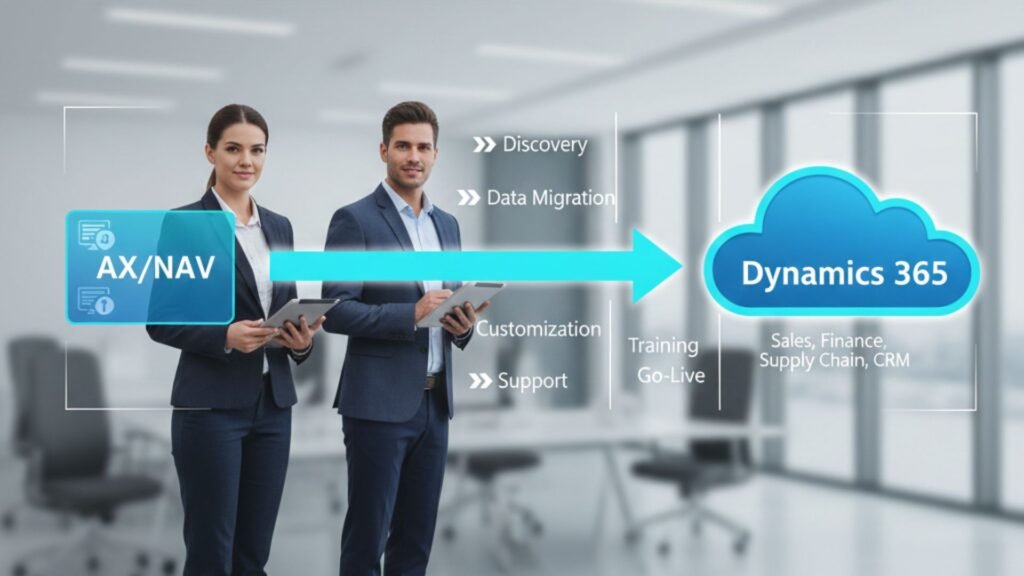
For many organizations across the United States, especially in Texas, Microsoft Dynamics AX and NAV have long been the backbone of enterprise resource planning (ERP). However, with Microsoft’s strategic shift toward cloud-first, AI-powered solutions, Dynamics 365—particularly Dynamics 365 Business Central and Dynamics 365 Finance & Operations—has become the future of ERP. Migrating from AX or NAV to Dynamics 365 is not just a technical upgrade; it is a strategic business transformation. Data structures change, processes evolve, integrations expand, and users must adapt to new ways of working. This is where a trusted Microsoft Dynamics 365 partner in Texas, USA plays a critical role. Understanding the Shift: From AX/NAV to Dynamics 365 Why Microsoft AX and NAV Are No Longer Enough Microsoft Dynamics AX and NAV were powerful on-premise ERP systems, but modern businesses now demand: Dynamics 365 addresses these needs through two primary solutions: An experienced Microsoft Dynamics partner in Texas understands which path fits your business and industry best. Why Migration Is Not Just an Upgrade Many organizations underestimate the complexity of a Dynamics NAV upgrade to Business Central or an AX-to-D365 migration. The reality is that this journey involves: Attempting this without a certified Microsoft Dynamics 365 implementation partner often leads to cost overruns, delays, and operational disruption. The Role of a Trusted Microsoft Dynamics 365 Partner in Texas, USA 1. Strategic Assessment and Roadmap Planning A trusted Microsoft Dynamics consulting services provider in Texas, USA begins with a comprehensive assessment: This assessment results in a tailored migration roadmap aligned with your business goals, budget, and timeline. 2. Choosing the Right Dynamics 365 Solution Not every business needs the same ERP. A certified Microsoft ERP partner helps you decide between: For Texas-based manufacturers, distributors, professional services firms, and retailers, local partners bring industry-specific insights that global providers often miss. How Microsoft Partners Simplify Data Migration Clean, Secure, and Accurate Data Transfer Data is the heart of your ERP. A trusted D365 migration services provider in Texas, USA ensures: Whether it’s a Dynamics NAV 2018 upgrade to Business Central or a complex AX migration, experienced partners reduce downtime and risk. Customization and Extension Optimization From Heavy Customization to Smart Extensions Older AX and NAV systems often rely on heavy customizations. A modern Microsoft Dynamics 365 Business Central partner helps you: This approach ensures smoother upgrades and long-term system stability. Seamless Integrations with the Microsoft Ecosystem A certified Dynamics 365 partner in Texas ensures seamless integration with: This unified ecosystem enables real-time insights and cross-department collaboration. Implementation Excellence with Local Expertise Why Texas-Based Partners Make a Difference Working with a Microsoft Dynamics 365 partner in Texas, USA offers unique advantages: Certified Microsoft Dynamics Gold Partners follow Microsoft’s Sure Step and FastTrack methodologies to ensure predictable, high-quality implementations. Change Management and User Adoption People Are the Key to ERP Success Technology alone does not guarantee success. A trusted Microsoft Dynamics 365 implementation services provider in Texas focuses on: This ensures faster adoption and higher productivity post-go-live. Ongoing Microsoft Dynamics 365 Support Services in Texas, USA Beyond Go-Live: Long-Term Partnership Post-implementation support is critical. Reliable Microsoft Dynamics 365 Support Services in Texas, USA include: A long-term partnership ensures your ERP evolves with your business. Business Benefits of Migrating with a Trusted Microsoft Partner Key Advantages With expert guidance, businesses unlock the full value of Microsoft Dynamics 365 Business Central in Texas, USA and enterprise-grade D365 solutions. Frequently Asked Questions (FAQs) Q 1. Why should I work with a Microsoft Dynamics 365 partner in Texas, USA? Ans: A local partner understands regional compliance, industry needs, and provides faster, more personalized support. Q 2. Is Dynamics NAV upgrade to Business Central mandatory? Ans: While not mandatory, Microsoft strongly recommends upgrading to stay supported, secure, and future-ready. Q 3. How long does AX/NAV to Dynamics 365 migration take? Ans: Timelines vary based on data complexity and customizations, but a trusted partner ensures realistic planning and execution. Q 4. Can I migrate only selected data from NAV or AX? Ans: Yes. Experienced Microsoft Dynamics consulting services in Texas, USA help you migrate only relevant, clean data. Q 5. What industries benefit most from Dynamics 365 Business Central? Ans: Manufacturing, distribution, retail, professional services, and logistics companies benefit significantly. Q 6. Do Microsoft Dynamics Gold Partners offer better implementation quality? Ans: Gold Partners meet Microsoft’s highest standards for expertise, customer success, and certified resources. Q 7. What support is available after go-live? Ans: Comprehensive Microsoft Dynamics 365 Support Services in Texas, USA include functional, technical, and strategic support. Q 8. Can Dynamics 365 integrate with CRM systems? Ans: Yes, Dynamics 365 integrates seamlessly with Dynamics 365 Customer Engagement and third-party CRM tools. Conclusion Migrating from AX or NAV to Dynamics 365 is a transformational step that demands expertise, strategy, and precision. A trusted Microsoft Dynamics 365 partner in Texas, USA simplifies this journey by combining technical excellence with local industry knowledge. From assessment and migration to implementation, support, and optimization, the right Microsoft ERP partner ensures your transition to Dynamics 365 is smooth, secure, and future-ready—empowering your business to thrive in a digital-first world. If you are planning a Dynamics NAV upgrade to Business Central or a full AX-to-D365 transformation, partnering with an experienced Microsoft Dynamics partner is not just an option—it’s a strategic advantage.

How a Trusted Microsoft Partner Simplifies Your Journey from AX/NAV to Dynamics 365 Read More »