Microsoft Dynamics Implementation

How AI in Dynamics 365 is Transforming Logistics-Operations

How AI in Dynamics 365 is Transforming Logistics Operations

The logistics industry is evolving rapidly as businesses face increasing pressure to deliver goods faster, reduce operational costs, and improve supply chain visibility. Traditional logistics systems often struggle to manage growing operational complexity, which is why many organizations are now investing in AI-powered ERP solutions. One of the most effective platforms helping businesses modernize logistics operations is Microsoft Dynamics 365. AI capabilities within Microsoft Dynamics 365 Business Central are transforming how logistics companies manage inventory, transportation, warehousing, customer service, and demand forecasting. By combining automation, predictive analytics, and real-time business intelligence, organizations can make smarter decisions while improving operational efficiency. This article explores how AI in Dynamics 365 is reshaping logistics operations and why businesses are increasingly working with a trusted Microsoft Dynamics 365 partner to implement and optimize these intelligent solutions. The Growing Role of AI in Logistics The logistics industry handles a massive amount of operational data every day. Managing deliveries, supplier coordination, warehouse operations, and customer expectations manually can create delays, errors, and rising operational costs. AI helps solve these challenges by automating repetitive tasks and delivering predictive insights that improve decision-making. Modern logistics companies are using AI-powered ERP systems to streamline operations, reduce human error, and gain complete visibility into their supply chains. AI can analyze historical trends, monitor real-time operations, and identify patterns that help businesses respond faster to changing market conditions. As competition increases, companies are relying on advanced ERP platforms and experienced Microsoft Dynamics consulting service providers to build smarter and more scalable logistics processes. What is AI in Dynamics 365? AI in Dynamics 365 combines machine learning, automation, cloud technology, and advanced analytics to help businesses improve operational performance. These intelligent capabilities are integrated across finance, supply chain, inventory management, customer service, and warehouse operations. Within Microsoft Dynamics 365 Business Central, AI helps logistics businesses forecast demand, automate workflows, improve shipment planning, and optimize inventory management. Instead of relying on manual reporting and reactive processes, organizations can use real-time insights to make proactive business decisions. AI also improves collaboration between departments by centralizing operational data into a single connected system. This creates better transparency across the supply chain and helps logistics teams respond quickly to disruptions. Predictive Demand Forecasting Demand forecasting is one of the most important functions in logistics operations. Inaccurate forecasting can lead to inventory shortages, overstocking, delayed deliveries, and unnecessary operational expenses. AI-powered forecasting tools in Dynamics 365 analyze historical sales trends, customer purchasing behavior, seasonal demand patterns, and market conditions to generate more accurate forecasts. This allows logistics businesses to maintain optimal stock levels while reducing waste and storage costs. Companies working with experienced MS Dynamics 365 implementation service providers can customize forecasting models according to their business requirements and industry-specific operational needs. Improved forecasting also helps businesses strengthen supplier relationships because procurement teams can plan inventory requirements more effectively. This results in smoother operations and improved customer satisfaction. Intelligent Inventory Management Inventory management becomes far more efficient when AI is integrated into ERP systems. AI-powered inventory tools within Dynamics 365 provide real-time visibility into stock levels, warehouse movement, and replenishment requirements. Instead of manually tracking inventory, businesses can automate stock monitoring and receive alerts when inventory reaches predefined thresholds. AI also identifies slow-moving products, reduces excess inventory, and improves order fulfillment accuracy. For logistics companies managing large warehouses or multiple distribution centers, this level of automation significantly improves operational efficiency. With the help of Microsoft Dynamics 365 Business Central, businesses can reduce carrying costs while improving delivery performance. Route Optimization and Fleet Efficiency Transportation costs are one of the largest operational expenses for logistics companies. Fuel consumption, delivery delays, and inefficient route planning can directly impact profitability. AI in Dynamics 365 helps businesses optimize delivery routes by analyzing traffic conditions, weather data, fuel usage, and delivery schedules in real time. This allows logistics companies to select the most efficient routes and improve delivery performance. Better route optimization reduces transportation costs while helping businesses improve customer satisfaction through faster and more reliable deliveries. AI also helps organizations improve fleet utilization and reduce vehicle downtime. Companies implementing intelligent transportation workflows through professional MS Dynamics 365 implementation services can achieve significant operational savings over time. Real-Time Supply Chain Visibility Supply chain disruptions have become increasingly common due to global economic uncertainty, labor shortages, transportation delays, and changing customer demands. Businesses now require complete real-time visibility into their operations to manage these challenges effectively. AI-powered dashboards in Dynamics 365 provide logistics companies with real-time monitoring of inventory movement, supplier performance, shipment status, and warehouse activities. Managers can identify bottlenecks quickly and make informed decisions before problems escalate. This level of visibility allows organizations to become more proactive instead of reactive. Businesses working with a reliable Microsoft Dynamics 365 partner can configure customized dashboards and reporting tools that align with their operational goals and KPIs. Warehouse Automation Warehouse operations involve multiple repetitive tasks that consume time and increase the risk of human error. AI-powered warehouse automation in Dynamics 365 helps businesses improve efficiency by automating processes such as inventory tracking, barcode scanning, picking, packing, and shipment scheduling. AI also helps optimize warehouse space utilization by analyzing product movement patterns and storage requirements. This improves operational productivity while reducing delays in order fulfillment. As logistics operations continue to scale, warehouse automation becomes essential for maintaining accuracy and operational efficiency. Businesses leveraging Microsoft Dynamics 365 Support Services can continuously optimize warehouse performance and adapt workflows based on operational changes. Predictive Maintenance for Fleet Vehicles Unexpected vehicle breakdowns can disrupt logistics operations and lead to missed delivery deadlines. AI-driven predictive maintenance capabilities within Dynamics 365 help businesses monitor vehicle performance and identify maintenance issues before failures occur. By analyzing engine performance, fuel usage, maintenance history, and sensor data, AI can predict when maintenance is required. This proactive approach reduces downtime, lowers repair costs, and improves fleet reliability. Predictive maintenance also helps logistics companies extend vehicle lifespan and maintain consistent delivery schedules. This creates a more dependable transportation network while improving overall operational efficiency. Enhanced

How AI in Dynamics 365 is Transforming Logistics Operations Read More »

Why-Flexible-ERP-Teams-Are-the-Future-of-Digital-transformation

Why Flexible ERP Teams Are the Future of Digital Transformation

In today’s rapidly changing business environment, organizations are under constant pressure to innovate, adapt, and scale faster than ever before. Digital transformation is no longer a long-term vision — it has become a business necessity. Companies across industries are investing in cloud technologies, automation, artificial intelligence, and enterprise solutions to stay competitive. At the center of this transformation lie ERP systems, especially platforms like Microsoft Dynamics 365 and Microsoft Dynamics 365 Business Central. However, technology alone does not guarantee success. Businesses also need skilled, agile, and flexible ERP teams that can adapt quickly to changing business needs. Traditional fixed IT teams often struggle to keep pace with modern digital demands. This is why flexible ERP teams are becoming the future of digital transformation. Organizations are now increasingly relying on scalable ERP experts, remote consultants, implementation specialists, and managed support teams to accelerate transformation projects while reducing operational costs. Whether it is cloud migration, ERP upgrades, or process automation, flexible ERP teams provide businesses with the expertise and scalability they need. The Shift Toward Flexible ERP Teams For years, companies depended heavily on in-house IT departments to manage ERP systems. While this model worked in the past, modern digital transformation projects require specialized expertise across multiple domains such as cloud computing, integrations, cybersecurity, analytics, and automation. Hiring permanent employees for every ERP function can be expensive and time-consuming. Moreover, digital transformation projects often require temporary specialized skills that may not be needed long-term. This is where flexible ERP teams create value. Flexible ERP teams allow businesses to: Businesses working with a trusted Microsoft ecosystem partner or a reliable Microsoft Dynamics 365 partner can quickly access experienced consultants, developers, support specialists, and project managers without long recruitment cycles. Why Digital Transformation Requires Agility Digital transformation projects are dynamic by nature. Requirements change frequently due to evolving market trends, customer expectations, and technology advancements. Companies need ERP teams that can respond quickly to these changes. Traditional ERP models are often rigid and slow. Flexible ERP teams, on the other hand, offer agility and responsiveness. They can adapt to new business priorities, integrate emerging technologies, and optimize processes continuously. For example, a manufacturing company implementing Microsoft Dynamics 365 Business Central may initially focus on finance and inventory management. Later, they may decide to add AI-driven forecasting, warehouse automation, or CRM integrations. Flexible ERP teams can seamlessly expand the project scope without major disruptions. This adaptability is one of the key reasons why businesses increasingly invest in Microsoft Dynamics consulting services and cloud ERP specialists. The Growing Importance of Microsoft Dynamics 365 Modern organizations require ERP systems that support scalability, remote work, automation, and data-driven decision-making. Microsoft Dynamics 365 has emerged as one of the leading ERP and CRM platforms because it combines flexibility, intelligence, and cloud capabilities. Businesses implementing Microsoft Dynamics 365 Business Central can centralize operations, improve productivity, and gain real-time business visibility. However, successful ERP implementation depends heavily on having the right team. A skilled Microsoft Dynamics 365 partner helps organizations: Flexible ERP teams make these services more accessible and cost-effective for businesses of all sizes. Benefits of Flexible ERP Teams 1. Faster ERP Implementations One of the biggest challenges businesses face during ERP implementation is project delays. Traditional hiring processes slow down project execution because finding skilled ERP professionals takes time. Flexible ERP teams provide immediate access to experienced consultants and developers, accelerating deployment timelines. Businesses can start projects quickly and reduce downtime. Organizations using MS Dynamics 365 implementation services often benefit from faster onboarding, streamlined workflows, and reduced implementation risks when working with scalable ERP teams. 2. Access to Specialized Expertise Digital transformation projects require expertise in multiple areas, including: Instead of maintaining a large in-house team, businesses can access specialists only when needed. Flexible ERP teams allow organizations to bring in experts for specific phases of the project. For example, companies using D365 migration services may require temporary migration specialists during system upgrades but not afterward. Flexible staffing models eliminate unnecessary long-term costs. 3. Reduced Operational Costs Hiring full-time ERP professionals can be expensive, especially for small and mid-sized businesses. Flexible ERP teams reduce overhead costs related to: Businesses only pay for the expertise they need, making digital transformation more affordable and scalable. Many companies now prefer outsourcing Microsoft Dynamics 365 support rather than maintaining large in-house support departments. 4. Improved Business Continuity ERP systems are critical for daily business operations. Downtime or technical issues can lead to revenue loss and productivity disruptions. Flexible ERP teams provide continuous support and proactive monitoring to ensure system stability. Businesses can access remote ERP experts across different time zones, enabling faster issue resolution and improved operational continuity. A reliable Microsoft Dynamics 365 partner ensures that ERP systems remain secure, optimized, and fully functional even during business expansion or system upgrades. 5. Easier Cloud Migration Cloud ERP adoption continues to grow because it offers scalability, flexibility, and remote accessibility. However, cloud migration can be complex without the right expertise. Flexible ERP teams simplify migration processes by providing skilled consultants experienced in: Organizations investing in D365 migration services can minimize migration risks and ensure smooth transitions to cloud-based ERP environments. Flexible ERP Teams and Remote Work Culture The rise of hybrid and remote work models has further increased the demand for flexible ERP teams. Modern businesses need ERP professionals who can collaborate virtually and support distributed teams. Cloud-based platforms like Microsoft Dynamics 365 allow ERP consultants, developers, and support teams to work remotely while maintaining productivity and collaboration. Remote ERP teams offer several advantages: This flexibility enables businesses to remain agile and competitive in an increasingly digital economy. The Role of Automation in Flexible ERP Teams Automation is transforming how ERP systems operate. Businesses are increasingly using AI-powered workflows, robotic process automation, and predictive analytics to improve efficiency. Flexible ERP teams help organizations implement automation strategies more effectively. Experienced consultants can identify repetitive processes and integrate intelligent automation solutions into ERP systems. Some common automation areas include: Organizations leveraging Microsoft Dynamics consulting services

Why Flexible ERP Teams Are the Future of Digital Transformation Read More »

Managed-Services-Reduce-ERP-TCO

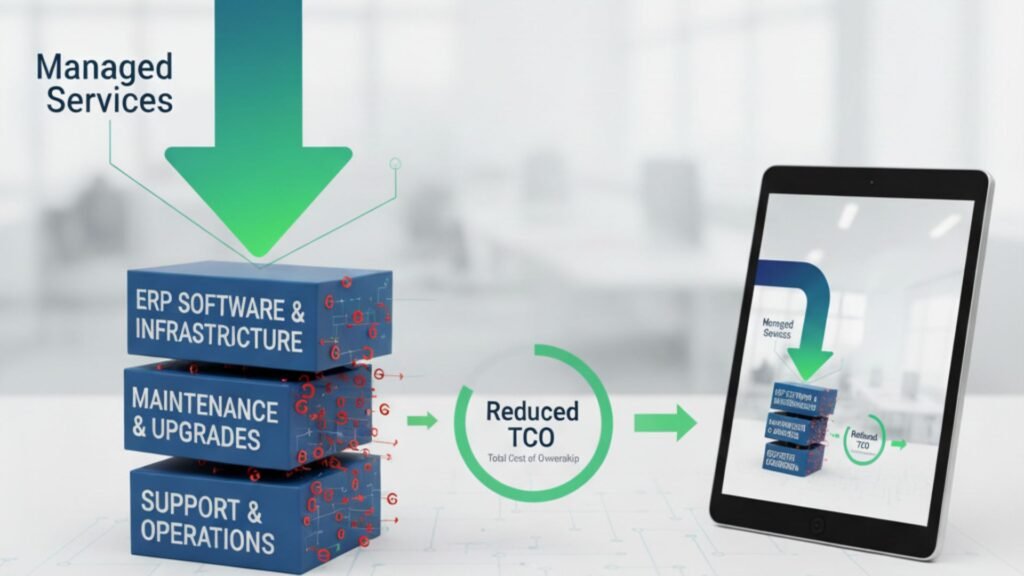
How Our Managed Services Reduce ERP TCO for USA & Canadian Companies

In today’s competitive market, businesses in the USA and Canada are constantly looking for ways to optimize operations, reduce costs, and improve performance. Enterprise Resource Planning (ERP) systems like Microsoft Dynamics 365 play a pivotal role in achieving these goals. However, one of the most overlooked factors in ERP success is the total cost of ownership (TCO). The initial investment in ERP software is just the beginning. Ongoing support, upgrades, integration, staff training, and downtime costs can significantly increase TCO if not managed properly. That’s where managed services come into play. By partnering with a trusted Microsoft Dynamics 365 partner in USA and Canada, companies can unlock predictable costs, improved efficiency, and long-term ROI. In this article, we’ll explore how our managed services help businesses reduce ERP TCO while ensuring reliability, scalability, and compliance. Understanding ERP TCO Before we dive into cost reduction strategies, let’s clarify what ERP TCO (Total Cost of Ownership) includes. It covers: Without structured support, these expenses can spiral out of control. Managed services provide a proactive approach to keep ERP costs predictable and aligned with business outcomes. How Managed Services Reduce ERP TCO 1. Proactive Monitoring & Issue Resolution Unplanned downtime is one of the biggest hidden ERP costs. A single hour of downtime in industries like manufacturing, retail, or hospitality can cost thousands of dollars. With our Microsoft Dynamics 365 Support Services in USA and Canada, we proactively monitor your ERP environment 24/7. This reduces operational disruptions, leading to lower indirect ERP costs. 2. Predictable Cost Structure Traditional ERP support is reactive, often involving costly emergency fixes. Our managed services replace this uncertainty with predictable, subscription-based pricing models. Instead of unpredictable bills for system outages or upgrade delays, businesses benefit from: For companies seeking ERP Implementation Services in USA and Canada, predictable costs make budgeting easier and more reliable. 3. Optimized ERP Performance ERP systems require regular optimization to align with changing business needs. Our managed services ensure Dynamics 365 runs at peak efficiency by: An optimized ERP reduces processing times, improves employee productivity, and lowers operational costs over time. 4. Scalable Support for Growing Businesses As businesses expand across the USA and Canada, their ERP requirements evolve. Without proper planning, scaling can lead to expensive re-implementations. By partnering with a trusted Microsoft Dynamics 365 partner in USA and Canada, companies benefit from: Scalable ERP support avoids costly system overhauls and keeps TCO under control. 5. Improved Security & Compliance Cybersecurity breaches and compliance penalties can drastically increase ERP costs. Our Microsoft Dynamics 365 Support Services in USA and Canada include: Stronger security reduces risk exposure and eliminates unexpected compliance costs. 6. Faster Upgrades & Migration ERP upgrades and migrations are often time-consuming and expensive if mishandled. We specialize in ERP Migration Services in USA and Canada, ensuring a smooth transition from legacy systems to Microsoft Dynamics 365. Key benefits include: Our approach significantly reduces the time and cost associated with upgrades and migrations. 7. Enhanced User Training & Adoption Poor adoption is another hidden driver of high ERP TCO. Many organizations underestimate the cost of retraining employees or handling productivity losses due to lack of knowledge. As part of our managed services, we provide: This maximizes ERP utilization and ensures companies get the full return on their Dynamics 365 investment. Why Choose Us as Your Microsoft Dynamics 365 Partner in USA and Canada Choosing the right partner is critical for reducing ERP TCO. We go beyond traditional support by delivering: With us as your Microsoft Dynamics 365 partner in USA and Canada, you don’t just get technical support—you get a strategic partner committed to driving long-term value. Business Impact: How Managed Services Lower ERP TCO Let’s break down the tangible benefits: Cost Driver Without Managed Services With Managed Services Downtime High, unpredictable Minimal due to proactive monitoring Support Costs Unplanned, reactive Predictable monthly/annual plans Upgrades & Migrations Expensive, high-risk Streamlined, automated, faster Security & Compliance Reactive, risk-prone Continuous audits, reduced fines User Adoption Poor, retraining needed Strong training support Scalability Costly re-implementations Flexible, cloud-ready growth The result? A significantly lower ERP TCO and a higher ROI on your Dynamics 365 investment. Conclusion ERP systems like Microsoft Dynamics 365 are essential for modern enterprises, but without proper management, the total cost of ownership can escalate quickly. Our managed services offer a structured, proactive, and scalable approach that keeps ERP costs predictable and controlled. Whether you are considering ERP Implementation Services in USA and Canada, planning a migration, or seeking ongoing Microsoft Dynamics 365 Support Services in USA and Canada, partnering with us ensures you achieve maximum value at the lowest possible TCO. If you’re ready to transform ERP from a cost center into a growth enabler, it’s time to work with a Microsoft Dynamics 365 partner in USA and Canada who understands your challenges and delivers solutions tailored to your business.

How Our Managed Services Reduce ERP TCO for USA & Canadian Companies Read More »