dynamics 365 business central on premise

ax-to-dynamics-365-f-and-migration-costs-timeline-and-strategy

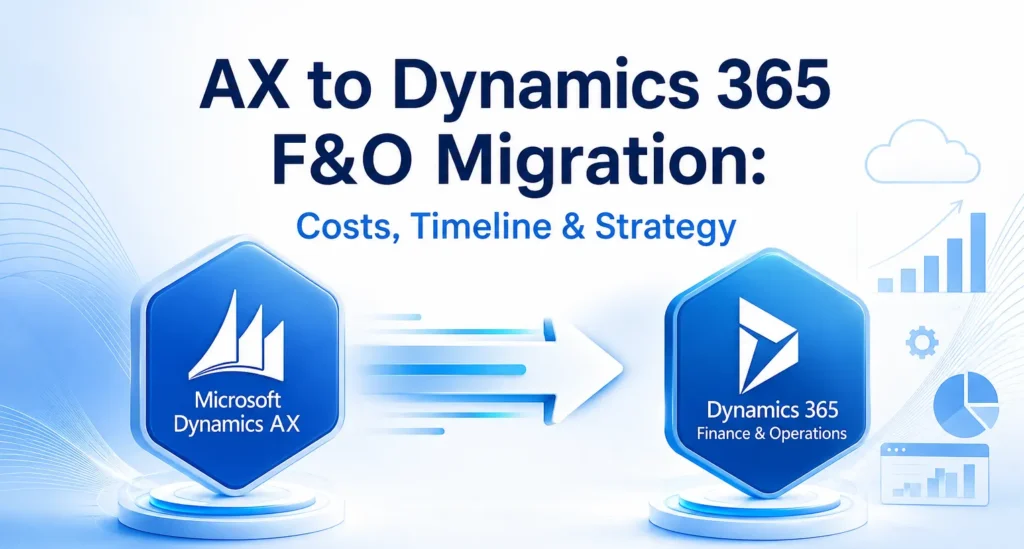
AX to Dynamics 365 F&O Migration: Costs, Timeline & Strategy

Businesses using Microsoft Dynamics AX have benefited from a reliable ERP system for many years. However, as technology evolves and organisations increasingly adopt cloud-first strategies, many are choosing to migrate to Microsoft Dynamics 365 Finance & Operations (Dynamics 365 F&O). This modern ERP solution provides greater flexibility, enhanced security, AI-powered capabilities, and continuous updates that help businesses stay competitive in an increasingly digital world. Migrating from Dynamics AX is more than simply upgrading software. It is an opportunity to modernise business processes, improve operational efficiency, and create a scalable platform that supports long-term growth. Whether you are planning your first ERP migration or evaluating your options, understanding the costs, timeline, and implementation strategy is essential for a successful transition. Why Upgrade from Dynamics AX to Dynamics 365 F&O? Microsoft Dynamics AX was designed for on-premises environments and has served thousands of organisations worldwide. However, maintaining legacy infrastructure, managing customisations, and handling manual upgrades have become increasingly expensive and time-consuming. Dynamics 365 F&O addresses these challenges with a cloud-based architecture that delivers continuous innovation and better performance. The platform offers advanced financial management, intelligent supply chain capabilities, automated workflows, real-time reporting, and seamless integration with Microsoft 365, Power Platform, and Azure services. Businesses also gain access to AI-driven insights that support faster and more informed decision-making. Working with an experienced Microsoft Dynamics 365 partner helps organisations make the transition smoothly while reducing risks associated with complex ERP migrations. Understanding the Cost of Migration One of the first questions businesses ask is, “How much does an AX to Dynamics 365 F&O migration cost?” There is no fixed answer because every organisation’s ERP environment is different. The overall investment depends on several factors, including the size of the business, the complexity of existing processes, and the amount of customisation required. Organisations running older versions such as Dynamics AX 2009 or AX 2012 often require additional planning because these systems typically contain outdated customisations, legacy integrations, and inconsistent data. Businesses with multiple locations, international operations, or high transaction volumes may also require more extensive implementation efforts. Another important cost factor is data migration. Customer records, vendor information, inventory data, financial transactions, and historical reports all need to be reviewed and validated before being transferred into the new system. The cleaner the existing data, the smoother and more cost-effective the migration process becomes. Training employees and preparing them for the new system should also be included in the overall project budget. Investing in user adoption ensures employees can quickly take advantage of the platform’s new features and capabilities. Typical Migration Timeline The duration of an AX to Dynamics 365 F&O migration depends on project complexity. Small businesses with straightforward business processes can often complete migration within a few months, while large enterprises with multiple legal entities and extensive integrations require a longer implementation schedule. A standard migration project generally includes assessment, solution design, system configuration, data migration, testing, user training, and go-live support. Each phase requires careful planning to minimise disruption to daily business operations. Rather than rushing implementation, organisations should focus on completing each stage thoroughly. Proper testing and user acceptance significantly reduce the likelihood of issues after deployment and contribute to a smoother transition. Building an Effective Migration Strategy A successful migration starts with a detailed assessment of the existing Dynamics AX environment. This involves reviewing current business processes, identifying customisations, evaluating integrations, and understanding reporting requirements. The goal is not simply to recreate the existing system but to identify opportunities for improvement. Once the assessment is complete, organisations can begin designing their future ERP environment. During this phase, business requirements are aligned with the capabilities available in Dynamics 365 F&O. Many businesses also evaluate Microsoft Dynamics 365 Business Central for smaller subsidiaries or regional offices while using Dynamics 365 F&O for enterprise-wide operations. This combination allows organisations to build a connected Microsoft ecosystem that supports different business needs. Data preparation is another critical step. Before migration begins, duplicate records should be removed, outdated information archived, and financial data validated. Clean and accurate data reduces migration errors and improves system performance after deployment. Testing plays a crucial role throughout the implementation process. Every workflow, integration, and report should be validated before the new system goes live. User acceptance testing allows employees to become familiar with the new environment while identifying any remaining issues. Common Migration Challenges Although every migration project is unique, organisations often encounter similar challenges. Legacy customisations are among the most common obstacles. Many Dynamics AX systems have been modified over several years to meet specific business requirements. During migration, these customisations should be carefully evaluated to determine whether they are still necessary or whether standard Dynamics 365 functionality can achieve the same outcome. Data quality is another common concern. Incomplete customer records, duplicate vendors, inconsistent product information, and outdated financial data can slow implementation and increase project costs. Beginning data cleansing early in the project significantly improves migration success. Employee adoption also deserves careful attention. Even the most advanced ERP solution will not deliver its full value if users are uncomfortable with the new system. Providing comprehensive training and communicating the benefits of the migration helps employees embrace new processes more confidently. Best Practices for a Successful Migration Organizations that experience successful ERP migrations typically follow a structured approach rather than treating migration as a simple technical upgrade. They establish clear business objectives, involve key stakeholders throughout the project, and prioritise business process improvements over replicating outdated workflows. While every implementation is different, several practices consistently contribute to success: Following these principles helps organisations reduce implementation risks while maximizing the return on their ERP investment. Benefits After Migrating to Dynamics 365 F&O Businesses that successfully migrate to Dynamics 365 F&O often experience improvements across finance, operations, manufacturing, procurement, and supply chain management. Real-time dashboards provide better visibility into business performance, allowing leaders to make faster and more informed decisions. Automation reduces repetitive manual tasks, enabling employees to focus on higher-value activities. Continuous Microsoft updates ensure the ERP platform remains

AX to Dynamics 365 F&O Migration: Costs, Timeline & Strategy Read More »
microsoft-dynamics-365-business-central-the-foundation-for-ai-driven-business-success

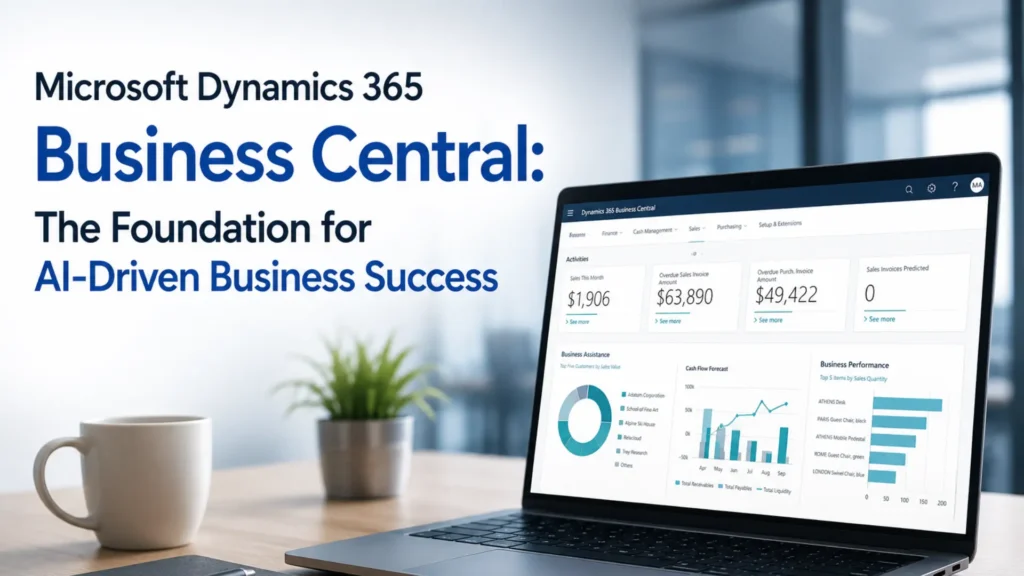
Microsoft Dynamics 365 Business Central: The Foundation for AI-Driven Business Success

Artificial Intelligence (AI) is no longer a futuristic concept—it has become an essential driver of business growth, innovation, and operational efficiency. Organizations across industries are investing in AI technologies to automate processes, improve decision-making, and deliver exceptional customer experiences. However, the success of AI depends on one critical factor: access to accurate, centralized, and real-time business data. This is where Microsoft Dynamics 365 Business Central plays a vital role. As Microsoft’s comprehensive cloud-based ERP solution, Business Central provides businesses with a unified platform to manage finance, sales, purchasing, inventory, operations, and customer information. When combined with Microsoft’s AI capabilities, including Copilot and advanced analytics, it becomes the foundation for smarter business decisions and sustainable growth. Whether you are a growing business looking to modernize operations or an established enterprise planning digital transformation, working with an experienced Microsoft Dynamics 365 partner can help you unlock the full potential of Business Central and AI-driven business solutions. Why AI Needs a Modern ERP Platform Artificial intelligence relies on high-quality business data to generate meaningful insights. Unfortunately, many organizations still use disconnected systems where financial data, inventory records, customer information, and operational reports are stored separately. This makes it difficult for AI to provide accurate recommendations. Microsoft Dynamics 365 Business Central eliminates these silos by bringing all business functions together in a single cloud platform. With centralized data, businesses can leverage AI to identify trends, forecast demand, optimize inventory, and improve financial planning. Instead of spending hours compiling reports from multiple systems, decision-makers gain instant access to reliable insights that help them respond quickly to changing market conditions. Key AI Capabilities in Microsoft Dynamics 365 Business Central Microsoft continues to enhance Business Central with intelligent features that improve productivity and simplify business operations. These AI-powered capabilities help organizations automate routine tasks while enabling employees to focus on strategic activities. Some of the most valuable AI-driven features include: These capabilities help businesses make informed decisions while reducing manual work and operational costs. How Business Central Improves Business Performance One of the biggest advantages of Business Central is its ability to connect every department within a single ERP system. Finance teams gain better visibility into cash flow and profitability, sales teams can track customer interactions more effectively, and inventory managers can monitor stock levels in real time. This connected approach improves collaboration across departments and enables AI to generate more accurate business insights. Business Central also integrates seamlessly with Microsoft applications such as Microsoft 365, Teams, Outlook, Excel, and Power BI. Employees can access business information directly from the tools they already use every day, improving efficiency and reducing the need to switch between multiple applications. For organizations embracing AI, this integration creates a powerful digital ecosystem where data flows automatically across business processes, allowing teams to work faster and make smarter decisions. Microsoft Copilot: Bringing AI into Everyday Work Microsoft Copilot is transforming the way businesses interact with ERP systems. Rather than manually searching for reports or entering repetitive information, users can ask questions in natural language and receive instant responses based on real-time business data. For example, finance managers can quickly generate financial summaries, sales teams can create product descriptions, and business leaders can analyze operational performance without spending hours preparing reports. Copilot reduces administrative workloads while helping employees focus on activities that create greater value for the organization. As Microsoft continues to invest in AI innovation, Copilot will become an even more powerful assistant within Microsoft Dynamics 365 Business Central, making everyday business operations more efficient and intelligent. The Importance of Professional Implementation and Support Implementing an ERP solution involves much more than installing software. Every organization has unique business processes, reporting requirements, and operational goals. Choosing the right Microsoft Dynamics 365 partner ensures your Business Central implementation is tailored to your specific needs. Professional MS Dynamics 365 implementation services help businesses configure the system correctly, migrate existing data, integrate third-party applications, train employees, and support a smooth go-live process. A well-planned implementation minimizes business disruption and helps organizations achieve faster returns on their ERP investment. After deployment, ongoing Microsoft Dynamics 365 support services play an equally important role. Regular updates, technical assistance, performance optimization, and user support ensure that the system continues to deliver maximum value as business requirements evolve. Why D365 Migration Services Matter Many organizations still rely on outdated ERP systems that limit business growth and make AI adoption difficult. Upgrading to Business Central enables businesses to take advantage of cloud technology, automation, and advanced analytics. Professional D365 migration services help organizations move securely from legacy systems such as Microsoft Dynamics NAV, Dynamics GP, or other ERP platforms. The migration process typically includes data cleansing, system configuration, testing, and user training to ensure a seamless transition with minimal downtime. Migrating to Business Central also provides businesses with a scalable platform that supports future innovation and continuous Microsoft updates without the complexity of maintaining legacy infrastructure. The Value of Microsoft Dynamics Consulting Services Every organization has different goals, challenges, and growth strategies. This is why expert Microsoft Dynamics consulting services are essential for maximizing the benefits of Business Central. Experienced consultants evaluate existing business processes, identify improvement opportunities, and recommend solutions that align with organizational objectives. Consulting services also help businesses adopt AI strategically by identifying automation opportunities, improving reporting capabilities, and ensuring the ERP system supports long-term business growth. With expert guidance, organizations can make better technology investments and accelerate their digital transformation journey. Benefits of Using Microsoft Dynamics 365 Business Central Businesses implementing Business Central often experience measurable improvements across their operations. Some of the key benefits include: These advantages help organizations improve efficiency, reduce costs, and remain competitive in an increasingly digital marketplace. Conclusion Artificial intelligence is transforming the future of business, but its success depends on having the right technology foundation. Microsoft Dynamics 365 Business Central provides that foundation by bringing together financial management, operations, inventory, sales, and customer information into a single intelligent ERP platform. Combined with Microsoft Copilot and advanced AI capabilities, Business Central

Microsoft Dynamics 365 Business Central: The Foundation for AI-Driven Business Success Read More »

how-business-central-is-replacing-traditional-erp-systems-faster-than-expected

How Business Central is Replacing Traditional ERP Systems Faster Than Expected

In today’s rapidly evolving digital economy, businesses can no longer afford to rely on outdated enterprise resource planning (ERP) systems that limit agility and innovation. Organizations across manufacturing, retail, distribution, healthcare, professional services, and finance are embracing cloud technology to improve efficiency, reduce operational costs, and gain real-time visibility into their operations. As a result, Microsoft Dynamics 365 Business Central has emerged as one of the fastest-growing ERP solutions, replacing traditional ERP systems much sooner than industry experts predicted. Unlike legacy ERP software that often requires expensive hardware, lengthy upgrade cycles, and significant IT resources, Business Central provides a modern cloud-based platform that integrates finance, supply chain, inventory, sales, purchasing, customer service, and reporting into a single, intelligent solution. Its seamless integration with Microsoft applications, built-in artificial intelligence (AI), and continuous updates make it an ideal ERP platform for organizations preparing for long-term digital transformation. Businesses looking to modernize their operations are increasingly partnering with an experienced Microsoft Dynamics 365 partner to implement Business Central efficiently and maximize the value of their ERP investment. Why Traditional ERP Systems Are Losing Their Competitive Edge For many years, traditional ERP systems played a vital role in helping organizations manage accounting, inventory, procurement, and operational processes. However, business requirements have changed dramatically. Modern organizations demand real-time data, remote accessibility, automation, and scalability—capabilities that many legacy ERP solutions struggle to provide. Older ERP platforms typically require costly on-premises servers, frequent hardware upgrades, manual software updates, and extensive IT maintenance. They are often difficult to customize and integrate with modern productivity tools, resulting in disconnected workflows and delayed decision-making. As businesses continue to adopt hybrid work models and digital-first strategies, these limitations become increasingly significant. Business Central addresses these challenges by offering a cloud-native ERP solution that is always up to date, highly secure, and accessible from anywhere, enabling organizations to remain competitive in a rapidly changing marketplace. Cloud Technology Is Accelerating ERP Modernization One of the biggest reasons businesses are replacing traditional ERP systems is the widespread adoption of cloud computing. Organizations are recognizing that cloud ERP eliminates many of the operational and financial burdens associated with maintaining on-premises infrastructure. With Microsoft Dynamics 365 Business Central, businesses no longer need to invest in expensive servers or dedicate large IT teams to maintaining their ERP environment. Microsoft manages system availability, security updates, backups, and software enhancements through its Azure cloud infrastructure, allowing companies to focus on strategic growth rather than technology maintenance. The cloud also enables employees to securely access business information from virtually anywhere, improving collaboration between departments and supporting remote and hybrid work environments. This flexibility has become an essential requirement for organizations seeking greater operational resilience. Artificial Intelligence Is Transforming Business Operations Artificial intelligence is no longer a future concept—it is now a practical business tool that helps organizations improve productivity and make smarter decisions. Business Central integrates Microsoft’s AI capabilities directly into everyday business processes, enabling users to automate repetitive tasks and gain predictive insights. Instead of manually analyzing spreadsheets or waiting for end-of-month reports, finance teams can forecast cash flow more accurately, purchasing managers can optimize inventory levels, and sales teams can identify new revenue opportunities using AI-driven recommendations. Microsoft Copilot further enhances user productivity by simplifying reporting, generating summaries, and assisting employees with everyday tasks. These intelligent capabilities reduce manual effort while enabling leadership teams to respond more quickly to changing market conditions, making Business Central significantly more valuable than traditional ERP systems. Faster ERP Implementation Reduces Business Risk Historically, ERP implementation projects were known for being lengthy, expensive, and complex. Many organizations spent more than a year deploying legacy ERP software before realizing measurable business value. Today, professional MS Dynamics 365 implementation services have transformed this process. Experienced implementation partners use proven methodologies, industry best practices, and Microsoft deployment frameworks to significantly reduce implementation timelines. Rather than spending months configuring infrastructure and installing software, organizations can focus on optimizing business processes and training employees. Faster implementation means businesses begin benefiting from improved efficiency, automation, and reporting much sooner while reducing project risk and implementation costs. Seamless Integration Creates a Connected Business Modern organizations rely on multiple software applications to manage daily operations. One of Business Central’s greatest strengths is its ability to connect seamlessly with the Microsoft ecosystem, creating a unified digital workplace. Employees can manage customer communications through Outlook, analyze financial data in Excel, collaborate in Microsoft Teams, automate repetitive workflows using Power Automate, and visualize business performance through Power BI—all while working within the same ERP environment. This level of integration eliminates duplicate data entry, reduces human error, and improves collaboration across departments. Instead of operating separate systems for finance, sales, inventory, and reporting, organizations benefit from a single source of truth that improves productivity and decision-making. D365 Migration Services Make ERP Modernization Easier Many businesses hesitate to replace their legacy ERP systems because they believe migration will be disruptive or risky. However, modern D365 migration services have considerably simplified the transition process. Migration specialists begin by evaluating the existing ERP environment and identifying which business data, processes, and integrations should be transferred to Business Central. They then cleanse outdated data, migrate essential records, validate system accuracy, and conduct comprehensive testing before deployment. This structured migration approach minimizes operational disruption while ensuring organizations retain critical business information. User training and post-deployment assistance further help employees adapt quickly to the new system, resulting in higher user adoption and faster business benefits. Continuous Microsoft Dynamics 365 Support Services Ensure Long-Term Success Implementing an ERP system is only the beginning of the digital transformation journey. As business requirements evolve, organizations require continuous support to maintain system performance, improve processes, and adopt new Microsoft innovations. Professional Microsoft Dynamics 365 Support Services help businesses resolve technical issues, optimize workflows, manage Microsoft updates, improve security, and introduce new functionality as organizational needs change. Ongoing support also ensures companies remain compliant with changing regulations while maximizing the value of their Business Central investment. Instead of treating ERP as a one-time implementation project, organizations benefit

How Business Central is Replacing Traditional ERP Systems Faster Than Expected Read More »

NAV-to-Dynamics-365

Upgrade or Re-Implement? Choosing the Right Path from AX/NAV to Dynamics 365

In today’s competitive digital landscape, businesses are under constant pressure to modernize their enterprise resource planning (ERP) systems. Companies that have relied on Microsoft Dynamics AX or Microsoft Dynamics NAV for years now face a crucial decision: should they upgrade to Dynamics 365, or should they re-implement from scratch? Both approaches come with their own benefits, challenges, and costs. For organizations across North America, making the right decision often requires working with a trusted Microsoft Dynamics 365 partner in Canada and USA who understands both legacy systems and the Dynamics 365 ecosystem. In this article, we’ll explore the differences between an upgrade and a re-implementation, the factors influencing the decision, and how to choose the right path for your business. The Shift from AX/NAV to Dynamics 365 Microsoft has been gradually moving businesses from on-premises ERP systems like Dynamics AX and Dynamics NAV toward its cloud-first platform—Microsoft Dynamics 365. This evolution offers significant benefits such as real-time analytics, AI-driven automation, seamless updates, and scalability. Businesses in Canada and the USA are increasingly considering either a NAV to Microsoft Dynamics 365 Business Central Upgrade in Canada and USA or an AX to D365 F&O Upgrade in Canada and USA to stay competitive. Upgrade vs. Re-Implement: Understanding the Difference Upgrade An upgrade involves moving your existing NAV or AX system, including data, configurations, and in some cases, customizations, to Dynamics 365. It’s essentially a technical transition that modernizes your current ERP without rebuilding everything. Pros of Upgrading: Cons of Upgrading: Re-Implementation Re-implementation means starting fresh with Dynamics 365. Instead of transferring all data and customizations, businesses take the opportunity to redesign their ERP environment, import only necessary data, and rebuild processes in a more modern and efficient way. Pros of Re-Implementing: Cons of Re-Implementing: Factors to Consider When Choosing Between Upgrade and Re-Implementation The right decision depends on several factors. With the guidance of a Microsoft Dynamics 365 partner in Canada and USA, businesses can analyze their specific situation. Key considerations include: 1. System Complexity 2. Data Quality 3. Process Efficiency 4. Budget and Timeline 5. Future Scalability Benefits of Moving to Dynamics 365 Whether through upgrade or re-implementation, moving to Dynamics 365 provides significant advantages for businesses in Canada and the USA: A reliable Microsoft Dynamics 365 Support Services in Canada provider ensures these benefits are continuously realized. Role of a Microsoft Dynamics 365 Partner Choosing the right partner is critical to success. A certified Microsoft Dynamics 365 partner in Canada and USA provides: Case Scenarios Scenario 1: Upgrade is the Right Choice A mid-sized Canadian manufacturing company using Dynamics NAV 2016 with minimal customizations chooses an upgrade to Dynamics 365 Business Central. Since their processes are already optimized, the upgrade allows them to retain historical data while gaining the benefits of the cloud. Scenario 2: Re-Implementation is the Better Path A large U.S.-based retail chain running Dynamics AX 2012 with heavy customizations and outdated workflows opts for a re-implementation to D365 Finance & Operations. They redesign processes, clean up data, and leverage AI-driven automation, setting a strong foundation for future scalability. Common Challenges in the Transition Even with expert support, businesses may face challenges such as: Working closely with an experienced Microsoft Dynamics 365 partner in Canada and USA helps overcome these issues. FAQs: Choosing Between Upgrade and Re-Implementation Q1. How do I know whether to upgrade or re-implement?Ans: A detailed system assessment by a Microsoft Dynamics 365 partner in Canada and USA can help determine whether your business should go for an upgrade or re-implementation. Q2. Is data migration possible in both approaches?Ans: Yes, but the method differs. Upgrading retains most historical data, while re-implementation allows selective migration of only clean and relevant data. Q3. Which is more cost-effective—upgrade or re-implementation?Ans: Upgrading is generally less expensive and quicker. However, re-implementation may deliver greater long-term ROI by modernizing workflows and eliminating technical debt. Q4. Can we migrate directly from Dynamics AX to Dynamics 365 F&O?Ans: Yes, with expert assistance, an AX to D365 F&O Upgrade in Canada and USA is possible, though the process can be complex depending on your AX version and customizations. Q5. What about NAV users?Ans: Businesses running NAV can perform a NAV to Microsoft Dynamics 365 Business Central Upgrade in Canada and USA to modernize operations and move to a cloud-based ERP. Q6. What support is available after migration?Ans: You can rely on Microsoft Dynamics 365 Support Services in Canada for continuous system monitoring, updates, performance optimization, and issue resolution. Q7. Will employees need training after moving to Dynamics 365?Ans: Yes. Whether upgrading or re-implementing, training is essential for user adoption. Most partners provide structured training and change management programs. Conclusion Deciding between upgrading and re-implementing from AX or NAV to Dynamics 365 is a pivotal choice for businesses in Canada and the USA. An upgrade offers speed and cost efficiency, while re-implementation provides a fresh start with long-term flexibility. The right path depends on your data quality, business processes, customization levels, and future goals. Partnering with a trusted Microsoft Dynamics 365 partner in Canada and USA ensures that your transition—whether a NAV to Microsoft Dynamics 365 Business Central Upgrade in Canada and USA or an AX to D365 F&O Upgrade in Canada and USA—is smooth, strategic, and successful.

Upgrade or Re-Implement? Choosing the Right Path from AX/NAV to Dynamics 365 Read More »