dynamics 365 finance and operations upgrade

ax-to-dynamics-365-f-and-migration-costs-timeline-and-strategy

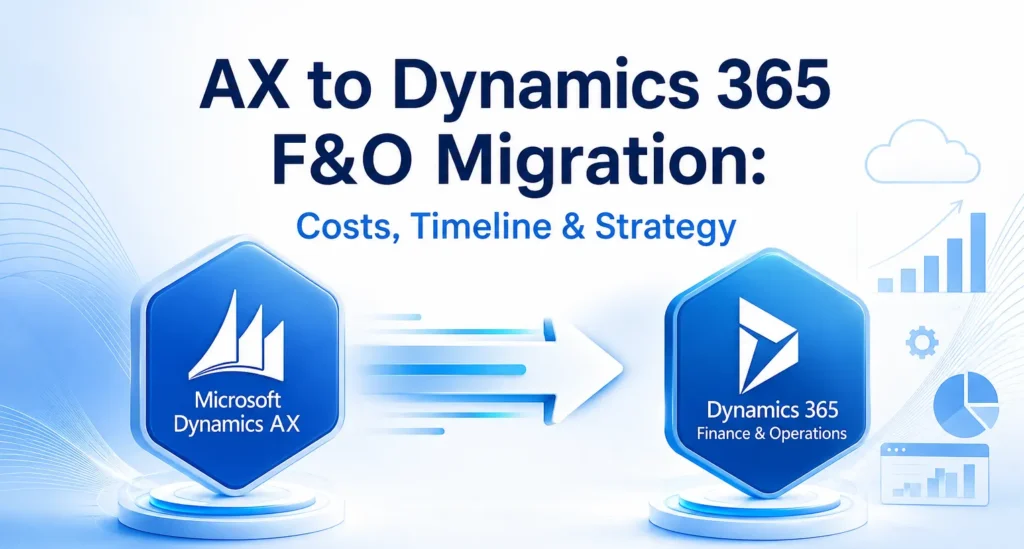
AX to Dynamics 365 F&O Migration: Costs, Timeline & Strategy

Businesses using Microsoft Dynamics AX have benefited from a reliable ERP system for many years. However, as technology evolves and organisations increasingly adopt cloud-first strategies, many are choosing to migrate to Microsoft Dynamics 365 Finance & Operations (Dynamics 365 F&O). This modern ERP solution provides greater flexibility, enhanced security, AI-powered capabilities, and continuous updates that help businesses stay competitive in an increasingly digital world. Migrating from Dynamics AX is more than simply upgrading software. It is an opportunity to modernise business processes, improve operational efficiency, and create a scalable platform that supports long-term growth. Whether you are planning your first ERP migration or evaluating your options, understanding the costs, timeline, and implementation strategy is essential for a successful transition. Why Upgrade from Dynamics AX to Dynamics 365 F&O? Microsoft Dynamics AX was designed for on-premises environments and has served thousands of organisations worldwide. However, maintaining legacy infrastructure, managing customisations, and handling manual upgrades have become increasingly expensive and time-consuming. Dynamics 365 F&O addresses these challenges with a cloud-based architecture that delivers continuous innovation and better performance. The platform offers advanced financial management, intelligent supply chain capabilities, automated workflows, real-time reporting, and seamless integration with Microsoft 365, Power Platform, and Azure services. Businesses also gain access to AI-driven insights that support faster and more informed decision-making. Working with an experienced Microsoft Dynamics 365 partner helps organisations make the transition smoothly while reducing risks associated with complex ERP migrations. Understanding the Cost of Migration One of the first questions businesses ask is, “How much does an AX to Dynamics 365 F&O migration cost?” There is no fixed answer because every organisation’s ERP environment is different. The overall investment depends on several factors, including the size of the business, the complexity of existing processes, and the amount of customisation required. Organisations running older versions such as Dynamics AX 2009 or AX 2012 often require additional planning because these systems typically contain outdated customisations, legacy integrations, and inconsistent data. Businesses with multiple locations, international operations, or high transaction volumes may also require more extensive implementation efforts. Another important cost factor is data migration. Customer records, vendor information, inventory data, financial transactions, and historical reports all need to be reviewed and validated before being transferred into the new system. The cleaner the existing data, the smoother and more cost-effective the migration process becomes. Training employees and preparing them for the new system should also be included in the overall project budget. Investing in user adoption ensures employees can quickly take advantage of the platform’s new features and capabilities. Typical Migration Timeline The duration of an AX to Dynamics 365 F&O migration depends on project complexity. Small businesses with straightforward business processes can often complete migration within a few months, while large enterprises with multiple legal entities and extensive integrations require a longer implementation schedule. A standard migration project generally includes assessment, solution design, system configuration, data migration, testing, user training, and go-live support. Each phase requires careful planning to minimise disruption to daily business operations. Rather than rushing implementation, organisations should focus on completing each stage thoroughly. Proper testing and user acceptance significantly reduce the likelihood of issues after deployment and contribute to a smoother transition. Building an Effective Migration Strategy A successful migration starts with a detailed assessment of the existing Dynamics AX environment. This involves reviewing current business processes, identifying customisations, evaluating integrations, and understanding reporting requirements. The goal is not simply to recreate the existing system but to identify opportunities for improvement. Once the assessment is complete, organisations can begin designing their future ERP environment. During this phase, business requirements are aligned with the capabilities available in Dynamics 365 F&O. Many businesses also evaluate Microsoft Dynamics 365 Business Central for smaller subsidiaries or regional offices while using Dynamics 365 F&O for enterprise-wide operations. This combination allows organisations to build a connected Microsoft ecosystem that supports different business needs. Data preparation is another critical step. Before migration begins, duplicate records should be removed, outdated information archived, and financial data validated. Clean and accurate data reduces migration errors and improves system performance after deployment. Testing plays a crucial role throughout the implementation process. Every workflow, integration, and report should be validated before the new system goes live. User acceptance testing allows employees to become familiar with the new environment while identifying any remaining issues. Common Migration Challenges Although every migration project is unique, organisations often encounter similar challenges. Legacy customisations are among the most common obstacles. Many Dynamics AX systems have been modified over several years to meet specific business requirements. During migration, these customisations should be carefully evaluated to determine whether they are still necessary or whether standard Dynamics 365 functionality can achieve the same outcome. Data quality is another common concern. Incomplete customer records, duplicate vendors, inconsistent product information, and outdated financial data can slow implementation and increase project costs. Beginning data cleansing early in the project significantly improves migration success. Employee adoption also deserves careful attention. Even the most advanced ERP solution will not deliver its full value if users are uncomfortable with the new system. Providing comprehensive training and communicating the benefits of the migration helps employees embrace new processes more confidently. Best Practices for a Successful Migration Organizations that experience successful ERP migrations typically follow a structured approach rather than treating migration as a simple technical upgrade. They establish clear business objectives, involve key stakeholders throughout the project, and prioritise business process improvements over replicating outdated workflows. While every implementation is different, several practices consistently contribute to success: Following these principles helps organisations reduce implementation risks while maximizing the return on their ERP investment. Benefits After Migrating to Dynamics 365 F&O Businesses that successfully migrate to Dynamics 365 F&O often experience improvements across finance, operations, manufacturing, procurement, and supply chain management. Real-time dashboards provide better visibility into business performance, allowing leaders to make faster and more informed decisions. Automation reduces repetitive manual tasks, enabling employees to focus on higher-value activities. Continuous Microsoft updates ensure the ERP platform remains

AX to Dynamics 365 F&O Migration: Costs, Timeline & Strategy Read More »

saas-concept

How Our Managed Services Reduce ERP TCO for US & Canadian Companies

Enterprise Resource Planning (ERP) systems are powerful tools that help organizations streamline operations, improve decision-making, and drive growth. However, managing an ERP system—whether Microsoft Dynamics 365, SAP, Oracle, or another platform—often comes with a hefty price tag. From licensing and infrastructure to upgrades, customizations, and support, many companies in the US and Canada struggle to keep their Total Cost of Ownership (TCO) under control. This is where ERP Managed Services can transform the game. By outsourcing day-to-day management, monitoring, and optimization to a trusted provider, businesses reduce IT overhead, improve efficiency, and extend the value of their ERP investment. In this article, we’ll explore how managed services reduce ERP TCO, what benefits they deliver, and why US and Canadian companies should consider this strategic approach. Understanding ERP Total Cost of Ownership (TCO) ERP TCO goes beyond the initial implementation costs. It includes: Without proper planning, these costs quickly spiral, making ERP feel more like a burden than a business enabler. How Managed Services Reduce ERP TCO 1. Optimized Licensing and Usage Many companies overpay for licenses they don’t fully use. Managed service providers (MSPs) perform license audits, identify underutilized subscriptions, and recommend right-sizing strategies. By aligning licenses with actual business needs, companies in the US and Canada save significantly on recurring costs. 2. Reduced Infrastructure Expenses Cloud-based ERP hosting through a managed service model eliminates the need for heavy on-premises hardware investments. Providers offer scalable cloud infrastructure, ensuring companies pay only for the resources they need while avoiding unnecessary infrastructure maintenance costs. 3. Proactive Monitoring and Maintenance Unplanned downtime can be costly. Managed services provide 24/7 monitoring and preventive maintenance, reducing disruptions and ensuring system stability. By resolving issues before they become critical, businesses avoid revenue losses and productivity declines. 4. Streamlined Upgrades and Patches ERP systems evolve constantly, but upgrades can be resource-intensive. MSPs handle regular updates, patches, and compliance requirements, keeping your ERP environment secure and current without requiring internal IT teams to spend long hours managing upgrades. 5. Access to Expert Resources Without Hiring Costs Hiring skilled ERP consultants in USA, especially in the US and Canadian markets where IT salaries are high. With managed services, companies gain access to a pool of certified ERP experts—covering functional, technical, and integration areas—at a fraction of the cost. 6. Enhanced Security and Compliance Managed service providers bring advanced security tools and compliance frameworks tailored to regional regulations like GDPR, HIPAA, or Canadian data privacy laws. This reduces the risk of fines, penalties, or costly breaches. 7. Scalability and Flexibility Business needs change—mergers, acquisitions, new market entries. Managed services allow companies to scale ERP environments up or down without massive reinvestments. This flexibility keeps costs predictable and aligned with actual growth. 8. Improved User Productivity By providing helpdesk support, user training, and troubleshooting, MSPs ensure employees spend less time struggling with ERP issues and more time focusing on business outcomes. Higher productivity translates to measurable cost savings. Why US and Canadian Companies Benefit Most Companies in the US and Canada often operate across multiple states, provinces, or even countries. This creates complexities in compliance, taxation, and supply chain processes. ERP managed services address these regional challenges by: With high labor costs in North America, outsourcing ERP management helps companies control budgets without sacrificing performance. Case Example: Reducing ERP TCO with Managed Services A mid-sized manufacturing company in Ontario relied on Microsoft Dynamics 365 Finance & Operations but struggled with escalating IT costs. They faced: By partnering with a managed services provider, the company: Result: A 35% overall reduction in ERP TCO within the first year. Additional Business Benefits Beyond Cost Savings While TCO reduction is the most obvious advantage, managed services also provide: Choosing the Right Managed Services Provider When selecting a provider in the US or Canada, businesses should look for: FAQs About ERP Managed Services and TCO Q 1. What is the average cost savings from ERP managed services?Ans: Most companies see 20–40% savings in TCO within the first 12–18 months, depending on system complexity and scope. Q 2. Can small and mid-sized businesses benefit from ERP managed services?Ans: Absolutely. SMEs often benefit even more, since they typically lack the in-house expertise required for ERP management. Q 3. Do managed services replace my internal IT team?Ans: Not necessarily. They complement your IT staff, allowing them to focus on innovation while the provider handles ERP administration. Q 4. How do managed services improve ERP security?Ans: Providers implement advanced security monitoring, regular patches, and compliance checks, reducing the risk of breaches and penalties. Q 5. Is ERP managed services only for cloud systems?Ans: No. Managed services support both on-premises and cloud ERP environments, or hybrid models, depending on your business needs. Conclusion Managing an ERP system in-house can quickly escalate costs, drain resources, and distract from strategic priorities. For companies in the US and Canada, partnering with an ERP managed services provider is a smart way to reduce TCO, improve system reliability, and unlock innovation. By optimizing licensing, infrastructure, and operations, managed services deliver not only cost efficiency but also the agility businesses need to stay competitive. Whether you’re running Microsoft Dynamics 365, SAP, or another ERP, the managed services model ensures you get the most value from your investment while maintaining financial control.

How Our Managed Services Reduce ERP TCO for US & Canadian Companies Read More »

erp-support-outsourcing

ERP Support Outsourcing: A Case for Cost Reduction in the U.S.

In today’s fast-paced business environment, companies across North America are constantly seeking ways to reduce operational costs while maintaining efficiency and innovation. Enterprise Resource Planning (ERP) systems, particularly Microsoft Dynamics 365, have become central to this mission by streamlining operations, enhancing decision-making, and enabling scalability. However, with ERP systems come challenges—chief among them being support and maintenance costs. Many businesses in the U.S. and Canada are now turning to ERP support outsourcing as a strategic move to lower expenses while ensuring robust performance. Whether you’re working with a Dynamics 365 Business Central Partner in Canada, collaborating with a Microsoft Dynamics 365 Partner in Canada, or evaluating ERP consulting options, outsourcing ERP support offers clear financial and operational benefits. In this article, we’ll explore why outsourcing ERP support is becoming the preferred choice, how it reduces costs, and what role trusted partners play in ensuring ERP success. The Rising Cost of ERP Support Implementing ERP solutions like Microsoft Dynamics 365 is a significant investment. While the upfront implementation cost is substantial, ongoing support and maintenance often account for an even larger portion of the ERP lifecycle expenses. Some of the key cost drivers for ERP support include: Outsourcing ERP support addresses these challenges while enabling organizations to focus on their core business objectives. Why Outsource ERP Support? Outsourcing ERP support provides businesses with access to specialized skills, 24×7 availability, and cost-efficient solutions. Let’s break down the benefits: 1. Lower Labor Costs Hiring and retaining in-house ERP specialists is expensive. Outsourcing to a Microsoft Dynamics 365 Partner in Canada allows businesses in the U.S. to access top-tier expertise without the high salary burden. 2. Access to Certified Experts ERP outsourcing partners employ certified consultants with in-depth knowledge of Microsoft Dynamics ERP. This ensures quick troubleshooting, smooth upgrades, and efficient issue resolution. 3. Round-the-Clock Support Unlike in-house teams restricted by working hours, outsourced providers offer Microsoft Dynamics 365 Support Services in Canada with 24×7 coverage, ensuring business continuity. 4. Scalability & Flexibility Whether it’s a minor issue, a full ERP migration and implementation services in Canada project, or an upgrade to Business Central, outsourcing provides flexibility to scale services as needed. 5. Focus on Core Business By outsourcing ERP support, companies free up internal resources, allowing them to focus on strategy, growth, and customer engagement. The Role of Trusted Partners Outsourcing ERP support is only effective when businesses partner with the right experts. A reliable Dynamics 365 Business Central Partner in Canada or a Microsoft Dynamics 365 ERP implementation services in Canada provider ensures that businesses not only reduce costs but also improve efficiency and system performance. Trusted partners provide: Case Study: Consider a mid-sized manufacturing firm in the U.S. that was struggling with rising ERP maintenance costs. Their in-house IT team lacked the expertise to handle advanced Dynamics 365 upgrades and troubleshooting. By outsourcing support to a Microsoft Dynamics 365 Partner in Canada, the company: This example demonstrates the tangible ROI of outsourcing ERP support. ERP Migration and Implementation Services in Canada and the U.S. For many businesses, outsourcing doesn’t just stop at support—it also extends to ERP migration and implementation services in Canada and the U.S. Moving from legacy systems like Dynamics GP or NAV to Microsoft Dynamics 365 Business Central requires expertise, planning, and flawless execution. By partnering with an experienced ERP Consultant in Canada, companies ensure: This approach not only saves money but also accelerates digital transformation. Key Cost Reduction Strategies Through Outsourcing Outsourced ERP partners apply several strategies to optimize costs: Future of ERP Support Outsourcing in the U.S. With the growing adoption of cloud-based ERP solutions like Dynamics 365, outsourcing is no longer just an option—it’s becoming the norm. U.S. businesses recognize that outsourcing ERP support to trusted global partners offers cost-efficiency, scalability, and expertise that in-house teams often cannot match. By leveraging Microsoft Dynamics 365 Support Services in Canada, U.S. companies can focus on what matters most—innovation, growth, and customer satisfaction—while enjoying significant cost savings. FAQs on ERP Support Outsourcing Q1. Why should U.S. companies outsource ERP support to partners in Canada?Ans: Outsourcing to a Microsoft Dynamics 365 Partner in Canada provides cost-effective services, access to certified experts, and round-the-clock support compared to building an expensive in-house team. Q2. Can outsourcing partners handle ERP migrations as well as support?Ans: Yes. Many partners offer ERP migration and implementation services in Canada, ensuring seamless upgrades and transitions from legacy systems, such as GP or NAV, to Dynamics 365 Business Central. Q3. How does outsourcing improve ROI on ERP systems?Ans: Outsourcing reduces labor costs, ensures proactive maintenance, minimizes downtime, and improves system performance—directly enhancing ROI. Q4. Is ERP outsourcing secure?Trusted partners implement advanced security protocols, regular updates, and compliance standards to ensure data protection. Q5. What industries benefit most from outsourcing ERP support?Ans: Industries such as retail, manufacturing, logistics, finance, and healthcare benefit greatly due to their need for continuous system uptime and scalability. Conclusion ERP systems are critical to business success, but their support and maintenance costs can quickly spiral if not managed effectively. Outsourcing ERP support offers U.S. businesses a clear path to cost reduction, efficiency, and innovation. By partnering with a Dynamics 365 Business Central Partner in Canada, a Microsoft Dynamics 365 Partner in Canada, or an expert ERP Consultant in Canada, organizations can achieve significant savings while ensuring their ERP systems remain future-ready. Additionally, outsourcing opens doors to advanced Microsoft Dynamics 365 ERP implementation services in Canada, ensuring long-term digital transformation success.

ERP Support Outsourcing: A Case for Cost Reduction in the U.S. Read More »

reneable-energy-manufacturing

Top Challenges in Renewable Energy Manufacturing & How ERP Helps

As the world shifts towards sustainability, renewable energy manufacturing is at the forefront of this global transformation. Companies engaged in solar, wind, bioenergy, and hydropower production are skyrocketing. However, this growth also brings a unique set of challenges—from supply chain constraints to regulatory compliance, fluctuating demand, and managing innovation. To succeed in this evolving landscape, renewable energy manufacturers are increasingly turning to Enterprise Resource Planning (ERP) systems. An ERP solution acts as a digital backbone, integrating various business functions into a single platform to streamline operations, improve visibility, and drive strategic decisions. In this article, we explore the top challenges in renewable energy manufacturing and how ERP helps overcome them. 1. Complex and Global Supply Chains The Challenge: Renewable energy manufacturing often involves sourcing rare or specialized materials from multiple countries. For example, wind turbines require rare earth metals like neodymium and dysprosium, often sourced from limited suppliers across the globe. Additionally, the production of solar panels involves polysilicon, glass, and specialized semiconductors, all of which may be subject to geopolitical and logistical risks. Disruptions—whether due to pandemics, political tensions, or natural disasters—can cause significant delays and cost overruns. How ERP Helps: An ERP system centralizes supply chain management. It enables real-time tracking of materials, automates procurement workflows, and provides alerts for potential delays. Manufacturers can use ERP to: By enhancing visibility and control, ERP helps reduce dependency on vulnerable supply chains. 2. Regulatory Compliance and Sustainability Reporting The Challenge: Renewable energy companies must comply with a myriad of environmental regulations, energy production standards, labor laws, and international trade policies. Moreover, as ESG (Environmental, Social, and Governance) reporting becomes a norm, organizations need to provide transparent sustainability reports to stakeholders. Staying compliant across multiple jurisdictions while maintaining operational efficiency is a difficult balance. How ERP Helps: Modern ERP platforms come with built-in compliance management and reporting tools. They can: ERP also keeps organizations audit-ready by maintaining accurate and time-stamped records, reducing the risk of non-compliance penalties. 3. High Capital Costs and Long ROI Cycles The Challenge: Renewable energy projects require substantial upfront investments. Building a solar farm, manufacturing turbines, or setting up battery production lines involves millions of dollars in capital. Moreover, the return on investment (ROI) may take several years due to long payback periods and fluctuating market demand. Mismanagement of costs can derail entire projects and impact profitability. How ERP Helps: An ERP system enables detailed financial planning and cost tracking. Through integrated modules for finance, project management, and procurement, ERP helps: By offering transparency in financial operations, ERP helps renewable energy companies make informed decisions and improve ROI predictability. 4. Rapid Technological Advancements The Challenge: Technology in renewable energy is evolving at a breakneck speed. Innovations like floating solar panels, high-efficiency batteries, hydrogen fuel cells, and smart grid integration are reshaping the industry. For manufacturers, keeping up with this pace while maintaining product quality and compliance can be overwhelming. Outdated systems and manual processes hinder scalability and adaptation to new technologies. How ERP Helps: ERP platforms provide the agility needed to support innovation. With capabilities like: ERP helps manufacturers stay ahead by quickly adapting production lines, managing R&D workflows, and ensuring compliance with evolving standards. 5. Workforce Skill Gaps and Labor Management The Challenge: As a relatively new industry, renewable energy manufacturing faces a shortage of skilled labor—especially in fields like engineering, automation, robotics, and data analytics. Moreover, managing a hybrid or remote workforce across multiple locations adds complexity to HR and operational management. Labor inefficiencies can lead to production delays and increased operational costs. How ERP Helps: ERP systems streamline human resource management by offering tools for: Advanced ERP platforms also support talent development by identifying skill gaps and automating learning management systems (LMS). This ensures a competent and productive workforce aligned with business goals. 6. Demand Volatility and Market Fluctuations The Challenge: While global demand for clean energy is rising, it can also be highly volatile due to changing government policies, subsidies, and economic conditions. For example, the expiration of tax incentives for solar projects in some regions can suddenly slow down demand. Without accurate forecasting, manufacturers risk overproduction or under-delivery. How ERP Helps: With integrated demand planning and forecasting tools, ERP helps renewable energy manufacturers to: ERP ensures manufacturers remain responsive and resilient, even in unpredictable market conditions. 7. Asset and Maintenance Management The Challenge: Equipment used in renewable energy manufacturing—such as robotic arms, casting machines, and test rigs—is often highly specialized and expensive. Downtime due to equipment failure can halt entire production lines and lead to significant losses. Proactive asset maintenance is essential but difficult without centralized systems. How ERP Helps: ERP systems with asset management modules allow: By minimizing downtime and extending asset life, ERP ensures uninterrupted production and reduces maintenance costs. 8. Data Silos and Fragmented Processes The Challenge: Many renewable energy manufacturers operate with disconnected tools—spreadsheets for finance, standalone CRMs, manual inventory systems, etc. This leads to data silos, inconsistent reporting, and inefficient workflows. Lack of integration limits visibility and slows decision-making. How ERP Helps: An ERP system unifies all departments—finance, production, supply chain, HR, and customer service—on a single platform. Benefits include: ERP acts as a single source of truth, enhancing collaboration and strategic alignment. Conclusion The renewable energy sector holds immense promise, but manufacturers must overcome complex challenges to remain competitive and sustainable. From managing supply chains and regulatory compliance to adapting to innovation and optimizing costs, the road ahead is demanding. ERP systems offer a comprehensive solution by integrating data, automating workflows, and enabling agility. With the right ERP platform in place, renewable energy manufacturers can not only address these challenges but also lead the charge towards a cleaner, more efficient future. FAQs Q 1. What is ERP in renewable energy manufacturing? Ans: ERP (Enterprise Resource Planning) is a software system that integrates various business functions such as supply chain, production, finance, HR, and inventory into one platform. In renewable energy manufacturing, it helps manage operations more efficiently and improve data-driven decision-making. Q 2. How does

Top Challenges in Renewable Energy Manufacturing & How ERP Helps Read More »