
Microsoft AX partner

Managed-Services-Reduce-ERP-TCO

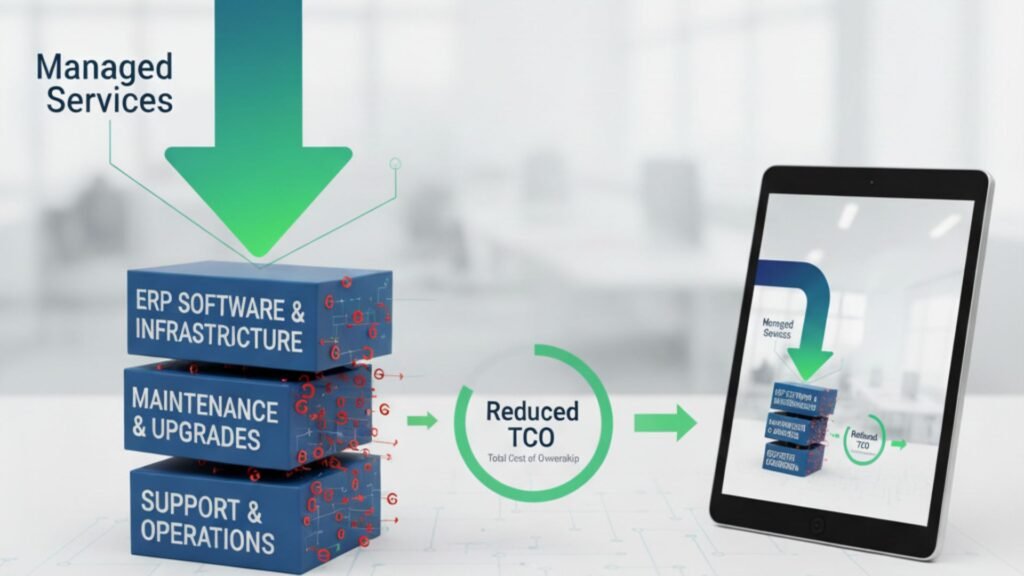
How Our Managed Services Reduce ERP TCO for USA & Canadian Companies

In today’s competitive market, businesses in the USA and Canada are constantly looking for ways to optimize operations, reduce costs, and improve performance. Enterprise Resource Planning (ERP) systems like Microsoft Dynamics 365 play a pivotal role in achieving these goals. However, one of the most overlooked factors in ERP success is the total cost of ownership (TCO). The initial investment in ERP software is just the beginning. Ongoing support, upgrades, integration, staff training, and downtime costs can significantly increase TCO if not managed properly. That’s where managed services come into play. By partnering with a trusted Microsoft Dynamics 365 partner in USA and Canada, companies can unlock predictable costs, improved efficiency, and long-term ROI. In this article, we’ll explore how our managed services help businesses reduce ERP TCO while ensuring reliability, scalability, and compliance. Understanding ERP TCO Before we dive into cost reduction strategies, let’s clarify what ERP TCO (Total Cost of Ownership) includes. It covers: Without structured support, these expenses can spiral out of control. Managed services provide a proactive approach to keep ERP costs predictable and aligned with business outcomes. How Managed Services Reduce ERP TCO 1. Proactive Monitoring & Issue Resolution Unplanned downtime is one of the biggest hidden ERP costs. A single hour of downtime in industries like manufacturing, retail, or hospitality can cost thousands of dollars. With our Microsoft Dynamics 365 Support Services in USA and Canada, we proactively monitor your ERP environment 24/7. This reduces operational disruptions, leading to lower indirect ERP costs. 2. Predictable Cost Structure Traditional ERP support is reactive, often involving costly emergency fixes. Our managed services replace this uncertainty with predictable, subscription-based pricing models. Instead of unpredictable bills for system outages or upgrade delays, businesses benefit from: For companies seeking ERP Implementation Services in USA and Canada, predictable costs make budgeting easier and more reliable. 3. Optimized ERP Performance ERP systems require regular optimization to align with changing business needs. Our managed services ensure Dynamics 365 runs at peak efficiency by: An optimized ERP reduces processing times, improves employee productivity, and lowers operational costs over time. 4. Scalable Support for Growing Businesses As businesses expand across the USA and Canada, their ERP requirements evolve. Without proper planning, scaling can lead to expensive re-implementations. By partnering with a trusted Microsoft Dynamics 365 partner in USA and Canada, companies benefit from: Scalable ERP support avoids costly system overhauls and keeps TCO under control. 5. Improved Security & Compliance Cybersecurity breaches and compliance penalties can drastically increase ERP costs. Our Microsoft Dynamics 365 Support Services in USA and Canada include: Stronger security reduces risk exposure and eliminates unexpected compliance costs. 6. Faster Upgrades & Migration ERP upgrades and migrations are often time-consuming and expensive if mishandled. We specialize in ERP Migration Services in USA and Canada, ensuring a smooth transition from legacy systems to Microsoft Dynamics 365. Key benefits include: Our approach significantly reduces the time and cost associated with upgrades and migrations. 7. Enhanced User Training & Adoption Poor adoption is another hidden driver of high ERP TCO. Many organizations underestimate the cost of retraining employees or handling productivity losses due to lack of knowledge. As part of our managed services, we provide: This maximizes ERP utilization and ensures companies get the full return on their Dynamics 365 investment. Why Choose Us as Your Microsoft Dynamics 365 Partner in USA and Canada Choosing the right partner is critical for reducing ERP TCO. We go beyond traditional support by delivering: With us as your Microsoft Dynamics 365 partner in USA and Canada, you don’t just get technical support—you get a strategic partner committed to driving long-term value. Business Impact: How Managed Services Lower ERP TCO Let’s break down the tangible benefits: Cost Driver Without Managed Services With Managed Services Downtime High, unpredictable Minimal due to proactive monitoring Support Costs Unplanned, reactive Predictable monthly/annual plans Upgrades & Migrations Expensive, high-risk Streamlined, automated, faster Security & Compliance Reactive, risk-prone Continuous audits, reduced fines User Adoption Poor, retraining needed Strong training support Scalability Costly re-implementations Flexible, cloud-ready growth The result? A significantly lower ERP TCO and a higher ROI on your Dynamics 365 investment. Conclusion ERP systems like Microsoft Dynamics 365 are essential for modern enterprises, but without proper management, the total cost of ownership can escalate quickly. Our managed services offer a structured, proactive, and scalable approach that keeps ERP costs predictable and controlled. Whether you are considering ERP Implementation Services in USA and Canada, planning a migration, or seeking ongoing Microsoft Dynamics 365 Support Services in USA and Canada, partnering with us ensures you achieve maximum value at the lowest possible TCO. If you’re ready to transform ERP from a cost center into a growth enabler, it’s time to work with a Microsoft Dynamics 365 partner in USA and Canada who understands your challenges and delivers solutions tailored to your business.

How Our Managed Services Reduce ERP TCO for USA & Canadian Companies Read More »

zero-downtime-erp-migration-to-the-cloud

How to Plan a Zero-Downtime ERP Migration to the Cloud

In today’s competitive digital economy, businesses cannot afford extended downtime when upgrading or migrating their enterprise resource planning (ERP) systems. Organizations in Canada and the USA are increasingly turning to cloud-based ERP solutions like Microsoft Dynamics 365 Business Central to modernize operations, improve scalability, and reduce IT overhead. However, a poorly executed migration can disrupt business continuity, leading to lost revenue, frustrated customers, and operational bottlenecks. That’s why zero-downtime ERP migration has become the gold standard. It ensures businesses transition smoothly to the cloud without halting day-to-day operations. Achieving this requires careful planning, the right technology stack, and experienced partners offering ERP Migration Services in Canada and USA. This article explores strategies, best practices, and considerations for planning a seamless migration, with insights on how a Microsoft Dynamics 365 Partner in Canada and USA can support the journey. Why Zero-Downtime ERP Migration Matters Downtime during ERP migration is not just an inconvenience—it can result in: A zero-downtime migration strategy enables organizations to transition seamlessly while keeping all core systems fully functional. Key Steps to Planning a Zero-Downtime ERP Migration 1. Define Clear Migration Objectives Before moving ERP workloads to the cloud, organizations must define objectives such as: Engaging a Microsoft Dynamics 365 Partner in Canada and USA ensures these objectives align with technical capabilities and business outcomes. 2. Choose the Right ERP System For most businesses, Microsoft Dynamics 365 Business Central offers the right balance of flexibility, cost-effectiveness, and cloud-native features. As a Dynamics 365 Business Central Partner in Canada and USA, certified consultants can help evaluate modules for finance, supply chain, retail, or manufacturing. 3. Conduct a Comprehensive System Audit Migrating without understanding your current ERP environment is risky. Conduct an audit to evaluate: Specialized ERP Consulting Services in Canada and USA provide detailed readiness assessments and gap analyses to streamline planning. 4. Select the Right Migration Strategy There are several strategies for ERP migration: For zero downtime, the hybrid or phased approach is most common, ensuring no interruptions in daily business processes. 5. Data Preparation and Migration Data migration is often the most complex element. Businesses should: Working with a Microsoft Dynamics 365 Partner in Canada and USA ensures access to advanced migration tools that support continuous data synchronization, avoiding downtime. 6. Implement a Phased Cutover Approach Instead of a “big bang” migration, organizations should: ERP Implementation Services in Canada and USA provide structured roadmaps for phased cutovers, minimizing risks. 7. Ensure Strong Integration with Other Systems Modern ERP doesn’t function in isolation—it must integrate with CRM, HR, e-commerce, and analytics platforms. Ensuring APIs and middleware are ready in advance avoids post-migration disruptions. 8. Plan for User Training and Change Management Technology is only part of the equation—employee adoption drives success. Offer role-based training sessions and create super-user groups to ease adoption. Experienced ERP Consulting Services in Canada and USA include change management strategies in their engagements. 9. Continuous Monitoring and Support Even after migration, continuous monitoring is critical. Performance analytics, system health dashboards, and proactive support reduce risks. Partnering with a Microsoft Dynamics 365 Partner in Canada and USA ensures access to 24/7 support and ongoing optimization. Role of Microsoft Dynamics 365 Partner in Canada and USA Migrating ERP without expert guidance can be overwhelming. Certified partners provide: Benefits of Zero-Downtime Cloud ERP Migration Common Challenges and How to Overcome Them Real-World Example A mid-sized manufacturer in Ontario migrated from NAV to Dynamics 365 Business Central with the help of a Microsoft Dynamics 365 Partner in Canada. By using a phased cutover approach and continuous data replication, they achieved zero downtime, ensuring uninterrupted production schedules. Similarly, a U.S.-based retail chain worked with a Microsoft Dynamics 365 Partner in USA to move from on-premises ERP to Dynamics 365 Business Central. The hybrid migration minimized risks and provided real-time insights into inventory across multiple locations. FAQs on Zero-Downtime ERP Migration Q1. What is zero-downtime ERP migration?Ans: Zero-downtime ERP migration refers to transitioning to a new ERP system without interrupting ongoing business operations. Businesses in Canada and the USA often achieve this with the support of ERP Migration Services in Canada and USA. Q2. How does Microsoft Dynamics 365 Business Central support zero-downtime migration?Ans: Dynamics 365 Business Central provides cloud-native architecture, real-time data synchronization, and flexible modules. A Dynamics 365 Business Central Partner in Canada and USA ensures businesses leverage these features for smooth transitions. Q3. Why should I choose a Microsoft Dynamics 365 Partner in Canada and USA for migration?Ans: Certified partners bring technical expertise, proven methodologies, and industry-specific best practices, ensuring successful ERP implementation without downtime. Q4. What is the difference between ERP Migration Services and ERP Implementation Services in Canada and USA? Q5. How do ERP Consulting Services in Canada and USA help in migration?Ans: ERP consulting services provide readiness assessments, compliance audits, process mapping, and change management strategies to ensure seamless migration. Q6. How long does an ERP migration take?Ans: The timeline varies depending on data volume, complexity, and migration strategy. With the right partner, businesses can significantly reduce timelines while maintaining zero downtime. Q7. What industries benefit most from zero-downtime ERP migration?Ans: Manufacturing, retail, distribution, healthcare, and financial services are particularly reliant on uninterrupted operations, making zero-downtime migration essential. Conclusion Migrating to a cloud-based ERP like Microsoft Dynamics 365 Business Central is no longer optional—it’s a strategic necessity for businesses in Canada and the USA. However, the risk of downtime makes planning essential. By defining objectives, auditing existing systems, preparing data, and adopting phased cutover strategies, organizations can ensure seamless transitions. Partnering with a Microsoft Dynamics 365 Partner in Canada and USA provides access to advanced ERP Migration Services, ERP Implementation Services, and ERP Consulting Services in Canada and USA. With the right expertise, businesses can modernize their ERP systems, reduce risks, and gain the agility to compete in today’s fast-paced markets—all without a minute of lost productivity.

How to Plan a Zero-Downtime ERP Migration to the Cloud Read More »

saas-concept

How Our Managed Services Reduce ERP TCO for US & Canadian Companies

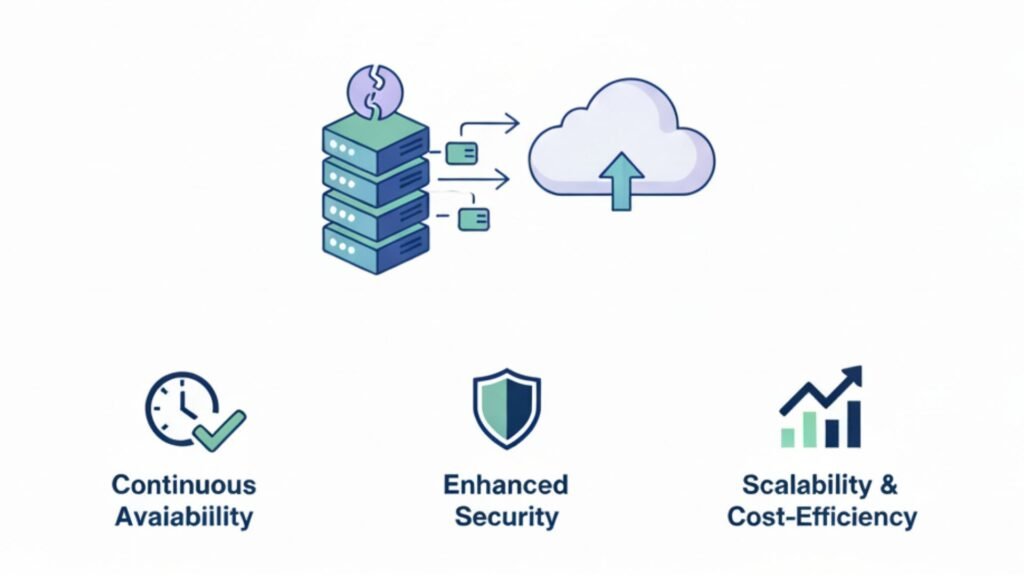
Enterprise Resource Planning (ERP) systems are powerful tools that help organizations streamline operations, improve decision-making, and drive growth. However, managing an ERP system—whether Microsoft Dynamics 365, SAP, Oracle, or another platform—often comes with a hefty price tag. From licensing and infrastructure to upgrades, customizations, and support, many companies in the US and Canada struggle to keep their Total Cost of Ownership (TCO) under control. This is where ERP Managed Services can transform the game. By outsourcing day-to-day management, monitoring, and optimization to a trusted provider, businesses reduce IT overhead, improve efficiency, and extend the value of their ERP investment. In this article, we’ll explore how managed services reduce ERP TCO, what benefits they deliver, and why US and Canadian companies should consider this strategic approach. Understanding ERP Total Cost of Ownership (TCO) ERP TCO goes beyond the initial implementation costs. It includes: Without proper planning, these costs quickly spiral, making ERP feel more like a burden than a business enabler. How Managed Services Reduce ERP TCO 1. Optimized Licensing and Usage Many companies overpay for licenses they don’t fully use. Managed service providers (MSPs) perform license audits, identify underutilized subscriptions, and recommend right-sizing strategies. By aligning licenses with actual business needs, companies in the US and Canada save significantly on recurring costs. 2. Reduced Infrastructure Expenses Cloud-based ERP hosting through a managed service model eliminates the need for heavy on-premises hardware investments. Providers offer scalable cloud infrastructure, ensuring companies pay only for the resources they need while avoiding unnecessary infrastructure maintenance costs. 3. Proactive Monitoring and Maintenance Unplanned downtime can be costly. Managed services provide 24/7 monitoring and preventive maintenance, reducing disruptions and ensuring system stability. By resolving issues before they become critical, businesses avoid revenue losses and productivity declines. 4. Streamlined Upgrades and Patches ERP systems evolve constantly, but upgrades can be resource-intensive. MSPs handle regular updates, patches, and compliance requirements, keeping your ERP environment secure and current without requiring internal IT teams to spend long hours managing upgrades. 5. Access to Expert Resources Without Hiring Costs Hiring skilled ERP consultants in USA, especially in the US and Canadian markets where IT salaries are high. With managed services, companies gain access to a pool of certified ERP experts—covering functional, technical, and integration areas—at a fraction of the cost. 6. Enhanced Security and Compliance Managed service providers bring advanced security tools and compliance frameworks tailored to regional regulations like GDPR, HIPAA, or Canadian data privacy laws. This reduces the risk of fines, penalties, or costly breaches. 7. Scalability and Flexibility Business needs change—mergers, acquisitions, new market entries. Managed services allow companies to scale ERP environments up or down without massive reinvestments. This flexibility keeps costs predictable and aligned with actual growth. 8. Improved User Productivity By providing helpdesk support, user training, and troubleshooting, MSPs ensure employees spend less time struggling with ERP issues and more time focusing on business outcomes. Higher productivity translates to measurable cost savings. Why US and Canadian Companies Benefit Most Companies in the US and Canada often operate across multiple states, provinces, or even countries. This creates complexities in compliance, taxation, and supply chain processes. ERP managed services address these regional challenges by: With high labor costs in North America, outsourcing ERP management helps companies control budgets without sacrificing performance. Case Example: Reducing ERP TCO with Managed Services A mid-sized manufacturing company in Ontario relied on Microsoft Dynamics 365 Finance & Operations but struggled with escalating IT costs. They faced: By partnering with a managed services provider, the company: Result: A 35% overall reduction in ERP TCO within the first year. Additional Business Benefits Beyond Cost Savings While TCO reduction is the most obvious advantage, managed services also provide: Choosing the Right Managed Services Provider When selecting a provider in the US or Canada, businesses should look for: FAQs About ERP Managed Services and TCO Q 1. What is the average cost savings from ERP managed services?Ans: Most companies see 20–40% savings in TCO within the first 12–18 months, depending on system complexity and scope. Q 2. Can small and mid-sized businesses benefit from ERP managed services?Ans: Absolutely. SMEs often benefit even more, since they typically lack the in-house expertise required for ERP management. Q 3. Do managed services replace my internal IT team?Ans: Not necessarily. They complement your IT staff, allowing them to focus on innovation while the provider handles ERP administration. Q 4. How do managed services improve ERP security?Ans: Providers implement advanced security monitoring, regular patches, and compliance checks, reducing the risk of breaches and penalties. Q 5. Is ERP managed services only for cloud systems?Ans: No. Managed services support both on-premises and cloud ERP environments, or hybrid models, depending on your business needs. Conclusion Managing an ERP system in-house can quickly escalate costs, drain resources, and distract from strategic priorities. For companies in the US and Canada, partnering with an ERP managed services provider is a smart way to reduce TCO, improve system reliability, and unlock innovation. By optimizing licensing, infrastructure, and operations, managed services deliver not only cost efficiency but also the agility businesses need to stay competitive. Whether you’re running Microsoft Dynamics 365, SAP, or another ERP, the managed services model ensures you get the most value from your investment while maintaining financial control.

How Our Managed Services Reduce ERP TCO for US & Canadian Companies Read More »

erp-support-outsourcing

ERP Support Outsourcing: A Case for Cost Reduction in the U.S.

In today’s fast-paced business environment, companies across North America are constantly seeking ways to reduce operational costs while maintaining efficiency and innovation. Enterprise Resource Planning (ERP) systems, particularly Microsoft Dynamics 365, have become central to this mission by streamlining operations, enhancing decision-making, and enabling scalability. However, with ERP systems come challenges—chief among them being support and maintenance costs. Many businesses in the U.S. and Canada are now turning to ERP support outsourcing as a strategic move to lower expenses while ensuring robust performance. Whether you’re working with a Dynamics 365 Business Central Partner in Canada, collaborating with a Microsoft Dynamics 365 Partner in Canada, or evaluating ERP consulting options, outsourcing ERP support offers clear financial and operational benefits. In this article, we’ll explore why outsourcing ERP support is becoming the preferred choice, how it reduces costs, and what role trusted partners play in ensuring ERP success. The Rising Cost of ERP Support Implementing ERP solutions like Microsoft Dynamics 365 is a significant investment. While the upfront implementation cost is substantial, ongoing support and maintenance often account for an even larger portion of the ERP lifecycle expenses. Some of the key cost drivers for ERP support include: Outsourcing ERP support addresses these challenges while enabling organizations to focus on their core business objectives. Why Outsource ERP Support? Outsourcing ERP support provides businesses with access to specialized skills, 24×7 availability, and cost-efficient solutions. Let’s break down the benefits: 1. Lower Labor Costs Hiring and retaining in-house ERP specialists is expensive. Outsourcing to a Microsoft Dynamics 365 Partner in Canada allows businesses in the U.S. to access top-tier expertise without the high salary burden. 2. Access to Certified Experts ERP outsourcing partners employ certified consultants with in-depth knowledge of Microsoft Dynamics ERP. This ensures quick troubleshooting, smooth upgrades, and efficient issue resolution. 3. Round-the-Clock Support Unlike in-house teams restricted by working hours, outsourced providers offer Microsoft Dynamics 365 Support Services in Canada with 24×7 coverage, ensuring business continuity. 4. Scalability & Flexibility Whether it’s a minor issue, a full ERP migration and implementation services in Canada project, or an upgrade to Business Central, outsourcing provides flexibility to scale services as needed. 5. Focus on Core Business By outsourcing ERP support, companies free up internal resources, allowing them to focus on strategy, growth, and customer engagement. The Role of Trusted Partners Outsourcing ERP support is only effective when businesses partner with the right experts. A reliable Dynamics 365 Business Central Partner in Canada or a Microsoft Dynamics 365 ERP implementation services in Canada provider ensures that businesses not only reduce costs but also improve efficiency and system performance. Trusted partners provide: Case Study: Consider a mid-sized manufacturing firm in the U.S. that was struggling with rising ERP maintenance costs. Their in-house IT team lacked the expertise to handle advanced Dynamics 365 upgrades and troubleshooting. By outsourcing support to a Microsoft Dynamics 365 Partner in Canada, the company: This example demonstrates the tangible ROI of outsourcing ERP support. ERP Migration and Implementation Services in Canada and the U.S. For many businesses, outsourcing doesn’t just stop at support—it also extends to ERP migration and implementation services in Canada and the U.S. Moving from legacy systems like Dynamics GP or NAV to Microsoft Dynamics 365 Business Central requires expertise, planning, and flawless execution. By partnering with an experienced ERP Consultant in Canada, companies ensure: This approach not only saves money but also accelerates digital transformation. Key Cost Reduction Strategies Through Outsourcing Outsourced ERP partners apply several strategies to optimize costs: Future of ERP Support Outsourcing in the U.S. With the growing adoption of cloud-based ERP solutions like Dynamics 365, outsourcing is no longer just an option—it’s becoming the norm. U.S. businesses recognize that outsourcing ERP support to trusted global partners offers cost-efficiency, scalability, and expertise that in-house teams often cannot match. By leveraging Microsoft Dynamics 365 Support Services in Canada, U.S. companies can focus on what matters most—innovation, growth, and customer satisfaction—while enjoying significant cost savings. FAQs on ERP Support Outsourcing Q1. Why should U.S. companies outsource ERP support to partners in Canada?Ans: Outsourcing to a Microsoft Dynamics 365 Partner in Canada provides cost-effective services, access to certified experts, and round-the-clock support compared to building an expensive in-house team. Q2. Can outsourcing partners handle ERP migrations as well as support?Ans: Yes. Many partners offer ERP migration and implementation services in Canada, ensuring seamless upgrades and transitions from legacy systems, such as GP or NAV, to Dynamics 365 Business Central. Q3. How does outsourcing improve ROI on ERP systems?Ans: Outsourcing reduces labor costs, ensures proactive maintenance, minimizes downtime, and improves system performance—directly enhancing ROI. Q4. Is ERP outsourcing secure?Trusted partners implement advanced security protocols, regular updates, and compliance standards to ensure data protection. Q5. What industries benefit most from outsourcing ERP support?Ans: Industries such as retail, manufacturing, logistics, finance, and healthcare benefit greatly due to their need for continuous system uptime and scalability. Conclusion ERP systems are critical to business success, but their support and maintenance costs can quickly spiral if not managed effectively. Outsourcing ERP support offers U.S. businesses a clear path to cost reduction, efficiency, and innovation. By partnering with a Dynamics 365 Business Central Partner in Canada, a Microsoft Dynamics 365 Partner in Canada, or an expert ERP Consultant in Canada, organizations can achieve significant savings while ensuring their ERP systems remain future-ready. Additionally, outsourcing opens doors to advanced Microsoft Dynamics 365 ERP implementation services in Canada, ensuring long-term digital transformation success.

ERP Support Outsourcing: A Case for Cost Reduction in the U.S. Read More »