
microsoft dynamics certified partners

why-manufacturers-trust-business-central-for-supply-chain-optimization

Why Manufacturers Trust Business Central for Supply Chain Optimization

In today’s highly competitive manufacturing landscape, supply chain efficiency is no longer optional—it is a strategic necessity. Manufacturers must manage fluctuating demand, rising operational costs, supplier disruptions, and increasing customer expectations, all while maintaining profitability. This growing complexity explains why manufacturers trust Business Central for supply chain optimization, as many organizations are turning to Microsoft Dynamics 365 Business Central as a modern, scalable ERP solution that delivers end-to-end supply chain visibility and control. Across the United States—and particularly in Texas—manufacturers are partnering with a trusted Microsoft Dynamics 365 partner in Texas USA to transform their operations, streamline processes, and optimize supply chains. This growing shift highlights why manufacturers trust Business Central for supply chain optimization, as Dynamics 365 Business Central has become the ERP of choice for manufacturers seeking greater visibility and control. This article explores how it enhances supply chain performance and why working with experienced Microsoft Dynamics consulting services in Texas USA is essential for long-term success. The Growing Supply Chain Challenges Faced by Manufacturers Manufacturers today operate in an environment shaped by global sourcing, volatile markets, and digital disruption. Traditional ERP systems often fail to provide the agility and real-time insights needed to respond quickly. Common supply chain challenges include: Legacy ERP systems struggle to adapt to these realities. As a result, manufacturers are increasingly migrating to cloud-based solutions like Dynamics 365 Business Central, supported by expert D365 migration services in Texas USA. What Is Microsoft Dynamics 365 Business Central? Microsoft Dynamics 365 Business Central is a comprehensive, cloud-based ERP solution designed for small to mid-sized businesses and growing enterprises. It unifies finance, supply chain, manufacturing, sales, and customer relationship management (CRM) into a single platform. Often referred to as Dynamics 365 Business Central, Business Central, or Dynamics 365 BC, it is part of the broader Microsoft Dynamics 365 ecosystem, seamlessly integrating with tools like Microsoft Dynamics 365 CRM, Microsoft 365, Power BI, and Azure. For manufacturers, Business Central delivers: Why Manufacturers Trust Business Central for Supply Chain Optimization 1. End-to-End Supply Chain Visibility One of the biggest reasons manufacturers trust Dynamics 365 Business Central is its ability to provide complete visibility across the supply chain. From procurement and inventory to production and fulfillment, every process is connected. With real-time dashboards and analytics, manufacturers can: A trusted Microsoft Dynamics 365 Business Central partner in Texas USA ensures that dashboards and reports are customized to manufacturing KPIs. 2. Intelligent Inventory Management Inventory optimization is critical for manufacturers aiming to reduce carrying costs while avoiding stockouts. Business Central uses intelligent planning tools to help manufacturers maintain the right inventory levels. Key benefits include: By working with Microsoft Dynamics 365 Support Services in Texas USA, manufacturers can continuously refine inventory strategies as business needs evolve. 3. Demand Forecasting and Production Planning Accurate demand forecasting is essential for efficient supply chain operations. Dynamics Microsoft solutions use historical data and predictive insights to help manufacturers align production with actual demand. Business Central supports: Manufacturers partnering with experienced MS Dynamics 365 Implementation services in Texas USA can configure these features to match complex production environments. 4. Seamless Procurement and Supplier Management Procurement inefficiencies can disrupt the entire supply chain. Microsoft Dynamics ERP partner solutions streamline purchasing by automating vendor selection, approvals, and order tracking. With Business Central, manufacturers can: A certified Microsoft Dynamics 365 partner ensures procurement workflows align with industry best practices. 5. Integrated Manufacturing and Shop Floor Control Unlike disconnected systems, Dynamics 365 Business Central integrates supply chain operations directly with manufacturing processes. Capabilities include: Manufacturers working with Microsoft Dynamics implementation partners gain tailored configurations that support discrete, process, or mixed-mode manufacturing. 6. Built-In Financial and Cost Control Supply chain optimization is incomplete without financial alignment. Business Central links inventory movements, procurement, and production directly to finance. This enables manufacturers to: A reliable Microsoft ERP partner helps manufacturers leverage these insights for strategic planning. Why Texas Manufacturers Prefer Dynamics 365 Business Central Texas is home to a diverse manufacturing ecosystem, including automotive, electronics, oil & gas, food processing, and industrial equipment. These industries require scalable and flexible ERP solutions. Manufacturers in Texas benefit from: By choosing Microsoft Dynamics 365 Business Central in Texas USA, organizations gain both global technology and local expertise. The Role of Microsoft Dynamics Consulting Services in Texas USA ERP success depends not only on software but also on strategy, implementation, and ongoing optimization. Microsoft Dynamics consulting services in Texas USA play a critical role in ensuring manufacturers realize maximum ROI. Consulting services include: Experienced consultants ensure that Dynamics 365, MS Dynamics, and Dynamics CRM capabilities are aligned with manufacturing goals. Smooth Transitions with D365 Migration Services in Texas USA Many manufacturers are moving from legacy systems or older Microsoft ERP solutions to Dynamics 365 Business Central. A poorly planned migration can disrupt operations—but expert D365 migration services in Texas USA minimize risk. Migration services cover: Certified Microsoft Dynamics partners list providers ensure secure and seamless transitions. Business Central and CRM: A Unified View of Customers Supply chain efficiency is closely linked to customer satisfaction. Microsoft Dynamics 365 CRM integrates seamlessly with Business Central, giving manufacturers a 360-degree view of customers. Benefits include: This integration strengthens both supply chain and customer experience strategies. Why Choose a Microsoft Dynamics 365 Partner in Texas USA? Choosing the right partner is as important as choosing the right ERP. A trusted Dynamics 365 partner, Business Central partner, or Microsoft Dynamics ERP partner brings industry knowledge, technical expertise, and ongoing support. Key advantages include: Leading Microsoft Dynamics implementation partners help manufacturers stay competitive in a rapidly changing market. Future-Ready Supply Chains with Dynamics 365 With continuous updates, AI-driven insights, and cloud scalability, Microsoft Dynamics 365 Business Central prepares manufacturers for the future. Key innovations include: Manufacturers partnering with a reliable Dynamics 365 Business Central partner gain a future-proof ERP platform. Frequently Asked Questions (FAQs) Q1. Why is Business Central ideal for manufacturers? Ans: Business Central integrates supply chain, manufacturing, finance, and CRM into one system, providing real-time visibility, automation, and scalability. Q2.

Why Manufacturers Trust Business Central for Supply Chain Optimization Read More »
how-a-trusted-microsoft-partner-simplifies-your-journey-from-axnav-to-dynamics-365

How a Trusted Microsoft Partner Simplifies Your Journey from AX/NAV to Dynamics 365

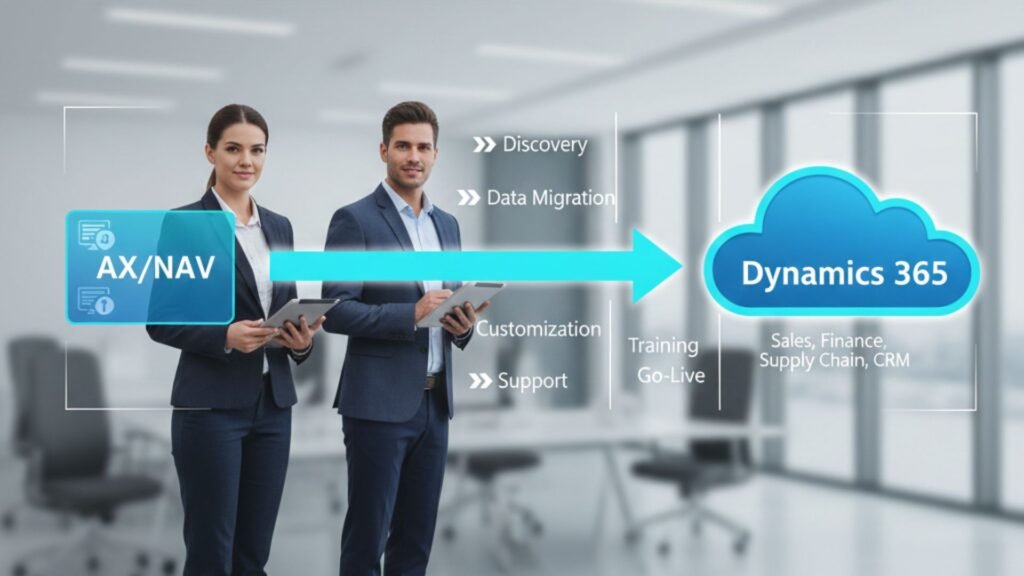
For many organizations across the United States, especially in Texas, Microsoft Dynamics AX and NAV have long been the backbone of enterprise resource planning (ERP). However, with Microsoft’s strategic shift toward cloud-first, AI-powered solutions, Dynamics 365—particularly Dynamics 365 Business Central and Dynamics 365 Finance & Operations—has become the future of ERP. Migrating from AX or NAV to Dynamics 365 is not just a technical upgrade; it is a strategic business transformation. Data structures change, processes evolve, integrations expand, and users must adapt to new ways of working. This is where a trusted Microsoft Dynamics 365 partner in Texas, USA plays a critical role. Understanding the Shift: From AX/NAV to Dynamics 365 Why Microsoft AX and NAV Are No Longer Enough Microsoft Dynamics AX and NAV were powerful on-premise ERP systems, but modern businesses now demand: Dynamics 365 addresses these needs through two primary solutions: An experienced Microsoft Dynamics partner in Texas understands which path fits your business and industry best. Why Migration Is Not Just an Upgrade Many organizations underestimate the complexity of a Dynamics NAV upgrade to Business Central or an AX-to-D365 migration. The reality is that this journey involves: Attempting this without a certified Microsoft Dynamics 365 implementation partner often leads to cost overruns, delays, and operational disruption. The Role of a Trusted Microsoft Dynamics 365 Partner in Texas, USA 1. Strategic Assessment and Roadmap Planning A trusted Microsoft Dynamics consulting services provider in Texas, USA begins with a comprehensive assessment: This assessment results in a tailored migration roadmap aligned with your business goals, budget, and timeline. 2. Choosing the Right Dynamics 365 Solution Not every business needs the same ERP. A certified Microsoft ERP partner helps you decide between: For Texas-based manufacturers, distributors, professional services firms, and retailers, local partners bring industry-specific insights that global providers often miss. How Microsoft Partners Simplify Data Migration Clean, Secure, and Accurate Data Transfer Data is the heart of your ERP. A trusted D365 migration services provider in Texas, USA ensures: Whether it’s a Dynamics NAV 2018 upgrade to Business Central or a complex AX migration, experienced partners reduce downtime and risk. Customization and Extension Optimization From Heavy Customization to Smart Extensions Older AX and NAV systems often rely on heavy customizations. A modern Microsoft Dynamics 365 Business Central partner helps you: This approach ensures smoother upgrades and long-term system stability. Seamless Integrations with the Microsoft Ecosystem A certified Dynamics 365 partner in Texas ensures seamless integration with: This unified ecosystem enables real-time insights and cross-department collaboration. Implementation Excellence with Local Expertise Why Texas-Based Partners Make a Difference Working with a Microsoft Dynamics 365 partner in Texas, USA offers unique advantages: Certified Microsoft Dynamics Gold Partners follow Microsoft’s Sure Step and FastTrack methodologies to ensure predictable, high-quality implementations. Change Management and User Adoption People Are the Key to ERP Success Technology alone does not guarantee success. A trusted Microsoft Dynamics 365 implementation services provider in Texas focuses on: This ensures faster adoption and higher productivity post-go-live. Ongoing Microsoft Dynamics 365 Support Services in Texas, USA Beyond Go-Live: Long-Term Partnership Post-implementation support is critical. Reliable Microsoft Dynamics 365 Support Services in Texas, USA include: A long-term partnership ensures your ERP evolves with your business. Business Benefits of Migrating with a Trusted Microsoft Partner Key Advantages With expert guidance, businesses unlock the full value of Microsoft Dynamics 365 Business Central in Texas, USA and enterprise-grade D365 solutions. Frequently Asked Questions (FAQs) Q 1. Why should I work with a Microsoft Dynamics 365 partner in Texas, USA? Ans: A local partner understands regional compliance, industry needs, and provides faster, more personalized support. Q 2. Is Dynamics NAV upgrade to Business Central mandatory? Ans: While not mandatory, Microsoft strongly recommends upgrading to stay supported, secure, and future-ready. Q 3. How long does AX/NAV to Dynamics 365 migration take? Ans: Timelines vary based on data complexity and customizations, but a trusted partner ensures realistic planning and execution. Q 4. Can I migrate only selected data from NAV or AX? Ans: Yes. Experienced Microsoft Dynamics consulting services in Texas, USA help you migrate only relevant, clean data. Q 5. What industries benefit most from Dynamics 365 Business Central? Ans: Manufacturing, distribution, retail, professional services, and logistics companies benefit significantly. Q 6. Do Microsoft Dynamics Gold Partners offer better implementation quality? Ans: Gold Partners meet Microsoft’s highest standards for expertise, customer success, and certified resources. Q 7. What support is available after go-live? Ans: Comprehensive Microsoft Dynamics 365 Support Services in Texas, USA include functional, technical, and strategic support. Q 8. Can Dynamics 365 integrate with CRM systems? Ans: Yes, Dynamics 365 integrates seamlessly with Dynamics 365 Customer Engagement and third-party CRM tools. Conclusion Migrating from AX or NAV to Dynamics 365 is a transformational step that demands expertise, strategy, and precision. A trusted Microsoft Dynamics 365 partner in Texas, USA simplifies this journey by combining technical excellence with local industry knowledge. From assessment and migration to implementation, support, and optimization, the right Microsoft ERP partner ensures your transition to Dynamics 365 is smooth, secure, and future-ready—empowering your business to thrive in a digital-first world. If you are planning a Dynamics NAV upgrade to Business Central or a full AX-to-D365 transformation, partnering with an experienced Microsoft Dynamics partner is not just an option—it’s a strategic advantage.

How a Trusted Microsoft Partner Simplifies Your Journey from AX/NAV to Dynamics 365 Read More »

license-based-erp

Subscription vs. License-Based ERP: Which Is Better for Long-Term Growth?

In today’s fast-evolving digital economy, Enterprise Resource Planning (ERP) systems are the backbone of business operations — integrating finance, supply chain, manufacturing, sales, and human resources into one unified platform. But when it comes to adopting an ERP, one question keeps business leaders and IT managers debating: Should you choose a subscription-based (cloud) ERP or a license-based (on-premises) ERP? This question isn’t just about pricing models; it’s about long-term scalability, innovation, and total cost of ownership (TCO). As more businesses move toward cloud-based solutions like Microsoft Dynamics 365, it’s important to understand what each model offers — and which one aligns best with your growth strategy. In this article, we’ll explore the key differences between subscription and license-based ERP models, their advantages and drawbacks, the financial and operational impacts, and how to choose the right option for long-term success. Understanding ERP Deployment and Licensing Models Before diving into comparisons, let’s clarify what these two models mean in practice. 1. License-Based ERP (Perpetual License) A license-based ERP involves purchasing a software license outright, which gives your company the right to use the software indefinitely. Traditionally, this model is paired with on-premises deployment, where the software is installed on your own servers, and your internal IT team (or a partner) manages the infrastructure, upgrades, and security. Key Characteristics: Examples: Microsoft Dynamics AX, SAP ECC, Oracle E-Business Suite (legacy editions) 2. Subscription-Based ERP A subscription-based ERP operates under a pay-as-you-go model. You pay a recurring monthly or annual fee to access the software, which is typically hosted in the cloud by the vendor or a managed partner. Key Characteristics: Examples: Microsoft Dynamics 365 Business Central, Oracle NetSuite, SAP S/4HANA Cloud Key Differences Between Subscription and License-Based ERP Factor Subscription-Based ERP (SaaS) License-Based ERP (Perpetual) Cost Structure Monthly/annual OPEX One-time CAPEX + maintenance Deployment Cloud-hosted On-premises or private cloud Scalability Easily scalable up or down Limited by hardware and licenses Upgrades Automatic, frequent updates Manual upgrades; costly & disruptive Security & Compliance Managed by vendor (enterprise-grade) Managed internally Customization Limited but configurable Deep customization possible Integration with Modern Tools Native integration with cloud apps, AI, Power BI May require manual integrations Access & Mobility Accessible anywhere, anytime Typically on-premises access TCO (Total Cost of Ownership) Lower over time for SMBs and mid-market Potentially lower for large enterprises over 10+ years Deep Dive: Advantages and Drawbacks of Each Model Subscription-Based ERP – The Modern Approach Advantages: Drawbacks: License-Based ERP – The Traditional Powerhouse Advantages: Drawbacks: Total Cost of Ownership (TCO) Comparison When evaluating ERP options, cost must be viewed beyond licensing alone. Here’s how both models typically compare across time: Cost Element Subscription ERP (Cloud) License ERP (On-Premises) License Monthly/annual subscription One-time perpetual license Infrastructure Included in subscription Requires servers, network, backup Maintenance Included Annual support fee (15–25%) Upgrades Included automatically Paid upgrades (every 5–7 years) IT Staff Minimal Dedicated internal team required Security Managed by vendor Managed in-house Scalability On-demand Hardware-dependent Long-Term Cost (10 yrs) Potentially higher for very large users Potentially lower after break-even point Insight:For small and mid-sized businesses (SMBs), subscription ERP typically offers lower TCO and higher agility. For large enterprises with established IT infrastructure and predictable operations, license-based ERP may eventually become more cost-efficient — provided they manage it effectively. The Future is Cloud – Here’s Why Over the past decade, the ERP landscape has undergone a massive transformation. According to industry reports, more than 80% of new ERP implementations today are cloud-based. Microsoft, SAP, and Oracle are all transitioning customers from their legacy on-premises products to modern SaaS platforms. Here’s why cloud subscription models are dominating: Which Model Is Right for You? The decision depends on your size, industry, IT maturity, budget, and growth objectives. Here’s a practical framework: Choose Subscription-Based ERP (Cloud) Choose License-Based ERP (On-Premises) : Hybrid ERP: The Best of Both Worlds Many companies are now adopting hybrid ERP models, combining the stability of on-premises systems with the flexibility of cloud applications. For instance, a manufacturer may run core financials and operations in Dynamics 365 Finance (cloud) while maintaining on-premises systems for shop-floor control or legacy integrations. The hybrid model provides a balanced approach to innovation and control. Benefits of Hybrid ERP: Drawbacks: Nevertheless, hybrid ERP serves as a strategic bridge for organizations transitioning from legacy systems toward full digital transformation. Microsoft Dynamics 365: A Real-World Example Microsoft Dynamics 365 offers flexible licensing options — subscription-based SaaS as the default model and on-premises deployment for specific industries and compliance needs. Why it stands out: For businesses aiming for long-term growth, Dynamics 365’s cloud-first model enables agility, innovation, and scalability while maintaining enterprise-grade security and compliance. The Strategic View: Long-Term Growth Implications When evaluating ERP models for long-term growth, think beyond immediate costs — focus on strategic flexibility, innovation velocity, and business resilience. Growth Factor Subscription (Cloud) License (On-Prem) Innovation Continuous delivery, AI-first Limited upgrades Scalability Dynamic scaling Hardware-dependent Agility Rapid deployment & updates Slow change cycles Cost Control Predictable, flexible High upfront, low variable Security Vendor-managed enterprise-grade Internal responsibility Long-Term ROI High for fast-growing firms High for stable enterprises Future Readiness Built for digital transformation May require modernization later In essence, subscription-based ERP is the better choice for most growing organizations. It offers agility, lower barriers to entry, and constant innovation — all essential in an economy defined by rapid technological change. License-based ERP still has relevance for specific industries and large enterprises needing full control, but even these organizations are gradually adopting hybrid or cloud-first strategies. Conclusion Both subscription-based and license-based ERP models have their place in today’s business landscape. However, when it comes to long-term growth, the balance increasingly tilts toward the subscription (cloud) model. Subscription ERP: License ERP: For most businesses aiming to future-proof their operations, cloud ERP platforms like Microsoft Dynamics 365 represent the smarter, more sustainable path forward. As the world continues to shift toward AI-driven, data-centric operations, flexibility and continuous innovation will define success — and subscription-based ERP models are designed precisely for that. Frequently Asked Questions (FAQs) Q

Subscription vs. License-Based ERP: Which Is Better for Long-Term Growth? Read More »

microsoft-erp-support

What’s Included in a World-Class Microsoft ERP Support SLA

In today’s fast-paced business environment, ERP downtime is more than just a technical inconvenience—it’s a direct hit to productivity, revenue, and customer satisfaction. For organizations running Microsoft Dynamics 365, Business Central, Finance & Operations, or older versions like GP, NAV, or AX, having a robust support framework isn’t optional—it’s mission-critical. That’s where a world-class Microsoft ERP Support SLA (Service Level Agreement) comes in. A powerful SLA defines not only response times, but also responsibility, transparency, accountability, and strategic value. Whether your provider is an in-house team or an external Microsoft Dynamics Partner in USA, understanding what’s included in a high-quality ERP support agreement can help you make smarter IT decisions. In this article, we’ll break down: What Is an ERP Support SLA and Why Does It Matter? An ERP Support SLA is a contractual agreement between your organization and your support provider defining how quickly and effectively issues will be resolved. It sets expectations on: Without an SLA, support becomes arbitrary and reactive. But with a structured SLA, your Microsoft ERP environment remains secure, optimized, and evolving with your business needs. Core Components of a World-Class Microsoft ERP Support SLA Let’s explore the key elements you should expect from premium ERP Support Services in USA or any leading Microsoft Dynamics Partner in USA. 1. Clearly Defined Support Tiers & Issue Categories Every ERP issue is not equal. A simple “How do I update a record?” query should not receive the same priority as a financial posting failure during month-end closing. A good SLA includes: Priority Level Example Issue Expected Response Time P1 – Critical System down, data corruption, failed transactions < 1 Hour P2 – High Major feature not functioning but workarounds exist < 4 Hours P3 – Medium Performance lag or integration interruption < 1 Business Day P4 – Low User queries or enhancement requests < 2 Business Days Leading Microsoft Dynamics Consultancy Services in USA follow ITIL-aligned ticketing structures to ensure fair prioritization across departments. 2. Guaranteed Response & Resolution Timelines Response time is when your support provider acknowledges the issue—resolution time is when they actually fix it. A world-class SLA clearly commits to both. ✅ Example Commitment from Top ERP Support Services in USA: If your provider only mentions “response time,” they may leave you waiting for actual fixes. Always insist on both. 3. 24/7 Support Availability (If Needed) If your operations span multiple time zones or include eCommerce, logistics, or manufacturing workflows, round-the-clock support is non-negotiable. A future-ready SLA includes: Many Microsoft Dynamics Partners in USA offer follow-the-sun support models to ensure continuous availability. 4. Proactive System Monitoring & Preventive Maintenance Reactive support alone is outdated. World-class SLAs now include: ✔ Automated health checks✔ Patch & update management✔ Integration monitoring✔ Security audits and threat response Rather than waiting for something to break, leading Microsoft Dynamics Consultancy Services in USA actively prevent incidents before they impact business. 5. Functional & Technical Support (Not Just Bug Fixing) True ERP optimization requires more than resolving technical errors. Your SLA should also cover: Not all ERP Implementation Services in USA provide functional consulting under support—double-check before signing. 6. Dedicated Account Manager & Escalation Matrix Fast issue resolution requires accountability. Your SLA must include: This structure ensures transparency and continuous improvement rather than transactional support. 7. Customization & Change Request Management Most organizations customize Microsoft ERP at some level. Therefore, the SLA must define: Top-tier Microsoft Dynamics Partners in USA often provide bundled enhancement hours with premium SLA tiers. 8. SLA Penalties & Performance Reporting A strong SLA includes measurable KPIs like: You should receive monthly or quarterly performance reports. Some elite providers even include penalty clauses if SLA targets are consistently missed. 9. Strategic Advisory & Roadmap Planning A world-class SLA goes beyond break-fix services. It helps future-proof your ERP investment by including: The best Microsoft Dynamics Consultancy Services in USA operate as long-term partners—not just support vendors. Comparing Support Options: In-House vs. Microsoft Dynamics Partner in USA Criteria In-House IT Team External Microsoft Dynamics Partner in USA Cost High (recruitment, training, infrastructure) Scalable and subscription-based Expertise Limited to internal exposure Cross-industry best practices Scalability Challenging during peak loads On-demand resource expansion Upgrades & Innovation Slow adoption Faster access to new features Most mid-sized and enterprise businesses choose hybrid or fully outsourced ERP support models for efficiency and flexibility. How ERP Implementation Services in USA Bundle Support with Deployment Smart organizations negotiate support before the implementation begins. Many ERP Implementation Services in USA offer tiered support extensions such as: Be cautious: Some low-cost implementers provide minimal support post-launch, forcing businesses to scramble later. Always demand official SLA documentation before signing any implementation contract. Q 1: What is the difference between response time and resolution time in an ERP SLA?Ans: Response time is how quickly the support team acknowledges your issue, while resolution time is how long it takes to fix or mitigate the problem. Q2: Do all Microsoft ERP SLAs include proactive monitoring?Ans: Not necessarily. World-class SLAs include automated health checks, patch management, and preventive measures, while basic SLAs may only offer reactive support. Q3: Can an ERP support SLA cover functional consulting?Ans: Yes. Premium Microsoft Dynamics Consultancy Services in USA include functional support like workflow assistance, user training, and business process optimization. Qns4: Are SLAs only for critical issues?Ans: No. SLAs categorize issues by priority (Critical, High, Medium, Low), ensuring response times and resolution expectations for all types of incidents. Q5: How do SLAs help during ERP upgrades or migrations?Ans: SLAs often include support for system upgrades, migrations, and new feature adoption, ensuring minimal downtime and smoother transitions. Q6: What happens if the provider fails to meet SLA commitments?Ans: Many top-tier ERP Support Services in USA include penalties, credits, or corrective action plans if SLA targets are consistently missed. Q7: Is 24/7 support necessary for all businesses?Ans: Not always. If your operations are limited to one region and normal business hours, extended hours may be optional. Global operations or critical systems usually require 24/7 coverage. Final Thoughts A

What’s Included in a World-Class Microsoft ERP Support SLA Read More »

zero-downtime-erp-migration-to-the-cloud

How to Plan a Zero-Downtime ERP Migration to the Cloud

In today’s competitive digital economy, businesses cannot afford extended downtime when upgrading or migrating their enterprise resource planning (ERP) systems. Organizations in Canada and the USA are increasingly turning to cloud-based ERP solutions like Microsoft Dynamics 365 Business Central to modernize operations, improve scalability, and reduce IT overhead. However, a poorly executed migration can disrupt business continuity, leading to lost revenue, frustrated customers, and operational bottlenecks. That’s why zero-downtime ERP migration has become the gold standard. It ensures businesses transition smoothly to the cloud without halting day-to-day operations. Achieving this requires careful planning, the right technology stack, and experienced partners offering ERP Migration Services in Canada and USA. This article explores strategies, best practices, and considerations for planning a seamless migration, with insights on how a Microsoft Dynamics 365 Partner in Canada and USA can support the journey. Why Zero-Downtime ERP Migration Matters Downtime during ERP migration is not just an inconvenience—it can result in: A zero-downtime migration strategy enables organizations to transition seamlessly while keeping all core systems fully functional. Key Steps to Planning a Zero-Downtime ERP Migration 1. Define Clear Migration Objectives Before moving ERP workloads to the cloud, organizations must define objectives such as: Engaging a Microsoft Dynamics 365 Partner in Canada and USA ensures these objectives align with technical capabilities and business outcomes. 2. Choose the Right ERP System For most businesses, Microsoft Dynamics 365 Business Central offers the right balance of flexibility, cost-effectiveness, and cloud-native features. As a Dynamics 365 Business Central Partner in Canada and USA, certified consultants can help evaluate modules for finance, supply chain, retail, or manufacturing. 3. Conduct a Comprehensive System Audit Migrating without understanding your current ERP environment is risky. Conduct an audit to evaluate: Specialized ERP Consulting Services in Canada and USA provide detailed readiness assessments and gap analyses to streamline planning. 4. Select the Right Migration Strategy There are several strategies for ERP migration: For zero downtime, the hybrid or phased approach is most common, ensuring no interruptions in daily business processes. 5. Data Preparation and Migration Data migration is often the most complex element. Businesses should: Working with a Microsoft Dynamics 365 Partner in Canada and USA ensures access to advanced migration tools that support continuous data synchronization, avoiding downtime. 6. Implement a Phased Cutover Approach Instead of a “big bang” migration, organizations should: ERP Implementation Services in Canada and USA provide structured roadmaps for phased cutovers, minimizing risks. 7. Ensure Strong Integration with Other Systems Modern ERP doesn’t function in isolation—it must integrate with CRM, HR, e-commerce, and analytics platforms. Ensuring APIs and middleware are ready in advance avoids post-migration disruptions. 8. Plan for User Training and Change Management Technology is only part of the equation—employee adoption drives success. Offer role-based training sessions and create super-user groups to ease adoption. Experienced ERP Consulting Services in Canada and USA include change management strategies in their engagements. 9. Continuous Monitoring and Support Even after migration, continuous monitoring is critical. Performance analytics, system health dashboards, and proactive support reduce risks. Partnering with a Microsoft Dynamics 365 Partner in Canada and USA ensures access to 24/7 support and ongoing optimization. Role of Microsoft Dynamics 365 Partner in Canada and USA Migrating ERP without expert guidance can be overwhelming. Certified partners provide: Benefits of Zero-Downtime Cloud ERP Migration Common Challenges and How to Overcome Them Real-World Example A mid-sized manufacturer in Ontario migrated from NAV to Dynamics 365 Business Central with the help of a Microsoft Dynamics 365 Partner in Canada. By using a phased cutover approach and continuous data replication, they achieved zero downtime, ensuring uninterrupted production schedules. Similarly, a U.S.-based retail chain worked with a Microsoft Dynamics 365 Partner in USA to move from on-premises ERP to Dynamics 365 Business Central. The hybrid migration minimized risks and provided real-time insights into inventory across multiple locations. FAQs on Zero-Downtime ERP Migration Q1. What is zero-downtime ERP migration?Ans: Zero-downtime ERP migration refers to transitioning to a new ERP system without interrupting ongoing business operations. Businesses in Canada and the USA often achieve this with the support of ERP Migration Services in Canada and USA. Q2. How does Microsoft Dynamics 365 Business Central support zero-downtime migration?Ans: Dynamics 365 Business Central provides cloud-native architecture, real-time data synchronization, and flexible modules. A Dynamics 365 Business Central Partner in Canada and USA ensures businesses leverage these features for smooth transitions. Q3. Why should I choose a Microsoft Dynamics 365 Partner in Canada and USA for migration?Ans: Certified partners bring technical expertise, proven methodologies, and industry-specific best practices, ensuring successful ERP implementation without downtime. Q4. What is the difference between ERP Migration Services and ERP Implementation Services in Canada and USA? Q5. How do ERP Consulting Services in Canada and USA help in migration?Ans: ERP consulting services provide readiness assessments, compliance audits, process mapping, and change management strategies to ensure seamless migration. Q6. How long does an ERP migration take?Ans: The timeline varies depending on data volume, complexity, and migration strategy. With the right partner, businesses can significantly reduce timelines while maintaining zero downtime. Q7. What industries benefit most from zero-downtime ERP migration?Ans: Manufacturing, retail, distribution, healthcare, and financial services are particularly reliant on uninterrupted operations, making zero-downtime migration essential. Conclusion Migrating to a cloud-based ERP like Microsoft Dynamics 365 Business Central is no longer optional—it’s a strategic necessity for businesses in Canada and the USA. However, the risk of downtime makes planning essential. By defining objectives, auditing existing systems, preparing data, and adopting phased cutover strategies, organizations can ensure seamless transitions. Partnering with a Microsoft Dynamics 365 Partner in Canada and USA provides access to advanced ERP Migration Services, ERP Implementation Services, and ERP Consulting Services in Canada and USA. With the right expertise, businesses can modernize their ERP systems, reduce risks, and gain the agility to compete in today’s fast-paced markets—all without a minute of lost productivity.

How to Plan a Zero-Downtime ERP Migration to the Cloud Read More »

saas-concept

How Our Managed Services Reduce ERP TCO for US & Canadian Companies

Enterprise Resource Planning (ERP) systems are powerful tools that help organizations streamline operations, improve decision-making, and drive growth. However, managing an ERP system—whether Microsoft Dynamics 365, SAP, Oracle, or another platform—often comes with a hefty price tag. From licensing and infrastructure to upgrades, customizations, and support, many companies in the US and Canada struggle to keep their Total Cost of Ownership (TCO) under control. This is where ERP Managed Services can transform the game. By outsourcing day-to-day management, monitoring, and optimization to a trusted provider, businesses reduce IT overhead, improve efficiency, and extend the value of their ERP investment. In this article, we’ll explore how managed services reduce ERP TCO, what benefits they deliver, and why US and Canadian companies should consider this strategic approach. Understanding ERP Total Cost of Ownership (TCO) ERP TCO goes beyond the initial implementation costs. It includes: Without proper planning, these costs quickly spiral, making ERP feel more like a burden than a business enabler. How Managed Services Reduce ERP TCO 1. Optimized Licensing and Usage Many companies overpay for licenses they don’t fully use. Managed service providers (MSPs) perform license audits, identify underutilized subscriptions, and recommend right-sizing strategies. By aligning licenses with actual business needs, companies in the US and Canada save significantly on recurring costs. 2. Reduced Infrastructure Expenses Cloud-based ERP hosting through a managed service model eliminates the need for heavy on-premises hardware investments. Providers offer scalable cloud infrastructure, ensuring companies pay only for the resources they need while avoiding unnecessary infrastructure maintenance costs. 3. Proactive Monitoring and Maintenance Unplanned downtime can be costly. Managed services provide 24/7 monitoring and preventive maintenance, reducing disruptions and ensuring system stability. By resolving issues before they become critical, businesses avoid revenue losses and productivity declines. 4. Streamlined Upgrades and Patches ERP systems evolve constantly, but upgrades can be resource-intensive. MSPs handle regular updates, patches, and compliance requirements, keeping your ERP environment secure and current without requiring internal IT teams to spend long hours managing upgrades. 5. Access to Expert Resources Without Hiring Costs Hiring skilled ERP consultants in USA, especially in the US and Canadian markets where IT salaries are high. With managed services, companies gain access to a pool of certified ERP experts—covering functional, technical, and integration areas—at a fraction of the cost. 6. Enhanced Security and Compliance Managed service providers bring advanced security tools and compliance frameworks tailored to regional regulations like GDPR, HIPAA, or Canadian data privacy laws. This reduces the risk of fines, penalties, or costly breaches. 7. Scalability and Flexibility Business needs change—mergers, acquisitions, new market entries. Managed services allow companies to scale ERP environments up or down without massive reinvestments. This flexibility keeps costs predictable and aligned with actual growth. 8. Improved User Productivity By providing helpdesk support, user training, and troubleshooting, MSPs ensure employees spend less time struggling with ERP issues and more time focusing on business outcomes. Higher productivity translates to measurable cost savings. Why US and Canadian Companies Benefit Most Companies in the US and Canada often operate across multiple states, provinces, or even countries. This creates complexities in compliance, taxation, and supply chain processes. ERP managed services address these regional challenges by: With high labor costs in North America, outsourcing ERP management helps companies control budgets without sacrificing performance. Case Example: Reducing ERP TCO with Managed Services A mid-sized manufacturing company in Ontario relied on Microsoft Dynamics 365 Finance & Operations but struggled with escalating IT costs. They faced: By partnering with a managed services provider, the company: Result: A 35% overall reduction in ERP TCO within the first year. Additional Business Benefits Beyond Cost Savings While TCO reduction is the most obvious advantage, managed services also provide: Choosing the Right Managed Services Provider When selecting a provider in the US or Canada, businesses should look for: FAQs About ERP Managed Services and TCO Q 1. What is the average cost savings from ERP managed services?Ans: Most companies see 20–40% savings in TCO within the first 12–18 months, depending on system complexity and scope. Q 2. Can small and mid-sized businesses benefit from ERP managed services?Ans: Absolutely. SMEs often benefit even more, since they typically lack the in-house expertise required for ERP management. Q 3. Do managed services replace my internal IT team?Ans: Not necessarily. They complement your IT staff, allowing them to focus on innovation while the provider handles ERP administration. Q 4. How do managed services improve ERP security?Ans: Providers implement advanced security monitoring, regular patches, and compliance checks, reducing the risk of breaches and penalties. Q 5. Is ERP managed services only for cloud systems?Ans: No. Managed services support both on-premises and cloud ERP environments, or hybrid models, depending on your business needs. Conclusion Managing an ERP system in-house can quickly escalate costs, drain resources, and distract from strategic priorities. For companies in the US and Canada, partnering with an ERP managed services provider is a smart way to reduce TCO, improve system reliability, and unlock innovation. By optimizing licensing, infrastructure, and operations, managed services deliver not only cost efficiency but also the agility businesses need to stay competitive. Whether you’re running Microsoft Dynamics 365, SAP, or another ERP, the managed services model ensures you get the most value from your investment while maintaining financial control.

How Our Managed Services Reduce ERP TCO for US & Canadian Companies Read More »

NAV-to-Dynamics-365

Upgrade or Re-Implement? Choosing the Right Path from AX/NAV to Dynamics 365

In today’s competitive digital landscape, businesses are under constant pressure to modernize their enterprise resource planning (ERP) systems. Companies that have relied on Microsoft Dynamics AX or Microsoft Dynamics NAV for years now face a crucial decision: should they upgrade to Dynamics 365, or should they re-implement from scratch? Both approaches come with their own benefits, challenges, and costs. For organizations across North America, making the right decision often requires working with a trusted Microsoft Dynamics 365 partner in Canada and USA who understands both legacy systems and the Dynamics 365 ecosystem. In this article, we’ll explore the differences between an upgrade and a re-implementation, the factors influencing the decision, and how to choose the right path for your business. The Shift from AX/NAV to Dynamics 365 Microsoft has been gradually moving businesses from on-premises ERP systems like Dynamics AX and Dynamics NAV toward its cloud-first platform—Microsoft Dynamics 365. This evolution offers significant benefits such as real-time analytics, AI-driven automation, seamless updates, and scalability. Businesses in Canada and the USA are increasingly considering either a NAV to Microsoft Dynamics 365 Business Central Upgrade in Canada and USA or an AX to D365 F&O Upgrade in Canada and USA to stay competitive. Upgrade vs. Re-Implement: Understanding the Difference Upgrade An upgrade involves moving your existing NAV or AX system, including data, configurations, and in some cases, customizations, to Dynamics 365. It’s essentially a technical transition that modernizes your current ERP without rebuilding everything. Pros of Upgrading: Cons of Upgrading: Re-Implementation Re-implementation means starting fresh with Dynamics 365. Instead of transferring all data and customizations, businesses take the opportunity to redesign their ERP environment, import only necessary data, and rebuild processes in a more modern and efficient way. Pros of Re-Implementing: Cons of Re-Implementing: Factors to Consider When Choosing Between Upgrade and Re-Implementation The right decision depends on several factors. With the guidance of a Microsoft Dynamics 365 partner in Canada and USA, businesses can analyze their specific situation. Key considerations include: 1. System Complexity 2. Data Quality 3. Process Efficiency 4. Budget and Timeline 5. Future Scalability Benefits of Moving to Dynamics 365 Whether through upgrade or re-implementation, moving to Dynamics 365 provides significant advantages for businesses in Canada and the USA: A reliable Microsoft Dynamics 365 Support Services in Canada provider ensures these benefits are continuously realized. Role of a Microsoft Dynamics 365 Partner Choosing the right partner is critical to success. A certified Microsoft Dynamics 365 partner in Canada and USA provides: Case Scenarios Scenario 1: Upgrade is the Right Choice A mid-sized Canadian manufacturing company using Dynamics NAV 2016 with minimal customizations chooses an upgrade to Dynamics 365 Business Central. Since their processes are already optimized, the upgrade allows them to retain historical data while gaining the benefits of the cloud. Scenario 2: Re-Implementation is the Better Path A large U.S.-based retail chain running Dynamics AX 2012 with heavy customizations and outdated workflows opts for a re-implementation to D365 Finance & Operations. They redesign processes, clean up data, and leverage AI-driven automation, setting a strong foundation for future scalability. Common Challenges in the Transition Even with expert support, businesses may face challenges such as: Working closely with an experienced Microsoft Dynamics 365 partner in Canada and USA helps overcome these issues. FAQs: Choosing Between Upgrade and Re-Implementation Q1. How do I know whether to upgrade or re-implement?Ans: A detailed system assessment by a Microsoft Dynamics 365 partner in Canada and USA can help determine whether your business should go for an upgrade or re-implementation. Q2. Is data migration possible in both approaches?Ans: Yes, but the method differs. Upgrading retains most historical data, while re-implementation allows selective migration of only clean and relevant data. Q3. Which is more cost-effective—upgrade or re-implementation?Ans: Upgrading is generally less expensive and quicker. However, re-implementation may deliver greater long-term ROI by modernizing workflows and eliminating technical debt. Q4. Can we migrate directly from Dynamics AX to Dynamics 365 F&O?Ans: Yes, with expert assistance, an AX to D365 F&O Upgrade in Canada and USA is possible, though the process can be complex depending on your AX version and customizations. Q5. What about NAV users?Ans: Businesses running NAV can perform a NAV to Microsoft Dynamics 365 Business Central Upgrade in Canada and USA to modernize operations and move to a cloud-based ERP. Q6. What support is available after migration?Ans: You can rely on Microsoft Dynamics 365 Support Services in Canada for continuous system monitoring, updates, performance optimization, and issue resolution. Q7. Will employees need training after moving to Dynamics 365?Ans: Yes. Whether upgrading or re-implementing, training is essential for user adoption. Most partners provide structured training and change management programs. Conclusion Deciding between upgrading and re-implementing from AX or NAV to Dynamics 365 is a pivotal choice for businesses in Canada and the USA. An upgrade offers speed and cost efficiency, while re-implementation provides a fresh start with long-term flexibility. The right path depends on your data quality, business processes, customization levels, and future goals. Partnering with a trusted Microsoft Dynamics 365 partner in Canada and USA ensures that your transition—whether a NAV to Microsoft Dynamics 365 Business Central Upgrade in Canada and USA or an AX to D365 F&O Upgrade in Canada and USA—is smooth, strategic, and successful.

Upgrade or Re-Implement? Choosing the Right Path from AX/NAV to Dynamics 365 Read More »

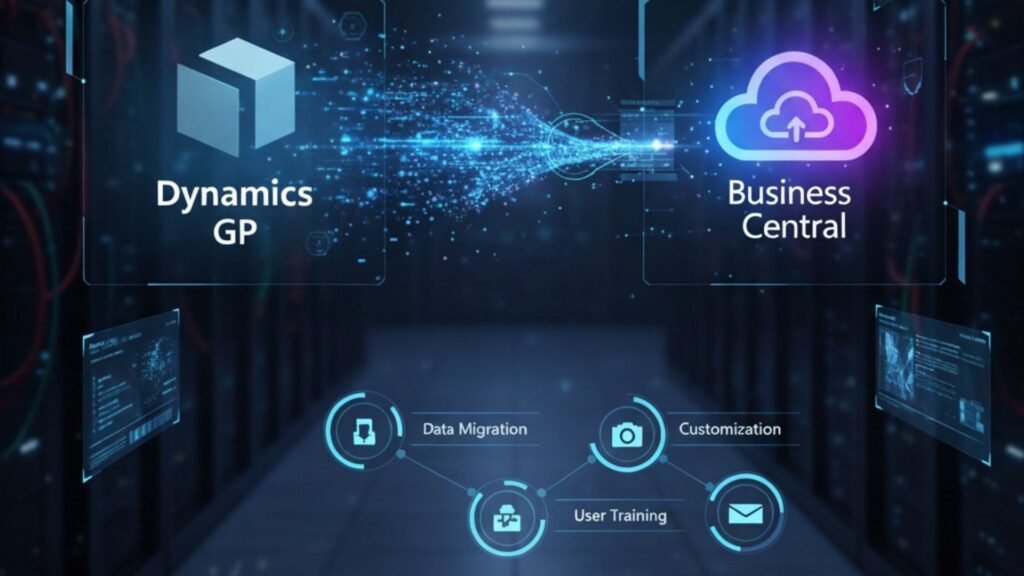
5-Step Roadmap to Migrate Dynamics GP to Business Central

Migrating from Microsoft Dynamics GP to Business Central is more than a software upgrade—it’s a strategic move toward cloud-based efficiency, modern business processes, and future-ready operations. For companies in Canada and the USA, making this transition offers a chance to enhance flexibility, scalability, and integration with the full Microsoft ecosystem. Whether you’re planning to migrate Dynamics GP to Business Central in Canada and the USA or considering a broader transformation, working with experienced Microsoft D365 F&O implementation partners in Canada and the USA can help ensure your migration is smooth, cost-effective, and risk-free. In this article, we’ll explore a 5-step roadmap to upgrade Dynamics GP to Business Central in Canada and the USA, as well as provide important tips for businesses transitioning from NAV to the Microsoft Dynamics 365 Business Central upgrade in Canada and the USA. Why Businesses Are Moving from Dynamics GP to Business Central Microsoft Dynamics GP has served thousands of organizations for decades, but its architecture and deployment model no longer match today’s fast-paced, cloud-first business environment. Microsoft’s innovation focus is now on Dynamics 365 Business Central, which offers: This makes it a natural choice for organizations looking to upgrade Dynamics GP to Business Central in Canada and the USA. The 5-Step Roadmap to a Successful GP-to-BC Migration Step 1: Assess and Plan Every successful migration begins with a detailed assessment. This involves: For companies also considering a NAV to Microsoft Dynamics 365 Business Central upgrade in Canada and the USA, this step ensures a clear understanding of both technical requirements and business objectives. Pro Tip: Partner with experienced Microsoft D365 F&O implementation partners in Canada and the USA to perform a migration readiness check. Step 2: Clean and Prepare Your Data Migrating outdated or inaccurate data can cause problems in your new ERP environment. A thorough data cleanup ensures only relevant, accurate, and properly formatted data moves to Business Central. Key tasks include: If you plan to migrate Dynamics GP to Business Central in Canada and USA, this step is critical for ensuring a smooth and error-free transition. Step 3: Choose the Right Migration Tools and Method Microsoft provides specialized tools for GP-to-BC migrations, including: You’ll need to decide between: For NAV to Microsoft Dynamics 365 Business Central upgrades in Canada and the USA, similar tools and methods apply, but NAV migrations often require additional mapping for custom modules. Step 4: Configure and Test Business Central Once data migration is planned, your Business Central environment needs to be set up and tested. This includes: Before going live, conduct User Acceptance Testing (UAT) to ensure processes run as expected and reports deliver accurate results. Pro Tip: Your Microsoft D365 F&O implementation partners in Canada and the USA can create a sandbox environment for testing before full deployment. Step 5: Go Live and Optimize With testing complete and your team trained, it’s time to go live. However, migration doesn’t end at deployment—ongoing optimization is key. Post-migration steps include: If you’re making the jump from Dynamics GP to Business Central in Canada and the USA, continuous monitoring ensures your investment delivers long-term value. Additional Considerations for NAV to Business Central Upgrades For businesses still on Microsoft Dynamics NAV, the migration path is slightly different from GP: Engaging a partner skilled in NAV to Microsoft Dynamics 365 Business Central upgrades in Canada and the USA can help streamline the process. Benefits of Migrating to Business Central Why Work with a Microsoft D365 Partner The complexity of ERP migration demands specialized expertise. Experienced Microsoft D365 F&O implementation partners in Canada and the USA bring: Whether you’re planning to migrate Dynamics GP to Business Central in Canada and the USA or upgrade from NAV, the right partner ensures a seamless transition. Conclusion Migrating from Dynamics GP—or even NAV—to Business Central is a strategic move that positions your business for greater agility, efficiency, and innovation. By following this 5-step roadmap and working with skilled Microsoft D365 F&O implementation partners in Canada and the USA, you can reduce risks, avoid downtime, and unlock the full potential of Microsoft’s modern ERP platform. Whether your goal is to upgrade Dynamics GP to Business Central in Canada and the USA or embark on a NAV to Microsoft Dynamics 365 Business Central upgrade in Canada and the USA, careful planning, expert guidance, and a structured approach will set you up for long-term success. FAQs 1. How long does it take to migrate from Dynamics GP to Business Central?Ans: Migration timelines vary based on data volume, complexity, and business requirements. Small to medium businesses often complete the process in 2–4 months. 2. Can we keep historical data during migration?Ans: Yes. Businesses can choose to migrate all historical data or only the most recent records for efficiency. 3. What happens to my GP licenses after migration?Ans: Once you move to Business Central, your GP licenses will no longer be required, though you may maintain GP access for historical reference. 4. Is it possible to migrate from NAV directly to Business Central cloud?Ans: Yes. The process may require reworking customizations, but experienced Microsoft D365 F&O implementation partners in Canada and the USA can make it seamless. 5. Do I need to retrain my team for Business Central?Ans: Yes. While there are similarities, Business Central offers many new capabilities, and user training ensures faster adoption.

5-Step Roadmap to Migrate Dynamics GP to Business Central Read More »

erp-managed-support-over-in-house-teams

Why North American Businesses Are Choosing 24*7 ERP Managed Support Over In-House Teams

In today’s digital-first business environment, Enterprise Resource Planning (ERP) systems like Microsoft Dynamics 365 have become the backbone of operations for organizations across North America. From finance and supply chain to human resources and sales, ERP systems streamline business processes, improve data visibility, and enhance decision-making. But with this complexity comes the need for continuous monitoring, updates, and optimization. That’s why a growing number of companies in Canada and the USA are choosing 24*7 ERP managed support over traditional in-house ERP teams. Let’s explore the driving forces behind this shift, how it impacts efficiency, cost, and innovation, and why it’s especially relevant for organizations seeking expert ERP consulting services in Canada and the USA. 1. The Changing ERP Landscape Modern ERP systems, especially cloud-based solutions like Microsoft Dynamics 365, have moved far beyond basic accounting or inventory tools. Today, these systems are deeply integrated with AI, automation, IoT, analytics, and even industry-specific functionalities. As a result, managing ERP has become a highly specialized task, requiring real-time monitoring, rapid problem resolution, and proactive performance tuning. In this environment, relying solely on an in-house team can be limiting, especially when support is needed beyond the typical 9-to-5 schedule. 2. Why 24*7 ERP Managed Support Is Taking Over a. Round-the-Clock Support Businesses don’t operate in isolation anymore. With global operations, remote teams, and eCommerce platforms running 24*7, any ERP downtime—even at midnight—can result in lost revenue and customer dissatisfaction. Managed service providers offer 24*7 monitoring and support, ensuring issues are identified and resolved before they impact your operations. b. Cost Efficiency Building and retaining a skilled ERP team in-house can be prohibitively expensive. Salaries, training, and benefits for full-time ERP specialists—especially for high-end platforms like Microsoft Dynamics 365 F&O—add up quickly. On the other hand, ERP implementation services in Canada and the USA that offer managed support give you access to a full team of experts at a predictable monthly cost. c. Access to Specialized Skills An in-house team may be strong in daily ERP operations but might lack expertise in specific modules or upcoming updates. A managed service partner brings a broader skill set, including access to seasoned Microsoft Dynamics 365 F&O consultants in Texas and the USA who can handle technical issues, upgrades, customizations, and integrations with ease. d. Scalability and Flexibility As your business grows or pivots, your ERP needs change. A managed service provider can quickly scale support up or down based on your evolving requirements. Whether you’re adding new modules, expanding to new markets, or upgrading to a newer version of Dynamics 365, managed support ensures you’re never understaffed or over-invested. e. Proactive Problem Resolution Rather than reacting to issues after they occur, 24*7 managed support teams use predictive analytics and monitoring tools to detect anomalies early. This helps reduce system downtime, prevent data loss, and maintain a seamless user experience. 3. The Strategic Role of ERP Consulting Services Many North American companies are not just looking for support—they’re seeking strategic partners. ERP consulting services in Austin and the USA don’t just fix problems; they help align ERP systems with business goals. With the right partner, organizations can: A trusted Microsoft Dynamics 365 partner in Texas and the USA can guide your organization from roadmap development to post-implementation support—offering both stability and innovation. 4. Industry Use Case: Manufacturing in Canada A mid-sized manufacturing company in Ontario implemented Microsoft Dynamics 365 Finance and Operations to modernize its supply chain. Initially relying on an in-house IT team, they soon faced challenges in managing updates, resolving system lags, and customizing reports. By switching to 24*7 managed ERP support, provided by an experienced Microsoft Dynamics 365 F&O consultant in Texas, the company achieved: This shift not only improved operations but also freed up their internal team to focus on business development and innovation. 5. Security and Compliance Data privacy regulations such as HIPAA, GDPR, and Canada’s PIPEDA require ERP systems to follow strict compliance protocols. Managed service providers are well-versed in these requirements and can implement security controls, monitor access, and ensure audit-readiness. In contrast, in-house teams may lack the time or expertise to stay updated with regulatory changes, increasing risk exposure. 6. Making the Right Choice: What to Look For in a Managed ERP Partner Choosing the right partner is crucial. Look for the following when evaluating managed ERP providers: Conclusion The complexities and demands of modern ERP systems are pushing North American businesses to reconsider traditional support models. With continuous innovation, data security needs, and around-the-clock operational demands, 24*7 ERP managed support has emerged as the smarter, scalable, and more strategic choice. By partnering with a certified Microsoft Dynamics 365 partner in Texas or the USA, companies can ensure their ERP systems are not only running efficiently but also evolving with the business. Frequently Asked Questions (FAQs) Q 1. What is ERP managed support?Ans: ERP managed support refers to ongoing, outsourced management of your ERP system, including monitoring, troubleshooting, updates, and optimization—typically available 24*7. Q 2. How is managed ERP support different from in-house support?Ans: In-house teams operate during standard business hours and are limited in skill diversity. Managed support offers 24*7 service, broader expertise, and cost-effective scalability. Q 3. Why is 24×7 support important for ERP systems?Ans: Businesses operate globally and rely on real-time data. Any downtime can impact operations, revenue, or customer experience. 24*7 support ensures problems are addressed immediately, regardless of the time. Q 4. Can managed support help with ERP upgrades and customizations?Ans: Yes, providers often include experts in various ERP modules and can assist with upgrades, custom developments, integrations, and process optimization. Q 5. How do I choose the right ERP consulting services provider?Ans: Look for experience, certifications, industry expertise, client references, and a strong understanding of compliance and security regulations.

Why North American Businesses Are Choosing 24*7 ERP Managed Support Over In-House Teams Read More »