microsoft gold partner dynamics 365

how-managed-erp-services-strengthen-security-and-compliance

How Managed ERP Services Strengthen Security and Compliance

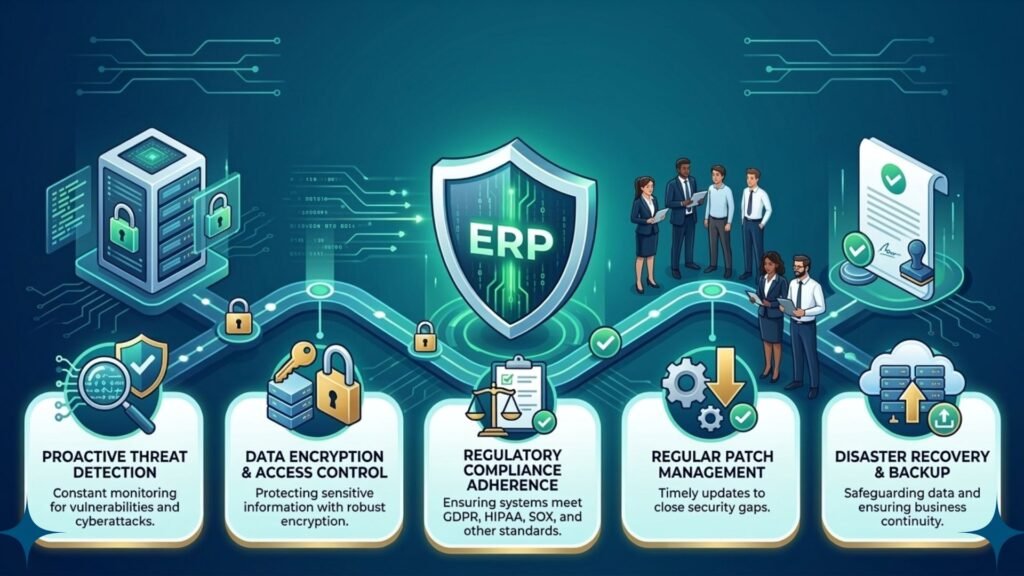
In today’s digital-first business environment, organizations rely heavily on Enterprise Resource Planning (ERP) systems to manage finance, supply chains, operations, and customer data. However, as businesses become more connected and data-driven, the risks associated with cybersecurity threats, regulatory requirements, and compliance management also increase. This is where Managed ERP Services play a critical role. Managed ERP services help organizations maintain secure, reliable, and compliant ERP environments while allowing internal teams to focus on core business activities. Businesses across industries are increasingly partnering with a Microsoft Dynamics 365 partner in Texas, USA, to ensure their ERP systems remain protected against cyber threats while meeting regulatory requirements. This article explores how managed ERP services enhance security, strengthen compliance, and support long-term business growth. Understanding Managed ERP Services Managed ERP services involve outsourcing ERP system management, maintenance, monitoring, and optimization to specialized experts. Instead of relying solely on in-house IT teams, organizations work with ERP specialists who ensure the system operates securely and efficiently. For companies using Microsoft Dynamics 365 Business Central in texas usa, managed ERP services often include: These services ensure that ERP platforms remain secure, compliant, and aligned with evolving business requirements. The Growing Importance of ERP Security ERP systems store highly sensitive business data, including financial records, customer information, employee data, and operational insights. This makes ERP platforms attractive targets for cybercriminals. Without proper security measures, organizations may face risks such as: Companies using Microsoft Dynamics 365 Support Services in texas usa often rely on managed ERP providers to implement advanced security frameworks that safeguard sensitive data and protect critical operations. Key Security Benefits of Managed ERP Services 1. Proactive Threat Monitoring One of the biggest advantages of managed ERP services is 24/7 system monitoring. Security specialists continuously monitor ERP environments to detect unusual activities, suspicious logins, or potential vulnerabilities. With the help of Microsoft Dynamics consulting services in texas usa, businesses can quickly identify and address potential threats before they escalate into major security incidents. Proactive monitoring includes: This proactive approach significantly reduces the risk of data breaches. 2. Advanced Access Control and User Management Access control is a crucial aspect of ERP security. Not every employee should have access to all system data. Managed ERP providers implement role-based access control (RBAC) to ensure users only access information relevant to their responsibilities. Organizations using MS Dynamics 365 Implementation services in texas usa often configure: These controls prevent unauthorized access and strengthen internal security. 3. Regular Security Updates and Patch Management ERP software vendors frequently release security updates to address vulnerabilities. However, many organizations fail to implement these updates promptly due to resource constraints or operational challenges. Managed ERP providers ensure that: For businesses relying on D365 migration services in texas usa, maintaining updated systems is particularly important because newly migrated environments must remain secure from the start. 4. Data Encryption and Secure Data Storage Managed ERP services also strengthen data protection through encryption. Sensitive information stored within ERP systems is encrypted both in transit and at rest. Security measures include: Organizations implementing Microsoft Dynamics 365 Business Central in texas usa benefit from enterprise-level security features combined with expert management services. 5. Backup and Disaster Recovery Planning Data loss can result from cyberattacks, hardware failures, or human errors. Managed ERP services ensure businesses have robust backup and disaster recovery strategies in place. These strategies include: With support from Microsoft Dynamics 365 Support Services in texas usa, businesses can recover operations quickly in the event of unexpected disruptions. Strengthening Compliance with Managed ERP Services In addition to security, organizations must comply with numerous regulatory requirements. Industries such as finance, healthcare, manufacturing, and retail face strict compliance standards related to data protection, financial reporting, and operational transparency. Managed ERP services help organizations maintain compliance through structured governance and regulatory alignment. 1. Regulatory Compliance Management ERP systems must comply with various regulations, such as: Working with a Microsoft Dynamics 365 partner in texas usa helps businesses ensure their ERP environment aligns with evolving compliance requirements. Managed ERP providers regularly review system configurations, ensuring compliance policies remain properly enforced. 2. Automated Audit Trails Audit trails play an essential role in compliance. ERP systems track all system activities, including user actions, data modifications, and financial transactions. Managed ERP services ensure these logs are: Companies using Microsoft Dynamics consulting services in texas usa can generate compliance reports quickly and efficiently during regulatory audits. 3. Data Governance and Policy Enforcement Effective compliance requires strict data governance policies. Managed ERP providers help organizations implement policies that control: Organizations leveraging MS Dynamics 365 Implementation services in texas usa benefit from structured governance models that ensure consistent compliance across departments. 4. Compliance Reporting and Documentation Managed ERP services simplify compliance reporting by providing automated documentation and reporting tools. Businesses can generate reports related to: This capability is particularly valuable for organizations using D365 migration services in texas usa, as regulatory reporting must remain consistent during and after ERP migrations. Why Businesses in Texas Are Adopting Managed ERP Services Texas is home to a rapidly growing business ecosystem that includes manufacturing companies, energy firms, logistics providers, and technology enterprises. As these businesses expand, they require scalable ERP systems that can support growth while maintaining strong security and compliance. Partnering with a trusted Microsoft Dynamics 365 partner in texas usa enables organizations to: Managed ERP services also help businesses focus on innovation rather than technical maintenance. How Managed ERP Services Improve Business Continuity In addition to security and compliance benefits, managed ERP services also improve overall business continuity. Organizations gain advantages such as: Businesses implementing Microsoft Dynamics 365 Business Central in texas usa often rely on managed service providers to maintain system stability while scaling operations. Choosing the Right Managed ERP Partner Selecting the right ERP partner is crucial for maximizing the benefits of managed services. Organizations should evaluate potential providers based on: A reliable provider offering Microsoft Dynamics 365 Support Services in texas usa ensures businesses receive ongoing support, security monitoring, and compliance management. Future of Managed ERP Security

How Managed ERP Services Strengthen Security and Compliance Read More »

why-manufacturers-trust-business-central-for-supply-chain-optimization

Why Manufacturers Trust Business Central for Supply Chain Optimization

In today’s highly competitive manufacturing landscape, supply chain efficiency is no longer optional—it is a strategic necessity. Manufacturers must manage fluctuating demand, rising operational costs, supplier disruptions, and increasing customer expectations, all while maintaining profitability. This growing complexity explains why manufacturers trust Business Central for supply chain optimization, as many organizations are turning to Microsoft Dynamics 365 Business Central as a modern, scalable ERP solution that delivers end-to-end supply chain visibility and control. Across the United States—and particularly in Texas—manufacturers are partnering with a trusted Microsoft Dynamics 365 partner in Texas USA to transform their operations, streamline processes, and optimize supply chains. This growing shift highlights why manufacturers trust Business Central for supply chain optimization, as Dynamics 365 Business Central has become the ERP of choice for manufacturers seeking greater visibility and control. This article explores how it enhances supply chain performance and why working with experienced Microsoft Dynamics consulting services in Texas USA is essential for long-term success. The Growing Supply Chain Challenges Faced by Manufacturers Manufacturers today operate in an environment shaped by global sourcing, volatile markets, and digital disruption. Traditional ERP systems often fail to provide the agility and real-time insights needed to respond quickly. Common supply chain challenges include: Legacy ERP systems struggle to adapt to these realities. As a result, manufacturers are increasingly migrating to cloud-based solutions like Dynamics 365 Business Central, supported by expert D365 migration services in Texas USA. What Is Microsoft Dynamics 365 Business Central? Microsoft Dynamics 365 Business Central is a comprehensive, cloud-based ERP solution designed for small to mid-sized businesses and growing enterprises. It unifies finance, supply chain, manufacturing, sales, and customer relationship management (CRM) into a single platform. Often referred to as Dynamics 365 Business Central, Business Central, or Dynamics 365 BC, it is part of the broader Microsoft Dynamics 365 ecosystem, seamlessly integrating with tools like Microsoft Dynamics 365 CRM, Microsoft 365, Power BI, and Azure. For manufacturers, Business Central delivers: Why Manufacturers Trust Business Central for Supply Chain Optimization 1. End-to-End Supply Chain Visibility One of the biggest reasons manufacturers trust Dynamics 365 Business Central is its ability to provide complete visibility across the supply chain. From procurement and inventory to production and fulfillment, every process is connected. With real-time dashboards and analytics, manufacturers can: A trusted Microsoft Dynamics 365 Business Central partner in Texas USA ensures that dashboards and reports are customized to manufacturing KPIs. 2. Intelligent Inventory Management Inventory optimization is critical for manufacturers aiming to reduce carrying costs while avoiding stockouts. Business Central uses intelligent planning tools to help manufacturers maintain the right inventory levels. Key benefits include: By working with Microsoft Dynamics 365 Support Services in Texas USA, manufacturers can continuously refine inventory strategies as business needs evolve. 3. Demand Forecasting and Production Planning Accurate demand forecasting is essential for efficient supply chain operations. Dynamics Microsoft solutions use historical data and predictive insights to help manufacturers align production with actual demand. Business Central supports: Manufacturers partnering with experienced MS Dynamics 365 Implementation services in Texas USA can configure these features to match complex production environments. 4. Seamless Procurement and Supplier Management Procurement inefficiencies can disrupt the entire supply chain. Microsoft Dynamics ERP partner solutions streamline purchasing by automating vendor selection, approvals, and order tracking. With Business Central, manufacturers can: A certified Microsoft Dynamics 365 partner ensures procurement workflows align with industry best practices. 5. Integrated Manufacturing and Shop Floor Control Unlike disconnected systems, Dynamics 365 Business Central integrates supply chain operations directly with manufacturing processes. Capabilities include: Manufacturers working with Microsoft Dynamics implementation partners gain tailored configurations that support discrete, process, or mixed-mode manufacturing. 6. Built-In Financial and Cost Control Supply chain optimization is incomplete without financial alignment. Business Central links inventory movements, procurement, and production directly to finance. This enables manufacturers to: A reliable Microsoft ERP partner helps manufacturers leverage these insights for strategic planning. Why Texas Manufacturers Prefer Dynamics 365 Business Central Texas is home to a diverse manufacturing ecosystem, including automotive, electronics, oil & gas, food processing, and industrial equipment. These industries require scalable and flexible ERP solutions. Manufacturers in Texas benefit from: By choosing Microsoft Dynamics 365 Business Central in Texas USA, organizations gain both global technology and local expertise. The Role of Microsoft Dynamics Consulting Services in Texas USA ERP success depends not only on software but also on strategy, implementation, and ongoing optimization. Microsoft Dynamics consulting services in Texas USA play a critical role in ensuring manufacturers realize maximum ROI. Consulting services include: Experienced consultants ensure that Dynamics 365, MS Dynamics, and Dynamics CRM capabilities are aligned with manufacturing goals. Smooth Transitions with D365 Migration Services in Texas USA Many manufacturers are moving from legacy systems or older Microsoft ERP solutions to Dynamics 365 Business Central. A poorly planned migration can disrupt operations—but expert D365 migration services in Texas USA minimize risk. Migration services cover: Certified Microsoft Dynamics partners list providers ensure secure and seamless transitions. Business Central and CRM: A Unified View of Customers Supply chain efficiency is closely linked to customer satisfaction. Microsoft Dynamics 365 CRM integrates seamlessly with Business Central, giving manufacturers a 360-degree view of customers. Benefits include: This integration strengthens both supply chain and customer experience strategies. Why Choose a Microsoft Dynamics 365 Partner in Texas USA? Choosing the right partner is as important as choosing the right ERP. A trusted Dynamics 365 partner, Business Central partner, or Microsoft Dynamics ERP partner brings industry knowledge, technical expertise, and ongoing support. Key advantages include: Leading Microsoft Dynamics implementation partners help manufacturers stay competitive in a rapidly changing market. Future-Ready Supply Chains with Dynamics 365 With continuous updates, AI-driven insights, and cloud scalability, Microsoft Dynamics 365 Business Central prepares manufacturers for the future. Key innovations include: Manufacturers partnering with a reliable Dynamics 365 Business Central partner gain a future-proof ERP platform. Frequently Asked Questions (FAQs) Q1. Why is Business Central ideal for manufacturers? Ans: Business Central integrates supply chain, manufacturing, finance, and CRM into one system, providing real-time visibility, automation, and scalability. Q2.

Why Manufacturers Trust Business Central for Supply Chain Optimization Read More »

how-a-trusted-microsoft-partner-simplifies-your-journey-from-axnav-to-dynamics-365

How a Trusted Microsoft Partner Simplifies Your Journey from AX/NAV to Dynamics 365

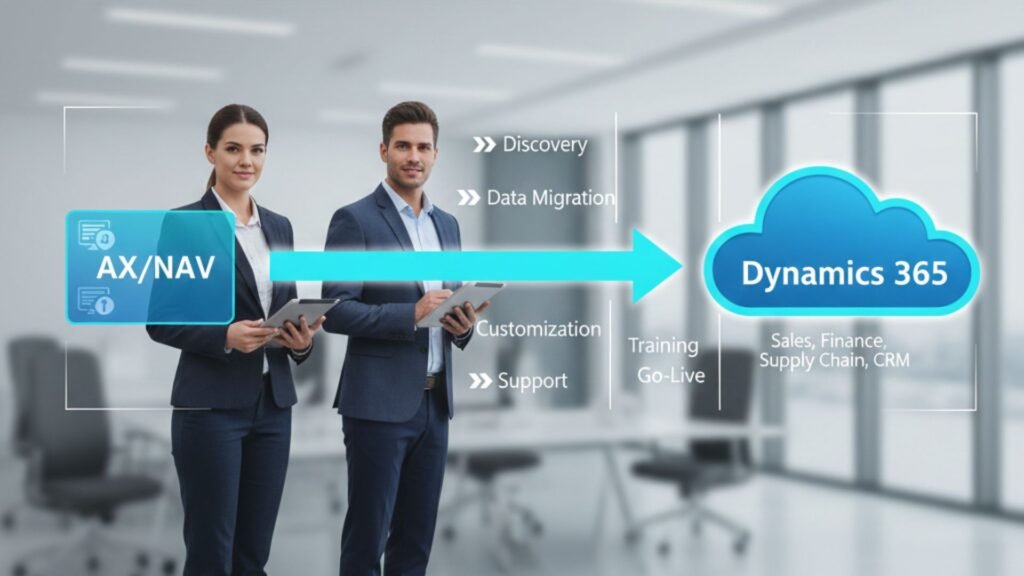
For many organizations across the United States, especially in Texas, Microsoft Dynamics AX and NAV have long been the backbone of enterprise resource planning (ERP). However, with Microsoft’s strategic shift toward cloud-first, AI-powered solutions, Dynamics 365—particularly Dynamics 365 Business Central and Dynamics 365 Finance & Operations—has become the future of ERP. Migrating from AX or NAV to Dynamics 365 is not just a technical upgrade; it is a strategic business transformation. Data structures change, processes evolve, integrations expand, and users must adapt to new ways of working. This is where a trusted Microsoft Dynamics 365 partner in Texas, USA plays a critical role. Understanding the Shift: From AX/NAV to Dynamics 365 Why Microsoft AX and NAV Are No Longer Enough Microsoft Dynamics AX and NAV were powerful on-premise ERP systems, but modern businesses now demand: Dynamics 365 addresses these needs through two primary solutions: An experienced Microsoft Dynamics partner in Texas understands which path fits your business and industry best. Why Migration Is Not Just an Upgrade Many organizations underestimate the complexity of a Dynamics NAV upgrade to Business Central or an AX-to-D365 migration. The reality is that this journey involves: Attempting this without a certified Microsoft Dynamics 365 implementation partner often leads to cost overruns, delays, and operational disruption. The Role of a Trusted Microsoft Dynamics 365 Partner in Texas, USA 1. Strategic Assessment and Roadmap Planning A trusted Microsoft Dynamics consulting services provider in Texas, USA begins with a comprehensive assessment: This assessment results in a tailored migration roadmap aligned with your business goals, budget, and timeline. 2. Choosing the Right Dynamics 365 Solution Not every business needs the same ERP. A certified Microsoft ERP partner helps you decide between: For Texas-based manufacturers, distributors, professional services firms, and retailers, local partners bring industry-specific insights that global providers often miss. How Microsoft Partners Simplify Data Migration Clean, Secure, and Accurate Data Transfer Data is the heart of your ERP. A trusted D365 migration services provider in Texas, USA ensures: Whether it’s a Dynamics NAV 2018 upgrade to Business Central or a complex AX migration, experienced partners reduce downtime and risk. Customization and Extension Optimization From Heavy Customization to Smart Extensions Older AX and NAV systems often rely on heavy customizations. A modern Microsoft Dynamics 365 Business Central partner helps you: This approach ensures smoother upgrades and long-term system stability. Seamless Integrations with the Microsoft Ecosystem A certified Dynamics 365 partner in Texas ensures seamless integration with: This unified ecosystem enables real-time insights and cross-department collaboration. Implementation Excellence with Local Expertise Why Texas-Based Partners Make a Difference Working with a Microsoft Dynamics 365 partner in Texas, USA offers unique advantages: Certified Microsoft Dynamics Gold Partners follow Microsoft’s Sure Step and FastTrack methodologies to ensure predictable, high-quality implementations. Change Management and User Adoption People Are the Key to ERP Success Technology alone does not guarantee success. A trusted Microsoft Dynamics 365 implementation services provider in Texas focuses on: This ensures faster adoption and higher productivity post-go-live. Ongoing Microsoft Dynamics 365 Support Services in Texas, USA Beyond Go-Live: Long-Term Partnership Post-implementation support is critical. Reliable Microsoft Dynamics 365 Support Services in Texas, USA include: A long-term partnership ensures your ERP evolves with your business. Business Benefits of Migrating with a Trusted Microsoft Partner Key Advantages With expert guidance, businesses unlock the full value of Microsoft Dynamics 365 Business Central in Texas, USA and enterprise-grade D365 solutions. Frequently Asked Questions (FAQs) Q 1. Why should I work with a Microsoft Dynamics 365 partner in Texas, USA? Ans: A local partner understands regional compliance, industry needs, and provides faster, more personalized support. Q 2. Is Dynamics NAV upgrade to Business Central mandatory? Ans: While not mandatory, Microsoft strongly recommends upgrading to stay supported, secure, and future-ready. Q 3. How long does AX/NAV to Dynamics 365 migration take? Ans: Timelines vary based on data complexity and customizations, but a trusted partner ensures realistic planning and execution. Q 4. Can I migrate only selected data from NAV or AX? Ans: Yes. Experienced Microsoft Dynamics consulting services in Texas, USA help you migrate only relevant, clean data. Q 5. What industries benefit most from Dynamics 365 Business Central? Ans: Manufacturing, distribution, retail, professional services, and logistics companies benefit significantly. Q 6. Do Microsoft Dynamics Gold Partners offer better implementation quality? Ans: Gold Partners meet Microsoft’s highest standards for expertise, customer success, and certified resources. Q 7. What support is available after go-live? Ans: Comprehensive Microsoft Dynamics 365 Support Services in Texas, USA include functional, technical, and strategic support. Q 8. Can Dynamics 365 integrate with CRM systems? Ans: Yes, Dynamics 365 integrates seamlessly with Dynamics 365 Customer Engagement and third-party CRM tools. Conclusion Migrating from AX or NAV to Dynamics 365 is a transformational step that demands expertise, strategy, and precision. A trusted Microsoft Dynamics 365 partner in Texas, USA simplifies this journey by combining technical excellence with local industry knowledge. From assessment and migration to implementation, support, and optimization, the right Microsoft ERP partner ensures your transition to Dynamics 365 is smooth, secure, and future-ready—empowering your business to thrive in a digital-first world. If you are planning a Dynamics NAV upgrade to Business Central or a full AX-to-D365 transformation, partnering with an experienced Microsoft Dynamics partner is not just an option—it’s a strategic advantage.

How a Trusted Microsoft Partner Simplifies Your Journey from AX/NAV to Dynamics 365 Read More »

zero-downtime-erp-migration-to-the-cloud

How to Plan a Zero-Downtime ERP Migration to the Cloud

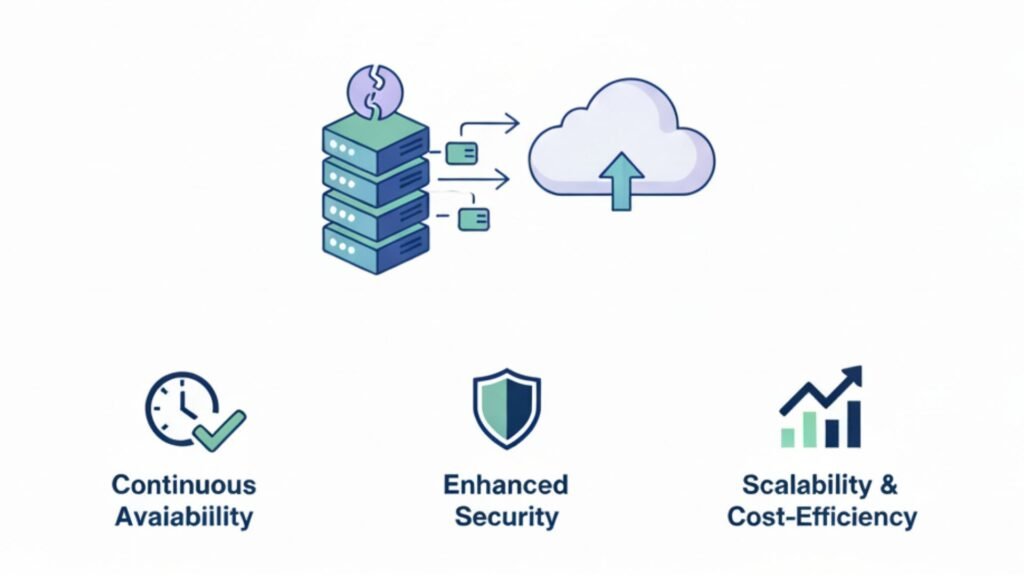
In today’s competitive digital economy, businesses cannot afford extended downtime when upgrading or migrating their enterprise resource planning (ERP) systems. Organizations in Canada and the USA are increasingly turning to cloud-based ERP solutions like Microsoft Dynamics 365 Business Central to modernize operations, improve scalability, and reduce IT overhead. However, a poorly executed migration can disrupt business continuity, leading to lost revenue, frustrated customers, and operational bottlenecks. That’s why zero-downtime ERP migration has become the gold standard. It ensures businesses transition smoothly to the cloud without halting day-to-day operations. Achieving this requires careful planning, the right technology stack, and experienced partners offering ERP Migration Services in Canada and USA. This article explores strategies, best practices, and considerations for planning a seamless migration, with insights on how a Microsoft Dynamics 365 Partner in Canada and USA can support the journey. Why Zero-Downtime ERP Migration Matters Downtime during ERP migration is not just an inconvenience—it can result in: A zero-downtime migration strategy enables organizations to transition seamlessly while keeping all core systems fully functional. Key Steps to Planning a Zero-Downtime ERP Migration 1. Define Clear Migration Objectives Before moving ERP workloads to the cloud, organizations must define objectives such as: Engaging a Microsoft Dynamics 365 Partner in Canada and USA ensures these objectives align with technical capabilities and business outcomes. 2. Choose the Right ERP System For most businesses, Microsoft Dynamics 365 Business Central offers the right balance of flexibility, cost-effectiveness, and cloud-native features. As a Dynamics 365 Business Central Partner in Canada and USA, certified consultants can help evaluate modules for finance, supply chain, retail, or manufacturing. 3. Conduct a Comprehensive System Audit Migrating without understanding your current ERP environment is risky. Conduct an audit to evaluate: Specialized ERP Consulting Services in Canada and USA provide detailed readiness assessments and gap analyses to streamline planning. 4. Select the Right Migration Strategy There are several strategies for ERP migration: For zero downtime, the hybrid or phased approach is most common, ensuring no interruptions in daily business processes. 5. Data Preparation and Migration Data migration is often the most complex element. Businesses should: Working with a Microsoft Dynamics 365 Partner in Canada and USA ensures access to advanced migration tools that support continuous data synchronization, avoiding downtime. 6. Implement a Phased Cutover Approach Instead of a “big bang” migration, organizations should: ERP Implementation Services in Canada and USA provide structured roadmaps for phased cutovers, minimizing risks. 7. Ensure Strong Integration with Other Systems Modern ERP doesn’t function in isolation—it must integrate with CRM, HR, e-commerce, and analytics platforms. Ensuring APIs and middleware are ready in advance avoids post-migration disruptions. 8. Plan for User Training and Change Management Technology is only part of the equation—employee adoption drives success. Offer role-based training sessions and create super-user groups to ease adoption. Experienced ERP Consulting Services in Canada and USA include change management strategies in their engagements. 9. Continuous Monitoring and Support Even after migration, continuous monitoring is critical. Performance analytics, system health dashboards, and proactive support reduce risks. Partnering with a Microsoft Dynamics 365 Partner in Canada and USA ensures access to 24/7 support and ongoing optimization. Role of Microsoft Dynamics 365 Partner in Canada and USA Migrating ERP without expert guidance can be overwhelming. Certified partners provide: Benefits of Zero-Downtime Cloud ERP Migration Common Challenges and How to Overcome Them Real-World Example A mid-sized manufacturer in Ontario migrated from NAV to Dynamics 365 Business Central with the help of a Microsoft Dynamics 365 Partner in Canada. By using a phased cutover approach and continuous data replication, they achieved zero downtime, ensuring uninterrupted production schedules. Similarly, a U.S.-based retail chain worked with a Microsoft Dynamics 365 Partner in USA to move from on-premises ERP to Dynamics 365 Business Central. The hybrid migration minimized risks and provided real-time insights into inventory across multiple locations. FAQs on Zero-Downtime ERP Migration Q1. What is zero-downtime ERP migration?Ans: Zero-downtime ERP migration refers to transitioning to a new ERP system without interrupting ongoing business operations. Businesses in Canada and the USA often achieve this with the support of ERP Migration Services in Canada and USA. Q2. How does Microsoft Dynamics 365 Business Central support zero-downtime migration?Ans: Dynamics 365 Business Central provides cloud-native architecture, real-time data synchronization, and flexible modules. A Dynamics 365 Business Central Partner in Canada and USA ensures businesses leverage these features for smooth transitions. Q3. Why should I choose a Microsoft Dynamics 365 Partner in Canada and USA for migration?Ans: Certified partners bring technical expertise, proven methodologies, and industry-specific best practices, ensuring successful ERP implementation without downtime. Q4. What is the difference between ERP Migration Services and ERP Implementation Services in Canada and USA? Q5. How do ERP Consulting Services in Canada and USA help in migration?Ans: ERP consulting services provide readiness assessments, compliance audits, process mapping, and change management strategies to ensure seamless migration. Q6. How long does an ERP migration take?Ans: The timeline varies depending on data volume, complexity, and migration strategy. With the right partner, businesses can significantly reduce timelines while maintaining zero downtime. Q7. What industries benefit most from zero-downtime ERP migration?Ans: Manufacturing, retail, distribution, healthcare, and financial services are particularly reliant on uninterrupted operations, making zero-downtime migration essential. Conclusion Migrating to a cloud-based ERP like Microsoft Dynamics 365 Business Central is no longer optional—it’s a strategic necessity for businesses in Canada and the USA. However, the risk of downtime makes planning essential. By defining objectives, auditing existing systems, preparing data, and adopting phased cutover strategies, organizations can ensure seamless transitions. Partnering with a Microsoft Dynamics 365 Partner in Canada and USA provides access to advanced ERP Migration Services, ERP Implementation Services, and ERP Consulting Services in Canada and USA. With the right expertise, businesses can modernize their ERP systems, reduce risks, and gain the agility to compete in today’s fast-paced markets—all without a minute of lost productivity.

How to Plan a Zero-Downtime ERP Migration to the Cloud Read More »

NAV-to-Dynamics-365

Upgrade or Re-Implement? Choosing the Right Path from AX/NAV to Dynamics 365

In today’s competitive digital landscape, businesses are under constant pressure to modernize their enterprise resource planning (ERP) systems. Companies that have relied on Microsoft Dynamics AX or Microsoft Dynamics NAV for years now face a crucial decision: should they upgrade to Dynamics 365, or should they re-implement from scratch? Both approaches come with their own benefits, challenges, and costs. For organizations across North America, making the right decision often requires working with a trusted Microsoft Dynamics 365 partner in Canada and USA who understands both legacy systems and the Dynamics 365 ecosystem. In this article, we’ll explore the differences between an upgrade and a re-implementation, the factors influencing the decision, and how to choose the right path for your business. The Shift from AX/NAV to Dynamics 365 Microsoft has been gradually moving businesses from on-premises ERP systems like Dynamics AX and Dynamics NAV toward its cloud-first platform—Microsoft Dynamics 365. This evolution offers significant benefits such as real-time analytics, AI-driven automation, seamless updates, and scalability. Businesses in Canada and the USA are increasingly considering either a NAV to Microsoft Dynamics 365 Business Central Upgrade in Canada and USA or an AX to D365 F&O Upgrade in Canada and USA to stay competitive. Upgrade vs. Re-Implement: Understanding the Difference Upgrade An upgrade involves moving your existing NAV or AX system, including data, configurations, and in some cases, customizations, to Dynamics 365. It’s essentially a technical transition that modernizes your current ERP without rebuilding everything. Pros of Upgrading: Cons of Upgrading: Re-Implementation Re-implementation means starting fresh with Dynamics 365. Instead of transferring all data and customizations, businesses take the opportunity to redesign their ERP environment, import only necessary data, and rebuild processes in a more modern and efficient way. Pros of Re-Implementing: Cons of Re-Implementing: Factors to Consider When Choosing Between Upgrade and Re-Implementation The right decision depends on several factors. With the guidance of a Microsoft Dynamics 365 partner in Canada and USA, businesses can analyze their specific situation. Key considerations include: 1. System Complexity 2. Data Quality 3. Process Efficiency 4. Budget and Timeline 5. Future Scalability Benefits of Moving to Dynamics 365 Whether through upgrade or re-implementation, moving to Dynamics 365 provides significant advantages for businesses in Canada and the USA: A reliable Microsoft Dynamics 365 Support Services in Canada provider ensures these benefits are continuously realized. Role of a Microsoft Dynamics 365 Partner Choosing the right partner is critical to success. A certified Microsoft Dynamics 365 partner in Canada and USA provides: Case Scenarios Scenario 1: Upgrade is the Right Choice A mid-sized Canadian manufacturing company using Dynamics NAV 2016 with minimal customizations chooses an upgrade to Dynamics 365 Business Central. Since their processes are already optimized, the upgrade allows them to retain historical data while gaining the benefits of the cloud. Scenario 2: Re-Implementation is the Better Path A large U.S.-based retail chain running Dynamics AX 2012 with heavy customizations and outdated workflows opts for a re-implementation to D365 Finance & Operations. They redesign processes, clean up data, and leverage AI-driven automation, setting a strong foundation for future scalability. Common Challenges in the Transition Even with expert support, businesses may face challenges such as: Working closely with an experienced Microsoft Dynamics 365 partner in Canada and USA helps overcome these issues. FAQs: Choosing Between Upgrade and Re-Implementation Q1. How do I know whether to upgrade or re-implement?Ans: A detailed system assessment by a Microsoft Dynamics 365 partner in Canada and USA can help determine whether your business should go for an upgrade or re-implementation. Q2. Is data migration possible in both approaches?Ans: Yes, but the method differs. Upgrading retains most historical data, while re-implementation allows selective migration of only clean and relevant data. Q3. Which is more cost-effective—upgrade or re-implementation?Ans: Upgrading is generally less expensive and quicker. However, re-implementation may deliver greater long-term ROI by modernizing workflows and eliminating technical debt. Q4. Can we migrate directly from Dynamics AX to Dynamics 365 F&O?Ans: Yes, with expert assistance, an AX to D365 F&O Upgrade in Canada and USA is possible, though the process can be complex depending on your AX version and customizations. Q5. What about NAV users?Ans: Businesses running NAV can perform a NAV to Microsoft Dynamics 365 Business Central Upgrade in Canada and USA to modernize operations and move to a cloud-based ERP. Q6. What support is available after migration?Ans: You can rely on Microsoft Dynamics 365 Support Services in Canada for continuous system monitoring, updates, performance optimization, and issue resolution. Q7. Will employees need training after moving to Dynamics 365?Ans: Yes. Whether upgrading or re-implementing, training is essential for user adoption. Most partners provide structured training and change management programs. Conclusion Deciding between upgrading and re-implementing from AX or NAV to Dynamics 365 is a pivotal choice for businesses in Canada and the USA. An upgrade offers speed and cost efficiency, while re-implementation provides a fresh start with long-term flexibility. The right path depends on your data quality, business processes, customization levels, and future goals. Partnering with a trusted Microsoft Dynamics 365 partner in Canada and USA ensures that your transition—whether a NAV to Microsoft Dynamics 365 Business Central Upgrade in Canada and USA or an AX to D365 F&O Upgrade in Canada and USA—is smooth, strategic, and successful.

Upgrade or Re-Implement? Choosing the Right Path from AX/NAV to Dynamics 365 Read More »

erp-managed-support-over-in-house-teams

Why North American Businesses Are Choosing 24*7 ERP Managed Support Over In-House Teams

In today’s digital-first business environment, Enterprise Resource Planning (ERP) systems like Microsoft Dynamics 365 have become the backbone of operations for organizations across North America. From finance and supply chain to human resources and sales, ERP systems streamline business processes, improve data visibility, and enhance decision-making. But with this complexity comes the need for continuous monitoring, updates, and optimization. That’s why a growing number of companies in Canada and the USA are choosing 24*7 ERP managed support over traditional in-house ERP teams. Let’s explore the driving forces behind this shift, how it impacts efficiency, cost, and innovation, and why it’s especially relevant for organizations seeking expert ERP consulting services in Canada and the USA. 1. The Changing ERP Landscape Modern ERP systems, especially cloud-based solutions like Microsoft Dynamics 365, have moved far beyond basic accounting or inventory tools. Today, these systems are deeply integrated with AI, automation, IoT, analytics, and even industry-specific functionalities. As a result, managing ERP has become a highly specialized task, requiring real-time monitoring, rapid problem resolution, and proactive performance tuning. In this environment, relying solely on an in-house team can be limiting, especially when support is needed beyond the typical 9-to-5 schedule. 2. Why 24*7 ERP Managed Support Is Taking Over a. Round-the-Clock Support Businesses don’t operate in isolation anymore. With global operations, remote teams, and eCommerce platforms running 24*7, any ERP downtime—even at midnight—can result in lost revenue and customer dissatisfaction. Managed service providers offer 24*7 monitoring and support, ensuring issues are identified and resolved before they impact your operations. b. Cost Efficiency Building and retaining a skilled ERP team in-house can be prohibitively expensive. Salaries, training, and benefits for full-time ERP specialists—especially for high-end platforms like Microsoft Dynamics 365 F&O—add up quickly. On the other hand, ERP implementation services in Canada and the USA that offer managed support give you access to a full team of experts at a predictable monthly cost. c. Access to Specialized Skills An in-house team may be strong in daily ERP operations but might lack expertise in specific modules or upcoming updates. A managed service partner brings a broader skill set, including access to seasoned Microsoft Dynamics 365 F&O consultants in Texas and the USA who can handle technical issues, upgrades, customizations, and integrations with ease. d. Scalability and Flexibility As your business grows or pivots, your ERP needs change. A managed service provider can quickly scale support up or down based on your evolving requirements. Whether you’re adding new modules, expanding to new markets, or upgrading to a newer version of Dynamics 365, managed support ensures you’re never understaffed or over-invested. e. Proactive Problem Resolution Rather than reacting to issues after they occur, 24*7 managed support teams use predictive analytics and monitoring tools to detect anomalies early. This helps reduce system downtime, prevent data loss, and maintain a seamless user experience. 3. The Strategic Role of ERP Consulting Services Many North American companies are not just looking for support—they’re seeking strategic partners. ERP consulting services in Austin and the USA don’t just fix problems; they help align ERP systems with business goals. With the right partner, organizations can: A trusted Microsoft Dynamics 365 partner in Texas and the USA can guide your organization from roadmap development to post-implementation support—offering both stability and innovation. 4. Industry Use Case: Manufacturing in Canada A mid-sized manufacturing company in Ontario implemented Microsoft Dynamics 365 Finance and Operations to modernize its supply chain. Initially relying on an in-house IT team, they soon faced challenges in managing updates, resolving system lags, and customizing reports. By switching to 24*7 managed ERP support, provided by an experienced Microsoft Dynamics 365 F&O consultant in Texas, the company achieved: This shift not only improved operations but also freed up their internal team to focus on business development and innovation. 5. Security and Compliance Data privacy regulations such as HIPAA, GDPR, and Canada’s PIPEDA require ERP systems to follow strict compliance protocols. Managed service providers are well-versed in these requirements and can implement security controls, monitor access, and ensure audit-readiness. In contrast, in-house teams may lack the time or expertise to stay updated with regulatory changes, increasing risk exposure. 6. Making the Right Choice: What to Look For in a Managed ERP Partner Choosing the right partner is crucial. Look for the following when evaluating managed ERP providers: Conclusion The complexities and demands of modern ERP systems are pushing North American businesses to reconsider traditional support models. With continuous innovation, data security needs, and around-the-clock operational demands, 24*7 ERP managed support has emerged as the smarter, scalable, and more strategic choice. By partnering with a certified Microsoft Dynamics 365 partner in Texas or the USA, companies can ensure their ERP systems are not only running efficiently but also evolving with the business. Frequently Asked Questions (FAQs) Q 1. What is ERP managed support?Ans: ERP managed support refers to ongoing, outsourced management of your ERP system, including monitoring, troubleshooting, updates, and optimization—typically available 24*7. Q 2. How is managed ERP support different from in-house support?Ans: In-house teams operate during standard business hours and are limited in skill diversity. Managed support offers 24*7 service, broader expertise, and cost-effective scalability. Q 3. Why is 24×7 support important for ERP systems?Ans: Businesses operate globally and rely on real-time data. Any downtime can impact operations, revenue, or customer experience. 24*7 support ensures problems are addressed immediately, regardless of the time. Q 4. Can managed support help with ERP upgrades and customizations?Ans: Yes, providers often include experts in various ERP modules and can assist with upgrades, custom developments, integrations, and process optimization. Q 5. How do I choose the right ERP consulting services provider?Ans: Look for experience, certifications, industry expertise, client references, and a strong understanding of compliance and security regulations.

Why North American Businesses Are Choosing 24*7 ERP Managed Support Over In-House Teams Read More »