staff augmentation services for d365 f&o

7-emerging-erp-trends-every-business-should-watch-in-2026

7 Emerging ERP Trends Every Business Should Watch in 2026

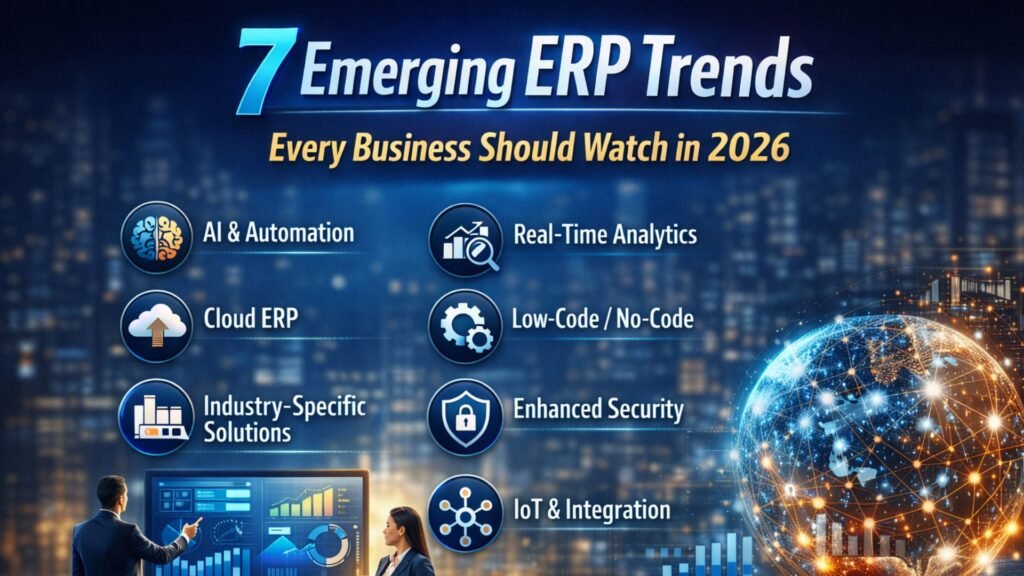
In 2026, Enterprise Resource Planning (ERP) systems are no longer just back-office tools—they are becoming intelligent, cloud-powered, and data-driven platforms that drive strategic decision-making. Businesses across industries are rapidly adopting modern ERP solutions like Microsoft Dynamics 365 to stay competitive, agile, and future-ready. If your organization is planning digital transformation or looking for a reliable Microsoft Dynamics 365 partner in Texas, USA, understanding these trends is crucial. This article explores the top 7 ERP trends shaping 2026, along with their business impact and why companies are investing heavily in solutions like Microsoft Dynamics 365 Business Central in Texas, USA. 1. AI-Driven and Autonomous ERP Systems Artificial Intelligence (AI) is the most transformative ERP trend in 2026. Modern ERP platforms are embedding AI capabilities that go beyond automation. Key Capabilities: ERP systems are evolving from reactive tools to proactive systems, helping businesses anticipate problems before they occur. According to recent insights, AI-driven ERP allows companies to automate workflows and improve decision-making significantly. Business Impact: Companies leveraging Microsoft Dynamics 365 Support Services in Texas, USA, are already benefiting from AI-powered insights that improve operational efficiency and reduce human error. 2. Cloud-First ERP Adoption Cloud ERP is no longer optional—it is the standard. Businesses are moving away from legacy on-premise systems toward scalable, cloud-based platforms. Why Cloud ERP is Dominating: Studies show that the majority of ERP deployments are now cloud or hybrid rather than traditional on-premise systems. Business Impact: Organizations adopting MS Dynamics 365 implementation services in Texas, USA, benefit from flexibility, scalability, and seamless updates. 3. Industry-Specific ERP Solutions One-size-fits-all ERP systems are fading. Businesses now prefer industry-specific ERP solutions tailored to their needs. Examples: Industry-focused ERP reduces customization costs and accelerates implementation. Business Impact: Companies working with Microsoft Dynamics consulting services in Texas, USA, can deploy tailored ERP solutions faster with better ROI. 4. Real-Time Data and Advanced Analytics In 2026, data is the backbone of decision-making. ERP systems are integrating advanced analytics and real-time dashboards. Key Features: Businesses can now make data-driven decisions instantly, improving agility and competitiveness. Business Impact: With D365 migration services in Texas, USA, companies can upgrade legacy systems to real-time analytics platforms that deliver actionable insights. 5. Low-Code/No-Code ERP Customization Customization used to be expensive and time-consuming. Now, low-code and no-code platforms are transforming ERP development. Benefits: This trend empowers business users to modify workflows without deep technical expertise. Business Impact: Organizations using Microsoft Dynamics 365 Business Central in Texas, USA, can quickly adapt ERP systems to changing business needs. 6. Enhanced Cybersecurity and Compliance With increasing cloud adoption, cybersecurity has become a top priority. Key Security Trends: ERP systems must comply with global regulations like GDPR and data protection laws. Business Impact: Businesses relying on Microsoft Dynamics 365 Support Services in Texas, USA, benefit from robust security frameworks that protect sensitive data. 7. ERP Integration with Emerging Technologies (IoT, AI, and Automation) ERP systems are now integrating with emerging technologies like IoT, machine learning, and automation tools. Examples: These integrations create a connected ecosystem, enabling smarter operations and improved efficiency. Business Impact: Companies adopting Microsoft Dynamics consulting services in Texas, USA, can leverage these integrations to optimize business processes and drive innovation. Why Microsoft Dynamics 365 is Leading ERP Innovation Microsoft Dynamics 365 is at the forefront of these trends, offering: Businesses partnering with a Microsoft Dynamics 365 partner in Texas, USA, gain access to advanced ERP capabilities that align with modern business needs. How to Prepare for ERP Trends in 2026 To stay competitive, businesses should: 1. Invest in Cloud ERP: Upgrade legacy systems with D365 migration services in Texas, USA. 2. Focus on AI and Automation: Adopt ERP systems that support intelligent automation. 3. Choose the Right Partner: Work with experienced providers offering MS Dynamics 365 implementation services in Texas, USA. 4. Prioritize Security: Ensure your ERP system meets compliance and security standards. 5. Enable Data-Driven Decision Making: Leverage real-time analytics for better business outcomes. Conclusion ERP systems in 2026 are smarter, faster, and more connected than ever before. From AI-driven automation to cloud-first architectures, these trends are reshaping how businesses operate. Organizations that embrace these innovations—especially through solutions like Microsoft Dynamics 365 Business Central in Texas, USA—will gain a competitive edge in efficiency, scalability, and decision-making. Partnering with the right Microsoft Dynamics 365 partner in Texas, USA, ensures a smooth transition and long-term success in this rapidly evolving ERP landscape. FAQs Q1. What are the key ERP trends in 2026? Ans: The major trends include AI-driven ERP, cloud adoption, real-time analytics, industry-specific solutions, low-code customization, enhanced cybersecurity, and integration with emerging technologies. Q2. Why is cloud ERP important in 2026? Ans: Cloud ERP offers scalability, flexibility, cost efficiency, and real-time access to data, making it essential for modern businesses. Q3. How does AI improve ERP systems? Ans: AI enhances ERP by automating processes, predicting trends, detecting anomalies, and providing actionable insights. Q4. What is the role of Microsoft Dynamics 365 in ERP trends? Ans: Microsoft Dynamics 365 leads ERP innovation with AI capabilities, cloud integration, and industry-specific solutions. Q5. How can businesses choose the right ERP partner? Ans: Businesses should look for experience, industry expertise, and services like Microsoft Dynamics 365 Support Services in Texas, USA, and MS Dynamics 365 Implementation Services in Texas, USA. Q6. What are the benefits of ERP migration? Ans: ERP migration improves system performance, enables real-time analytics, enhances security, and supports scalability. Q7. Is ERP suitable for small businesses? Ans: Yes, modern cloud ERP solutions like Microsoft Dynamics 365 Business Central in Texas, USA, are designed for businesses of all sizes. Q8. What industries benefit most from ERP in 2026? Ans: Manufacturing, retail, healthcare, logistics, and finance are among the top industries benefiting from ERP systems.

7 Emerging ERP Trends Every Business Should Watch in 2026 Read More »

data-migration-done-right-avoiding-pitfalls-during-your-erp-upgrade

Data Migration Done Right: Avoiding Pitfalls During Your ERP Upgrade

Upgrading your ERP system is a critical step toward modernizing your business operations, improving efficiency, and gaining real-time insights. However, one of the most complex and high-risk aspects of any ERP upgrade is data migration. Whether you’re transitioning from a legacy system or upgrading within the same ecosystem, poor data migration can derail your entire project. For organizations planning to adopt Microsoft Dynamics 365, particularly in regions like Texas, ensuring a smooth migration process is essential. Businesses often rely on a trusted Microsoft Dynamics 365 partner in Texas, USA, to guide them through this journey. In this comprehensive guide, we will explore the importance of data migration, common pitfalls, and best practices to ensure a seamless ERP upgrade. Understanding Data Migration in ERP Upgrades Data migration is the process of transferring data from your existing systems into a new ERP platform, such as Microsoft Dynamics 365 Business Central or Dynamics 365 Finance & Operations. This process includes: Organizations investing in Microsoft Dynamics 365 Business Central in Texas, USA, often underestimate the complexity of migration, assuming it is just a technical step rather than a strategic process. Why Data Migration Matters Data is the backbone of your ERP system. Poor data quality leads to: Engaging experts offering Microsoft Dynamics 365 Support Services in Texas, USA, ensures your data remains accurate, consistent, and usable throughout the transition. Common Data Migration Pitfalls 1. Lack of a Clear Migration Strategy Many businesses jump into ERP upgrades without a defined migration plan. Without proper planning: Working with professionals providing MS Dynamics 365 Implementation services in Texas, USA, helps define a structured roadmap. 2. Poor Data Quality Migrating outdated, duplicate, or incorrect data is a major mistake. Common issues include: Before migration, data must be cleaned and standardized—something experienced teams offering D365 migration services in Texas, USA prioritize. 3. Underestimating Data Complexity ERP systems store vast amounts of interconnected data: Failing to map relationships correctly can break workflows in the new system. This is where Microsoft Dynamics consulting services in Texas, USA, play a vital role. 4. Insufficient Testing Skipping testing phases can lead to: Testing should include: 5. Lack of Stakeholder Involvement Data migration is not just an IT task. Business users must be involved to: 6. Ignoring Compliance and Security Sensitive data must be handled securely during migration. Risks include: A trusted Microsoft Dynamics 365 partner in Texas, USA, ensures compliance with data protection standards. 7. No Backup or Rollback Plan If something goes wrong during migration, you need a fallback. Without backups: Best Practices for Successful Data Migration 1. Define Clear Objectives Start by identifying: This reduces clutter and improves system performance. 2. Conduct Data Audit and Cleansing Before migration: Organizations leveraging Microsoft Dynamics 365 Support Services in Texas, USA, often perform multiple rounds of data cleansing. 3. Choose the Right Migration Approach There are different migration strategies: The right approach depends on your business size and complexity. 4. Use Automated Tools Modern ERP platforms offer migration tools that: Professionals offering D365 migration services in Texas, USA, utilize advanced tools for efficient data transfer. 5. Ensure Proper Data Mapping Data mapping defines how old data aligns with the new system structure. This includes: Incorrect mapping is one of the leading causes of migration failure. 6. Perform Multiple Testing Cycles Testing should not be a one-time activity. Best practices include: 7. Train Your Team User adoption is critical. Training ensures: Working with experts in MS Dynamics 365 Implementation services in Texas, USA, ensures proper user training. 8. Monitor Post-Migration Performance After go-live: Role of Microsoft Dynamics 365 in Data Migration Microsoft Dynamics 365 offers robust capabilities for data migration, including: Organizations adopting Microsoft Dynamics 365 Business Central in Texas, USA, benefit from streamlined migration processes and improved data visibility. Why Partner with Experts? ERP migration is not a DIY project. Partnering with specialists offering Microsoft Dynamics consulting services in Texas, USA, provides: A reliable Microsoft Dynamics 365 partner in Texas, USA, ensures your migration is efficient, secure, and aligned with your business goals. Real-World Example Consider a manufacturing company upgrading to Dynamics 365. Without proper data migration: After engaging experts providing D365 migration services in Texas, USA, they: Result: A successful ERP upgrade with improved efficiency and accuracy. Key Benefits of Proper Data Migration When done right, data migration offers: Frequently Asked Questions (FAQs) Q1. What is data migration in ERP? Ans: Data migration is the process of transferring data from a legacy system to a new ERP system like Microsoft Dynamics 365 while ensuring accuracy and integrity. Q2. Why is data cleansing important before migration? Ans: Data cleansing removes duplicates, errors, and inconsistencies, ensuring that only high-quality data is migrated. Q3. How long does ERP data migration take? Ans: The timeline depends on: It can range from a few weeks to several months. Q4. What are the risks of poor data migration? Ans: Risks include: Q5. Should I migrate all legacy data? Not necessarily. It’s best to: Q6. What tools are used for Dynamics 365 data migration? Ans: Common tools include: Q7. How can I ensure data accuracy after migration? By: Q8. Why hire a Microsoft Dynamics 365 partner? Ans: A Microsoft Dynamics 365 partner in Texas, USA, brings expertise, reduces risks, and ensures a smooth migration process. Q9. What is the cost of data migration services? Ans: Costs vary based on: Working with providers offering Microsoft Dynamics 365 Support Services in Texas, USA, helps optimize costs. Q10. Can data migration be automated? Ans: Yes, modern tools and services enable automation, improving speed and accuracy. Conclusion Data migration is the foundation of a successful ERP upgrade. Ignoring its complexity can lead to costly mistakes, operational disruptions, and failed implementations. However, with proper planning, the right tools, and expert guidance, you can ensure a seamless transition. Businesses investing in Microsoft Dynamics 365 Business Central in Texas, USA, or leveraging MS Dynamics 365 Implementation services in Texas, USA, must prioritize data migration as a strategic initiative—not just a technical task. By partnering with experienced

Data Migration Done Right: Avoiding Pitfalls During Your ERP Upgrade Read More »

Choosing the Right Microsoft Dynamics Support

Choosing the Right Microsoft Dynamics Support: Shared, Dedicated, or Incident-Based?

Microsoft Dynamics is a robust suite of tools designed to streamline enterprise resource planning (ERP) and customer relationship management (CRM). To maintain its performance and ensure efficiency, choosing the right Microsoft Dynamics support model is essential. Businesses can select from three primary options: Shared Support, Dedicated Support, or Incident-Based Support. Each model serves different needs, making it crucial to understand their benefits and ideal use cases. Shared Support Shared Support involves a support team assisting multiple clients. This model is cost-effective and suitable for businesses with straight forward needs. Key Benefits: Best for: Small to medium-sized businesses needing occasional support without high costs. Dedicated Support Dedicated Support provides exclusive assistance with a team of professionals assigned solely to your business. Key Benefits: Best for: Medium to large businesses with complex systems requiring constant attention and minimal downtime. Incident-Based Support Incident-Based Support works on a pay-per-incident basis. Businesses pay only when they need assistance. Key Benefits: Best for: Small businesses with minimal issues or organizations needing backup support. How to Choose the Right Model When selecting a support model, consider the following factors: Conclusion Choosing the right Microsoft Dynamics support model—Shared, Dedicated, or Incident-Based—depends on your business needs, budget, and resources. Shared support is affordable and ideal for occasional issues, dedicated support ensures personalized and proactive assistance, and incident-based support provides flexibility for minimal requirements. By evaluating your business requirements carefully, you can select a support model that keeps your Microsoft Dynamics environment running smoothly and efficiently.

Choosing the Right Microsoft Dynamics Support: Shared, Dedicated, or Incident-Based? Read More »

align-your-business-goals

How to Align Your Business Goals with a D365 Implementation Strategy

In today’s fast-evolving digital economy, businesses face the constant challenge of aligning technology with strategy. While enterprise resource planning (ERP) systems have long been the backbone of efficient operations, not all implementations deliver the results organizations envision. Microsoft Dynamics 365 (D365), however, offers a unique opportunity — it integrates finance, operations, sales, and customer engagement on a unified platform that adapts to your business goals. Yet, even the most robust ERP platform can fall short without a well-aligned implementation strategy. Whether you’re a mid-sized enterprise or a large organization in Texas, aligning your D365 implementation strategy with your core business objectives is crucial for driving ROI, productivity, and long-term growth. In this guide, we’ll explore how to strategically align your business goals with Microsoft Dynamics 365, key steps in planning your implementation, and why partnering with a Microsoft Dynamics 365 partner in Texas, USA ensures your project’s success. Understanding the Power of Microsoft Dynamics 365 Microsoft Dynamics 365 isn’t just an ERP or CRM — it’s a connected business solution designed to unify data, people, and processes. The platform helps organizations improve visibility, streamline workflows, and make smarter, data-driven decisions. Some of its key features include: However, to unlock the full potential of Microsoft Dynamics 365, organizations must ensure the implementation aligns with their strategic direction — not the other way around. Step 1: Define Clear Business Goals Before Implementation A successful ERP implementation begins with clarity of purpose. Before deploying Microsoft Dynamics 365, leadership teams should define measurable goals that reflect their business priorities. Ask these essential questions: For instance, if your goal is to improve supply chain efficiency, you might focus on Dynamics 365 modules like Supply Chain Management and Finance, integrating predictive analytics to reduce bottlenecks. If customer engagement is a top priority, the Dynamics 365 Customer Service and Sales modules can help enhance customer experiences and retention. A Microsoft Dynamics 365 partner in Texas, USA can work with your leadership and technical teams to translate these goals into system configurations that directly support your KPIs. Step 2: Conduct a Comprehensive Business Process Assessment Before any ERP implementation, a deep understanding of existing workflows and inefficiencies is essential. Many organizations make the mistake of automating flawed processes, which can magnify problems instead of solving them. An ERP consulting services provider in Texas, USA will typically conduct a process mapping and gap analysis that involves: This discovery phase ensures the implementation aligns with real operational needs — not assumptions. Step 3: Choose the Right Dynamics 365 Applications Microsoft Dynamics 365 offers modular apps tailored to different business functions. Selecting the right combination of apps is key to aligning technology with your strategy. Here’s a quick overview of key modules and how they relate to business objectives: Business Goal Recommended D365 Module Strategic Outcome Financial visibility and compliance Dynamics 365 Finance Real-time insights and automated reporting Streamlined operations and supply chain Dynamics 365 Supply Chain Management End-to-end logistics optimization Improved sales and customer engagement Dynamics 365 Sales & Customer Service Better forecasting and customer loyalty Project management and delivery Dynamics 365 Project Operations Resource optimization and profitability Efficient HR management Dynamics 365 Human Resources Enhanced employee engagement and compliance A certified Microsoft Dynamics 365 services provider in Texas, USA can help you identify which apps align best with your short- and long-term business goals, ensuring a cost-effective and scalable deployment. Step 4: Align Stakeholders and Build a Change Management Plan Technology alone doesn’t drive transformation — people do. An ERP implementation impacts every department, from finance and operations to HR and customer service. Therefore, early stakeholder involvement is critical. Here’s how to ensure alignment: An experienced ERP implementation services provider in Texas, USA will integrate change management into the project plan, ensuring smoother adoption and long-term sustainability. Step 5: Data Strategy – The Foundation of Your D365 Implementation Data is the backbone of any ERP system. Before migration, businesses must assess data quality, structure, and accessibility. Poor data can derail even the most well-planned implementation. Key steps include: Partnering with a Microsoft Dynamics 365 partner in Texas, USA ensures your data strategy adheres to Microsoft’s best practices and supports analytics-driven decision-making post-implementation. Step 6: Establish KPIs and Measurement Metrics To ensure your implementation aligns with business objectives, define Key Performance Indicators (KPIs) early in the process. Common ERP-related KPIs include: Microsoft Dynamics 365’s embedded analytics and Power BI integration allow organizations to track these KPIs in real-time. When implemented strategically, the system becomes a tool not only for automation but also for continuous improvement. Step 7: Leverage Expert Guidance from a Certified Partner The complexity of an ERP implementation demands both technical and strategic expertise. A Microsoft Dynamics 365 partner in Texas, USA brings local industry knowledge, certified resources, and proven methodologies to ensure success. Here’s how the right partner adds value: By choosing a trusted partner offering ERP consulting services in Texas, USA, you ensure that your D365 solution evolves as your business does. Step 8: Adopt a Phased Implementation Approach A phased rollout allows you to deploy D365 modules in stages, reducing risk and improving user adoption. For example: Each phase includes testing, feedback, and process adjustments before expanding further. This agile methodology ensures alignment remains strong throughout the implementation lifecycle. Step 9: Ensure Continuous Optimization Post-Implementation ERP implementation is not a one-time event — it’s a continuous journey. Once Microsoft Dynamics 365 is live, ongoing optimization is key to keeping the system aligned with evolving business goals. Areas to focus on include: A reliable Microsoft Dynamics 365 services provider in Texas, USA will offer post-implementation support, monitoring performance, and recommending enhancements to maximize ROI. Step 10: Leverage the Power of Integration and Automation To truly align D365 with your goals, consider integrating it with other business applications — such as Power BI for analytics, Microsoft Power Apps for automation, and Teams for collaboration. These integrations allow seamless data flow across your enterprise ecosystem, reducing manual effort and improving productivity. Over time, you can automate recurring

How to Align Your Business Goals with a D365 Implementation Strategy Read More »

challenges-in-renewable-energy-manufacturing

Top Challenges in Renewable Energy Manufacturing & How ERP Solves Them

The renewable energy sector stands at the forefront of global efforts to combat climate change and transition to sustainable power sources. However, manufacturers in this industry face a unique set of challenges that can hinder growth and operational efficiency. Enterprise Resource Planning (ERP) systems, particularly Microsoft Dynamics 365, offer comprehensive solutions to address these obstacles. Key Challenges in Renewable Energy Manufacturing 1. Complex and Global Supply Chains Renewable energy manufacturing often involves intricate supply chains that span multiple countries. Managing suppliers, logistics, and inventory across diverse regions can lead to delays, increased costs, and quality control issues. The complexity is further exacerbated by the need to source specialized components like solar panels, wind turbine blades, and battery storage systems. 2. Regulatory Compliance and Sustainability Reporting Manufacturers must navigate a labyrinth of local, national, and international regulations concerning environmental standards, emissions, and sustainability practices. Failing to comply can result in hefty fines, project delays, and reputational damage. Moreover, the pressure to provide transparent sustainability reports is intensifying, requiring robust data management systems. 3. High Capital Costs and Long ROI Cycles The capital-intensive nature of renewable energy projects means that manufacturers often face extended periods before realizing returns on investment. This financial strain can impede the ability to scale operations, invest in research and development, or adopt new technologies. 4. Rapid Technological Advancements The renewable energy sector is characterized by swift technological innovations. Manufacturers must continuously adapt to new materials, production techniques, and energy storage solutions to remain competitive. This rapid pace can lead to challenges in workforce training, equipment upgrades, and process optimization. 5. Skilled Labor Shortages A significant barrier to growth in renewable energy manufacturing is the shortage of skilled labor. The industry requires specialized knowledge in areas such as solar panel installation, wind turbine maintenance, and battery technology. However, the current workforce often lacks the necessary training, leading to inefficiencies and increased operational costs. How Microsoft Dynamics 365 ERP Addresses These Challenges 1. Streamlining Supply Chain Management Microsoft Dynamics 365 offers integrated modules that provide real-time visibility into supply chain operations. Features like demand forecasting, supplier management, and inventory optimization help manufacturers mitigate risks associated with global sourcing. For instance, Dynamics 365 enables proactive identification of supply chain disruptions, allowing for timely interventions. 2. Ensuring Regulatory Compliance and Sustainability The ERP system includes built-in tools for tracking and reporting on environmental metrics, emissions, and compliance with industry standards. By automating data collection and reporting processes, Dynamics 365 reduces the risk of human error and ensures timely submission of compliance documents. Additionally, integration with Microsoft Sustainability Manager leverages AI to analyze energy consumption patterns and recommend efficiency improvements. 3. Optimizing Financial Management Dynamics 365 Finance provides advanced budgeting, forecasting, and financial analysis tools tailored for the renewable energy sector. These capabilities enable manufacturers to manage cash flow effectively, assess project viability, and make informed investment decisions. The system’s scalability ensures that financial operations can grow in tandem with the business. 4. Facilitating Technological Adaptation The platform’s modular architecture allows manufacturers to adopt new technologies and processes without disrupting existing operations. For example, Dynamics 365 can integrate with Internet of Things (IoT) devices to monitor equipment performance in real-time, facilitating predictive maintenance and reducing downtime. This adaptability ensures that manufacturers can swiftly respond to technological advancements. 5. Addressing Skilled Labor Challenges Dynamics 365 includes Human Resources modules that assist in workforce planning, training, and development. By identifying skill gaps and providing tools for employee development, the ERP system helps manufacturers build a more competent and adaptable workforce. Additionally, integration with Microsoft 365 tools supports collaborative learning and knowledge sharing among employees. Selecting a Microsoft Dynamics 365 Partner in the USA Implementing Microsoft Dynamics 365 requires expertise to ensure alignment with business objectives and seamless integration into existing workflows. Choosing the right partner is crucial for a successful deployment. In the USA, several certified Microsoft Dynamics 365 partners specialize in the renewable energy sector: KUMAVISION: Specializes in ERP solutions for energy project developers, offering industry-specific functionalities for project management and financial oversight Ellipse Solutions: Offers tailored solutions for solar, wind, and geothermal energy projects, focusing on site development, construction, and maintenance. Dynamics Square: Provides end-to-end ERP implementation services, including consulting, customization, and support, with a strong track record in the energy industry. Conclusion The renewable energy manufacturing industry faces multifaceted challenges that require integrated solutions. Microsoft Dynamics 365 ERP provides a robust platform to streamline operations, ensure compliance, optimize financial management, facilitate technological adaptation, and address workforce development. By partnering with experienced ERP consultants, manufacturers can leverage these capabilities to enhance efficiency, reduce costs, and drive sustainable growth in the renewable energy sector. For organizations seeking to implement or upgrade their ERP systems, engaging with a certified Microsoft Dynamics 365 partner in the USA is a strategic step towards achieving operational excellence and long-term success.

Top Challenges in Renewable Energy Manufacturing & How ERP Solves Them Read More »

NAV-to-Dynamics-365

Upgrade or Re-Implement? Choosing the Right Path from AX/NAV to Dynamics 365

In today’s competitive digital landscape, businesses are under constant pressure to modernize their enterprise resource planning (ERP) systems. Companies that have relied on Microsoft Dynamics AX or Microsoft Dynamics NAV for years now face a crucial decision: should they upgrade to Dynamics 365, or should they re-implement from scratch? Both approaches come with their own benefits, challenges, and costs. For organizations across North America, making the right decision often requires working with a trusted Microsoft Dynamics 365 partner in Canada and USA who understands both legacy systems and the Dynamics 365 ecosystem. In this article, we’ll explore the differences between an upgrade and a re-implementation, the factors influencing the decision, and how to choose the right path for your business. The Shift from AX/NAV to Dynamics 365 Microsoft has been gradually moving businesses from on-premises ERP systems like Dynamics AX and Dynamics NAV toward its cloud-first platform—Microsoft Dynamics 365. This evolution offers significant benefits such as real-time analytics, AI-driven automation, seamless updates, and scalability. Businesses in Canada and the USA are increasingly considering either a NAV to Microsoft Dynamics 365 Business Central Upgrade in Canada and USA or an AX to D365 F&O Upgrade in Canada and USA to stay competitive. Upgrade vs. Re-Implement: Understanding the Difference Upgrade An upgrade involves moving your existing NAV or AX system, including data, configurations, and in some cases, customizations, to Dynamics 365. It’s essentially a technical transition that modernizes your current ERP without rebuilding everything. Pros of Upgrading: Cons of Upgrading: Re-Implementation Re-implementation means starting fresh with Dynamics 365. Instead of transferring all data and customizations, businesses take the opportunity to redesign their ERP environment, import only necessary data, and rebuild processes in a more modern and efficient way. Pros of Re-Implementing: Cons of Re-Implementing: Factors to Consider When Choosing Between Upgrade and Re-Implementation The right decision depends on several factors. With the guidance of a Microsoft Dynamics 365 partner in Canada and USA, businesses can analyze their specific situation. Key considerations include: 1. System Complexity 2. Data Quality 3. Process Efficiency 4. Budget and Timeline 5. Future Scalability Benefits of Moving to Dynamics 365 Whether through upgrade or re-implementation, moving to Dynamics 365 provides significant advantages for businesses in Canada and the USA: A reliable Microsoft Dynamics 365 Support Services in Canada provider ensures these benefits are continuously realized. Role of a Microsoft Dynamics 365 Partner Choosing the right partner is critical to success. A certified Microsoft Dynamics 365 partner in Canada and USA provides: Case Scenarios Scenario 1: Upgrade is the Right Choice A mid-sized Canadian manufacturing company using Dynamics NAV 2016 with minimal customizations chooses an upgrade to Dynamics 365 Business Central. Since their processes are already optimized, the upgrade allows them to retain historical data while gaining the benefits of the cloud. Scenario 2: Re-Implementation is the Better Path A large U.S.-based retail chain running Dynamics AX 2012 with heavy customizations and outdated workflows opts for a re-implementation to D365 Finance & Operations. They redesign processes, clean up data, and leverage AI-driven automation, setting a strong foundation for future scalability. Common Challenges in the Transition Even with expert support, businesses may face challenges such as: Working closely with an experienced Microsoft Dynamics 365 partner in Canada and USA helps overcome these issues. FAQs: Choosing Between Upgrade and Re-Implementation Q1. How do I know whether to upgrade or re-implement?Ans: A detailed system assessment by a Microsoft Dynamics 365 partner in Canada and USA can help determine whether your business should go for an upgrade or re-implementation. Q2. Is data migration possible in both approaches?Ans: Yes, but the method differs. Upgrading retains most historical data, while re-implementation allows selective migration of only clean and relevant data. Q3. Which is more cost-effective—upgrade or re-implementation?Ans: Upgrading is generally less expensive and quicker. However, re-implementation may deliver greater long-term ROI by modernizing workflows and eliminating technical debt. Q4. Can we migrate directly from Dynamics AX to Dynamics 365 F&O?Ans: Yes, with expert assistance, an AX to D365 F&O Upgrade in Canada and USA is possible, though the process can be complex depending on your AX version and customizations. Q5. What about NAV users?Ans: Businesses running NAV can perform a NAV to Microsoft Dynamics 365 Business Central Upgrade in Canada and USA to modernize operations and move to a cloud-based ERP. Q6. What support is available after migration?Ans: You can rely on Microsoft Dynamics 365 Support Services in Canada for continuous system monitoring, updates, performance optimization, and issue resolution. Q7. Will employees need training after moving to Dynamics 365?Ans: Yes. Whether upgrading or re-implementing, training is essential for user adoption. Most partners provide structured training and change management programs. Conclusion Deciding between upgrading and re-implementing from AX or NAV to Dynamics 365 is a pivotal choice for businesses in Canada and the USA. An upgrade offers speed and cost efficiency, while re-implementation provides a fresh start with long-term flexibility. The right path depends on your data quality, business processes, customization levels, and future goals. Partnering with a trusted Microsoft Dynamics 365 partner in Canada and USA ensures that your transition—whether a NAV to Microsoft Dynamics 365 Business Central Upgrade in Canada and USA or an AX to D365 F&O Upgrade in Canada and USA—is smooth, strategic, and successful.

Upgrade or Re-Implement? Choosing the Right Path from AX/NAV to Dynamics 365 Read More »