microsoft dynamics crm partner

Why-business-Central-is-Becoming-the-Preferred-ERP-for-growing-US-businesses

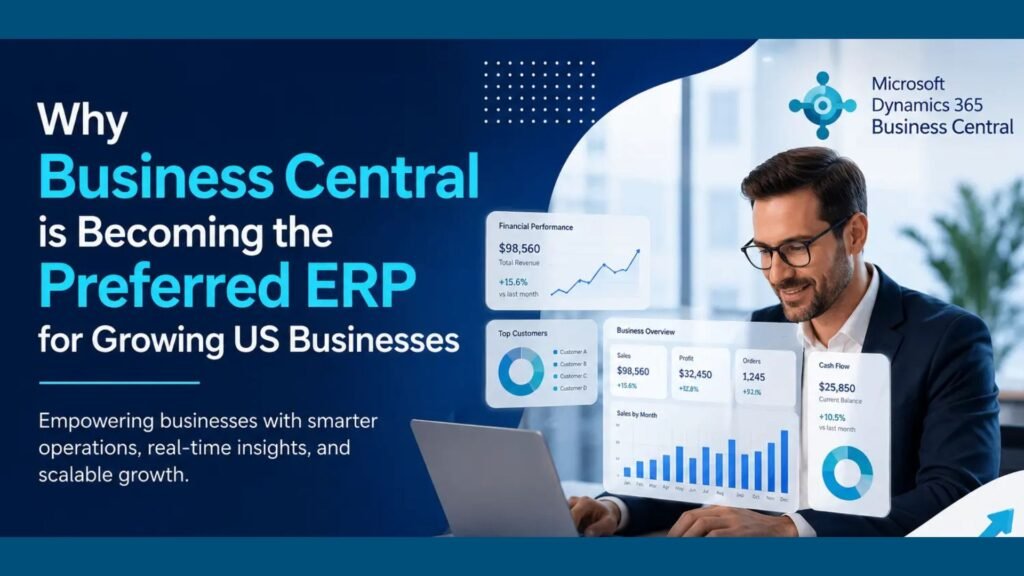
Why Business Central Is Becoming the Preferred ERP for Growing US Businesses

Modern businesses in the United States are rapidly transforming the way they operate. From finance and inventory management to customer service and analytics, organizations are looking for intelligent systems that can help them scale efficiently while reducing operational complexity. Traditional software solutions often fail to support growing business needs, which is why many companies are moving toward cloud-based ERP platforms. One solution that continues to gain popularity among small and mid-sized businesses is Microsoft Dynamics 365 Business Central. Known for its flexibility, automation capabilities, and seamless integration with Microsoft tools, Business Central is helping organizations streamline operations and improve decision-making. Today, businesses in Texas, USA, searching for a reliable Microsoft Dynamics 365 partner are increasingly choosing Business Central to modernize operations, improve productivity, and prepare for long-term growth. Understanding Microsoft Dynamics 365 Business Central Microsoft Dynamics 365 Business Central is a comprehensive enterprise resource planning (ERP) solution designed to unify core business processes within a single platform. It combines finance, supply chain management, sales, purchasing, inventory, reporting, and customer relationship management into one connected system. Unlike traditional ERP systems that require expensive hardware and complex maintenance, Business Central operates in the cloud. This enables organizations to access critical business information securely from anywhere while reducing IT infrastructure costs. Growing companies often choose Microsoft Dynamics 365 Business Central in Texas, USA, because the platform supports scalability, automation, and digital transformation without requiring large enterprise budgets. Why Growing US Businesses Need Modern ERP Solutions As businesses expand, operational challenges also increase. Managing disconnected software systems, spreadsheets, manual reporting, and outdated processes can slow growth and reduce efficiency. Many organizations struggle with: Modern ERP systems solve these problems by centralizing business data and automating workflows. Business Central has become one of the preferred ERP platforms because it allows businesses to simplify operations while improving agility and decision-making. Cloud ERP Is Driving Digital Transformation Cloud technology has fundamentally changed how businesses operate. Companies no longer want complex on-premise systems that require costly upgrades and maintenance. Business Central provides a cloud-first environment that offers: For organizations looking for MS Dynamics 365 implementation services in Texas, USA, cloud ERP adoption offers significant operational and financial advantages. Businesses can access their ERP system anytime using laptops, smartphones, or tablets, making it ideal for remote and hybrid work environments. Seamless Integration with Microsoft Ecosystem One of the strongest advantages of Business Central is its seamless integration with Microsoft applications. Businesses can connect Business Central with: This integration improves collaboration and productivity because employees can work within familiar tools while accessing real-time business data. For example: Companies searching for Microsoft Dynamics consulting services in Texas, USA, often prioritize this integration capability because it improves workflow efficiency across departments. Financial Management Made Easier Financial management is one of the most critical areas for growing businesses. Business Central helps organizations improve financial visibility and automate accounting processes. Key financial management features include the following: Automation reduces manual data entry and minimizes errors, allowing finance teams to focus on strategic planning rather than repetitive tasks. Real-time financial reporting helps businesses make faster decisions and respond quickly to market changes. Organizations requiring Microsoft Dynamics 365 Support Services in Texas, USA, often use Business Central to improve accounting accuracy and financial control. Inventory and Supply Chain Optimization Inventory management becomes increasingly complex as businesses grow. Overstocking and stock shortages can negatively impact profitability and customer satisfaction. Business Central helps businesses optimize supply chain operations through: Manufacturers, distributors, and retailers benefit significantly from improved inventory visibility and automation. Businesses implementing Business Central can reduce operational delays while improving order fulfillment accuracy. Scalability Supports Long-Term Growth One major reason businesses choose Business Central is scalability. Many traditional ERP systems become difficult to manage as organizations expand. Business Central supports growth by allowing companies to: This flexibility ensures businesses can continue using the same ERP platform as they grow without requiring expensive system replacements. Companies seeking D365 migration services in Texas, USA, often migrate from outdated ERP systems because Business Central offers a scalable and future-ready solution. Automation Improves Operational Efficiency Manual processes consume time and increase the likelihood of errors. Business Central automates repetitive business tasks, helping organizations improve efficiency and productivity. Automation features include the following: By automating routine operations, employees can focus on customer engagement, strategic initiatives, and business growth. Automation also helps reduce operational costs while improving overall service quality. Real-Time Data and Business Intelligence Modern businesses rely heavily on accurate data to make informed decisions. Business Central provides real-time reporting and analytics capabilities that help organizations monitor performance effectively. Users can access: Integration with Power BI enables businesses to create advanced visual dashboards and customized reports. This level of visibility supports proactive decision-making and helps leadership teams identify opportunities for improvement. Enhanced Customer Relationship Management Customer expectations continue to rise, making customer relationship management more important than ever. Business Central helps businesses improve customer experiences through: Sales and service teams gain better visibility into customer interactions, enabling faster response times and personalized engagement. Improved customer management ultimately leads to stronger customer retention and higher revenue growth. Cost-Effective ERP Solution for SMBs Large enterprise ERP systems are often expensive and difficult to maintain. Business Central offers a cost-effective alternative designed specifically for small and mid-sized businesses. Benefits include: Because the platform operates in the cloud, businesses avoid major upfront investments while still accessing enterprise-grade functionality. For businesses evaluating Microsoft Dynamics 365 Business Central in Texas, USA, affordability is often a major advantage. Strong Security and Compliance Features Data security is a top priority for modern organizations. Business Central benefits from Microsoft’s advanced cloud security infrastructure. Security features include the following: These security capabilities help businesses protect sensitive financial and operational information while meeting regulatory requirements. Faster ERP Deployment and Implementation Traditional ERP implementations can take years to complete. Business Central offers faster implementation timelines, especially when businesses work with experienced ERP consultants. Professional implementation services typically include: Organizations seeking MS Dynamics 365 implementation services in Texas, USA, often prefer Business Central because

Why Business Central Is Becoming the Preferred ERP for Growing US Businesses Read More »

top-challenges-in-erp-implementation-and-how-to-overcome-them

Top Challenges in ERP Implementation and How to Overcome Them

Implementing an Enterprise Resource Planning (ERP) system is a major step toward digital transformation. It helps businesses unify operations, improve efficiency, and gain real-time insights across departments. However, ERP implementation is not just a technical upgrade—it’s a strategic shift that impacts people, processes, and technology. Solutions like Microsoft Dynamics 365 have made ERP more flexible and scalable, but organizations still face several challenges during implementation. Whether you’re planning a new deployment or upgrading an existing system, understanding these challenges can help you avoid costly mistakes. In this blog, we explore the most common ERP implementation challenges and how to overcome them effectively. 1. Unclear Business Goals One of the most common reasons ERP projects fail is the lack of clearly defined objectives. Without a clear vision, businesses struggle to measure success or align the system with their operational needs. How to overcome it:Start by identifying your business goals—whether it’s improving reporting, reducing costs, or enhancing productivity. Define KPIs and ensure your ERP solution supports these objectives. Working with an experienced Microsoft Dynamics 365 partner in Texas, USA, can help you create a structured implementation roadmap. 2. Resistance to Change ERP systems often require employees to adopt new workflows and processes. This can lead to resistance, especially if users are not properly trained or informed. How to overcome it:Focus on change management from the beginning. Communicate the benefits of the new system clearly and involve employees in the implementation process. Provide hands-on training and continuous support to ease the transition. Businesses that invest in Microsoft Dynamics 365 Support Services in Texas, USA, often achieve better adoption rates. 3. Poor Planning and Budget Issues ERP implementations can quickly exceed budgets if not planned carefully. Hidden costs, scope changes, and delays can impact the overall success of the project. How to overcome it:Create a detailed project plan that includes timelines, budgets, and milestones. Break the implementation into phases and allocate contingency funds. Choosing reliable MS Dynamics 365 implementation services in Texas, USA, can help minimize risks and keep your project on track. 4. Data Migration Challenges Migrating data from legacy systems to a new ERP platform is often complex. Poor data quality or incomplete migration can lead to inaccurate reporting and operational issues. How to overcome it:Before migration, audit and clean your data. Remove duplicates, standardize formats, and ensure consistency. Using expert D365 migration services in texas usa can make the process smoother and more accurate. 5. Lack of Skilled Resources ERP implementation requires specialized knowledge, which many organizations may not have in-house. How to overcome it:Consider hiring experienced consultants or using resource augmentation services. Partnering with experts in Microsoft Dynamics consulting services in texas usa ensures that your implementation is handled efficiently and professionally. 6. Over-Customization While customization can make ERP systems more tailored, excessive modifications can increase complexity and maintenance costs. How to overcome it:Use standard features wherever possible and customize only when necessary. Solutions like Microsoft Dynamics 365 Business Central in Texas, USA, offer built-in functionalities that meet most business needs without heavy customization. 7. Integration Issues ERP systems need to integrate with existing tools like CRM, HR software, and third-party applications. Poor integration can create data silos. How to overcome it:Identify integration requirements early in the project. Use APIs and middleware to ensure seamless connectivity. Thorough testing is essential to ensure smooth data flow across systems. 8. Unrealistic Timelines: Many organizations underestimate the time required for ERP implementation, leading to rushed deployments and errors. How to overcome it:Set realistic timelines based on project scope and complexity. Use a phased approach and allow enough time for testing, training, and adjustments. 9. Inadequate Testing: Skipping testing or rushing through it can result in system failures after go-live. How to overcome it:Conduct multiple testing phases, including user acceptance testing. Simulate real business scenarios and involve end-users to ensure the system works as expected. 10. Lack of Post-Implementation Support: ERP implementation doesn’t end at go-live. Without ongoing support, businesses may struggle to resolve issues or optimize performance. How to overcome it:Invest in continuous support and maintenance. Regular updates, monitoring, and training ensure your ERP system continues to deliver value over time. Final Thoughts ERP implementation is a transformative journey that requires careful planning, the right expertise, and a clear strategy. While challenges are inevitable, they can be effectively managed with the right approach. By working with experienced professionals and leveraging reliable services, businesses can ensure a smooth transition and maximize the benefits of their ERP investment. A well-implemented ERP system not only improves efficiency but also sets the foundation for long-term growth and innovation. FAQs Q1. What is the biggest challenge in ERP implementation? Ans: The biggest challenge is usually a lack of clear goals and poor planning, which can lead to delays and budget overruns. Q2. How long does ERP implementation take? Ans: It depends on the size and complexity of the business, but most projects take several months to a year. Q3. Why is data migration important? Ans: Data migration ensures that all existing business information is accurately transferred to the new system without errors. Q4. Can small businesses benefit from ERP? Ans: Yes, modern ERP solutions are scalable and help small businesses improve efficiency and manage growth. Q5. What is the role of ERP support services? Ans: Support services help maintain system performance, resolve issues, and ensure continuous improvement after implementation.

Top Challenges in ERP Implementation and How to Overcome Them Read More »

complete-guide-to-migrating-from-dynamics-nav-to-business-central

Complete Guide to Migrating from Dynamics NAV to Business Central

In today’s fast-evolving digital landscape, businesses relying on legacy ERP systems are increasingly shifting toward modern, cloud-based solutions. One of the most significant transitions happening globally is the migration from Microsoft Dynamics NAV to Microsoft Dynamics 365 Business Central. Why Businesses Are Moving from Dynamics NAV to Business Central Microsoft has officially shifted its focus to cloud-first solutions under Microsoft Dynamics 365. While Dynamics NAV served businesses well for years, it lacks the agility and scalability modern organizations need. Key Reasons for Migration Businesses working with a Microsoft Dynamics 365 partner in Texas, USA, often accelerate this transition with minimal disruption and maximum ROI. What is Microsoft Dynamics 365 Business Central? Microsoft Dynamics 365 Business Central is a next-generation, all-in-one ERP solution designed for small to mid-sized businesses. It combines finance, operations, sales, and customer service into a unified platform. Core Features Companies leveraging Microsoft Dynamics 365 Business Central in Texas, USA, gain a competitive advantage through automation and real-time decision-making. NAV vs Business Central: Key Differences Feature Dynamics NAV Business Central Deployment On-premise Cloud & Hybrid Updates Manual Automatic Scalability Limited Highly scalable Integration Basic Advanced (Power Platform, AI) User Experience Traditional Modern & intuitive Benefits of Migrating to Business Central 1. Cloud-Based Flexibility: Access your ERP system anytime, anywhere. 2. Lower IT Costs: No need for expensive infrastructure or maintenance. 3. Enhanced Productivity: Automation reduces manual tasks and errors. 4. Real-Time Insights: Built-in analytics improve decision-making. 5. Seamless Integration: Connect easily with Microsoft ecosystem tools. Businesses opting for D365 migration services in Texas, USA, often report faster ROI and improved operational efficiency. Challenges in NAV to Business Central Migration Migration isn’t without hurdles. Common challenges include: This is why partnering with experts offering Microsoft Dynamics 365 support services in Texas, USA, is essential for smooth execution. Step-by-Step Migration Process 1. Assessment & Planning 2. Choose the Right Migration Strategy A reliable Microsoft Dynamics consulting services provider in Texas, USA, helps determine the best approach. 3. Data Migration 4. Customization & Integration 5. Testing Phase 6. Go-Live & Support Engaging MS Dynamics 365 implementation services in Texas, USA, ensures a seamless go-live experience. Cost of Migration Migration costs vary depending on the following: Estimated Cost Breakdown Working with a trusted Microsoft Dynamics 365 partner in Texas, USA, helps optimize costs and avoid hidden expenses. Best Practices for Successful Migration Plan Early: Start planning at least 6–12 months. Clean Your Data: Remove redundant or outdated data before migration. Choose the Right Partner: A certified partner ensures efficiency and compliance. Train Your Team: User adoption is critical for success. Test Thoroughly: Never skip testing phases. How Migration Improves Business Performance After migrating to Business Central, companies typically experience: Organizations leveraging Microsoft Dynamics 365 Support Services in Texas, USA, also benefit from continuous system optimization. Industry Use Cases Manufacturing Retail Services Why Choose a Dynamics Partner in Texas? Working with a local Microsoft Dynamics 365 partner in Texas, USA, offers the following: Future of ERP: Why Business Central is the Right Choice The future of ERP lies in the following: Microsoft Dynamics 365 continues to lead innovation, making Business Central a future-proof investment. Frequently Asked Questions (FAQs) Q1. What is the difference between Dynamics NAV and Business Central? Ans: Dynamics NAV is an on-premise ERP, while Business Central is a cloud-based, modern ERP with advanced capabilities. Q2. How long does migration take? Ans: Typically, 3 to 12 months, depending on complexity and data size. Q3. Is data migration safe? Ans: Yes, when handled by experts offering D365 migration services in Texas, USA, data integrity and security are ensured. Q4. What are the costs involved? Ans: Costs depend on customization, data volume, and implementation scope. Q5. Can I keep my NAV customizations? Ans: Some can be migrated, but many require redevelopment in Business Central. Q6. Do I need training after migration? Ans: Yes, user training is essential for smooth adoption. Q7. Why choose Business Central over other ERPs? Ans: It offers seamless Microsoft integration, scalability, and cost efficiency. Q8. What support is available after migration? Ans: Ongoing Microsoft Dynamics 365 support services in Texas, USA, ensure system stability and updates. Conclusion Migrating from Microsoft Dynamics NAV to Microsoft Dynamics 365 Business Central is no longer just an upgrade—it’s a strategic move toward digital transformation. With the right approach, tools, and expert guidance from a trusted Microsoft Dynamics 365 partner in Texas, USA, businesses can unlock new levels of efficiency, scalability, and innovation. Whether you’re planning a simple upgrade or a complete ERP transformation, investing in MS Dynamics 365 implementation services in Texas, USA, and Microsoft Dynamics consulting services in Texas, USA, ensures long-term success.

Complete Guide to Migrating from Dynamics NAV to Business Central Read More »

common-dynamics-365-issues-and-how-support-teams-fix-them

Common Dynamics 365 Issues and How Support Teams Fix Them

Modern businesses depend on Microsoft Dynamics 365 to manage operations, customer relationships, finance, and supply chains in one unified ecosystem. While the platform offers powerful capabilities, organizations often face technical and operational challenges that can impact productivity. The difference between struggling with these issues and turning them into opportunities lies in having the right support strategy. In this guide, we’ll explore the most common Dynamics 365 issues and how expert teams resolve them efficiently. 1. System Performance and Slow Response One of the most frequent complaints users have is slow system performance. This can affect reporting, transaction processing, and overall user experience. Why it happen: How support teams fix it: Experts analyze system performance using diagnostic tools, optimize database queries, and streamline customizations. In many cases, businesses working with a Microsoft Dynamics 365 partner in Texas, USA, benefit from proactive monitoring that prevents these issues before they escalate. 2. Integration Issues with External Systems Dynamics 365 is often connected with CRM platforms, eCommerce tools, and third-party applications. When integrations fail, it can disrupt workflows and create data silos. Common causes: Resolution: Support specialists implement secure APIs, use middleware solutions, and perform regular testing. Providers offering Microsoft Dynamics consulting services in Texas, USA, ensure that integrations remain stable and scalable. 3. Data Migration Challenges Migrating data from legacy systems or older ERP platforms can be complex. Errors during this process may lead to data loss or duplication. Key issues: How experts handle it: Teams providing D365 migration services in Texas, USA, typically start with data audits, followed by cleansing and validation. Automated tools and post-migration testing ensure accuracy and reliability. 4. Low User Adoption Even the most advanced system fails if employees don’t use it effectively. Many organizations struggle with user adoption after implementation. Signs of poor adoption: Fix: Support teams conduct role-based training, simplify interfaces, and provide ongoing assistance. Companies using Microsoft Dynamics 365 Business Central in Texas, USA, often see improved adoption when workflows are tailored to user needs. 5. Customization and Update Conflicts Customization is essential for aligning the platform with business processes. However, excessive or poorly managed modifications can create problems during updates. Causes: Solution: Professionals delivering MS Dynamics 365 implementation services in Texas, USA, follow best practices such as using extensions instead of altering core code. They also test updates in sandbox environments to avoid disruptions. 6. Security and Compliance Risks With sensitive business data stored in the system, security is a top concern. Common risks: How support teams mitigate risks: They implement role-based access, enable multi-factor authentication, and conduct regular audits. Reliable Microsoft Dynamics 365 support services in Texas, USA, also ensure compliance with industry standards. 7. Reporting and Analytics Limitations Businesses rely on accurate insights for decision-making. Poor reporting setups can lead to delays or incorrect data interpretation. Issues include: Fix: Support teams optimize reporting frameworks and integrate tools like Microsoft Power BI to deliver actionable insights. 8. Licensing and Cost Optimization Many organizations overspend due to inefficient license management. Challenges: Solution: A trusted Microsoft Dynamics 365 partner in Texas, USA, conducts license audits and aligns subscriptions with actual business needs, helping reduce unnecessary costs. 9. Workflow and Automation Failures Automation is a major advantage of Dynamics 365, but poorly configured workflows can lead to operational issues. Causes: Resolution: Support teams debug workflows, optimize logic, and continuously monitor automation processes to ensure consistency. 10. Lack of Ongoing Support and Maintenance Without continuous monitoring, systems can become outdated and inefficient over time. Solution: Businesses benefit from ongoing support that includes: Organizations leveraging Microsoft Dynamics 365 support services in Texas, USA, often experience improved system stability and long-term efficiency. Why Professional Support Matters Working with experienced experts provides long-term advantages beyond just fixing issues. Key benefits: A reliable Microsoft Dynamics 365 partner in Texas, USA, not only solves problems but also helps businesses scale effectively. Conclusion Microsoft Dynamics 365 is a robust platform that can transform business operations, but it requires proper management to deliver its full value. From performance bottlenecks to integration challenges and user adoption issues, these problems are common—but solvable. By working with experts offering services such as: Businesses can ensure smooth operations and sustained growth without disruptions. FAQs Q1. What are the most common Dynamics 365 problems? Ans: Performance issues, integration errors, data migration challenges, and low user adoption are among the most common problems. Q2. How can I improve system performance? Ans: Optimizing databases, reducing unnecessary customizations, and using expert support services can significantly improve performance. Q3. Why is migration to Dynamics 365 complex? Ans: It involves handling large datasets, ensuring accuracy, and maintaining data integrity, which requires specialized tools and expertise. Q4. How do consultants help with integration? Ans: They design scalable integration frameworks, configure APIs, and ensure consistent data flow between systems. Q5. Is customization recommended? Ans: Yes, but it should follow best practices to avoid issues during system updates. Q6. How important is ongoing support? Ans: Continuous support ensures system stability, security, and performance optimization over time. Q7. Can Dynamics 365 scale with business growth? Ans: Yes, it is highly scalable and can adapt to changing business needs across industries. Q8. What tools enhance reporting in Dynamics 365? Ans: Tools like Microsoft Power BI provide advanced analytics and real-time insights.

Common Dynamics 365 Issues and How Support Teams Fix Them Read More »

10-powerful-copilot-features-in-business-central

What Microsoft Didn’t Highlight: 10 Powerful Copilot Features in Business Central

In the rapidly evolving world of ERP systems, artificial intelligence is no longer a futuristic concept—it’s a present-day competitive advantage. With the introduction of Copilot in Microsoft Dynamics 365 Business Central, Microsoft has embedded AI directly into everyday business workflows. While official announcements showcase a handful of capabilities, many powerful features remain underutilized or overlooked. For organizations working with a Microsoft Dynamics 365 partner in Texas, USA, or leveraging Microsoft Dynamics consulting services in Texas, USA, understanding these hidden capabilities can unlock significant operational efficiency and ROI. This SEO-optimized guide explores 10 powerful Copilot features in Business Central, along with practical use cases, benefits, and strategic insights—without keyword stuffing and with a natural content flow. Understanding Copilot in Business Central Copilot is an AI-powered assistant designed to: Unlike traditional ERP tools, Copilot allows users to interact with the system conversationally, making it easier for both technical and non-technical users. Businesses partnering with Microsoft Dynamics 365 implementation partners or a Dynamics implementation partner can maximize the value of these capabilities through proper configuration and customization. 1. AI-Powered Product Description Generation Creating product descriptions manually can be time-consuming, especially for businesses managing large inventories. Copilot simplifies this by generating high-quality descriptions based on product attributes. Key Benefits: For companies using Microsoft Dynamics 365 Business Central in Texas, USA, this feature significantly reduces content creation efforts while improving online visibility. 2. Natural Language Data Queries Copilot allows users to ask questions in plain English instead of building complex reports. Example: Why It Matters: Organizations working with a Microsoft CRM partner or Dynamics 365 customer engagement partner can integrate these insights across departments. 3. Automated Bank Reconciliation Financial processes are often repetitive and error-prone. Copilot assists by: Business Impact: This is particularly beneficial when supported by Microsoft Dynamics 365 Support Services in Texas, USA. 4. AI-Driven Forecasting and Predictions Copilot uses historical data and AI models to predict the following: Advantages: Companies leveraging D365 migration services in Texas, USA, can take full advantage of these predictive capabilities after moving to cloud-based systems. 5. Chat-Based ERP Navigation One of the most user-friendly features is conversational navigation. Instead of navigating menus, users can simply type: Benefits: Businesses using MS Dynamics 365 implementation services in Texas, USA, often see faster onboarding due to this feature. 6. Intelligent Document Processing Copilot can read and process documents such as invoices and receipts. Capabilities: Outcomes: 7. Sales Order Automation Copilot can transform emails into actionable sales processes. What It Can Do: Result: End-to-end automation of sales workflows improves efficiency and customer experience. This is especially valuable for organizations working with top Microsoft Dynamics partners. 8. AI-Powered Summarization Copilot can summarize large datasets, reports, and communications. Use Cases: Benefits: 9. Unified AI Across ERP and CRM Copilot is not limited to ERP—it extends across the broader Microsoft Dynamics 365 ecosystem. Integration Areas: Businesses working with a partner dynamics expert or a Microsoft AX partner can unify ERP and CRM workflows for better efficiency. 10. Custom AI Agents for Workflow Automation One of the most advanced yet underutilized features is the ability to create custom AI agents. Capabilities: Why It Matters: Organizations collaborating with Microsoft Dynamics partners can build tailored AI solutions that align with specific business needs. Why These Features Matter for Your Business Implementing Copilot effectively can transform how businesses operate. Whether you’re working with a Microsoft Dynamics 365 partner in Texas, USA, or exploring Microsoft Dynamics consulting services in Texas, USA, these features deliver measurable value. Key Benefits: The Role of the Right Implementation Partner Choosing the right partner is critical to success. A reliable dynamics implementation partner or Microsoft Dynamics 365 implementation partners can help: Businesses that collaborate with top Microsoft Dynamics partners gain a competitive edge through expert guidance and optimized solutions. Common Challenges and How to Overcome Them 1. Lack of Proper Implementation: Solution: Work with experienced partners and consultants 2. Resistance to Change Solution: Provide user training and change management 3. Poor Data Quality Solution: Clean and structure data before implementation 4. Underutilization of Features Solution: Continuously explore and adopt new capabilities Future of Copilot in Business Central AI is evolving rapidly, and Copilot is expected to become even more powerful. Future Trends: Businesses that invest early will be better positioned to leverage these advancements. Conclusion Copilot in Microsoft Dynamics 365 Business Central is far more powerful than what Microsoft initially highlighted. From AI-driven automation to predictive analytics and intelligent workflows, it is redefining how modern businesses operate. However, success depends on how effectively these features are implemented and utilized. Partnering with the right experts—whether for Microsoft Dynamics 365 Support Services in texas usa or implementation—can significantly impact outcomes. By embracing these hidden capabilities, businesses can drive efficiency, innovation, and long-term growth. FAQs Q1. What is Copilot in Business Central? Ans: Copilot is an AI-powered assistant that helps automate tasks, generate insights, and improve productivity within Business Central. Q2. Is Copilot available in all versions of Business Central? Ans: Copilot is primarily available in the cloud version of Business Central and continues to expand with updates. Q3. How does Copilot improve business efficiency? Ans: It automates repetitive tasks, provides real-time insights, and enhances decision-making capabilities. Q4. Do I need a partner for implementation? Ans: While not mandatory, working with a Dynamics implementation partner ensures better customization and ROI. Q5. Which industries benefit most from Copilot? Ans: Retail, manufacturing, finance, and service industries benefit significantly from automation and AI insights. Q6. Is Copilot secure? Ans: Yes, it follows Microsoft’s enterprise-grade security and compliance standards. Q7. Can Copilot integrate with CRM systems? Ans: Yes, it integrates seamlessly with Dynamics 365 CRM modules, enabling unified business operations. Q8. What is the future of Copilot? Ans: Copilot will continue evolving with advanced AI capabilities, automation, and deeper business integration.

What Microsoft Didn’t Highlight: 10 Powerful Copilot Features in Business Central Read More »

7-game-changing-copilot-capabilities-in-busness-central-that-most-teams-overlook

7 Game-Changing Copilot Capabilities in Business Central That Most Teams Overlook

Artificial intelligence is redefining how modern ERP systems operate, and one of the most impactful innovations is Copilot in Microsoft Dynamics 365 Business Central. While many businesses already use Business Central to manage finance, operations, and supply chains, many still underutilize its AI-powered Copilot capabilities. Instead of simply automating tasks, Copilot acts as a strategic assistant, helping organizations make smarter decisions, streamline workflows, and uncover insights hidden within their data. In this article, we’ll explore seven powerful Copilot capabilities that are often overlooked—and how businesses working with a reliable Microsoft Dynamics partner in Texas can take full advantage of them. 1. AI-Driven Financial Forecasting Traditional financial forecasting relies heavily on historical data and manual calculations. Copilot enhances this process by introducing predictive intelligence. It analyzes patterns, detects anomalies, and generates forecasts that help finance teams anticipate future outcomes more accurately. Why it matters: Organizations using Microsoft Dynamics 365 Business Central in Texas, USA, can leverage this feature to stay ahead in financial planning. 2. Instant Report Generation with Natural Language Creating reports manually can take hours. With Copilot, users can type what they need—just like asking a question. For example: Copilot instantly delivers structured reports with clear insights. Key advantages: This is especially useful for businesses relying on Microsoft Dynamics 365 support services in Texas, USA, to streamline operations. 3. Smart Data Entry and Journal Automation Manual data entry is not only time-consuming but also prone to errors. Copilot simplifies this by automating repetitive accounting tasks. It can: Business impact: Companies implementing ERP systems through MS Dynamics 365 implementation services in Texas, USA, often see immediate productivity gains from this feature. 4. Intelligent Sales and Customer Insights Copilot goes beyond finance—it helps sales teams understand customer behavior and make better decisions. By analyzing transaction history and engagement patterns, it can recommend: Why this matters: Businesses leveraging Microsoft Dynamics consulting services in Texas, USA, can use these insights to create more personalized strategies. 5. Natural Language Data Exploration One of Copilot’s most powerful capabilities is the ability to interact with data using everyday language. Instead of navigating complex dashboards, users can simply ask: Benefits: This feature becomes particularly valuable for organizations undergoing ERP upgrades through D365 migration services in Texas, USA, as it simplifies the transition for users. 6. AI-Powered Inventory Optimization Ans: Inventory management can be complex, especially for growing businesses. Copilot introduces predictive intelligence to help maintain optimal stock levels. It can: Results: For companies using Microsoft Dynamics 365 Business Central in Texas, USA, this capability can significantly enhance operational performance. 7. Workflow Automation and Process Optimization Copilot continuously analyzes business processes and suggests ways to improve them. It can: Impact: Working with an experienced Microsoft Dynamics partner in Texas ensures these workflows are configured correctly for maximum benefit. Why These Features Are Often Overlooked Despite their value, many businesses don’t fully utilize Copilot. Common reasons include: This highlights the importance of working with experts who provide Microsoft Dynamics 365 support services in Texas, USA, to ensure continuous optimization. How to Maximize Copilot in Business Central To unlock the full potential of Copilot, businesses should focus on a strategic approach: Best practices: Partnering with providers offering Microsoft Dynamics consulting services in Texas, USA, can help ensure long-term success. The Importance of Implementation and Migration A successful ERP journey starts with proper implementation and migration. Implementation ensures: Migration helps: Businesses adopting solutions through MS Dynamics 365 implementation services in Texas, USA, and D365 migration services in Texas, USA, are better positioned to leverage AI capabilities like Copilot. The Future of AI in Business Central Copilot is just the beginning. As AI continues to evolve, ERP systems will become more intelligent and autonomous. What to expect: Organizations working with a trusted Microsoft Dynamics partner in Texas will be able to stay ahead of these innovations. Conclusion Copilot in Microsoft Dynamics 365 Business Central is transforming how businesses interact with their ERP systems. From financial forecasting to workflow automation, its capabilities go far beyond basic assistance. However, the real value lies in how effectively these features are implemented and used. By focusing on training, optimization, and expert guidance, businesses can unlock significant efficiency gains and competitive advantages. FAQs Q1. What is Copilot in Business Central? Ans: Copilot is an AI-powered assistant within Microsoft Dynamics 365 Business Central that helps automate tasks, generate insights, and improve decision-making. Q2. How does Copilot benefit businesses? Ans: It enhances productivity, reduces manual work, and provides real-time insights for better decision-making. Q3. Is Copilot suitable for small and mid-sized businesses? Ans: Yes, it is designed to help SMBs improve efficiency without requiring advanced technical expertise. Q4. Do I need a partner to implement Business Central? Ans: While not mandatory, working with an experienced Microsoft Dynamics partner ensures proper setup, customization, and support. Q5. Can Copilot improve financial management? Ans: Yes, it provides predictive insights, automates reporting, and enhances financial accuracy.

7 Game-Changing Copilot Capabilities in Business Central That Most Teams Overlook Read More »

ten-hidden-copilot-features-in-business-central-youre-probably-not-using-yet

10 Hidden Copilot Features in Business Central You’re Probably Not Using Yet

In today’s fast-evolving digital landscape, businesses are constantly seeking smarter ways to streamline operations, reduce manual work, and improve decision-making. With the integration of AI-powered tools like Copilot in Microsoft Dynamics 365 Business Central, organizations now have access to intelligent automation that goes far beyond traditional ERP capabilities. While many users are aware of basic Copilot functionalities, several powerful features remain underutilized. These hidden capabilities can significantly enhance productivity, improve accuracy, and transform how businesses operate. In this comprehensive guide, we’ll uncover 10 hidden Copilot features in Business Central that you’re probably not using yet—and explain how partnering with a Microsoft Dynamics 365 partner in Texas, USA, or leveraging Microsoft Dynamics consulting services in Texas, USA, can help you unlock their full potential. What is Copilot in Business Central? Copilot is an AI-powered assistant embedded within Business Central that uses natural language processing and machine learning to assist users with tasks such as data entry, reporting, forecasting, and decision-making. It enables users to: With proper implementation through MS Dynamics 365 implementation services in Texas, USA, businesses can maximize Copilot’s capabilities and drive real value. 1. AI-Powered Product Description Generation One of the most overlooked features is Copilot’s ability to generate product descriptions automatically. How it helps: This is especially beneficial for e-commerce and retail businesses using Microsoft Dynamics 365 Business Central in Texas, USA. 2. Intelligent Sales Line Suggestions Copilot can analyze historical sales data and suggest relevant products during order creation. Benefits: Businesses working with Microsoft Dynamics consulting services in Texas, USA, can fine-tune these suggestions for better accuracy. 3. Automated Email Drafting Copilot can generate professional email drafts directly within Business Central. Use cases: This reduces manual effort and ensures consistent communication. 4. Natural Language Data Queries Instead of running complex reports, users can simply ask questions like the following: Copilot converts these queries into actionable insights. Advantages: 5. Smart Financial Forecasting Copilot leverages AI to predict financial trends based on historical data. Key benefits: Organizations using Microsoft Dynamics 365 Support Services in Texas, USA, can continuously refine forecasting models. 6. Automated Data Entry and Cleanup Manual data entry is one of the most time-consuming ERP tasks. Copilot automates this process by: Result: 7. AI-Assisted Inventory Management Copilot helps businesses optimize inventory by analyzing demand patterns and stock levels. Features include: When combined with D365 migration services in Texas, USA, businesses can modernize their inventory systems and gain better control. 8. Report Summarization Instead of going through lengthy reports, Copilot can summarize key insights in seconds. Benefits: This is particularly useful for leadership teams who need quick insights. 9. Guided User Assistance Copilot acts as a built-in assistant, guiding users through complex workflows. Examples: This reduces training time and improves user adoption—especially when implemented via MS Dynamics 365 implementation services in Texas, USA. 10. AI-Driven Demand Forecasting One of the most powerful yet underused features is AI-driven demand forecasting. Capabilities: Businesses partnering with a Microsoft Dynamics 365 partner in Texas, USA, can customize forecasting models for industry-specific needs. Why Businesses Are Not Using These Features Despite their benefits, many organizations fail to utilize these features due to: This is where Microsoft Dynamics Consulting Services in Texas, USA, play a crucial role in bridging the gap. The Role of Implementation and Support To fully leverage Copilot features, businesses must focus on the following: 1. Proper Implementation Using MS Dynamics 365 implementation services in Texas, USA, ensures the following: 2. Ongoing Support With Microsoft Dynamics 365 Support Services in Texas, USA, businesses can: 3. Migration to Modern Systems Legacy systems often limit AI capabilities.D365 migration services in Texas, USA, help businesses: Business Benefits of Using Copilot 1. Increased Productivity: Automation reduces manual work and speeds up operations. 2. Better Decision-Making: AI insights enable data-driven strategies. 3. Cost Savings: Reduced errors and improved efficiency, lowering operational costs. 4. Enhanced Customer Experience: Faster responses and personalized interactions improve satisfaction. 5. Competitive Advantage: Businesses using AI-powered ERP systems stay ahead of competitors. Real-World Impact A mid-sized distribution company in Texas implemented Copilot with the help of a Microsoft Dynamics 365 partner in Texas, USA, and achieved the following: This demonstrates the transformative power of hidden Copilot features when properly utilized. Best Practices to Maximize Copilot FAQs: Hidden Copilot Features in Business Central Q1. What is Copilot in Business Central? Ans: Copilot is an AI-powered assistant in Microsoft Dynamics 365 Business Central that automates tasks, generates insights, and improves productivity. Q2. Are Copilot features available by default? Ans: Some features are enabled by default, but many require proper configuration through MS Dynamics 365 implementation services in Texas, USA. Q3. Can Copilot improve sales performance? Ans: Yes, features like intelligent sales suggestions and automated communication can significantly boost sales efficiency. Q4. Is Copilot suitable for small businesses? Ans: Absolutely. Businesses using Microsoft Dynamics 365 Business Central in Texas, USA, can benefit from scalable AI features tailored for SMBs. Q5. How can I enable advanced Copilot features? Ans: You can work with a Microsoft Dynamics 365 partner in Texas, USA, or use Microsoft Dynamics consulting services there to unlock advanced capabilities. Q6. Does Copilot help in financial management? Ans: Yes, it provides forecasting, reporting, and financial insights that improve budgeting and cash flow management. Q7. What role does migration play in using Copilot? Ans: Modern ERP systems are required for AI features. D365 migration services in Texas, USA, help businesses upgrade and enable Copilot functionalities. Q8. Is ongoing support necessary? Ans: Yes, Microsoft Dynamics 365 Support Services in Texas, USA, ensure smooth operation and continuous optimization. Conclusion Copilot in Microsoft Dynamics 365 Business Central is more than just an AI assistant—it’s a game-changer for modern businesses. While many organizations use basic features, the hidden capabilities discussed in this article can unlock unprecedented efficiency, accuracy, and growth. From AI-driven forecasting and automated data entry to intelligent sales suggestions and report summarization, these features can transform your ERP experience. However, to fully realize these benefits, businesses must invest in proper implementation, migration, and ongoing support. By partnering

10 Hidden Copilot Features in Business Central You’re Probably Not Using Yet Read More »

how-demand-forecasting-in-d365-f-o-is-reshaping-the-automotive-supply-chain

How Demand Forecasting in D365 F&O is Reshaping the Automotive Supply Chain

In today’s fast-evolving automotive industry, supply chain efficiency is no longer optional—it’s a competitive necessity. With fluctuating customer demand, global disruptions, and complex supplier networks, manufacturers need intelligent systems that go beyond traditional planning. This case study explores how a mid-sized automotive components manufacturer transformed its supply chain using Microsoft Dynamics 365 Finance & Operations (D365 F&O), leveraging advanced demand forecasting capabilities to drive efficiency, accuracy, and growth. Client Overview The client is a rapidly growing automotive parts manufacturer supplying OEMs and aftermarket distributors. With operations across multiple regions, the company faced increasing pressure to optimize inventory, reduce lead times, and improve service levels. Business Challenges Before implementing D365 F&O, the company struggled with: Solution Implemented To address these challenges, the company implemented Microsoft Dynamics 365 Finance & Operations with a strong focus on demand forecasting and supply chain optimization. Key Features Deployed Implementation Approach The implementation followed a structured and phased approach: Results & Business Impact: After implementing D365 F&O, the company achieved significant improvements: 1. Improved Forecast Accuracy 2. Optimized Inventory Management 3. Faster Decision-Making 4. Enhanced Supplier Collaboration 5. Increased Customer Satisfaction Key Use Case: Handling Seasonal Demand One of the biggest breakthroughs came during peak seasonal demand. Previously, the company either overproduced or faced shortages. With D365 F&O: This resulted in zero stockouts during peak season—a first for the company. Why Demand Forecasting Matters in Automotive Supply Chains The automotive sector is uniquely complex due to: By leveraging advanced forecasting in Microsoft Dynamics 365 Finance & Operations, businesses can: Lessons Learned From this transformation, several key insights emerged: Conclusion Demand forecasting is no longer just a planning tool—it’s a strategic enabler. This case study demonstrates how implementing Microsoft Dynamics 365 Finance & Operations can revolutionize automotive supply chains by improving accuracy, agility, and efficiency. Organizations that embrace intelligent forecasting are better equipped to navigate uncertainty, meet customer expectations, and achieve sustainable growth. FAQs Q1. What makes D365 F&O demand forecasting different from traditional methods?Ans: It uses AI and machine learning to analyze multiple variables, providing more accurate and dynamic forecasts. Q2. Can demand forecasting reduce inventory costs?Ans: Yes, by aligning stock levels with actual demand, it minimizes overstocking and stockouts. Q3. Is D365 F&O suitable for mid-sized automotive companies?Ans: Absolutely. It is scalable and can be tailored to meet the needs of growing businesses. Q4. How long does it take to implement demand forecasting in D365 F&O?Ans: Typically, it depends on data readiness and customization needs, but most implementations range from a few months to a year.

How Demand Forecasting in D365 F&O is Reshaping the Automotive Supply Chain Read More »

7-emerging-erp-trends-every-business-should-watch-in-2026

7 Emerging ERP Trends Every Business Should Watch in 2026

In 2026, Enterprise Resource Planning (ERP) systems are no longer just back-office tools—they are becoming intelligent, cloud-powered, and data-driven platforms that drive strategic decision-making. Businesses across industries are rapidly adopting modern ERP solutions like Microsoft Dynamics 365 to stay competitive, agile, and future-ready. If your organization is planning digital transformation or looking for a reliable Microsoft Dynamics 365 partner in Texas, USA, understanding these trends is crucial. This article explores the top 7 ERP trends shaping 2026, along with their business impact and why companies are investing heavily in solutions like Microsoft Dynamics 365 Business Central in Texas, USA. 1. AI-Driven and Autonomous ERP Systems Artificial Intelligence (AI) is the most transformative ERP trend in 2026. Modern ERP platforms are embedding AI capabilities that go beyond automation. Key Capabilities: ERP systems are evolving from reactive tools to proactive systems, helping businesses anticipate problems before they occur. According to recent insights, AI-driven ERP allows companies to automate workflows and improve decision-making significantly. Business Impact: Companies leveraging Microsoft Dynamics 365 Support Services in Texas, USA, are already benefiting from AI-powered insights that improve operational efficiency and reduce human error. 2. Cloud-First ERP Adoption Cloud ERP is no longer optional—it is the standard. Businesses are moving away from legacy on-premise systems toward scalable, cloud-based platforms. Why Cloud ERP is Dominating: Studies show that the majority of ERP deployments are now cloud or hybrid rather than traditional on-premise systems. Business Impact: Organizations adopting MS Dynamics 365 implementation services in Texas, USA, benefit from flexibility, scalability, and seamless updates. 3. Industry-Specific ERP Solutions One-size-fits-all ERP systems are fading. Businesses now prefer industry-specific ERP solutions tailored to their needs. Examples: Industry-focused ERP reduces customization costs and accelerates implementation. Business Impact: Companies working with Microsoft Dynamics consulting services in Texas, USA, can deploy tailored ERP solutions faster with better ROI. 4. Real-Time Data and Advanced Analytics In 2026, data is the backbone of decision-making. ERP systems are integrating advanced analytics and real-time dashboards. Key Features: Businesses can now make data-driven decisions instantly, improving agility and competitiveness. Business Impact: With D365 migration services in Texas, USA, companies can upgrade legacy systems to real-time analytics platforms that deliver actionable insights. 5. Low-Code/No-Code ERP Customization Customization used to be expensive and time-consuming. Now, low-code and no-code platforms are transforming ERP development. Benefits: This trend empowers business users to modify workflows without deep technical expertise. Business Impact: Organizations using Microsoft Dynamics 365 Business Central in Texas, USA, can quickly adapt ERP systems to changing business needs. 6. Enhanced Cybersecurity and Compliance With increasing cloud adoption, cybersecurity has become a top priority. Key Security Trends: ERP systems must comply with global regulations like GDPR and data protection laws. Business Impact: Businesses relying on Microsoft Dynamics 365 Support Services in Texas, USA, benefit from robust security frameworks that protect sensitive data. 7. ERP Integration with Emerging Technologies (IoT, AI, and Automation) ERP systems are now integrating with emerging technologies like IoT, machine learning, and automation tools. Examples: These integrations create a connected ecosystem, enabling smarter operations and improved efficiency. Business Impact: Companies adopting Microsoft Dynamics consulting services in Texas, USA, can leverage these integrations to optimize business processes and drive innovation. Why Microsoft Dynamics 365 is Leading ERP Innovation Microsoft Dynamics 365 is at the forefront of these trends, offering: Businesses partnering with a Microsoft Dynamics 365 partner in Texas, USA, gain access to advanced ERP capabilities that align with modern business needs. How to Prepare for ERP Trends in 2026 To stay competitive, businesses should: 1. Invest in Cloud ERP: Upgrade legacy systems with D365 migration services in Texas, USA. 2. Focus on AI and Automation: Adopt ERP systems that support intelligent automation. 3. Choose the Right Partner: Work with experienced providers offering MS Dynamics 365 implementation services in Texas, USA. 4. Prioritize Security: Ensure your ERP system meets compliance and security standards. 5. Enable Data-Driven Decision Making: Leverage real-time analytics for better business outcomes. Conclusion ERP systems in 2026 are smarter, faster, and more connected than ever before. From AI-driven automation to cloud-first architectures, these trends are reshaping how businesses operate. Organizations that embrace these innovations—especially through solutions like Microsoft Dynamics 365 Business Central in Texas, USA—will gain a competitive edge in efficiency, scalability, and decision-making. Partnering with the right Microsoft Dynamics 365 partner in Texas, USA, ensures a smooth transition and long-term success in this rapidly evolving ERP landscape. FAQs Q1. What are the key ERP trends in 2026? Ans: The major trends include AI-driven ERP, cloud adoption, real-time analytics, industry-specific solutions, low-code customization, enhanced cybersecurity, and integration with emerging technologies. Q2. Why is cloud ERP important in 2026? Ans: Cloud ERP offers scalability, flexibility, cost efficiency, and real-time access to data, making it essential for modern businesses. Q3. How does AI improve ERP systems? Ans: AI enhances ERP by automating processes, predicting trends, detecting anomalies, and providing actionable insights. Q4. What is the role of Microsoft Dynamics 365 in ERP trends? Ans: Microsoft Dynamics 365 leads ERP innovation with AI capabilities, cloud integration, and industry-specific solutions. Q5. How can businesses choose the right ERP partner? Ans: Businesses should look for experience, industry expertise, and services like Microsoft Dynamics 365 Support Services in Texas, USA, and MS Dynamics 365 Implementation Services in Texas, USA. Q6. What are the benefits of ERP migration? Ans: ERP migration improves system performance, enables real-time analytics, enhances security, and supports scalability. Q7. Is ERP suitable for small businesses? Ans: Yes, modern cloud ERP solutions like Microsoft Dynamics 365 Business Central in Texas, USA, are designed for businesses of all sizes. Q8. What industries benefit most from ERP in 2026? Ans: Manufacturing, retail, healthcare, logistics, and finance are among the top industries benefiting from ERP systems.

7 Emerging ERP Trends Every Business Should Watch in 2026 Read More »

t the-real-cost-of-ignoring-erp-support -and-maintenance

The Real Cost of Ignoring ERP Support and Maintenance

In today’s fast-paced digital economy, Enterprise Resource Planning (ERP) systems are the backbone of business operations. From finance and supply chain to customer relationship management, ERP platforms ensure seamless integration across departments. Among the leading solutions, Microsoft Dynamics 365 has become a preferred choice for businesses seeking scalability, intelligence, and operational efficiency. However, while companies invest significantly in ERP implementation, many overlook one critical aspect—ongoing support and maintenance. Ignoring ERP support might seem like a cost-saving strategy in the short term, but it can lead to severe operational, financial, and strategic consequences over time. This article explores the real cost of neglecting ERP support and maintenance, especially for organizations relying on Microsoft Dynamics 365 Business Central in Texas, USA, and related services. We’ll also discuss how partnering with a reliable Microsoft Dynamics 365 partner in Texas, USA, can safeguard your investment and drive long-term success. Understanding ERP Support and Maintenance ERP support and maintenance involve a wide range of activities designed to keep your system running smoothly, including: Businesses that leverage Microsoft Dynamics 365 Support Services in Texas, USA, benefit from continuous improvements, enhanced performance, and reduced risk of downtime. The Hidden Costs of Ignoring ERP Support 1. Increased System Downtime One of the most immediate consequences of neglecting ERP support is system downtime. Without proactive monitoring and maintenance, small issues can escalate into major failures. Impact: For companies using MS Dynamics 365 Implementation services in Texas, USA, downtime can directly affect customer satisfaction and brand reputation. 2. Security Vulnerabilities Cybersecurity threats are constantly evolving. ERP systems store sensitive business data, including financial records, customer information, and supply chain data. Without regular updates and patches: A trusted Microsoft Dynamics 365 partner in Texas, USA, ensures your system stays secure with timely updates and proactive monitoring. 3. Higher Long-Term Costs Skipping maintenance might reduce short-term expenses, but it often leads to higher long-term costs due to: Investing in Microsoft Dynamics consulting services in Texas, USA, ensures preventive maintenance, which is far more cost-effective than reactive fixes. 4. Poor System Performance An ERP system that isn’t regularly maintained can become slow and inefficient. Common issues include: Businesses in Texas, USA, relying on Microsoft Dynamics 365 Business Central need optimized performance to manage financials, inventory, and operations effectively. 5. Lack of Scalability As your business grows, your ERP system must evolve. Without proper support: With professional D365 migration services in Texas, USA, businesses can scale their ERP systems seamlessly and adapt to changing needs. 6. Data Inaccuracy and Loss ERP systems depend on accurate data to generate insights and reports. Lack of maintenance can result in: Regular support ensures data integrity, helping organizations make informed strategic decisions. 7. Compliance Risks Industries such as manufacturing, healthcare, and finance must comply with strict regulations. Ignoring ERP updates can lead to: A reliable Microsoft Dynamics 365 Support Services provider in Texas, USA, ensures your system remains compliant with industry standards. 8. Reduced User Adoption If your ERP system is difficult to use or frequently experiences issues, employees may avoid using it altogether. Consequences include: Proper training and ongoing support from a Microsoft Dynamics consulting service in Texas, USA, can significantly improve user adoption. 9. Missed Innovation Opportunities ERP platforms like Microsoft Dynamics 365 Business Central continuously evolve with new features such as AI-driven insights, automation, and advanced analytics. Without regular updates: 10. Integration Challenges Modern businesses rely on multiple tools and systems. ERP integration is essential for seamless operations. Without maintenance: Partnering with experts in MS Dynamics 365 Implementation services in Texas, USA, ensures smooth integrations and system compatibility. The Role of a Microsoft Dynamics 365 Partner Working with a certified Microsoft Dynamics 365 partner in Texas, USA, provides several advantages: 1. Proactive Monitoring: Continuous monitoring helps detect and resolve issues before they impact operations. 2. Regular Updates: Ensure your ERP system is always up-to-date with the latest features and security patches. 3. Customization Support: Tailor your ERP system to meet specific business needs. 4. Expert Guidance: Gain insights into best practices and industry trends. 5. Cost Optimization: Reduce long-term costs through preventive maintenance and strategic planning. Why Businesses in Texas Need ERP Support Texas is home to a diverse range of industries, including manufacturing, oil & gas, retail, and technology. Businesses in this region require robust ERP systems to stay competitive. By leveraging: Organizations can streamline operations, enhance productivity, and drive growth. Best Practices for ERP Support and Maintenance To maximize the value of your ERP system, follow these best practices: 1. Schedule Regular System Audits: Identify potential issues and optimize system performance. 2. Invest in Training: Ensure employees are well-trained to use the system effectively. 3. Monitor Performance Metrics: Track KPIs to evaluate system efficiency. 4. Implement Security Measures: Regularly update security protocols to prevent cyber threats. 5. Partner with Experts: Work with a trusted Microsoft Dynamics 365 partner in Texas, USA, for ongoing support. Real-World Example Consider a manufacturing company in Texas using Microsoft Dynamics 365 Business Central. Without proper support: After partnering with a provider offering Microsoft Dynamics 365 Support Services in Texas, USA: This highlights the importance of continuous ERP support. FAQs: ERP Support and Maintenance Q1. Why is ERP support important? Ans: ERP support ensures your system runs efficiently, remains secure, and adapts to changing business needs. Q2. What happens if I don’t maintain my ERP system? Ans: Ignoring maintenance can lead to downtime, security risks, data loss, and higher long-term costs. Q3. How often should ERP systems be updated? Ans: ERP systems should be updated regularly, typically with monthly patches and periodic major upgrades. Q4. What are the benefits of Microsoft Dynamics 365 Support Services in Texas, USA? Ans: These services provide proactive monitoring, issue resolution, system optimization, and expert guidance. Q5. How can a Microsoft Dynamics 365 partner in Texas, USA, help? Ans: They offer implementation, customization, support, and strategic consulting to maximize your ERP investment. Q6. What is included in D365 migration services in Texas, USA? Ans: Migration services include data transfer, system configuration, testing, and

The Real Cost of Ignoring ERP Support and Maintenance Read More »